
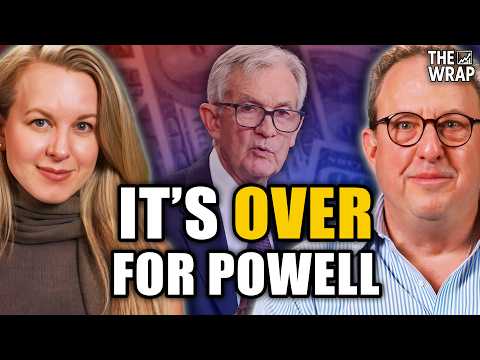
Chris Whalen argues the DOJ dropping the Powell probe clears the way for Kevin Warsh, whom he sees as the hawkish, structurally more conservative Fed choice. He remains bearish on the policy backdrop: energy-driven inflation, limited room for rate cuts, and rising credit stress, with private credit, AI capex, and weaker airlines as symptoms of a broader credit-cycle problem.
Watch on YouTube ›Get the market thesis, key claims, assets, contradictions, and follow-up questions from any financial video — then unlock a version personalized to your portfolio, watchlist, and favorite speakers.
This episode is a fast-moving Washington and macro discussion anchored on Fed succession, inflation, credit quality, and a few policy/cycle flashpoints. In the addendum, Whalen says the DOJ dropping its criminal probe of Jerome Powell was the necessary step if Trump wants Kevin Warsh confirmed and ultimately wants Powell out of the chairmanship. He argues Powell should ideally step down not only as chair but also as a governor so Trump can appoint both Warsh and another governor. Whalen is critical of Powell’s tenure, especially quantitative easing and the resulting home-price inflation, and says Trump mishandled the politics of Powell’s exit. He also warns Trump could eventually turn on Warsh too, because Trump is more tactically combative than strategically disciplined. On the macro front, Whalen says energy prices and the Middle East situation are reinforcing a stagflationary setup. …
Near term, the key setup is whether Powell fully clears the stage for Warsh and whether the Senate treats him as a serious confirmation fight. Fuel costs and Hormuz headlines are the quickest macro shock risks right now.
Over the next few months, the base case is a more hawkish Fed stance, little policy relief for growth, and a slow build in credit stress rather than a sudden crash. Confirmation of Warsh would reinforce the idea that the central bank is shifting toward restraint.
Structurally, the discussion points to a regime where central-bank support is less able to suppress credit risk and inflation simultaneously. The durable implication is a more fragile system built on years of excess liquidity, with balance-sheet discipline becoming more important than ever.
The DOJ dropping the criminal probe of Jerome Powell was necessary to clear the way for Kevin Warsh to become Fed chair.
Whalen says Trump had to let it go if he wants Warsh seated as chairman.
Powell should ideally leave the Fed entirely, not just end his term as chair, so that Trump can appoint both a new chair and another governor.
Whalen says Powell occupies a governor seat and should step down after chair term ends.
Whalen thinks Powell was a mediocre Fed chair and mishandled QE, contributing to home-price inflation.
He criticizes Powell's conduct of quantitative easing as too loose and says it caused home-price inflation.
What was your assessment of Powell as Fed chair?
He says Powell was mediocre and failed to act as the government's banker. He criticizes Powell's quantitative easing as too loose for too long, arguing it helped drive home-price inflation and reflects hubris among Fed governors.
How should Trump handle the Fed going forward, and what does Powell's exit tell us about that?
He says Trump may still end up attacking Worsh or others, because Trump likes tactical fights and uses conflict politically. He adds that Trump is better at tactical politics than at messaging or agenda-building.
Would Worsh come in as a hawk, and could he shrink the balance sheet?
He expects Worsh to be a hard-nosed, conservative choice, especially on monetary policy and board management. He thinks Worsh will lean toward doing less, including being cautious about balance-sheet support and Treasury backstopping.
Unlock the full claims, asset map, scores, related transcripts, follow-up questions, and AI chat — shaped around your portfolio, watchlist, favorite speakers, and risks.
