TranscriptAgent
Try it free
TRANSCRIPTAGENT.AI · transcript analysis

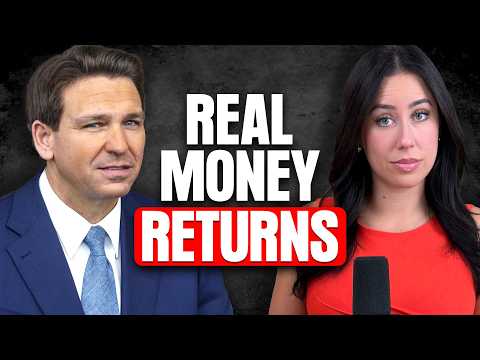
The IMF Just Admitted that Dollar Dominance Is Ending

Channel: ITM TRADING, INC. Published: 2026-04-28 11:05
ITM TRADING, INC.

The speaker argues that rising U.S. debt and weakening demand for Treasury bonds could be the trigger for inflation accelerating into hyperinflation, with the Fed ultimately forced to monetize more debt. He frames gold and silver as the practical defense against a coming monetary reset.

Watch on YouTube ›

Get the market thesis, key claims, assets, contradictions, and follow-up questions from any financial video — then unlock a version personalized to your portfolio, watchlist, and favorite speakers.

Detailed summary

The video centers on a single thesis: the U.S. is moving through a familiar fiat-currency life cycle in which inflation eventually turns into hyperinflation, and the key trigger will be a collapse in demand for U.S. debt. The speaker points to an IMF-linked Fortune article warning that exploding U.S. debt is eroding the traditional safety premium of Treasuries, making borrowing more expensive and signaling that foreign investors may be losing confidence in dollar assets. He argues that the dollar’s reserve-currency status is no guarantee of permanence. In his telling, several forces are pressuring U.S. debt demand: the U.S. weaponizing the dollar in sanctions policy, investors worrying about repayment and inflation, a rising yield backdrop, and the growing role of hedge funds in Treasury ownership. …

🔒 The full detailed summary continues — read all of it free with an account. Read the full summary →

Main takeaways

  1. The core trigger in his framework is not prices alone, but a failure of demand for U.S. debt.
  2. He sees the IMF’s comments as confirmation that Treasury safety is eroding.
  3. Higher yields are interpreted as evidence that investors now require more compensation for U.S. fiscal risk.
  4. He believes hedge-fund ownership and leverage in Treasuries raise the odds of a disorderly unwind.
  5. His base defense is to own gold and silver before the transition becomes obvious and harder to hedge.
  6. The video is advocacy-heavy and warning-oriented, with little quantitative balancing of the bullish gold thesis or the probabilities of hyperinflation.

Market read by horizon

Short term

Immediate setup is defensive: the speaker sees Treasury demand fragility and a possible deleveraging event as the main near-term hazard. In his view, any sharp funding stress would quickly translate into more Fed support and a worse inflation impulse.

  • Immediate risk setup: the speaker thinks the bond market is already signaling stress through rising yields and weaker Treasury demand.
Show more
  • A key near-term catalyst in his narrative would be any forced deleveraging in Treasuries tied to private credit, commercial real estate, or a broader liquidity event.
  • If Treasury buyers step back further, he expects the Fed to absorb more issuance, which he views as inflationary in the short run.
Mid term

Over the next few months, the base case in this framework is continued pressure on U.S. debt markets, higher yields, and a growing perception that the Fed must backstop issuance. The view weakens if Treasury demand stabilizes without additional monetization or if inflation pressures cool materially.

  • Over the next several weeks or months, his base case is a continuation of Treasury market strain and a further rise in borrowing costs if demand stays weak.
Show more
  • He implies the narrative strengthens if foreign buyers remain reluctant and the Fed is pressured to support the market more openly.
  • A change in view would require evidence that Treasury demand stabilizes or that yields stop pricing in fiscal stress.
Long term

The long-run thesis is a regime shift away from dollar exceptionalism toward a harder-money environment where fiat purchasing power erodes over time. Gold and silver are presented as the lasting stores of value in a post-confidence monetary order.

  • Structurally, he believes all fiat currencies eventually fail and revert to zero intrinsic value.
Show more
  • He frames the dollar as the latest reserve currency in a long historical sequence of monetary regimes, not a permanent exception.
  • The long-run implication is a monetary reset in which hard assets such as gold and silver preserve purchasing power better than paper currency.
Unlock the full horizon read See the full short-term, mid-term, and long-term implications with confirmation and invalidation signals. Unlock horizon read

Key claims (8)

BEARISH U.S. fiscal sustainability U.S. debt

The trigger for U.S. hyperinflation would be a collapse in demand for U.S. debt rather than debt size alone.

She explicitly says the real trigger is demand for debt and ties that to the hyperinflation question.

BEARISH Treasury market demand U.S. Treasury bonds

The IMF warning implies that Treasury bonds are losing their safety premium and becoming more expensive to fund.

She cites the Fortune/IMF article and explains it as evidence that Treasuries no longer command the same safe-haven treatment.

BEARISH de-dollarization U.S. dollar

U.S. dollar dominance is at risk because other countries no longer view dollar-based assets as fully safe after U.S. sanctions and asset freezes.

She argues that weaponizing the dollar against Russia caused other nations to question whether their assets are safe in U.S.-linked instruments.

Unlock 5 more claims See the full bullish, bearish, and counter-consensus argument map extracted from the transcript. Unlock all claims

Assets discussed (6)

U.S. Treasury bonds — TLT
BEARISH bond

She argues Treasuries are losing their safety premium, facing waning demand, and becoming more expensive for the U.S. to fund.

U.S. dollar — USD
BEARISH fx

She says dollar dominance is eroding and the dollar is following the historical path of failed fiat currencies.

Unlock the full asset map (4 more) See all assets mentioned, their directional bias, and the exact reasoning. Unlock asset map

Speakers

SPEAKER Taylor Kenny

Where this transcript pushes against consensus

  • The speaker treats the IMF/Fortune article as strong confirmation of imminent regime change, but the evidence presented is mostly directional rather than causal.
  • He assumes declining Treasury demand will necessarily force the Fed into large-scale monetization, without showing why fiscal or market alternatives would fail.
  • The claim that the U.S. is already on the path to hyperinflation is asserted more than demonstrated; no thresholds, timelines, or countervailing disinflationary forces are analyzed.
  • The argument relies heavily on historical fiat-collapse analogies, which may be suggestive but do not by themselves establish the same outcome for the U.S.
  • He presents gold as the clear answer, but does not discuss opportunity cost, valuation, or scenarios where inflation stays elevated without becoming hyperinflationary.

Topics

U.S. debtTreasury bondshyperinflationdollar dominanceIMF warningFederal Reserve monetizationgold and silvercurrency life cyclesreserve currency declineTreasury demand

Create your free research agent

Unlock the full claims, asset map, scores, related transcripts, follow-up questions, and AI chat — shaped around your portfolio, watchlist, favorite speakers, and risks.
  • Full claims and asset map
  • Personalized relevance to your watchlist
  • Follow-up questions you can track
  • Related transcripts from your workspace
  • AI chat about this video
Create your free research agent
TRANSCRIPTAGENT.AI