TranscriptAgent
Try it free
TRANSCRIPTAGENT.AI · transcript analysis

New World Order Plan Advances as UAE Drops Bombshell, Oil and Gold to SURGE: Hanke

Channel: ITM TRADING, INC. Published: 2026-04-29 11:05
ITM TRADING, INC.

Steve Hanke argues the UAE’s reported exit from OPEC is a rational response to rising Gulf insecurity and a desire to pump more oil now, while he expects higher oil prices, persistent inflation, and a continued secular bull market in gold.

Watch on YouTube ›

Get the market thesis, key claims, assets, contradictions, and follow-up questions from any financial video — then unlock a version personalized to your portfolio, watchlist, and favorite speakers.

Detailed summary

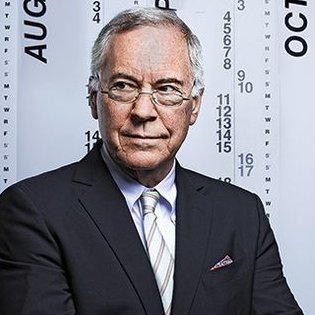
The video is a host-led interview with Professor Steve Hanke about breaking news that the UAE will leave OPEC on May 1. Hanke says the move is not surprising and frames it through three lenses: the UAE has long wanted to produce more oil than OPEC quotas allowed; it expects real oil prices to fall over time, which incentivizes faster depletion today; and the war involving Iran has made Gulf producers feel less secure about future property rights and future production. In his view, higher insecurity raises the discount rate on future oil revenues, making immediate pumping more attractive. He says the UAE’s decision is driven by economics and security rather than a sudden political shock. He then broadens into a strongly bearish view of U.S. policymaking and the war in Iran, arguing Washington did not properly assess costs or unintended consequences. …

🔒 The full detailed summary continues — read all of it free with an account. Read the full summary →

Main takeaways

  1. Hanke says the UAE leaving OPEC is mainly about pumping more oil now because future oil value looks less secure.
  2. He ties Gulf energy decisions to the Iran conflict, arguing insecurity raises the incentive to sell reserves sooner.
  3. He is skeptical of U.S. war planning and dismisses the public Iran-nuclear rationale as unsupported.
  4. He expects oil and gasoline to stay firm near term because inventories are being drawn down and demand is not very price-sensitive.
  5. He remains bullish gold over the medium and long term, with a secular bull-market view and a much higher eventual peak.
  6. He says inflation will remain sticky because broad money growth and bank lending are still expanding.
  7. He thinks de-dollarization is overstated and the U.S. dollar remains structurally dominant.
  8. He sees China as a major winner in the geopolitical and commodities landscape.

Market read by horizon

Short term

Near term, the setup favors higher oil and persistent gasoline pressure if Gulf insecurity keeps inventories tight and supply risk elevated. Gold may consolidate, but the bias remains upward rather than mean-reverting sharply.

  • The immediate setup is bullish oil: he expects continued inventory drawdowns and potential price spikes.
Show more
  • Gasoline prices are already at new highs, which he treats as confirmation of near-term energy pressure.
  • He says the Fed is likely to hold rates steady at the upcoming meeting.
Mid term

Over the next few months, Hanke’s base case is that inflation stays sticky, oil remains supported, and gold resumes its climb after consolidation. Confirmation would come from continued credit growth, ongoing inventory draws, and no meaningful easing in geopolitical risk.

  • Over the next several weeks to months, Hanke’s base case is for oil prices to remain supported as supply insecurity persists and inventories stay tight.
Show more
  • He expects inflation to stay above target because money supply growth and bank lending remain strong.
  • Gold should trend higher into year-end, though he does not promise a straight line and allows for more consolidation first.
Long term

Structurally, he sees a world of durable gold uptrend, monetary debasement, and greater geopolitical fragmentation, with commodities benefiting from insecurity and resource control. The dollar remains dominant, but the global system is becoming less stable and more security-driven.

  • His structural thesis is that the world is still in a secular gold bull market driven by monetary debasement and geopolitical stress.
Show more
  • He sees the dollar-based international system as durable, even if regional actors chip away at the margins.
  • The broader regime implication is that sovereign security and resource control increasingly shape commodity pricing and production decisions.
Unlock the full horizon read See the full short-term, mid-term, and long-term implications with confirmation and invalidation signals. Unlock horizon read

Key claims (11)

BULLISH oil supply and OPEC cohesion United Arab Emirates

The UAE’s reported exit from OPEC is not a shock because the UAE has wanted to increase oil production for years and OPEC quotas have constrained it.

Hanke says the UAE wanted to produce more oil but was limited by quotas, making exit economically rational.

BULLISH oil economics Oil

The UAE wants to pump more oil now because it expects real oil prices to be lower in the future.

He invokes his optimal production model: if real prices are expected to fall, it is rational to deplete faster today.

BULLISH geopolitics and commodity supply Oil

The Iran war has increased Gulf insecurity, lowering the present value of future oil revenues and encouraging faster near-term production.

He argues that if future property rights are less secure, producers discount future cash flows more heavily and pump faster now.

Unlock 8 more claims See the full bullish, bearish, and counter-consensus argument map extracted from the transcript. Unlock all claims

Assets discussed (10)

United Arab Emirates
BULLISH other

Hanke says the UAE wants to pump more oil now, which implies a pro-production, supply-increasing stance.

OPEC
BEARISH other

He says the UAE leaving OPEC reflects OPEC quotas constraining production and the group losing cohesion.

Unlock the full asset map (8 more) See all assets mentioned, their directional bias, and the exact reasoning. Unlock asset map

Interview (14 Q&A)

OPEC exit

What are your thoughts on the UAE leaving OPEC, and what does it mean for oil markets?

Steve Hanke says the move makes sense because the UAE wants to pump more oil and has been constrained by OPEC quotas. He argues the UAE also expects real oil prices to fall and faces greater insecurity in the Gulf, both of which incentivize faster production now.

US response

Was the UAE's OPEC exit a shock in Washington, and what are the consequences for the United States?

Hanke says it did not shock him because the incentives had been visible for a long time, but he says the U.S. is clueless about the broader consequences. He criticizes U.S. leaders for launching the war without understanding either the direct budget cost or the geopolitical fallout.

Iran war

What is your view of the rationale for going to war with Iran?

He rejects the justification as Israeli propaganda and compares it to the Iraq WMD narrative. He says the case for war was built on a story he does not buy, and later adds that U.S. pressure may even increase the chance Iran gets a weapon.

Unlock the full interview (11 more Q&A) Every question, answer summary, and YouTube timestamp. Unlock full Q&A

Where this transcript pushes against consensus

  • His claim that Iran has already ‘won the war’ is asserted as a geopolitical conclusion without clear evidence in the transcript.
  • He gives strong confidence that the U.S. was clueless about war costs, but provides limited direct evidence beyond a budget testimony anecdote.
  • The explanation that UAE’s exit is mainly driven by economics and insecurity is plausible, but he presents it as settled while ignoring other possible diplomatic or OPEC-internal factors.
  • His dismissal of de-dollarization as mostly ‘hot air’ may understate incremental shifts in trade settlement and reserve diversification.
  • The gold target framework is directionally coherent, but the exact $6,000–$7,000 peak level and timing are still highly uncertain.

Topics

UAE leaving OPECIran waroil pricesgold bull marketinflation and money supplyFederal Reserve policyde-dollarizationChina and BRICSU.S. foreign policybank lending

Create your free research agent

Unlock the full claims, asset map, scores, related transcripts, follow-up questions, and AI chat — shaped around your portfolio, watchlist, favorite speakers, and risks.
  • Full claims and asset map
  • Personalized relevance to your watchlist
  • Follow-up questions you can track
  • Related transcripts from your workspace
  • AI chat about this video
Create your free research agent
TRANSCRIPTAGENT.AI