TranscriptAgent
Try it free
TRANSCRIPTAGENT.AI · transcript analysis

Hegseth makes a question about Ukraine into an answer about Joe Biden

Channel: The Bulwark Published: 2026-04-29 10:42
The Bulwark

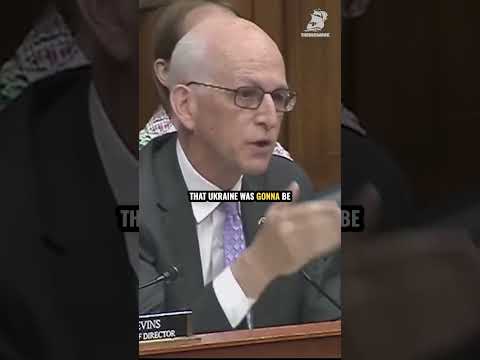
A U.S. defense official is pressed on whether his prior Ukraine assessment was wrong, but he pivots to blaming Joe Biden for massive aid and restates Trump’s preference for a peace deal.

Watch on YouTube ›

Get the market thesis, key claims, assets, contradictions, and follow-up questions from any financial video — then unlock a version personalized to your portfolio, watchlist, and favorite speakers.

Detailed summary

The exchange centers on Ukraine. The interviewer asks the speaker to explain what he missed a year-plus ago when he said Ukraine had no cards to play and should cut the best deal possible, given Ukraine’s progress over the last 14 months. The speaker does not directly concede the strategic premise of the question. Instead, he pivots to argue that Joe Biden gave hundreds of billions of dollars of U.S. weapons to Ukraine without accountability, and says the result would never have happened if Trump had been president. He also says Trump believes there should be a peace deal between Russia and Ukraine. The interviewer then presses again on whether the speaker expected Ukraine to be where it is now from a strategic standpoint, and adds that Ukrainians have shown courage while Europe is now paying for the weapons provided. …

🔒 The full detailed summary continues — read all of it free with an account. Read the full summary →

Main takeaways

  1. The speaker avoids directly answering the strategic critique and instead reframes the issue around Biden and Trump.
  2. The central policy stance is still anti-escalation / pro-negotiated settlement on Russia-Ukraine.
  3. He claims U.S. aid to Ukraine was massive and insufficiently accountable.
  4. The interviewer challenges the prior claim that Ukraine had no cards to play by pointing to Ukraine’s battlefield performance.
  5. Europe paying for some weapons is mentioned as a current policy shift.

Market read by horizon

Short term

Near term, this is a geopolitics headline rather than a tradable setup: the main risk is renewed U.S. political noise around Ukraine policy and aid. There is no clear asset-specific signal in the clip itself.

  • Immediate relevance is political: the speaker is defending a pro-peace-deal posture on Ukraine rather than updating the earlier strategic view.
Show more
  • Near-term risk is that the exchange reads as evasive; the key test is whether he ever directly revises the earlier 'no cards' assessment.
  • The clip offers no actionable market catalyst beyond generic geopolitical risk sentiment.
Mid term

Over the next few months, the more important question is whether U.S. support shifts toward negotiated settlement language and greater European burden-sharing. That would matter for defense, Europe, and broader risk appetite only if it translates into actual funding or policy changes.

  • Over the next several weeks to months, the relevant question is whether U.S. policy keeps moving toward burden-sharing with Europe and away from open-ended support.
Show more
  • If the administration keeps emphasizing negotiations, markets may treat the Ukraine issue more as a political headline risk than a large new escalation channel.
  • The view would be challenged if battlefield developments or allied funding decisions force a more explicit change in rhetoric or policy.
Long term

The durable implication is a more fragmented Western security framework, with U.S. politics increasingly shaping the scale and conditions of Ukraine support. Markets should treat alliance burden-sharing and policy volatility as a recurring regime feature.

  • Structurally, the clip reflects a persistent U.S. divide between aid-for-victory and aid-for-negotiation frameworks on Ukraine.
Show more
  • It also reinforces a broader regime where Europe is expected to shoulder more of the direct cost of regional security.
  • For markets, the lasting implication is that foreign-policy volatility may increasingly come through alliance burden-sharing and domestic U.S. politics rather than a single consistent strategy.

Key claims (5)

BEARISH Russia-Ukraine war Ukraine

Ukraine had no cards to play a year-plus ago, and the speaker advised cutting the best possible deal.

The interviewer references the prior view directly.

NEUTRAL U.S. aid to Ukraine Ukraine

Biden gave hundreds of billions of dollars of U.S. weapons to Ukraine with no accountability.

The speaker states this as his rebuttal to the question.

BEARISH U.S. politics and Ukraine Ukraine

The speaker believes the outcome would not have happened if Trump had been president.

He frames the result as dependent on presidential leadership.

Unlock 2 more claims See the full bullish, bearish, and counter-consensus argument map extracted from the transcript. Unlock all claims

Speakers

INTERVIEWER Interviewer SPEAKER Pete Hegseth

Interview (2 Q&A)

Ukraine strategy

What did you miss about the conflict between Russia and Ukraine that you didn't see that Ukraine was going to be capable of doing what they've done in the last 14 months?

The speaker does not directly answer the strategic question. He pivots to criticize Biden’s weapons support to Ukraine and to restate Trump’s preference for a peace deal.

Ukraine strategic assessment

You didn't expect Ukraine to be where they're at right now. I'm asking you just from a strategic standpoint.

The clip provides no full direct answer; the speaker instead notes Ukrainian courage and Europe paying for provided weapons.

Where this transcript pushes against consensus

  • The speaker never directly answers the strategic question of what he missed about Ukraine’s ability to resist or advance over the last 14 months.
  • He implies Biden’s aid was a mistake without showing that the aid caused the strategic outcome in question.
  • The claim that the outcome 'never would have happened if President Trump was president' is counterfactual and unsupported in the clip.
  • The interviewer’s challenge that Ukraine has proven greater capability is left unresolved.

Topics

UkraineRussia-Ukraine warJoe BidenDonald TrumpU.S. military aidEuropean burden-sharing

Create your free research agent

Unlock the full claims, asset map, scores, related transcripts, follow-up questions, and AI chat — shaped around your portfolio, watchlist, favorite speakers, and risks.

  • Full claims and asset map
  • Personalized relevance to your watchlist
  • Follow-up questions you can track
  • Related transcripts from your workspace
  • AI chat about this video
Create your free research agent
TRANSCRIPTAGENT.AI