
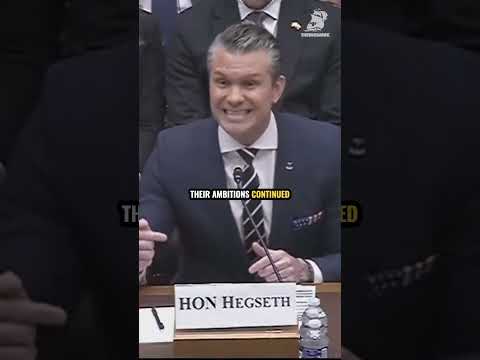
A short congressional-style exchange about whether U.S. strikes on Iran actually changed anything. The speaker argues the operation was necessary and damaged Iran’s conventional deterrent, while the other side says the action accomplished nothing and leaves Iran’s nuclear ambitions intact.
Watch on YouTube ›Get the market thesis, key claims, assets, contradictions, and follow-up questions from any financial video — then unlock a version personalized to your portfolio, watchlist, and favorite speakers.
This transcript is a brief back-and-forth about U.S. action against Iran, framed around whether ‘Operation Midnight Hammer’ achieved a meaningful objective. One speaker challenges the justification for the war by noting that Iran was said to be an imminent nuclear threat 60 days ago, but now officials are claiming the facilities were ‘completely obliterated,’ while also implying Iran’s nuclear ambitions remain. The opposing speaker defends the strike, saying the nuclear facilities were ‘obliterated underground,’ that the U.S. is monitoring the material, and that Iran had not abandoned its nuclear ambitions. The defense also argues the operation targeted Iran’s conventional ‘shield’ and compares Iran’s strategy to North Korea’s approach of using conventional missiles to deter challenge while slowly advancing toward a weapon. …
Tactically, this is a headline-risk setup: any fresh claims about damage to Iran’s nuclear or air-defense capacity could trigger short-lived moves in oil and defense-sensitive assets. Near-term risk is mostly from follow-up statements and congressional escalation.
Over the coming weeks, the market will likely reassess whether the strike truly degraded Iran’s ability to rebuild a shield or whether the damage was mostly symbolic. Confirmation of lasting capability loss would support a calmer risk premium; contrary evidence would revive geopolitical hedging.
The structural read is that Middle East risk remains a recurring regime feature because underground hardening and layered defenses can preserve strategic programs even after strikes. That means one operation rarely ends the story; it more often shifts the timeline and the market’s perception of persistence.
The strike operation accomplished nothing of substance and left the situation unchanged.
Explicit assertion by one speaker that the operation had no meaningful effect.
Iran's nuclear facilities were obliterated underground, and the U.S. is watching them constantly.
Defense of the strike claims destruction and ongoing surveillance.
Iran had not given up its nuclear ambitions and had built a conventional shield of thousands of assets.
Speaker frames Iran as continuing its ambitions and relying on layered defenses.
Why do you say the nuclear facilities were completely obliterated if the threat was supposed to still be imminent 60 days earlier?
The guest says the facilities were obliterated underground and that they are being watched 24/7, so the U.S. knows where any nuclear material is. He frames the action as having been necessary to stop an imminent threat and to neutralize Iran's conventional shield alongside Israeli partners.
What was achieved by Operation Midnight, and did it change anything substantively?
The guest says it accomplished nothing of substance and left things exactly where they were before. He then argues the opposite, saying the facilities were bombed and the nuclear ambitions were not ended, only the conventional shield was weakened.
Was Iran's conventional shield brought down, and how does that compare to the North Korea strategy?
The guest says Iran was using the North Korea-style strategy of relying on conventional missiles to deter attack while slowly moving toward a weapon. He says President Trump acted with Israeli partners to bring down that conventional shield.
Unlock the full claims, asset map, scores, related transcripts, follow-up questions, and AI chat — shaped around your portfolio, watchlist, favorite speakers, and risks.
