TranscriptAgent
Try it free
TRANSCRIPTAGENT.AI · transcript analysis

OPEC Just Broke the Petrodollar — And Gold Knows It

Channel: Felix & Friends (Goat Academy) Published: 2026-04-30 08:00
Felix & Friends (Goat Academy)

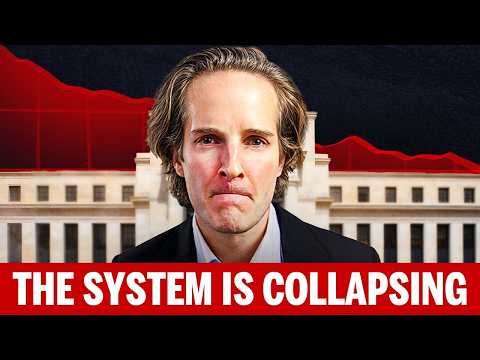
Felix Prin argues the petrodollar system is weakening as the UAE leaves OPEC, oil sellers consider non-dollar settlement, and central banks keep accumulating gold. He frames gold as the main beneficiary of dollar dilution, reserve diversification, and geopolitical fragmentation.

Watch on YouTube ›

Get the market thesis, key claims, assets, contradictions, and follow-up questions from any financial video — then unlock a version personalized to your portfolio, watchlist, and favorite speakers.

Detailed summary

The video presents a three-step macro framework around the petrodollar and gold. Felix Prin says the traditional oil-dollar recycling system began after the 1970s oil shock, when the U.S. and Saudi Arabia struck an informal arrangement: oil would be priced in dollars, surplus petrodollars would be recycled into U.S. debt, and the U.S. would provide security support to Gulf states. He argues this arrangement created persistent global demand for dollars and helped the U.S. borrow cheaply and maintain reserve-currency status. He then claims the system is now fracturing in three ways. First, he says the UAE has “walked out of OPEC” because it wants to produce more oil than its quota allows and seeks more freedom. …

🔒 The full detailed summary continues — read all of it free with an account. Read the full summary →

Main takeaways

  1. The speaker’s central claim is that the petrodollar system is weakening, not collapsing outright.
  2. He treats central-bank gold buying as the clearest institutional signal of that shift.
  3. Gold is framed as the cleanest asset expression of de-dollarization, fiscal dilution, and geopolitical risk.
  4. He does not argue for immediate dollar collapse; he argues for relative erosion of dollar monopoly.
  5. He promotes gold ETFs, physical gold, and some miners as possible implementation vehicles.

Market read by horizon

Short term

Tactically, the setup favors gold over dollar-concentration trades as long as central-bank buying and de-dollarization headlines remain active. Miners may offer higher beta, but the speaker himself implies they are not all technically ready yet.

  • Near term, the video’s tactical pitch is that gold remains supported by strong institutional buying and ongoing de-dollarization headlines.
Show more
  • He specifically flags gold miners as potentially lagging but beginning to look interesting, naming Newmont (NEM) as an example.
  • The immediate catalysts he emphasizes are UAE/OPEC settlement changes, Saudi-China oil talks, and reserve diversification away from dollars.
Mid term

Over the next few months, the view is for a gradual continuation of hard-asset demand if non-dollar settlement in energy trade keeps expanding and reserve managers keep trimming U.S. exposure. The thesis would weaken if these examples remain isolated and gold stops confirming on price and breadth.

  • Over the next several weeks to months, his base case is continued rotation into gold if oil trade settlement keeps broadening beyond dollars and central banks keep accumulating reserves in bullion.
Show more
  • The thesis strengthens if more oil exporters sign long-dated non-dollar contracts or if Treasury demand from foreign reserve managers remains weak.
  • He would likely revisit the view if the non-dollar settlement examples prove isolated rather than systemic, or if gold’s momentum stalls and miners fail to confirm.
Long term

The structural read is that the reserve-currency system is drifting toward a more multipolar, less dollar-centric regime. In that world, gold retains value as a politically neutral reserve asset, while U.S. monetary privilege becomes less absolute.

  • Structurally, the video argues that the post-1970s petrodollar regime is moving toward a multipolar reserve and settlement system.
Show more
  • If the thesis is right, gold becomes more important as a neutral reserve asset in a world where currencies and sovereign claims are more politicized.
  • The lasting implication is not just higher gold prices, but a broader shift away from U.S. monetary exceptionalism and toward greater reserve diversification.
Unlock the full horizon read See the full short-term, mid-term, and long-term implications with confirmation and invalidation signals. Unlock horizon read

Key claims (9)

BEARISH dedollarization / oil markets

The UAE has left OPEC and told the U.S. government it may start selling oil in other currencies.

This is the opening claim and central hook of the video; it drives the rest of the argument about dedollarization and oil market fragmentation.

NEUTRAL petrodollar

The petrodollar is an informal post-1974 arrangement in which oil is priced in dollars and surplus dollars are recycled into U.S. debt, supported by U.S. security guarantees for Gulf states.

He gives a simplified historical explanation of how the system works and why it benefited the U.S.

BULLISH reserve currency / rates

The petrodollar system helped create constant global demand for dollars and lower U.S. borrowing costs.

He ties energy invoicing directly to reserve-currency demand and Treasury financing conditions.

Unlock 6 more claims See the full bullish, bearish, and counter-consensus argument map extracted from the transcript. Unlock all claims

Assets discussed (10)

Gold
BULLISH commodity

Core beneficiary of dedollarization, debasement, and reserve diversification in the speaker’s thesis.

US Dollar
BEARISH fx

The speaker argues the dollar’s dominance is fading as oil settlement and reserves diversify.

Unlock the full asset map (8 more) See all assets mentioned, their directional bias, and the exact reasoning. Unlock asset map

Speakers

UNKNOWN Winston SPEAKER Felix Prin

Where this transcript pushes against consensus

  • The claim that the UAE has “officially leaving OPEC” appears overstated or unsupported in the transcript; it sounds more like a quota dispute than a verified exit.
  • He presents several currency-settlement examples as proof of a broad dismantling of the dollar monopoly, but the evidence is selective and not quantified against the full scale of global oil trade.
  • The statement that “China’s holdings of US debt has fallen by about 50%” is directionally plausible but imprecise and lacks context about time period and total foreign holdings.
  • He links the freezing of Russia’s reserves directly to “records shattering gold buying” without isolating other drivers such as rates, inflation, sanctions risk, or portfolio policy.
  • The video leans on broad geopolitical inference and recurrent certainty language, while giving limited hard data on how much oil trade has actually moved out of dollars.

Topics

petrodollarde-dollarizationgoldcentral bank buyingUAE and OPECoil settlement currenciesU.S. Treasury demandportfolio constructiongold minersgeopolitical fragmentation

Create your free research agent

Unlock the full claims, asset map, scores, related transcripts, follow-up questions, and AI chat — shaped around your portfolio, watchlist, favorite speakers, and risks.

  • Full claims and asset map
  • Personalized relevance to your watchlist
  • Follow-up questions you can track
  • Related transcripts from your workspace
  • AI chat about this video
Create your free research agent
TRANSCRIPTAGENT.AI