TranscriptAgent
Try it free
TRANSCRIPTAGENT.AI · transcript analysis

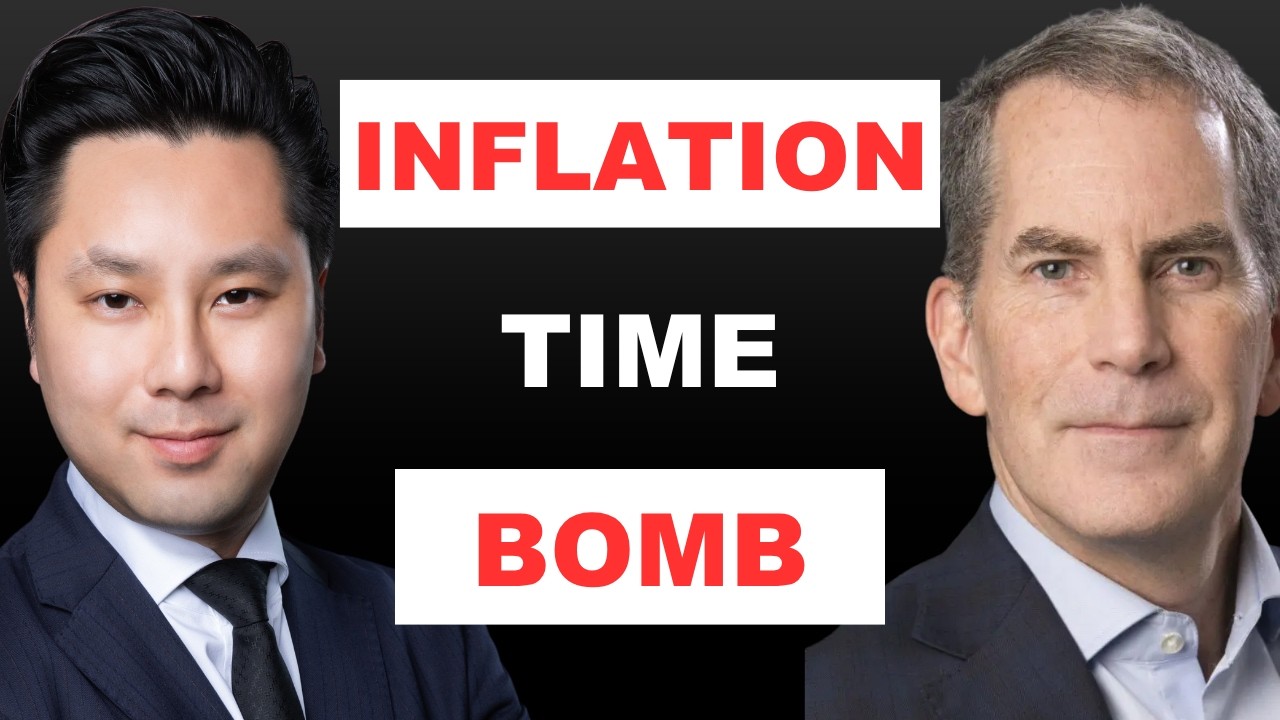
Critical Asset Shortage: Is The Next Inflation Shock Already Here? | M. Colin Joudrie

Channel: David Lin Published: 2026-05-04 12:51
David Lin

Interview on copper markets and Selkirk Copper’s Yukon project: Colin Joudrie argues copper’s rally reflects a structural supply deficit, rising demand from electrification and the modern economy, and near-term geopolitical/tariff-driven tightness. The second half focuses on Selkirk Copper’s drilling results, permitting path, First Nations ownership structure, and why Yukon’s infrastructure and jurisdictional features matter.

Watch on YouTube ›

Get the market thesis, key claims, assets, contradictions, and follow-up questions from any financial video — then unlock a version personalized to your portfolio, watchlist, and favorite speakers.

Detailed summary

David Lin interviews Colin Joudrie, CEO of Selkirk Copper Mines, about copper’s recent move toward new highs, the relationship between copper and gold, and the investment case for copper amid supply constraints, tariffs, geopolitics, and national-security concerns. Joudrie argues the key driver is not just cyclical price action but a longer-running mismatch: mine investment has lagged for years, major existing copper mines are aging, grades are declining, and demand is rising from electrification, transmission, battery storage, and the broader modernization of the economy. …

🔒 The full detailed summary continues — read all of it free with an account. Read the full summary →

Main takeaways

  1. Copper’s rally is presented as a supply-scarcity story first, with geopolitics and tariffs adding near-term support.
  2. Joudrie views ~$6/lb copper as more of an incentive price than a peak, implying more supply response is needed.
  3. Copper and gold are increasingly discussed together because many deposits and company strategies now span both metals.
  4. Yukon is framed as a strong jurisdiction because of mineral endowment and, for Selkirk, existing infrastructure.
  5. Selkirk’s First Nation ownership structure is presented as a key permitting and alignment advantage.
  6. The drill program appears to have improved the model materially by confirming high-grade zones and finding new lenses.
  7. QA/QC reanalysis is described as routine in high-grade drilling, not a red flag.
  8. The interview ties resource development to national security, permitting speed, and North American supply-chain resilience.

Market read by horizon

Short term

Copper looks tactically supported by geopolitical uncertainty, tariff-related stockpiling, and signs of physical tightness in concentrate and smelting. The immediate risk is that some of the strength is sentiment-driven, so a de-escalation in headlines or a reversal in inventory behavior could soften the move.

  • Copper is near new highs and the speaker says current pricing is being helped by geopolitical tension, tariffs, and U.S. stockpiling.
Show more
  • Near-term risk is that copper’s price run could be partly crowded or headline-driven if Middle East or trade tensions ease.
  • Selkirk’s immediate catalyst is assay flow, resource update work, and the upcoming preliminary economic assessment.
Mid term

Over the next few months, the more durable setup is continued copper tightness unless mine supply and permitting progress accelerate meaningfully. Validation would come from sustained pricing plus more project activity across explorers and developers; invalidation would come from a clear easing in physical shortages or weaker industrial demand.

  • Over the next several weeks to months, the base case is continued tightness in copper unless new mine supply and concentrate flows improve.
Show more
  • The market may continue to reward companies that can translate high prices into actual project advancement, not just exploration headlines.
  • For Selkirk, the key confirmation is whether drill data converts into a stronger resource model and a credible PEA.
Long term

The structural view is that copper is moving into a strategic scarcity regime tied to electrification, infrastructure buildout, and security of supply. Even if prices swing near term, the long-run implication is that new supply will increasingly depend on faster permitting, better execution, and politically acceptable project ownership.

  • The structural thesis is that copper is becoming a strategic bottleneck for electrification, grid buildout, batteries, and modern industrial life.
Show more
  • Longer term, the main issue is not whether copper exists in the ground, but whether the industry can permit, finance, and build projects fast enough.
  • The interview implies a durable regime where copper becomes increasingly tied to policy, energy transition, and national-security planning.
Unlock the full horizon read See the full short-term, mid-term, and long-term implications with confirmation and invalidation signals. Unlock horizon read

Key claims (12)

BULLISH commodities Copper

Copper’s rebound to near all-time highs reflects a broader supply-demand imbalance, not just a short-lived geopolitical move.

He says mine investment has lagged for a decade, older mines are declining, and demand is rising across modern uses.

BULLISH demand growth Copper

Demand for copper is rising because modern economies use more of it in electrification, transmission, battery storage, and related infrastructure.

He explicitly links copper demand to multiple end uses rather than only electrification.

NEUTRAL mining geology Copper / Gold

Copper and gold are increasingly discussed together because many major deposits contain both metals and companies want exposure to both.

He attributes part of the correlation to geology and part to market structure.

Unlock 9 more claims See the full bullish, bearish, and counter-consensus argument map extracted from the transcript. Unlock all claims

Assets discussed (6)

Copper
BULLISH commodity

He argues copper is in a structural supply-demand imbalance, has rebounded to highs, and the ~$6/lb area is an incentive price for new production.

Gold
BULLISH commodity

He discusses gold scarcity/supply tightness and notes investors and producers increasingly want both gold and copper exposure.

Unlock the full asset map (4 more) See all assets mentioned, their directional bias, and the exact reasoning. Unlock asset map

Interview (12 Q&A)

Copper macro outlook

Why should investors be paying attention to copper right now, and what does the rebound to near new all-time highs signal?

Joudrie says the rebound reflects a broader supply-demand imbalance driven by lagging mine investment, aging mines, and rising demand in modern economies.

Copper and gold correlation

Why have copper and gold broadly traded together over the past few months and over long periods?

Joudrie says they increasingly appear in similar deposits and that scarcity in both commodities may be part of the alignment, though he is not fully certain on the economics.

Resource availability

Are there fewer and fewer pure copper and gold deposits remaining in the world?

He argues discovery is still ongoing and that technology keeps improving the ability to find new deposits; the real challenge is extraction.

Unlock the full interview (9 more Q&A) Every question, answer summary, and YouTube timestamp. Unlock full Q&A

Where this transcript pushes against consensus

  • The claim that copper and gold have broadly moved together for 30 years is presented loosely and without rigorous evidence; the speaker also hedges that he is not an economist and does not fully explain the correlation.
  • The assertion that there is more copper and gold to find now than decades ago is framed as a technology story, but the argument is more philosophical than demonstrated.
  • The idea that $6/lb is the incentive price for new supply is asserted confidently, but no detailed cost curve or project-level evidence is provided.
  • The statement that Selkirk is the first publicly traded mining company in Canada and North America with a majority First Nation stake is a strong identity claim that would benefit from external verification.
  • The explanation of QA/QC reanalysis is plausible, but the response does not directly address whether raising insertion rates would materially reduce reanalysis frequency.

Topics

copper supply shortagegold-copper correlationtariffs and geopoliticsresource nationalismYukon mining jurisdictionFirst Nations ownershipdrill program resultsQA/QC and assay reanalysispermitting and national securityelectrification demand

Create your free research agent

Unlock the full claims, asset map, scores, related transcripts, follow-up questions, and AI chat — shaped around your portfolio, watchlist, favorite speakers, and risks.

  • Full claims and asset map
  • Personalized relevance to your watchlist
  • Follow-up questions you can track
  • Related transcripts from your workspace
  • AI chat about this video
Create your free research agent
TRANSCRIPTAGENT.AI