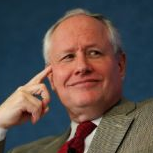
Tim Miller and Bill Kristol discuss the Iran–Hormuz crisis, Trump’s erratic escalation strategy, NATO fragility, and the Comey indictment as evidence of a broader revenge-driven but clumsy administration.
Watch on YouTube ›Get the market thesis, key claims, assets, contradictions, and follow-up questions from any financial video — then unlock a version personalized to your portfolio, watchlist, and favorite speakers.
This Bulwark Podcast segment is mostly a political and geopolitical conversation anchored on Trump’s response to Iran’s attacks on shipping and the Strait of Hormuz, with a secondary focus on NATO and the DOJ’s prosecution of James Comey. Tim Miller opens with a news update describing Iranian attacks on Dubai/UAE, shots fired around the Strait of Hormuz, Trump’s social-media response, and the resulting rise in oil prices and allied tension. He and Bill Kristol debate whether Trump is trying to force Iran into a deal, whether the administration has a coherent endgame, and whether the current posture is just performative escalation. Kristol repeatedly says the situation looks like jostling and phony military action rather than a clear strategy, while also allowing that Trump may still strike again in a dramatic way. …
Near term, the actionable risk is a further spike in oil and shipping disruption if Iran keeps targeting the Strait of Hormuz or if Trump answers with another visible escalation. Traders should expect headline-driven volatility and treat any hint of a ceasefire, shipping reopening, or de-escalatory signal as the main relief catalyst.
Over the next several weeks, the setup depends on whether the administration can convert coercion into a believable off-ramp or whether it stays stuck in an open-ended pressure campaign. If the Strait remains impaired and prices keep rising, political pressure on Trump should intensify and the market will start pricing a more durable supply shock.
Structurally, the episode argues that U.S. alliance credibility and forward military basing remain essential to deterrence and crisis response, while Trump’s personalized decision-making undermines both. The long-run regime risk is a less reliable U.S. security umbrella and a more fragile global energy-and-shipping system whenever Washington treats foreign policy as theater.
The Strait of Hormuz disruption is already pushing oil prices higher and could widen into broader price pressures.
Miller explicitly says prices are increasing in the oil market; Kristol adds that gas, fertilizers, and other prices are already affected.
The administration does not appear to have a coherent endgame in Iran.
Both speakers repeatedly ask what Trump is trying to achieve and say the rationale is hard to discern.
Markets and political defenders may be underestimating the duration and economic cost of a closed Strait of Hormuz.
Kristol stresses that every day the strait is closed is costly and that the world economy is heading toward real danger, while defenders do not mention the tradeoff.
What do you think of the current state of play with Iran and the Strait of Hormuz closure?
Bill says it seems like mostly talk and phony military action, though he thinks that is better than real military action. He suspects the moves are still jostling for a withdrawal deal, but he is uncertain whether Trump will instead hit Iran again in a bigger way.
What is Trump trying to achieve if the Strait of Hormuz blockade keeps hurting prices and shipping?
Bill says the blockade-forcing-Iran-to-cry-uncle story is a hard sell, and it is no longer even being pushed much. He argues that the real issue is the continuing closure of the Strait and the lack of a believable end state.
Are the Iran strikes and blockade actually weakening Iran's nuclear program and making the U.S. safer?
Bill says that view is wishful thinking. He thinks Iran's nuclear and missile programs were already in bad shape, and that after a month of bombing it is unclear how much more damage can be done.
Unlock the full claims, asset map, scores, related transcripts, follow-up questions, and AI chat — shaped around your portfolio, watchlist, favorite speakers, and risks.