TranscriptAgent
Try it free
TRANSCRIPTAGENT.AI · transcript analysis

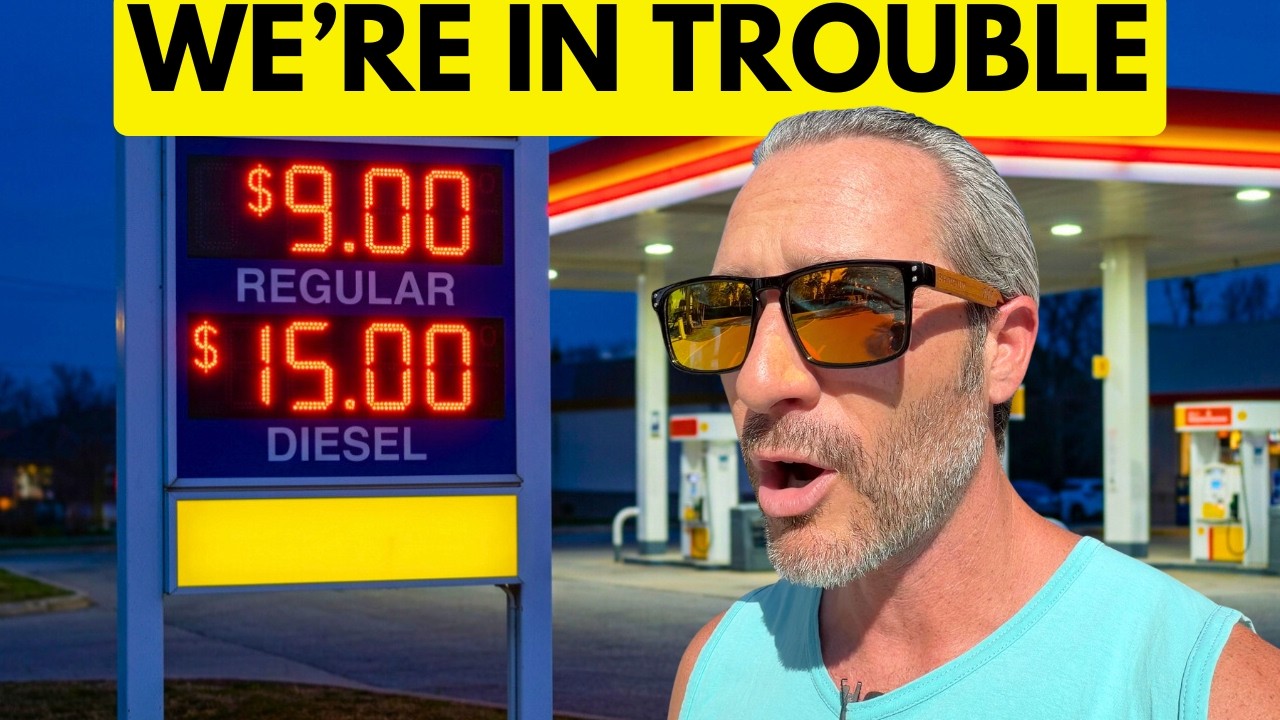
How The Iran War Will EXPLODE American Cost of Living

Channel: Michael Bordenaro Published: 2026-03-13 14:53
Michael Bordenaro

The video argues that the Iran conflict could drive oil sharply higher, freeze key shipping through the Strait of Hormuz, and feed directly into U.S. inflation through gasoline, diesel, food, freight, housing, and manufactured goods.

Watch on YouTube ›

Get the market thesis, key claims, assets, contradictions, and follow-up questions from any financial video — then unlock a version personalized to your portfolio, watchlist, and favorite speakers.

Detailed summary

The speaker frames the U.S.-Iran conflict as a major economic shock that could push oil toward $200 per barrel, citing the Strait of Hormuz as the key chokepoint and estimating that roughly 8 million barrels per day are already being disrupted in the narrative presented. He uses the 1970s oil embargo as the main historical analogy, arguing that a similar supply shock today would be worse because modern supply chains are more interconnected and energy-intensive. The core thesis is that higher energy prices would cascade through gasoline, diesel, jet fuel, freight, food, fertilizer, petrochemicals, clothing, packaging, construction, and technology inputs, worsening an already fragile inflationary environment. The speaker also claims the war is expensive for the U.S. budget, pointing to daily war costs, deficit expansion, borrowing, and reduced fiscal flexibility. …

🔒 The full detailed summary continues — read all of it free with an account. Read the full summary →

Main takeaways

  1. The speaker’s central claim is that the Iran conflict can become an energy-price shock with economy-wide spillovers.
  2. The Strait of Hormuz is presented as the critical vulnerability because it carries a large share of global oil and LNG flows.
  3. Gasoline and diesel are treated as the first visible transmission channels, but the speaker extends the impact to food, housing, freight, and industrial inputs.
  4. The argument relies heavily on 1970s oil-shock precedent and stagflation analogies.
  5. He believes the war adds meaningfully to the U.S. deficit and will be politically and economically costly even beyond the battlefield.
  6. The video is more a macro alarm piece than a trade idea; it is designed to frame the conflict as an inflation accelerator.
  7. The speaker repeatedly emphasizes that the damage is cumulative and that prices may not revert quickly once reset higher.

Market read by horizon

Short term

Immediate risk is a headline-driven oil and gasoline spike if shipping through Hormuz stays constrained, with the market vulnerable to a fast inflation scare. Short-term positioning should focus on whether the energy shock broadens or fades before it can be priced into a larger macro repricing.

  • Watch oil, gasoline, and diesel for immediate follow-through; the speaker treats them as the fastest-moving transmission mechanism.
Show more
  • The key tactical risk is a fresh move higher if shipping through the Strait of Hormuz remains constrained or worsens.
  • Near-term consumer pain would show up first in pump prices, freight costs, and headline inflation prints.
Mid term

If oil remains elevated for weeks, the base case is a broader inflation pickup and a shift toward stagflation-style market narratives. Confirmation would come from persistent fuel, freight, and food pass-through; a quick de-escalation would invalidate the setup.

  • Over the next several weeks to months, the base case in the video is a broader inflation reacceleration if energy stays elevated.
Show more
  • The speaker expects knock-on effects to work through fertilizer, food, logistics, construction, and industrial costs, not just fuel.
  • The argument becomes more convincing if supply disruptions persist long enough for businesses to reprice products and services higher.
Long term

The structural message is that modern economies remain acutely exposed to energy chokepoints and fiscal stress from geopolitical conflict. Even if the specific war eases, the video’s lasting thesis is that inflation shocks can be reintroduced quickly when global logistics and energy systems are disrupted.

  • Structurally, the video argues that modern economies are highly exposed to energy chokepoints and global logistics disruptions.
Show more
  • The speaker’s longer-run thesis is that once inflationary shocks reset prices upward, they tend to persist rather than fully reverse.
  • He implies the U.S. fiscal position is becoming more fragile because wars are financed through borrowing and interest compounding.
Unlock the full horizon read See the full short-term, mid-term, and long-term implications with confirmation and invalidation signals. Unlock horizon read

Key claims (8)

BULLISH energy shock oil

A U.S.-Iran war can push oil toward $200 per barrel because the Strait of Hormuz is a major chokepoint for global energy flows.

This is the main thesis of the video and is repeatedly tied to the shipping disruption narrative.

BULLISH supply disruption oil

The Strait of Hormuz disruption is reducing world oil supply by about 8 million barrels per day and normally carries about 20 million barrels per day.

He uses these figures to explain why the route matters so much.

BULLISH inflation transmission gasoline

Gasoline and diesel prices are already rising sharply and will feed through to many other consumer costs.

He says pump prices are up, diesel is near $4.85, and these fuel inputs affect logistics and consumer prices broadly.

Unlock 5 more claims See the full bullish, bearish, and counter-consensus argument map extracted from the transcript. Unlock all claims

Assets discussed (7)

oil
BULLISH commodity

He argues oil could rise sharply, potentially toward $200 per barrel, because of disruption around the Strait of Hormuz.

gasoline
BULLISH commodity

He says U.S. gasoline prices have already risen and could move much higher if oil spikes further.

Unlock the full asset map (5 more) See all assets mentioned, their directional bias, and the exact reasoning. Unlock asset map

Where this transcript pushes against consensus

  • The transcript assumes the U.S. is 'at war with Iran' without evidence or qualification in the clip.
  • The claim that oil has 'already crossed $100 a barrel' and that 8 million barrels per day are being lost is asserted without sourcing in the transcript.
  • The $200 oil scenario is presented as plausible, but the reasoning is largely analogical and not tied to a current supply-demand model.
  • The speaker treats the 1970s oil embargo as a near-direct template, but today’s market structure, shale supply, and policy tools are meaningfully different.
  • Statements about war cost, CBO figures, tariff refunds, and deficit math are presented quickly and not cross-checked in the clip.
  • The video mixes near-term market mechanics with broader political commentary, which makes some of the causal links feel overstated.

Topics

Iran waroil pricesStrait of HormuzU.S. inflationstagflationgasoline and dieselfertilizer and food pricespetrochemicalsU.S. deficitsstrategic petroleum reserve

Create your free research agent

Unlock the full claims, asset map, scores, related transcripts, follow-up questions, and AI chat — shaped around your portfolio, watchlist, favorite speakers, and risks.


  • Full claims and asset map
  • Personalized relevance to your watchlist
  • Follow-up questions you can track
  • Related transcripts from your workspace
  • AI chat about this video
Create your free research agent
TRANSCRIPTAGENT.AI