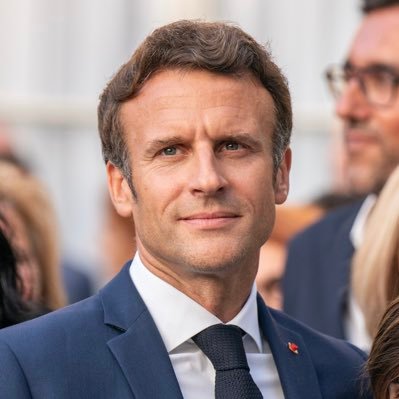
French LCI special coverage of the 8 May 1945 commemoration, mixing live ceremony reporting at Place de l'Étoile with historical explanation of the date's changing status in French memory and a guest discussion of the Bleuet de France and military remembrance.
Watch on YouTube ›Get the market thesis, key claims, assets, contradictions, and follow-up questions from any financial video — then unlock a version personalized to your portfolio, watchlist, and favorite speakers.
This broadcast follows the 8 May ceremonial sequence in Paris: President Emmanuel Macron arrives at Place Clémenceau, lays a wreath at the statue of General de Gaulle, then proceeds up the Champs-Élysées to Place de l’Étoile for the traditional review of troops, wreath-laying at the Tomb of the Unknown Soldier, revival of the flame, signature of the guest book, and the singing of La Marseillaise and Le Chant des partisans. The hosts and correspondents repeatedly note that this is Macron’s last 8 May ceremony as the sole president, while also explaining that the ceremony is both a remembrance of victory in Europe and a political/memorial ritual shaped by French republican tradition. The discussion includes historian Olivier Wieviorka, who explains that 8 May is often overshadowed in France by the memory of 1944 and Liberation, that the date has had an uneven national status, and that it …
Immediate read: the biggest near-term signal is Macron’s Sétif/Guelma recognition, which turns a routine commemoration into a Franco-Algerian memory event. The live ceremony itself is mostly symbolic, but the geopolitical context and the absence of a planned naval parade show how current events can quickly reshape protocol.
Over the coming weeks, watch whether the Sétif/Guelma gesture opens a sustained diplomatic memory track or fades after the ceremony. The broader setup is that French remembrance politics will stay sensitive to colonial history, military sacrifice, and current external deployments, with youth service and armed forces messaging likely to remain prominent.
Structurally, the broadcast reinforces that French state ritual is a lasting mechanism for defining national identity through war memory. The long-run implication is that colonial violence, Liberation memory, and modern military service will continue to be negotiated together rather than in separate historical silos.
The 8 May ceremony marks the end of the war in Europe, but not the end of World War II globally.
The speaker explains that the date commemorates the European end of the conflict while the war continues in the Far East and Japan.
French national memory gives more weight to 1944 Liberation than to the 1945 victory date.
Wieviorka argues that liberation and the return of 1944 overshadow the 8 May 1945 commemoration.
The 8 May holiday has not always been continuously celebrated and was suspended before being restored.
The historian states that the date had an uneven political history, including suspension and later reinstatement.
Quelle est la signification de la cérémonie du 8 mai et pourquoi se réunit-on ce jour-là pour se souvenir ?
Olivier Viviorka explique que le 8 mai marque la fin de la Seconde Guerre mondiale en Europe, mais que sa place dans la mémoire nationale est éclipsée par le souvenir de la libération de 1944. Il souligne que la France était considérée comme une puissance victorieuse mais n'a participé ni à Yalta ni à Potsdam, et que le retour des déportés en mars-avril 1945 a provoqué un choc dans l'opinion, rendant impossible la même joie qu'en 1944.
Quel est votre message en ce 8 mai en tant que mère d'un soldat tombé pour la France ?
Pascal Luminau explique qu'il s'agit de faire mémoire de tous les soldats tombés depuis longtemps, pas seulement des opérations extérieures récentes, et que cette mémoire est le socle de la nation.
Avez-vous le sentiment que l'attachement à se souvenir de nos soldats morts pour la patrie est suffisamment partagé ?
Pascal Luminau répond que non, peut-être pas assez, parce que cette notion de faire mémoire appartient aux personnes touchées par ce qui arrive et pas forcément à tous.
Unlock the full claims, asset map, scores, related transcripts, follow-up questions, and AI chat — shaped around your portfolio, watchlist, favorite speakers, and risks.