
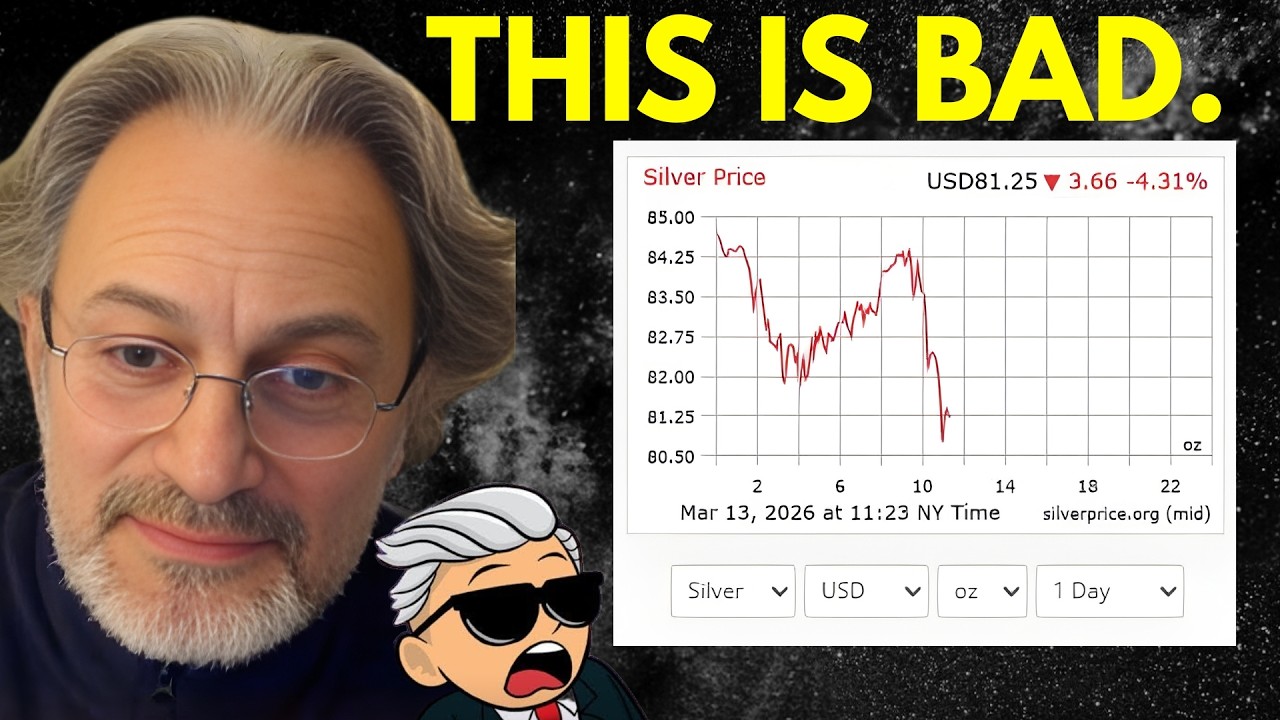
A precious-metals discussion centered on silver and gold, with the guest arguing that the bullish setup remains intact because lower rates, a weaker dollar, and macro uncertainty should ultimately support metals. The main near-term complication is geopolitics and oil, which could add volatility but is framed as temporary rather than thesis-breaking.
Watch on YouTube ›Get the market thesis, key claims, assets, contradictions, and follow-up questions from any financial video — then unlock a version personalized to your portfolio, watchlist, and favorite speakers.
The video opens with a March silver giveaway and then shifts into a host interview with Alan Corbani of Mount Blue Finance, described as head of mining and portfolio manager, and head of the Global Gold and Precious Fund. The discussion focuses on silver, gold, macro policy, and the effect of geopolitical shocks—especially higher oil prices and uncertainty around the Middle East/Strait of Hormuz. Corbani says the pre-February 28 setup was favorable for precious metals: accommodative monetary and fiscal policy, deficits, and softening real rates all supported higher gold and silver prices. He then says the picture became “blurrier” after the nomination of Kevin Worsh as future Fed chairman, which he describes as a first disruption because Worsh is anti-QE. …
Tactically, metals look volatile but still bid on any pullback if rates and the dollar stop strengthening. The main near-term risk is another oil or geopolitics spike that shakes miners and creates false breakouts.
Over the next few months, the constructive base case is a return to easier financial conditions and better visibility for precious metals. That view weakens if the market settles into a durable higher-rate, stronger-dollar regime.
Structurally, the speaker sees precious metals as supported by deficits, policy accommodation, and recurring geopolitical stress. The longer-run implication is that gold, silver, and selective miners remain useful hedges against macro instability rather than pure momentum trades.
Before February 28, the macro backdrop was bullish for precious metals because monetary policy, fiscal policy, and deficits were accommodative and real rates were falling.
He directly links the earlier setup to lower real rates and rising gold/silver prices.
The nomination of Kevin Worsh as future Fed chairman is a bearish disruption to the original precious-metals scenario because he is anti-QE.
He frames this as the first major 'rock in the shoe' to the prior bullish path.
Higher oil prices, a stronger dollar, and higher rates are all negative for the U.S. economy and are not aligned with what major policymakers want.
He says those conditions do not help the economy and are opposite the preferences of the Treasury, Fed, and White House.
What is your view on where silver and gold are headed three months into 2026?
Alan argues that pre-February 28, accommodative monetary/fiscal policy was perfect for gold and silver. Post-February 28, stronger dollar, higher rates, and higher oil prices create headwinds, but these go against U.S. interests and won't last. He expects a lower dollar and lower rates eventually, with gold and silver regaining visibility, but in the meantime investors must navigate uncertainty and volatility.
What happens if the conflict in the Strait of Hormuz continues long-term throughout 2026, driving oil prices higher?
Alan says it would definitely affect the global economy, especially Asian/Eurasian countries dependent on that energy. Lower economic growth means lower earnings and lower equity indices. He does not think this is the main scenario, as too many actors (U.S., Europe, Japan, China, India) don't want higher oil prices to become the norm. A spike might last a few weeks but the economy can't withstand those levels for months.
What is happening with investors at Montbleu — are people buying silver and gold right now?
Alan describes two categories: sophisticated institutional investors who stick to their conviction that a weaker economy leads to higher gold/silver prices, and less sophisticated investors who ask valid questions — notably about how higher oil prices impact miner profitability. He explains that energy is only ~13% of total mine costs, so even if oil doubles, the cost impact is only 5-6%, not a game-changer, while gold prices are up ~20% sequentially.
Unlock the full claims, asset map, scores, related transcripts, follow-up questions, and AI chat — shaped around your portfolio, watchlist, favorite speakers, and risks.
