TranscriptAgent
Try it free
TRANSCRIPTAGENT.AI · transcript analysis

'Asielcrisis explosieve splijtzwam'

Channel: De Telegraaf Published: 2026-05-08 00:00
De Telegraaf

A politically charged Dutch discussion about the asylum crisis, anti-immigration protests, media framing, and broader social polarization. The speakers argue that mainstream institutions, especially the VVD, D66, media, and talk shows, ignore public anger over asylum policy and instead demonize protesters, while also linking current tensions to climate politics, gender polarization, and wider civilizational decline.

Watch on YouTube ›

Get the market thesis, key claims, assets, contradictions, and follow-up questions from any financial video — then unlock a version personalized to your portfolio, watchlist, and favorite speakers.

Detailed summary

This transcript is a heated conversational monologue between two Dutch media figures discussing the asylum crisis, protests against new asylum sites, and the broader political and cultural conflict they believe is emerging in the Netherlands and Europe. The speakers open with an extended discussion of Pim Fortuyn’s assassination, the public reaction at the time, and the presence of Volkert van der Graaf at a May Day event where he was confronted by left-wing activist Bob Sneevliet. They use this episode to argue that the Dutch political and media establishment has long minimized or excused radical left intolerance while demonizing right-leaning voices. A large part of the conversation centers on asylum protests in places like Loosdrecht and IJsselstein. One speaker describes meeting residents such as Karin Kronenburg, who opposed a planned asylum center near her son’s home. …

🔒 The full detailed summary continues — read all of it free with an account. Read the full summary →

Main takeaways

  1. The speakers see the asylum protests as an expression of legitimate public fear, not just far-right agitation.
  2. They argue the Dutch media and political establishment systematically misframe and delegitimize anti-asylum demonstrators.
  3. Pim Fortuyn’s assassination is treated as a historical warning that the speakers believe was never properly learned from.
  4. They believe current social polarization resembles an interwar-style split into hardened camps.
  5. Climate alarmism, in their view, has relied too heavily on extreme scenarios and now faces credibility loss.
  6. The speakers think women and feminized institutions are driving more leftward, emotionally framed politics.
  7. They are broadly pessimistic on the Dutch political mainstream, but see Forum voor Democratie gaining support from voters and some entrepreneurs.
  8. They expect economic strain and stagflation could intensify social conflict, though one speaker remains more hopeful about technological and military control.

Market read by horizon

Short term

Near term, the actionable setup is political rather than financial: asylum protests are likely to intensify media conflict and could trigger more polarization around local safety, immigration, and protest legitimacy. The immediate risk is that isolated unrest gets used to discredit the broader protest movement.

  • Watch the asylum-center protests and how local opposition is covered or reframed in the Dutch press.
Show more
  • The immediate catalyst is the public backlash around Loosdrecht and similar sites, especially after the viral interview with Karin.
  • The speakers think media appearances by figures like Jelle Postma will soon shape the official anti-protest narrative.
Mid term

Over the next few months, the base case in the speakers’ view is deeper voter migration away from establishment parties if immigration pressure and municipal distrust continue. The setup strengthens if mainstream parties keep signaling and fail to address local fears; it weakens if they regain credibility on order and enforcement.

  • Over the next several weeks or months, the speakers expect more Dutch voters to move toward Forum voor Democratie and away from establishment parties.
Show more
  • They think the protest wave will broaden if municipalities keep announcing asylum sites abruptly and local media continue framing residents as radicals.
  • The broader narrative may evolve into a durable anti-establishment bloc, especially if entrepreneurs and former VVD voters keep defecting.
Long term

Structurally, the transcript argues that the Netherlands is entering a more polarized regime where the political center erodes and identity-based blocs dominate. If that view is right, long-run policy stability, institutional trust, and social cohesion all deteriorate, with periodic crises becoming the new normal.

  • The speakers’ structural thesis is that Dutch and European society is moving toward a lasting bifurcation between hard-right and Islamist-left camps.
Show more
  • They believe the post-Fortuyn consensus failed, and that unresolved migration and identity tensions will remain a defining regime feature.
  • Their long-run view is that feminized institutions, activist media, and moralized politics will continue to shape policy unless there is a major societal reversal.
Unlock the full horizon read See the full short-term, mid-term, and long-term implications with confirmation and invalidation signals. Unlock horizon read

Key claims (8)

BEARISH Dutch political polarization

Volkert van der Graaf was present at a May Day event and was confronted by Bob Sneevliet, which is used to argue that the Dutch left still tolerates extremism.

The speaker cites the encounter at the event and frames it as evidence of ongoing tolerance for Van der Graaf.

BEARISH immigration and identity

The main speaker argues Pim Fortuyn’s warnings about Islamization and parallel societies were correct and that conditions have worsened since his death.

He explicitly says nothing has improved and that parallel societies have become accepted.

BEARISH Dutch politics

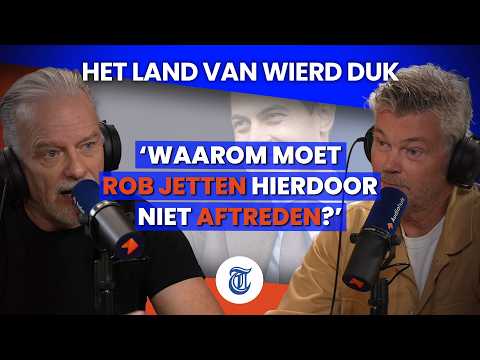
Rob Jetten is criticized for marching in the 'red line' demonstration despite alleged Hamas influence, and the speaker says this should trigger resignation.

The speaker links the demo to Hamas and argues the lack of outrage is unacceptable.

Unlock 5 more claims See the full bullish, bearish, and counter-consensus argument map extracted from the transcript. Unlock all claims

Speakers

SPEAKER Unknown speaker 1 SPEAKER Unknown speaker 2

Interview (16 Q&A)

Jetten protest

How can it be that Rob Jetten joining the red-line demonstration did not cause uproar, and why should he not simply resign?

The transcript does not provide a direct answer to the Rob Jetten question before the discussion moves on to other political topics.

Sneevliet

Why did the interviewer bring up Bob Sneevliet, and what was the point of the 1 May demonstration story?

The speaker explains that Bob Sneevliet was at an FNV or May Day manifestation and encountered Volkert van der Graaf there. That leads into criticism of Volkert being free and of the light sentence he received for Pim Fortuyn's murder.

Volkert sentence

What does the speaker think of Volkert van der Graaf's sentence and release?

He argues that Volkert van der Graaf should have received life imprisonment and been locked away permanently. He says the 18-year sentence was far too light and that early release after good behavior was a serious affront to public justice.

Unlock the full interview (13 more Q&A) Every question, answer summary, and YouTube timestamp. Unlock full Q&A

Where this transcript pushes against consensus

  • The speakers present the presence of Volkert van der Graaf at a May Day event as proof of continuing left-wing tolerance for extremism, but the causal link is asserted rather than demonstrated.
  • The claim that media and institutions broadly ignore or suppress ordinary protesters is heavily generalized from selected examples.
  • Their interpretation of the IPCC revision as vindication of climate skepticism overstates what the transcript itself proves; no detailed technical evidence is shown.
  • The argument that women are broadly and structurally shifting politics left relies on broad behavioral stereotypes and selective research claims.
  • The comparison of current Dutch politics to the 1930s is rhetorically strong but analytically loose.
  • The geopolitical claim that Iran could quickly collapse under a particular coalition scenario is speculative and presented without operational detail.

Topics

asielcrisisPim FortuynVolkert van der Graafanti-asielprotestenmedia framingRob JettenForum voor Democratieklimaatbeleidgenderpolitiekstagflatie

Create your free research agent

Unlock the full claims, asset map, scores, related transcripts, follow-up questions, and AI chat — shaped around your portfolio, watchlist, favorite speakers, and risks.

  • Full claims and asset map
  • Personalized relevance to your watchlist
  • Follow-up questions you can track
  • Related transcripts from your workspace
  • AI chat about this video
Create your free research agent
TRANSCRIPTAGENT.AI