
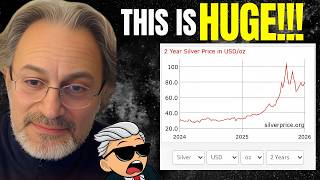
The speaker argues that the recent move in silver and gold is a response to a shifting macro setup: a short-lived Iran conflict, stabilizing oil/rates/USD, and growing belief that the Fed will eventually cut rates. The core thesis is that lower nominal rates without an inflation breakout would mean lower real rates, which should support precious metals.
Watch on YouTube ›Get the market thesis, key claims, assets, contradictions, and follow-up questions from any financial video — then unlock a version personalized to your portfolio, watchlist, and favorite speakers.
This interview centers on a bullish precious-metals outlook, especially gold and silver, framed through macro policy rather than supply/demand specifics. The guest, Alan Corbani of Mount Blue Finance and manager of a gold/precious-metals fund, says the prior scenario has not changed: the Iran conflict was expected to be short-lived because it was inconsistent with the broader political and economic agenda, and markets are now shifting from pricing the war itself toward pricing an end to it. He says March featured higher rates, higher oil, and a stronger U.S. dollar, while April-May have been more volatile but stabilized across those variables. He argues the key driver is not whether inflation falls sharply, but whether there is an inflation breakout. …
Near term, the setup is constructive for silver and gold if rate-cut expectations continue to firm and the Iran risk premium fades. The main tactical risk is a renewed spike in oil, the dollar, or real yields that interrupts the metals rebound.
Over the next several weeks to months, the base case is a gradual move toward easier policy pricing, which should support precious metals if the labor market keeps weakening and inflation does not re-accelerate. That view would be challenged if inflation surprises higher or the Fed pushes back hard against easing expectations.
Structurally, the interview argues that precious metals are best supported in a regime of lower real rates, even when inflation is not fully defeated. If technology and productivity eventually help the economy absorb easier policy, that would still be a favorable longer-run backdrop for monetary metals.
The recent move in silver and gold reflects a shift from pricing the war itself to pricing hope for an end to it.
He says the market has shifted 'from the war itself to the hope of an end to it' and that is why metals are reacting.
The conflict was always likely to be short-lived because it conflicted with the economic and political agenda of the U.S. leadership and Congress.
This is Corbani’s explanation for why the war would not last long.
March featured higher rates, higher oil, and a stronger US dollar, while April and May became more stabilized but volatile.
He uses this as the macro backdrop for metals and rates.
What do you think is happening now that silver and gold have started moving again in the past 7–8 days?
Corbani says the move fits his unchanged scenario: the conflict was always expected to be short-lived, and now the market is shifting from war pricing to hope of an end to the conflict, which supports silver and gold.
How does a weakening labor market and talk of universal basic income affect the precious metals outlook?
Corbani says the labor market is genuinely weakening and has been for years, and that the Fed knows it. He argues the short-run benefit of AI and productivity gains has not yet translated into stronger payroll growth, so the labor-market weakness supports easier policy and ultimately precious metals.
How does precious metals benefit if rates go lower and the dollar weakens?
Corbani says lower rates with stable inflation would lower real rates, and that real rates and the dollar have the strongest negative correlation with gold. Therefore, metals should benefit if policy eases and the dollar falls.
Unlock the full claims, asset map, scores, related transcripts, follow-up questions, and AI chat — shaped around your portfolio, watchlist, favorite speakers, and risks.
