
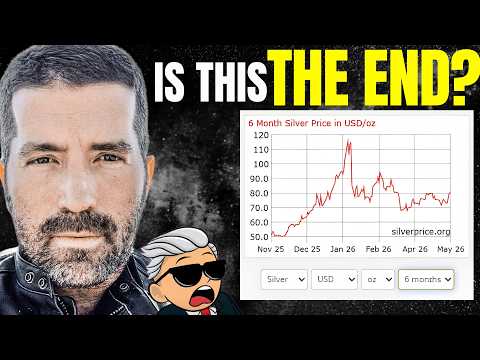
The video is an interview focused on precious metals, especially silver, with Father Emanuel Lemelson arguing that today’s market moves are being driven more by geopolitics, inflation anxiety, and emotional crowd behavior than by clean fundamentals. He says silver’s rise is not a pure fear trade, warns that rate cuts and political pressure on the Fed could worsen debasement and inflation, and repeatedly urges viewers to avoid fear-driven investing.
Watch on YouTube ›Get the market thesis, key claims, assets, contradictions, and follow-up questions from any financial video — then unlock a version personalized to your portfolio, watchlist, and favorite speakers.
This is a host-led interview on Wall Street Bullion with Father Emanuel Lemelson, who is introduced as CIO of Lemelson Capital Management and an Orthodox priest. The discussion begins with the U.S.-Iran conflict, where the host asks about oil and stocks amid renewed missile strikes and broken ceasefire claims. Lemelson frames the situation first as a human tragedy, then says it is difficult to trust official statements from either side. He notes oil fell sharply, which he interprets as disinflationary, yet gold and silver rose. …
Near term, the trade is headline-sensitive: Iran/oil shocks and Fed rhetoric can keep silver volatile, but the move is vulnerable if the conflict narrative cools. Chasing strength here looks crowded unless metals hold up after the next round of news.
Over the next few months, the setup is for metals to stay supported if inflation credibility worsens and the next Fed chair leans easier, but the view needs confirmation from persistent weakness in real purchasing power and continued policy uncertainty. If oil keeps dropping and geopolitical fear fades, the precious-metals bid could unwind.
Structurally, the thesis is that trust in institutions, currency stability, and labor-market durability is eroding at the same time. In that regime, gold and silver function as long-term hedges against debasement, social strain, and the growing gap between official narratives and lived reality.
The Iran situation should first be viewed as a human tragedy, not an economic event.
He explicitly says the loss of life matters first and that the event is a failure of humanity before economics.
Official statements about the Iran conflict are hard to trust because public claims and battlefield developments appear inconsistent.
He cites conflicting reports about peace agreements, missile strikes, and naval attacks as evidence that official channels may be unreliable.
Oil’s sharp drop is disinflationary and could create room for the Fed to ease sooner.
He directly links the oil plunge to lower inflation pressure and earlier rate cuts.
What is happening right now between the United States and Iran, and what does it mean for oil and the stock market?
The guest says the situation is a human tragedy first, and that conflicting public statements make official narratives hard to trust. He links the oil selloff to disinflation and notes that gold and silver are rising, though he interprets silver’s rise as more about peace expectations than fear.
What is happening with men outside the workforce and the broader social/economic cracks?
The guest says the issue is a combination of cultural/spiritual malaise and structural disruption from AI. He argues that traditional milestones like marriage, home ownership, and career formation have weakened, making men feel lost and less productive.
What are your thoughts on interest rates and the next Federal Reserve chair?
The guest expects the new chair to be aligned with the executive branch and favors lower rates, but warns that easier policy tends to raise inflation and debase the currency. He distrusts official CPI data and says households are already squeezed by essentials.
Unlock the full claims, asset map, scores, related transcripts, follow-up questions, and AI chat — shaped around your portfolio, watchlist, favorite speakers, and risks.
