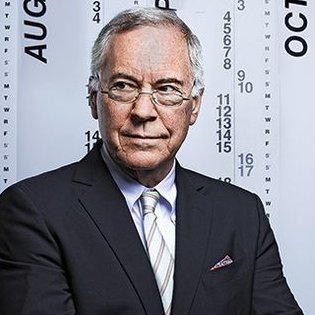
Steve Hanke argues the Iran/Gulf crisis is mostly a warning shot so far, not a market-disrupting event, because he thinks Iran is bluffing, the U.S. is constrained by Iran’s defenses, and oil would only spike hard if Hormuz were fully closed. He is similarly skeptical of a reported Russia-dollar memo, remains bullish on the dollar’s reserve status, expects U.S. inflation to drift back up as M2 accelerates, and says upcoming Fed easing would be driven more by labor-market weakness than inflation progress.
Watch on YouTube ›Get the market thesis, key claims, assets, contradictions, and follow-up questions from any financial video — then unlock a version personalized to your portfolio, watchlist, and favorite speakers.
This interview centers on three macro themes: Iran and the Strait of Hormuz, dollar geopolitics, and U.S. inflation/labor policy. On Iran, Hanke says the partial closure of Hormuz was a warning shot rather than a true shutdown, which explains why oil barely moved. He thinks a full closure could send oil to about $120/bbl, but says that scenario would be difficult and would depend on how Iran chose to block the waterway. He also argues that U.S. military threats are limited by Iranian red lines, Israeli influence on U.S. policy, and potentially sophisticated Chinese-installed radar that could make a strike more difficult. On regime change and war risk, Hanke dismisses the idea that the U.S. can easily repeat a Venezuela-style operation in Iran, calling the Maduro case an inside job and saying Iran’s military and geography make that much harder. …
Near term, the market seems to be pricing Iran headlines as a bluff unless Hormuz is actually shut; that keeps the immediate oil trade reactive but not yet trend-defining. The Fed outlook is still set by labor data, so any surprise weakening there is the main tactical catalyst for policy repricing.
Over the next few months, the base case in Hanke’s framework is a modest re-acceleration in inflation as M2 stays firmer and bank regulation loosens credit creation. That would keep the Fed biased toward easing only if labor conditions soften enough to justify it.
Structurally, he sees the dollar’s reserve role as durable and hard to displace, while the yuan remains constrained by capital controls. In that regime, the lasting macro variable is not who talks about de-dollarization, but which currencies can actually move capital freely and sustain credit creation.
Iran’s partial closure of the Strait of Hormuz was a warning shot rather than a true shutdown.
Hanke says Iran was signaling capability, not executing a full block, which explains the muted market reaction.
A full closure of Hormuz could push oil to about $120 per barrel.
He gives a concrete price estimate for the severe-tail-risk scenario.
The U.S. is not acting independently on Iran policy and is effectively following Israeli preferences.
He explicitly says U.S. policy is dictated by Israel and Netanyahu.
What's your take on Iran partially closing the Strait of Hormuz and oil barely budging?
Hanky says Iran was firing a warning shot across the bow, not a real attempt to shut it down, which explains why markets didn't react. He notes they've done partial shutdowns before since 1979.
What would happen if there's a full closure of the Strait of Hormuz?
Hanky says oil would go to $120 a barrel. The Strait is still vital — a full closure would shut out Saudi Arabia, UAE, Kuwait, and all the Gulf States.
What does the US want and what does Iran want out of this nuclear deal?
Hanky argues it's not what the US wants but what Israel dictates. Israel wants Iran's nuclear program completely dismantled and its ballistic missile program defanged — essentially surrender — which Iran will not agree to. He adds the Chinese have installed sophisticated radar in Iran that could detect stealth bombers, changing the military calculus.
Unlock the full claims, asset map, scores, related transcripts, follow-up questions, and AI chat — shaped around your portfolio, watchlist, favorite speakers, and risks.