
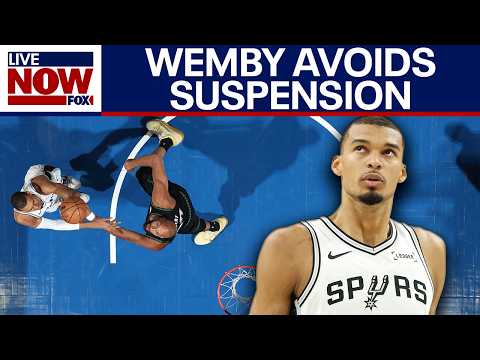
Tim Reynolds argues the NBA was unsurprised by Victor Wembanyama avoiding suspension for the Game 4 elbow, because he had already effectively sat much of that game and the league treated the incident as something that would stand as called. The segment then broadens into a discussion of playoff physicality, officiating, and whether the modern NBA is softer than earlier eras.
Watch on YouTube ›Get the market thesis, key claims, assets, contradictions, and follow-up questions from any financial video — then unlock a version personalized to your portfolio, watchlist, and favorite speakers.
This is a short interview segment on LiveNOW from FOX about Victor Wembanyama’s flagrant-two elbow on Naz Reid in Game 4 of the NBA playoffs and the league’s decision not to suspend him for Game 5. The anchor introduces the news that Wembanyama avoided suspension and fine, then brings in AP reporter Tim Reynolds to explain why the league likely let the call stand. Reynolds says he was not surprised because Wembanyama had already effectively served a substantial portion of a game since the elbow happened in the second quarter, not at the end of the game. He says the league probably viewed the play as reactionary rather than something warranting a harsher punishment, and that it did not downgrade the foul from a flagrant two to a flagrant one or technical. The discussion then turns to Spurs coach Mitch Johnson’s public defense of Wembanyama and criticism of Minnesota’s physical approach. …
Immediate setup: Wembanyama’s availability removes the biggest near-term downside for San Antonio, while the main tactical risk is a tighter whistle or another flare-up in Game 5. Minnesota’s physical game plan is likely to stay aggressive, so early officiating will be the key tell.
Over the next few games, the series turns on whether Wembanyama adjusts to the contact and whether the Spurs can keep him out of foul trouble. If he stays effective, San Antonio’s path through the series strengthens; if not, Minnesota’s disruption strategy may define the matchup.
Structurally, the segment points to an NBA that is less tolerant of overt physical altercations than past eras and more shaped by discipline, star protection, and financial incentives. The long-run implication is that elite skill and size still dominate, but games are increasingly decided by how much physicality the league allows rather than by brawling.
The NBA reviewed Victor Wembanyama's Game 4 elbow and decided he is eligible to play in Game 5.
The anchor states the league's look is over and he is eligible to play.
The league likely treated the foul as partly served because Wembanyama had already sat most of Game 4 after the second-quarter ejection.
Reynolds says the timing of the ejection mattered and the league would have looked harder if it happened late.
The league did not downgrade the foul, so Wembanyama still keeps the flagrant points attached to the play.
Reynolds explicitly notes the flagrant two remained as called.
What do you make of this decision by the NBA following what potentially looked like a suspension-worthy play?
Reynolds says he is not surprised; the league likely considered that Wembanyama had already effectively sat a large portion of the game, viewed the elbow as reactionary, and left the flagrant two standing as called.
Is that just a head coach protecting his player or is it a little more?
Reynolds says it is both: coach protection and a complaint that bigger players like Wembanyama get treated more physically, similar to Shaquille O'Neal in prior eras.
Did they learn anything in that first series that might have helped them if he even did get suspended this time?
Reynolds says yes; the Spurs have played without Wembanyama before, even used him off the bench at times, and could have rallied around the fact that they have won plenty of games without him.
Unlock the full claims, asset map, scores, related transcripts, follow-up questions, and AI chat — shaped around your portfolio, watchlist, favorite speakers, and risks.
