
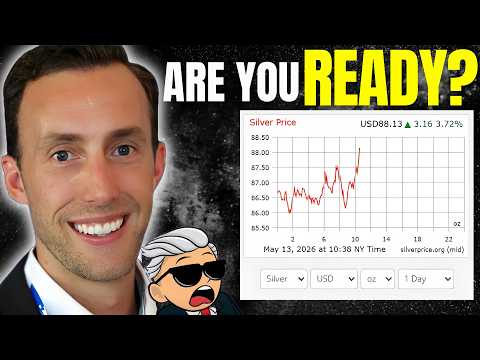
An interviewer-hosted precious-metals discussion argues that silver has already broken out, gold and silver may rise sharply if Middle East tensions and the Strait of Hormuz situation clarify, and that holding both precious metals and oil is a practical hedge. The guest, Mark Yaxley of Strategic Wealth Preservation, also promotes physical storage and liquidity services.
Watch on YouTube ›Get the market thesis, key claims, assets, contradictions, and follow-up questions from any financial video — then unlock a version personalized to your portfolio, watchlist, and favorite speakers.
This is an interview centered on precious metals, especially silver and gold, with recurring references to Middle East conflict, oil supply risk, and investor positioning. The host, Ivan, opens by noting silver’s recent move from about $73 to around $85 and asks whether silver is now leading gold. Mark Yaxley, identified as the managing director at Strategic Wealth Preservation, says silver has seen institutional buying, had previously run to around $120 before a consolidation, and now appears to have found a floor. He argues that, with more clarity on the Middle East, silver could revisit $90–$95 and potentially $100 again. The conversation repeatedly ties metals prices to geopolitical uncertainty. Mark says the market is confusing because one day there is a ceasefire and the next day there are shots fired, which keeps investors sidelined. …
Tactically bullish silver and gold, but the move appears event-driven and vulnerable to profit-taking unless Middle East headlines keep deteriorating. Oil remains the competing near-term trade, so metals may need a new catalyst to extend sharply.
Over the next few months, the base case is a constructive but choppy precious-metals trend with the market waiting for a clearer geopolitical resolution. Confirmation would be sustained buyer re-entry and follow-through above recent highs; failure to get that leaves metals rangebound.
The long-run message is that gold and silver remain regime hedges in a world of recurring geopolitical shocks and currency/energy stress. The structural implication is that physical ownership plus secure storage continues to be framed as a permanent wealth-preservation strategy.
Silver recently moved from about $73 to around $85 and is now leading gold.
Host describes the recent price move and relative strength.
Silver appears to have found a floor after a large prior run and consolidation.
Guest says silver ran to about 120, then pulled back and consolidated, and now looks supported.
With more clarity on the Middle East, silver could revisit $90–$95 and potentially $100.
Guest repeatedly ties silver upside to geopolitical clarity.
What’s happening in precious metals, and are you seeing more silver buying, more gold buying, or both?
Mark says buying had been quiet from early April to early May after a record first quarter, but volumes have picked up again in the last two weeks. He also says there has been some selling of silver at recent prices as people took profits.
What are your thoughts on the Middle East, oil shortages, and the Strait of Hormuz?
Mark says the situation is confusing and investors lack clarity, which has contributed to rangebound metals trading. He says oil has become the short-term profitable trade, but if the Strait of Hormuz situation clears, gold and silver could move up quickly.
How should people deal with oil shortages or rising fuel prices today?
Mark suggests stockpiling fuel if shortages seem likely, or hedging with crude and oil stocks where available. He also says central banks may be selling gold reserves to buy oil reserves.
Unlock the full claims, asset map, scores, related transcripts, follow-up questions, and AI chat — shaped around your portfolio, watchlist, favorite speakers, and risks.
