
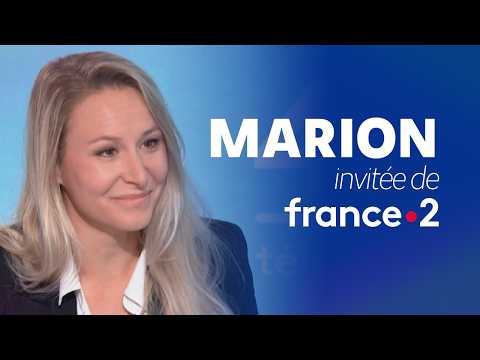
Marion Maréchal uses a TV interview to defend a more targeted response to the current anthrax quarantine question, criticize the public health credibility lost during Covid, and pivot quickly into political positioning around slavery commemoration and the coming presidential/appeal-court countdown for Marine Le Pen and the RN. The conversation is partisan, identity-focused, and centered on immigration, right-wing alliances, and the RN’s program.
Watch on YouTube ›Get the market thesis, key claims, assets, contradictions, and follow-up questions from any financial video — then unlock a version personalized to your portfolio, watchlist, and favorite speakers.
In this French interview, Marion Maréchal argues that the government’s tighter handling of the current anthrax-related quarantine is justified because it is narrow, temporary, and far less intrusive than Covid-era restrictions. She says the government’s credibility was damaged by the Covid experience, but still supports this specific measure as a way to avoid panic and reduce a serious sanitary risk. The discussion then shifts to the RN’s past Covid positions. Maréchal rejects any direct comparison between the two situations, saying the current case concerns a handful of people, while Covid involved broad restrictions on liberty, religion, children’s activities, work, and broader social and psychological harms. …
Near term, the key actionable issue is the RN’s preparation for the court decision around Marine Le Pen and how that affects campaign discipline. The quarantine comment is mostly political theater, but the immediate risk is reputational blowback from the slavery remarks and from any perception of overreach or inconsistency.
Over the next several weeks, the RN’s path depends on keeping its coalition unified while presenting a credible governing program under uncertainty around Le Pen. If the party can avoid internal drift and alliance ambiguity, Maréchal suggests it can preserve a strong rupture narrative; otherwise rivals on the center-right may regain room.
The long-run thesis is a reordering of the French right around a durable nationalist bloc centered on the RN. Maréchal’s broader regime view is that legitimacy, memory politics, and crisis-management trust have all been altered by Covid and by elite compromise, favoring harder anti-establishment politics.
The government’s credibility on health measures has been weakened by the Covid experience.
She says the government word is 'entamée, affaiblie' by Covid-related mistakes and contradictions.
The current quarantine response is more reasonable because it is targeted and temporary.
She supports the tighter isolation measure for a small number of potentially infected people.
The RN’s Covid-era opposition should be seen in the context of a much broader and more restrictive confinement experience.
She contrasts a tiny, temporary quarantine with generalized lockdown restrictions affecting religion, children, work, and freedom of movement.
Le gouvernement a changé de dimension dans la prise en charge du virus: quarantaine pour tous les cas contact. Est-ce que vous trouvez cette mesure exagérée ou bien dimensionnée ?
Marion Maréchal juge que la parole gouvernementale est affaiblie par l'expérience douloureuse du Covid, ce qui nuit à la confiance populaire. Elle constate qu'il y a un revirement gouvernemental vers un durcissement de l'isolement des personnes potentiellement malades, ce dont on peut se féliciter pour éviter à la fois psychose et risque sanitaire.
La mairie de Vierzon, récemment passée aux mains du Rassemblement national, a annulé une cérémonie de commémoration de l'abolition de l'esclavage. Est-ce une bonne décision ?
Marion Maréchal dit qu'elle-même aurait tenu cette commémoration, et qu'elle serait l'occasion de parler des autres esclavagismes tabous — notamment la traite arabo-musulmane (17 millions d'esclaves) et la traite intrafricaine (14 millions) — plutôt que de se focaliser uniquement sur la culpabilité des Européens et des Français avec un objectif politique biaisé.
Marine Le Pen se prépare à faire campagne ou à regarder cette campagne à la télé, à deux mois de la décision de la cour d'appel ?
Marion Maréchal répond que Jordan Bardella comme Marine Le Pen envisagent toutes les hypothèses et travaillent main dans la main pour cette campagne décisive, puisque le diagnostic vital de la France est engagé. Elle en profite pour critiquer les candidatures d'Édouard Philippe et Bruno Retailleau, et réaffirme son soutien au candidat du Rassemblement national.
Unlock the full claims, asset map, scores, related transcripts, follow-up questions, and AI chat — shaped around your portfolio, watchlist, favorite speakers, and risks.
