
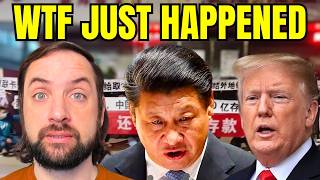
The speaker argues that the Trump-Xi summit is mostly political theater and that China’s latest lending data reveals a deeper domestic credit breakdown: weak household borrowing, contracting new RMB loans, and a collapsing private credit engine. The message is that Beijing needs external relief because the internal economy—especially banks, households, and property—remains stuck in a credit trap.
Watch on YouTube ›Get the market thesis, key claims, assets, contradictions, and follow-up questions from any financial video — then unlock a version personalized to your portfolio, watchlist, and favorite speakers.
This video centers on the claim that the Trump-Xi summit should be read less as a sign of China’s strength and more as evidence that Beijing needs breathing room. The speaker says markets may treat the meeting as a potential trade-truce catalyst, but China’s April lending data tells a darker story: total social financing was weak, new RMB loans unexpectedly contracted, and household loans posted an especially severe decline. In his view, those household numbers are the key signal because they reflect property confidence, consumer willingness, and the private economy’s willingness to borrow. He argues that China’s credit system is increasingly reliant on public-sector substitution—government bonds, policy-directed lending, local-government support—while genuine private demand remains impaired. …
Near term, the setup is headline-driven: a constructive Trump-Xi outcome could spark relief for risk assets tied to China and exports, but the move is vulnerable if the market realizes it is only diplomatic de-risking. The immediate risk is that traders overweight the summit and underweight the ugly lending data.
Over the next few months, the more likely path is a series of policy gestures and external stabilizers rather than a genuine domestic rebound. To invalidate the bearish view, China would need to show sustained improvement in household borrowing, property activity, and private credit demand; otherwise any rally should fade.
Structurally, the video argues China is exiting the era where credit growth could reliably manufacture growth. The long-run regime implication is slower, more fragile expansion with persistent pressure on banks, property, and household balance sheets, even if diplomacy periodically masks the weakness.
The Trump-Xi summit matters politically, but it does not solve China’s underlying domestic credit weakness.
The speaker contrasts summit optics with deteriorating lending data and says the summit is breathing room, not a cure.
China’s April credit data was weak across the board, including TSF, new RMB loans, and household loans.
He cites specific figures and says the release was ugly and historically weak.
Household lending is the most revealing indicator because it reflects property confidence and private-sector demand.
He repeatedly says household loans are the key giveaway for housing and confidence.
Unlock the full claims, asset map, scores, related transcripts, follow-up questions, and AI chat — shaped around your portfolio, watchlist, favorite speakers, and risks.
