TranscriptAgent
Try it free
TRANSCRIPTAGENT.AI · transcript analysis

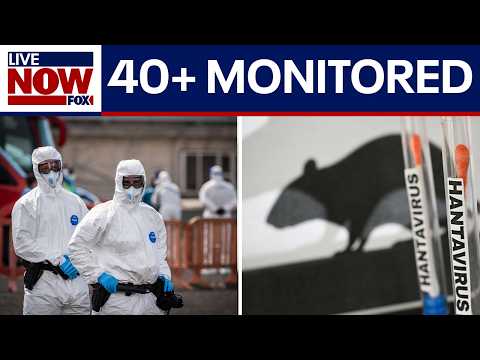
CDC 40+ people monitored for Hantavirus exposure

Channel: LiveNOW from FOX Published: 2026-05-15 07:28
LiveNOW from FOX

WHO guest Tariq Yashovich explained that hantavirus is a rodent-borne group of viruses, that the Andes virus can spread person-to-person in some circumstances, and that the current cruise-ship cluster is being watched closely but assessed as low risk to the general public.

Watch on YouTube ›

Get the market thesis, key claims, assets, contradictions, and follow-up questions from any financial video — then unlock a version personalized to your portfolio, watchlist, and favorite speakers.

Detailed summary

This segment is a live interview about a hantavirus outbreak tied to a cruise ship, with the CDC monitoring 41 people across nearly a dozen states and some passengers quarantined in Georgia and Nebraska. The interviewer, Josh, brings in Tariq Yashovich from the World Health Organization in Geneva to explain what hantavirus is, what the Andes virus is, how transmission happens, and what the public should watch for. Yashovich says hantaviruses are not new and are carried by rodents; people usually get infected through contact with droppings, saliva, or urine, though the Andes virus can be transmitted person-to-person. He says health officials are mainly trying to understand the level and pathway of human-to-human transmission on the ship, where the exposure occurred, and how the first case got onboard. …

🔒 The full detailed summary continues — read all of it free with an account. Read the full summary →

Main takeaways

  1. The main health message is low general-public risk, despite a serious cluster linked to a cruise ship.
  2. WHO says the key unknown is how person-to-person spread happened in this outbreak.
  3. There is no specific treatment or vaccine for hantavirus/Andes virus cited here.
  4. The interview repeatedly stresses reliance on official health agencies over social media misinformation.
  5. Prevention advice centers on rodent exposure reduction and basic sanitation.

Market read by horizon

Short term

Near term, this is a contained public-health monitoring story rather than a tradable macro shock; watch for any expansion in cases or stronger evidence of secondary spread. The immediate risk is headline sensitivity and misinformation, not a broad market catalyst.

  • Near term, the key watchpoint is whether additional contacts among the monitored 41 people test positive or develop symptoms.
Show more
  • Public-health officials are focused on contact tracing across multiple countries and enforcing the 42-day monitoring window.
  • The immediate risk in this story is less market-driven and more related to escalation in reported cases or confusing misinformation.
Mid term

Over the next several weeks, the key question is whether the cruise-ship cluster stays isolated within monitored contacts or develops broader transmission. If case counts stabilize, the story fades; if not, it shifts into a more serious travel and public-health risk narrative.

  • Over the next several weeks, the central question is whether the outbreak remains a contained cruise-ship event or shows broader secondary transmission.
Show more
  • Confirmation would come from stable or declining case counts among monitored contacts and no evidence of wider community spread.
  • A deterioration scenario would be new cases outside the tracked contact set or evidence that transmission was more efficient than expected.
Long term

Structurally, the segment underscores the persistent risk from zoonotic outbreaks in a highly connected travel system. The durable takeaway is that surveillance, quarantine, and health-system readiness matter more than any single outbreak headline.

  • Structurally, the segment reinforces the importance of global surveillance for zoonotic diseases that can occasionally cross from animals to humans and, in some variants, between people.
Show more
  • It also highlights a durable public-health regime risk: outbreaks on international travel networks can require rapid cross-border coordination.
  • The longer-run implication is that rodent-borne pathogens remain a recurring monitoring problem, especially where health systems, travel, and misinformation intersect.
Unlock the full horizon read See the full short-term, mid-term, and long-term implications with confirmation and invalidation signals. Unlock horizon read

Key claims (8)

NEUTRAL public health Hantavirus

Hantaviruses are a group of viruses carried by rodents and can infect humans, causing severe disease.

The guest directly defines hantaviruses and their animal reservoir.

NEUTRAL public health Andes virus

The Andes virus can be transmitted from one person to another in some cases.

The guest says this virus type can allow human-to-human spread.

NEUTRAL public health surveillance cruise ship outbreak

Health officials are mainly trying to determine the level and pathway of human-to-human transmission on the cruise ship.

This is presented as the main investigative priority.

Unlock 5 more claims See the full bullish, bearish, and counter-consensus argument map extracted from the transcript. Unlock all claims

Speakers

HOST Josh GUEST Tariq Yashovich

Interview (8 Q&A)

hantavirus basics

Can you explain exactly what the hantavirus is and what the Andes virus specifically is?

Tariq explains that hantavirus is not a new virus — it's a group of viruses carried by rodents that infect humans through contact with droppings, saliva, or urine, causing severe disease. The Andes virus is a specific type that can be transmitted from human to human, which is notable.

outbreak monitoring

What are health officials watching most closely right now regarding the outbreak?

Tariq says health officials are trying to understand the level of human-to-human transmission and how it was transmitted on the ship. There are 11 cases, 8 confirmed by lab testing. They're also investigating how the virus got onto the ship, where the initial human-animal contact occurred, and looking into diagnostics, therapies, and vaccines — though there is no specific treatment or vaccine currently.

public risk

How concerned overall should the public be about hantavirus and the Andes virus?

Tariq assesses the risk to the general public as low, but emphasizes they are taking the event seriously due to the cruise ship involving multiple nationalities crossing borders. He explains that transmission chains must be broken, and contacts are being monitored across countries for 42 days to avoid further spread.

Unlock the full interview (5 more Q&A) Every question, answer summary, and YouTube timestamp. Unlock full Q&A

Where this transcript pushes against consensus

  • The interview asserts the general-public risk is low, but it does not quantify that assessment or explain what data supports it.
  • The explanation of outbreak origin and transmission remains incomplete; the guest says investigators are trying to understand how it happened, which leaves the central mechanism unresolved.
  • The segment mentions 11 cases, 8 lab-confirmed, and 3 deaths, but does not reconcile these figures with the earlier CDC count of 41 monitored contacts, which may confuse viewers.
  • The discussion notes no specific treatment or vaccine, but does not clarify whether that applies to all hantavirus types or specifically the Andes virus in this event.

Topics

hantavirusAndes viruscruise-ship outbreakCDC monitoringWorld Health Organizationperson-to-person transmissionquarantine and contact tracingmisinformationrodent exposure prevention

Create your free research agent

Unlock the full claims, asset map, scores, related transcripts, follow-up questions, and AI chat — shaped around your portfolio, watchlist, favorite speakers, and risks.

  • Full claims and asset map
  • Personalized relevance to your watchlist
  • Follow-up questions you can track
  • Related transcripts from your workspace
  • AI chat about this video
Create your free research agent
TRANSCRIPTAGENT.AI