
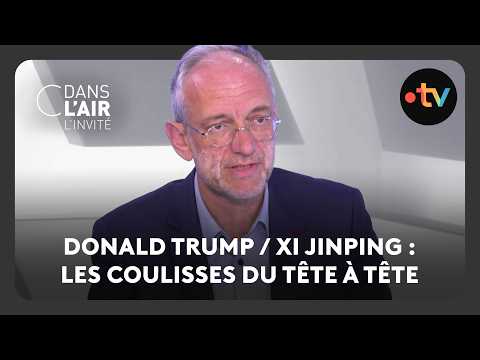
A geopolitical discussion of the Trump-Xi meeting focused on intelligence/security tensions, diplomatic staging, and the Iran nuclear issue. The guest argues the visit was largely a mutual sizing-up exercise that produced little concrete progress, while China could still play a technical role in preventing nuclear proliferation.
Watch on YouTube ›Get the market thesis, key claims, assets, contradictions, and follow-up questions from any financial video — then unlock a version personalized to your portfolio, watchlist, and favorite speakers.
The transcript is an interview on France Télévisions' C dans l'air with A. Casse questioning geopolitical expert François Encel about Donald Trump’s trip to China and what it means for the Iran crisis. The conversation opens with reports that U.S. delegation members were warned their devices could be compromised and were given disposable phones with new numbers, which Encel cites as evidence of China’s intelligence capabilities and surveillance culture. A major theme is diplomatic staging and body language. Casse asks whether Xi Jinping and Trump were positioned as equals, noting footage suggesting Xi stood higher and Trump looked subdued. Encel says the choreography of summits matters in diplomacy and can signal dominance or rank, though he does not interpret the staging as uniquely exceptional. The discussion then turns to what the visit achieved. …
Near term, the key risk is that the Trump-Xi meeting does not reduce Middle East tension, leaving oil and safe-haven pricing vulnerable to fresh Iran headlines. Any sudden move toward escalation or shipping disruption would matter more than the summit optics.
Over the next few weeks, watch for whether Iran moderation is actually enforced or whether Tehran keeps pushing enrichment rhetoric. The transcript’s base case is unresolved pressure, with China possibly acting as a limited technical broker only if it wants to signal anti-proliferation credibility.
Longer term, the transcript points to a durable regime where nuclear nonproliferation, great-power credibility, and regional deterrence remain tightly linked. If China becomes more active in enforcement or mediation, it would mark a structural shift in how proliferation crises are managed.
China can demonstrate advanced intelligence collection and surveillance capabilities, including against a U.S. delegation.
Encel uses the reported device precautions to argue China is capable of intercepting or compromising sensitive information.
Summit staging and body language are meaningful diplomatic signals, not trivial optics.
The guest argues that relative height, proximity, and handshakes convey rank and power.
The Trump-Xi visit produced little substantive progress and was mainly a mutual sizing-up exercise.
Encel says it 'served to nothing' and describes each leader testing the other.
Dans quel état D.Trump rentre-t-il de Chine ?
Encel says the visit exposed Chinese intelligence capability and suggests the trip was tense from the start.
Xi Jinping et Trump étaient d'égal à égal ?
Encel says diplomatic staging matters and that summit choreography often signals hierarchy and power.
Est-ce qu'il a voulu humilier D.Trump ? 5000 ans d'histoire contre 250.
Encel rejects the humiliation framing and says Xi's language also praised the American people.
Unlock the full claims, asset map, scores, related transcripts, follow-up questions, and AI chat — shaped around your portfolio, watchlist, favorite speakers, and risks.
