TranscriptAgent
Try it free
TRANSCRIPTAGENT.AI · transcript analysis

Prepare for Collapse: Interest Rates Will Crash The Economy

Channel: VRIC Media Published: 2026-05-16 10:01
VRIC Media

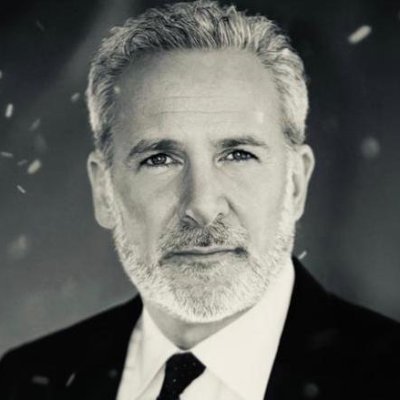
Peter Schiff argues that inflation is reaccelerating, the Fed is boxed in, bond yields are headed much higher, and the U.S. is drifting toward a debt and currency crisis. He ties that view to higher gold prices, weaker purchasing power, and political fallout for Trump.

Watch on YouTube ›

Get the market thesis, key claims, assets, contradictions, and follow-up questions from any financial video — then unlock a version personalized to your portfolio, watchlist, and favorite speakers.

Detailed summary

This is a host-led interview from VRIC Media with Peter Schiff of Europacific Asset Management. Schiff’s central message is that inflation is not under control, the Fed is still too easy, and markets are mispricing the next major move in rates. He cites CPI moving from 3.3% to 3.8% year over year, says annualized recent inflation is running much hotter, and argues that higher oil and supply disruptions will keep broad price pressure elevated. He believes the bond market is breaking down, long-term yields are near multi-decade highs, and a move to even higher highs in Treasury yields would be disastrous for the economy and the federal government. Schiff also frames the geopolitical situation, especially Iran and the Strait of Hormuz, as another inflationary shock. …

🔒 The full detailed summary continues — read all of it free with an account. Read the full summary →

Main takeaways

  1. Schiff’s base case is higher inflation, higher yields, and weaker purchasing power rather than a soft landing.
  2. He sees the Fed as trapped between inflation and debt-service pressure, making policy credibility fragile.
  3. Gold is presented as the preferred defense against fiat debasement and fiscal insolvency.
  4. He believes Trump’s economic and foreign-policy record will hurt Republicans in the 2026 midterms.
  5. Mining stocks are his higher-upside expression, but he still prefers physical metals for core protection.

Market read by horizon

Short term

Immediate setup is bearish for bonds and supportive for gold if inflation data stays hot and yields keep rising. The key tactical risk is that the market may still be mispriced for cuts, so a yield breakout could trigger a fast repricing.

  • Watch the bond market: Schiff thinks the immediate risk is a break higher in long-term yields, especially if the 10-year pushes decisively above 4.5% and the 30-year keeps making new highs.
Show more
  • Near-term inflation catalysts in his view are oil prices, the Strait of Hormuz, fertilizer, and broader supply bottlenecks.
  • He expects the Fed to lean back toward QE/balance-sheet expansion if rates rise too quickly, which he says would support asset prices but worsen Main Street inflation.
Mid term

Over the next few months, the base case is continued inflation pressure, a less dovish Fed, and greater stress in duration-sensitive assets. If yields keep climbing and the Fed is forced into yield management, that would validate the view; if inflation cools materially, the thesis weakens.

  • Over the next several weeks to months, he expects inflation to reaccelerate and force the market to reprice the Fed away from easing.
Show more
  • He thinks long-term borrowing costs will keep climbing as debt supply, inflation, and weak foreign demand collide.
  • His political base case is worsening voter frustration with Trump, which he thinks could reshape the 2026 midterm landscape.
Long term

The structural thesis is that the U.S. is in a long debt-debasement regime where nominal asset prices can rise while real purchasing power erodes. In that world, gold remains the durable monetary hedge and fiat savings keep losing ground.

  • Structurally, Schiff argues the U.S. is in a fiat-debt regime where monetary debasement is the mechanism used to manage obligations.
Show more
  • He sees Social Security, Medicare, and other promises as effectively underfunded claims on future taxpayers that will be reduced in real terms.
  • He believes the dollar’s reserve-currency status leaves it especially vulnerable to a long-run loss of purchasing power and trust.
Unlock the full horizon read See the full short-term, mid-term, and long-term implications with confirmation and invalidation signals. Unlock horizon read

Key claims (10)

BEARISH inflation U.S. inflation

Inflation is reaccelerating and remains well above the Fed’s target.

He cites CPI at 3.8% versus 3.3% a month earlier and says the direction is higher, not lower.

BEARISH U.S. Treasuries

The bond market is breaking down and long-term rates are heading toward a major multi-decade breakout.

He says the 20-year high is not the issue; the danger is a 30-year high in 30-year Treasuries and 8% yields.

BULLISH Federal Reserve balance sheet

The Fed is effectively returning to quantitative easing by stopping balance-sheet runoff and eventually buying duration again.

He says the balance sheet has expanded by over $200 billion and expects the Fed to buy long bonds if yields spike.

Unlock 7 more claims See the full bullish, bearish, and counter-consensus argument map extracted from the transcript. Unlock all claims

Assets discussed (8)

U.S. CPI / inflation
BEARISH other

Schiff says inflation is above target and moving higher, with CPI rising from 3.3% to 3.8% year over year.

U.S. Treasury bonds / long-term rates
BEARISH bond

He says the bond market is breaking down and that long-term interest rates are approaching multi-decade highs.

Unlock the full asset map (6 more) See all assets mentioned, their directional bias, and the exact reasoning. Unlock asset map

Interview (11 Q&A)

inflation assessment

What is your assessment of the recent inflation numbers?

Peter Schiff says the markets didn't react properly to the numbers. The year-over-year CPI increase is 3.8%, moving higher from 3.3% a month ago, and annualizing April gives about 7.2%. He argues the Fed maintains an easing bias and markets still price rate cuts despite worsening inflation, setting up for a major disappointment and decline.

Fed balance sheet expansion

What are your thoughts on the Fed expanding its balance sheet again?

Schiff says this is a return to QE — the Fed stopped shrinking the balance sheet and it expanded by $200 billion this year. Money supply is growing at 5%, inconsistent with a 2% inflation target. He predicts the Fed will step up bond buying if long-term rates spike decisively above 4.5% on the 10-year, especially with political pressure from the Trump administration.

inflation inequality impact

How does the Fed's balance sheet expansion impact Main Street versus Wall Street?

Schiff explains that inflation pushes asset prices higher nominally but doesn't make them more valuable in real terms. Asset owners with leverage can benefit, but most people experience it as higher supermarket prices. Inflation always harms the poor and middle class the most, though he notes US stocks are already so overpriced they still might come down even with inflation.

Unlock the full interview (8 more Q&A) Every question, answer summary, and YouTube timestamp. Unlock full Q&A

Where this transcript pushes against consensus

  • Schiff treats recent inflation as likely to keep worsening, but he gives limited discussion of disinflationary offsets such as demand destruction or tighter credit conditions.
  • He assumes the Fed will eventually expand its balance sheet to cap yields, but does not engage much with institutional constraints or whether the Fed would tolerate higher real rates for longer.
  • His claim that the U.S. is effectively insolvent relies on including large contingent and unfunded liabilities, which is directionally important but still depends on accounting choices and policy assumptions.
  • His Social Security framing as a Ponzi scheme is rhetorically strong and politically pointed, but it compresses the difference between an underfunded pay-as-you-go system and an actual fraud.
  • He is very confident that Trump’s policies will worsen inflation and political outcomes, but he does not really consider alternative growth or geopolitics scenarios that could offset that view.

Topics

inflationFederal Reserve policybond yieldsoil and IranStrait of HormuztariffsTrump politicsU.S. debtSocial Securitygold and mining stocks

Create your free research agent

Unlock the full claims, asset map, scores, related transcripts, follow-up questions, and AI chat — shaped around your portfolio, watchlist, favorite speakers, and risks.
  • Full claims and asset map
  • Personalized relevance to your watchlist
  • Follow-up questions you can track
  • Related transcripts from your workspace
  • AI chat about this video
Create your free research agent
TRANSCRIPTAGENT.AI