TranscriptAgent
Try it free
TRANSCRIPTAGENT.AI · transcript analysis

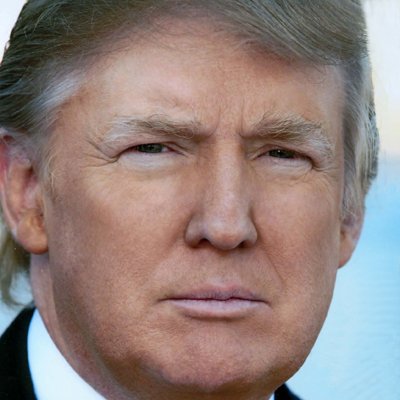
"L'Iran a intérêt à conclure un accord": Donald Trump répond à BFMTV

Channel: BFMTV Published: 2026-05-16 12:05
BFMTV

BFMTV reports an exclusive phone exchange in which Donald Trump says he has no idea whether Iran will make a deal and warns that if it does not, it could have a very difficult period.

Watch on YouTube ›

Get the market thesis, key claims, assets, contradictions, and follow-up questions from any financial video — then unlock a version personalized to your portfolio, watchlist, and favorite speakers.

Detailed summary

The transcript centers on BFMTV correspondent Antoine Lard’s live report from Washington about an exclusive phone call with Donald Trump. Lard says he asked Trump whether he was still optimistic that Iran would reach a deal. Trump’s response was blunt: he said he had “no idea” whether Iran would or would not agree, but warned that if they do not, they would have a “very difficult” time and “should make a deal.” The BFMTV team interprets this as Trump sounding increasingly impatient and possibly less confident in a diplomatic resolution. The report then shifts to the broader backdrop in Washington: Lard explains that Trump still maintains a direct channel with journalists, that this kind of informal contact has become more common since his return to the White House, and that he finally reached him after weeks of trying. The discussion moves to reported military preparations. …

🔒 The full detailed summary continues — read all of it free with an account. Read the full summary →

Main takeaways

  1. Trump’s direct answer to BFMTV was noncommittal on an Iran deal and explicitly threatening if no agreement is reached.
  2. The transcript portrays negotiations as stuck, with no meaningful concessions from either side.
  3. BFMTV says Trump now appears more impatient and more willing to escalate pressure on Iran.
  4. U.S./Israeli media are described as reporting ready-made attack plans and possible action within 24–48 hours.
  5. The major tactical levers discussed are Iran’s nuclear assets and the Strait of Hormuz.
  6. The panel suggests the real challenge for Trump is not just coercing Iran, but persuading U.S. domestic opinion that escalation is worthwhile.

Market read by horizon

Short term

Near term, the setup is headline-sensitive and skewed toward volatility: any leak, strike, or Trump follow-up could reprice energy and shipping risk immediately. If nothing happens, the market may fade the urgency, but the risk premium remains brittle.

  • Immediate focus is whether Trump authorizes military action in the next 24–48 hours, as reported by the cited press coverage.
Show more
  • Markets would likely react first to any credible signal around Hormuz, Iranian energy infrastructure, or U.S. strikes.
  • The report explicitly flags possible targets tied to oil, power, bridges, and coastal missile systems, which raises sudden energy and shipping risk.
Mid term

Over the next few weeks, the base case is a pressure campaign with intermittent escalation signals rather than a clean resolution. The key confirmation would be real diplomatic movement; failing that, markets should expect recurring repricing around Hormuz and Iranian nuclear assets.

  • Over the next several weeks, the base case in the transcript is continued coercive pressure rather than a clean diplomatic breakthrough.
Show more
  • A meaningful change in view would require a real concession or a verified return to talks; absent that, escalation risk stays elevated.
  • The key question is whether force or the threat of force can shift Iran’s bargaining position without triggering a broader regional spiral.
Long term

Structurally, the transcript points to a durable regime where Iran-related geopolitical risk periodically injects a premium into oil and shipping assets. The long-run question is whether U.S. coercion can consistently alter Iran’s nuclear posture, or whether it mainly creates recurring volatility cycles.

  • The lasting issue is the durability of a coercion-based U.S. strategy toward Iran: can repeated military threats reliably deliver nuclear concessions?
Show more
  • The transcript frames Hormuz and the nuclear program as enduring strategic choke points that can reshape regional and market regimes whenever the standoff intensifies.
  • If these dynamics persist, shipping risk, energy risk, and geopolitical premium may remain embedded in market pricing whenever U.S.-Iran tensions flare.
Unlock the full horizon read See the full short-term, mid-term, and long-term implications with confirmation and invalidation signals. Unlock horizon read

Key claims (9)

BEARISH U.S.-Iran negotiations Iran

Trump said he does not know whether Iran will make a deal and warned they will have a very difficult time if they do not.

Directly quoted in the phone exchange.

BEARISH U.S.-Iran negotiations Iran

BFMTV interprets Trump’s tone as showing reduced patience and weaker faith in a diplomatic solution.

The correspondent says Trump seems 'à bout' and no longer really believes in a deal.

UNCLEAR U.S.-Iran escalation Donald Trump

Press reports say Trump could decide within 24 to 48 hours whether to resume bombings.

Attributed to the Israeli press and the New York Times in the report.

Unlock 6 more claims See the full bullish, bearish, and counter-consensus argument map extracted from the transcript. Unlock all claims

Assets discussed (4)

Iran
BEARISH other

Escalation and refusal to concede are framed as increasing pressure and risk for Iran.

Strait of Hormuz
BULLISH other

Reopening it by force is discussed as a military objective; any disruption implies higher shipping/energy risk.

Unlock the full asset map (2 more) See all assets mentioned, their directional bias, and the exact reasoning. Unlock asset map

Interview (1 Q&A)

Iran deal prospects

How optimistic are you that Iran will make a deal?

Trump said he had no idea whether Iran would or would not make a deal and warned that if they do not, they will have a very difficult time.

Where this transcript pushes against consensus

  • The report treats leaked or press-reported military readiness as close to confirmed fact, but the transcript itself does not verify the operational details.
  • The claim that an attack could force Iranian concessions is asserted by commentators without substantive evidence in the transcript.
  • The idea that Trump is near a decision within 24–48 hours appears sourced to media reports, not to Trump directly.
  • The panel implies multiple simultaneous strike options are likely, but that scenario is speculative rather than established.

Topics

Iran nuclear negotiationsDonald TrumpU.S.-Iran military escalationStrait of Hormuzoil infrastructurecivilian infrastructure strikesenriched uraniumdomestic U.S. political messaging

Create your free research agent

Unlock the full claims, asset map, scores, related transcripts, follow-up questions, and AI chat — shaped around your portfolio, watchlist, favorite speakers, and risks.
  • Full claims and asset map
  • Personalized relevance to your watchlist
  • Follow-up questions you can track
  • Related transcripts from your workspace
  • AI chat about this video
Create your free research agent
TRANSCRIPTAGENT.AI