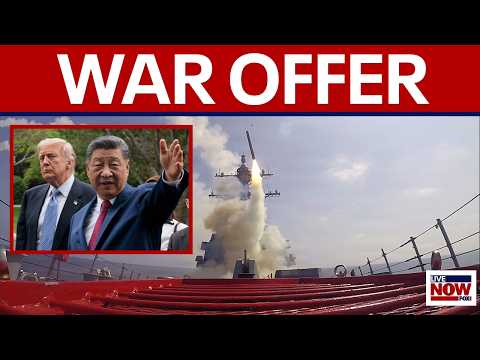
The segment frames Trump’s meeting with Xi as a diplomatic win if China really stops aiding Iran militarily and pushes Tehran to ease regional tensions. The guest argues China has leverage over Iran through oil and diplomacy, but the key test is whether words turn into sustained action.
Watch on YouTube ›Get the market thesis, key claims, assets, contradictions, and follow-up questions from any financial video — then unlock a version personalized to your portfolio, watchlist, and favorite speakers.
This LiveNOW from FOX segment centers on President Trump’s claim that Xi Jinping said China would not provide military equipment to Iran and would help end the conflict. The host opens by repeating the administration’s framing: Trump and Xi reportedly agreed Iran should not get a nuclear weapon, the Strait of Hormuz should be reopened, and the U.S. does not need favors. A brief Trump soundbite to Sean Hannity is aired, in which Trump says Xi said China would not give military equipment to Iran, that China buys a lot of Iranian oil, and that Xi would like to see the Strait of Hormuz opened. The guest, Rick Deator, described on-air as a friend of the show and former CIA officer, argues that Trump is trying to force China to choose between supporting Iran and maintaining stable relations with the U.S. …
Tactically, the immediate risk/opportunity is in headlines around China’s response and any Strait of Hormuz de-escalation; if those fail to materialize, the market should fade the 'breakthrough' narrative. Energy and shipping-sensitive assets are the most exposed to fresh escalation language.
Over the next few weeks, the key path is whether China shows any concrete reduction in support for Iran or whether this stays at the level of summit optics. Confirmation would come from sustained changes in oil flows, diplomatic language, or sanctions behavior; absent that, the setup reverts to geopolitical noise.
Structurally, the transcript points to a world where U.S.-China competition runs through Middle East energy security and Iran’s access to external support. The durable thesis is that Iran is increasingly a lever in broader great-power bargaining, not just a standalone regional issue.
Trump says Xi told him China will not provide military equipment to Iran.
Directly stated in the opening narration and repeated in the interview discussion.
Trump and Xi largely agreed that Iran must not have a nuclear weapon and that the Strait of Hormuz should be reopened.
Presented as the administration’s framing of the meeting.
China has leverage over Iran because it buys Iranian oil, provides diplomatic cover, and offers economic support when sanctions bite.
The guest explains the mechanism of Chinese influence over Tehran.
How significant is Trump's claim that Xi said China will not provide military equipment to Iran?
Rick says it is significant because Trump is forcing China to choose and China has real leverage over Iran through oil purchases, diplomatic cover, and economic support. He adds that China will still act in its own interest, but this gives Trump leverage because Beijing wants stability and an open waterway.
Why does the Trump administration view China as the key enabler of Iran?
Rick says China is an enabler because of its ties to Iran and because Beijing benefits from keeping the U.S. bogged down in Middle East conflicts. In his telling, that distraction lets China grow elsewhere while the U.S. stays tied down.
How much pressure has Trump been putting on China over its relationship with Iran?
Rick says Trump is pushing China to make a choice and stop acting like Iran's silent banker and diplomatic bodyguard. He argues the administration is trying to turn China into a responsible global power that breaks with Iran.
Unlock the full claims, asset map, scores, related transcripts, follow-up questions, and AI chat — shaped around your portfolio, watchlist, favorite speakers, and risks.