
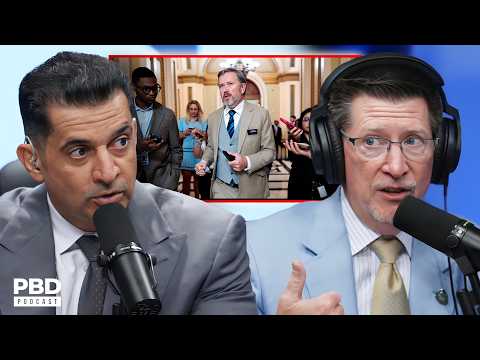
This Valuetainment segment is a political commentary about Thomas Massie’s Kentucky primary, framing it as a clash between Trump-aligned MAGA politics and Massie’s libertarian, non-interventionist style. The speakers argue that Massie’s independence, especially on spending, Ukraine, Israel, and Epstein-related transparency, has turned him into a target despite support from some libertarian or anti-war audiences.
Watch on YouTube ›Get the market thesis, key claims, assets, contradictions, and follow-up questions from any financial video — then unlock a version personalized to your portfolio, watchlist, and favorite speakers.
The discussion centers on why Thomas Massie’s primary has become a major story. The speakers describe Massie as a Republican who often votes against the party on spending, foreign aid, war powers, and other issues he sees as fiscally or constitutionally wrong. They repeatedly emphasize that he is more libertarian and non-interventionist than the typical GOP member, which they present as both his appeal and the reason he has fallen out of favor with Trump-aligned Republicans. A major theme is the shift in the race. The speakers say Massie once had a comfortable lead, but that the contest tightened after he lost support from party leadership and allied fundraising networks. They cite polling showing Massie trailing or losing his earlier advantage, and they argue that the loss of establishment backing and donor money explains the swing. …
Immediate setup: the primary is the event to watch, and the tactical question is whether Trump-aligned pressure plus late money overwhelm Massie’s remaining base. Near-term risk is that the race tightens further if anti-Massie turnout or outside spending intensifies.
Over the next few weeks, the base case is a party-discipline narrative: Massie either gets punished for repeated dissent or survives by mobilizing libertarian and anti-war voters. Confirmation comes from final vote margin, turnout patterns, and whether the fundraising edge keeps shifting.
Structurally, the segment argues that the GOP is becoming more centralized around Trump as the defining standard of loyalty. If that trend holds, future dissenting Republicans will face a harder path unless they can build a wider cross-faction coalition.
Massie’s primary became a major story because Trump got involved in a race that was not expected to be close.
The speaker says nobody thought Massie could lose until the primary became nationally salient.
Massie votes no on spending bills because he wants much deeper cuts and sees current deficit reduction as fake.
The speaker lists several fiscal votes and his desire for $2T+ more spending cuts.
Massie’s anti-war and anti-aid positions define him as a non-interventionist.
The speaker cites opposition to Iran war powers, airstrikes, and Ukraine/Israel aid.
How did Thomas Massie go from having such a big lead to all of a sudden his opponent flipping and having an eight-point lead on him?
Massie lost all his support, and with that support he lost the secret money — not illegal, but the PAC money and RNC backing. JD Vance and others campaigned against him. He also ended up in very public fights. Vance said that voting against your party on every single issue is a problem, and that Massie became a man on an island with no friends because he refused to broker votes the way Washington works.
Why is 79% of Massie's individual donor base from Dems and Liberal PACs according to FEC analysis?
Tom confirms the FEC is absolutely correct and they are the authority on those numbers — people get sued or even indicted on discoveries the FEC makes. The panel then debates whether this means Massie is a Trojan horse for Democrats, with Vinnie arguing that if 79-80% of his money comes from the opposition trying to destroy the country, he should just become a Democrat or independent.
What percentage of Gallrain's money came from AIPAC?
The panel notes that Gallrain has benefited roughly $5.7 million this year according to Track AIPAC, with one snapshot listing PAC donations of about $62,000. The discussion then pivots to the double standard — Massie gets 79% from Dems and Liberal PACs while Gallrain gets AIPAC money, and the host argues neither is clean.
Unlock the full claims, asset map, scores, related transcripts, follow-up questions, and AI chat — shaped around your portfolio, watchlist, favorite speakers, and risks.
