TranscriptAgent
Try it free
TRANSCRIPTAGENT.AI · transcript analysis

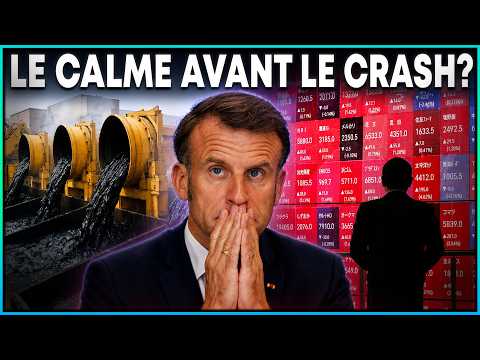
Pourquoi la crise énergétique est sur le point de s'aggraver

Channel: MoneyRadar Published: 2026-05-19 06:00
MoneyRadar

The video argues that a closure of Hormuz is the dominant driver of a global energy shock, and that reopening Russian oil would not meaningfully offset the loss. It frames the near-term crisis as a geopolitical bottleneck rather than a supply-demand problem that OPEC, strategic reserves, or land routes can quickly solve.

Watch on YouTube ›

Get the market thesis, key claims, assets, contradictions, and follow-up questions from any financial video — then unlock a version personalized to your portfolio, watchlist, and favorite speakers.

Detailed summary

This is a strongly opinionated geopolitical market monologue focused on oil, energy prices, and Europe’s response to a disruption around the Strait of Hormuz. The speaker says the world is missing roughly 20 million barrels per day because Hormuz is blocked, which they present as enough to send Brent sharply higher, drain strategic reserves, and trigger a global crisis within weeks. They argue that France and Europe are already feeling the strain through more expensive fuel, transport, air travel, and agricultural inputs, and they describe emergency measures in France such as allowing fuel tankers to drive on Sundays/holidays and distributing fiscal windfalls back to consumers and certain sectors. A major part of the video rebuts the idea that Russian crude could replace the missing barrels. …

🔒 The full detailed summary continues — read all of it free with an account. Read the full summary →

Main takeaways

  1. Hormuz is presented as the central bottleneck driving a worldwide energy shock.
  2. The speaker believes Russian oil could offset only a small fraction of the lost supply.
  3. Europe’s emergency options are framed as temporary and politically costly.
  4. French consumers and sectors are already seeing higher fuel and transport costs.
  5. The only durable fix, in the speaker’s view, is reducing fossil-fuel dependence.
  6. The video uses a lot of dramatic language and mixes market analysis with promotion.

Market read by horizon

Short term

Tactically, the setup is bullish for oil volatility and transport/fuel inflation if Hormuz remains impaired, with any U.S.-Iran headline likely to move prices fast. The immediate trade risk is sharp whipsaw because the video assumes high geopolitical sensitivity and little spare capacity.

  • Immediate risk is continued volatility in Brent and refined fuels if Hormuz stays shut.
Show more
  • The speaker expects price spikes to keep showing up on news tied to the Strait of Hormuz.
  • France is already using short-term relief measures for fuel logistics and selected users.
Mid term

Over the next few weeks or months, the base case is continued energy pressure unless passage through Hormuz is restored; Russian supply rerouting is not enough to normalize pricing. Confirmation would come from stable shipping flows and easing insurance or freight costs, while any deal breakdown would extend the squeeze.

  • Over the next several weeks to months, the base case in the video is prolonged energy stress unless Hormuz reopens.
Show more
  • The speaker sees Russian supply redirection as structurally limited because Asian buyers already absorb most exports.
  • If sanctions on Russia were lifted, the video argues the market response would still be too small to close the gap.
Long term

Structurally, the video argues that the world is still overexposed to maritime energy chokepoints, so energy security and electrification remain strategic rather than optional. The long-run implication is persistent vulnerability to sea-lane disruptions until economies rely less on imported fossil fuels.

  • The structural thesis is that dependence on imported fossil fuels leaves Europe and other regions vulnerable to geopolitical choke points.
Show more
  • The video implies the global oil system has become less flexible because Russian flows and trade routes have already been reconfigured.
  • A durable solution requires energy substitution, electrification, and distributed power rather than reliance on emergency supply rerouting.
Unlock the full horizon read See the full short-term, mid-term, and long-term implications with confirmation and invalidation signals. Unlock horizon read

Key claims (8)

BEARISH oil supply shock Hormuz

A blockage of Hormuz removes about 20 million barrels per day from the global oil market.

Presented as the core quantitative premise for the entire argument.

BULLISH oil prices Brent

A Hormuz closure can double Brent and trigger a global crisis within weeks.

The speaker links the supply shock directly to an extreme price move and fast crisis timeline.

MIXED energy prices France fuel market

France has reduced its station-level fuel shortage problem, but price pressure remains the main issue.

The speaker contrasts logistics with price effects in the French market.

Unlock 5 more claims See the full bullish, bearish, and counter-consensus argument map extracted from the transcript. Unlock all claims

Assets discussed (5)

Brent
BULLISH commodity

The speaker argues the Hormuz shock could make Brent double and keep prices highly volatile.

Russian crude oil
BULLISH commodity

Mentions Russian supply as a possible alternative source, though the video says it is insufficient to solve the shortage.

Unlock the full asset map (3 more) See all assets mentioned, their directional bias, and the exact reasoning. Unlock asset map

Speakers

SPEAKER Unknown speaker

Where this transcript pushes against consensus

  • The claim that 20 million barrels per day are missing from the market is asserted without clear sourcing and may exaggerate the direct supply loss from a Hormuz shutdown.
  • The video treats Russian oil as too small to matter, but 1–2 million barrels per day is still a meaningful marginal supply response and could affect pricing more than the speaker implies.
  • The presentation assumes a near-certain link between blocked Hormuz and a global crisis within weeks, but it does not clearly distinguish between temporary price spikes and sustained physical shortages.
  • The political argument against lifting Russia sanctions is plausible, but the analysis downplays any market benefit from even partial sanction relief.
  • Some operational details and numbers are delivered in a highly rhetorical way, reducing confidence in precision even where the broad direction may be right.

Topics

Hormuz closureBrent oil pricesRussian crude sanctionsEuropean energy crisisFrench fuel policyOPEC+ responseshipping and insurance riskE85 and EV substitutionfertilizers and food inflationU.S.-Iran negotiations

Create your free research agent

Unlock the full claims, asset map, scores, related transcripts, follow-up questions, and AI chat — shaped around your portfolio, watchlist, favorite speakers, and risks.

  • Full claims and asset map
  • Personalized relevance to your watchlist
  • Follow-up questions you can track
  • Related transcripts from your workspace
  • AI chat about this video
Create your free research agent
TRANSCRIPTAGENT.AI