
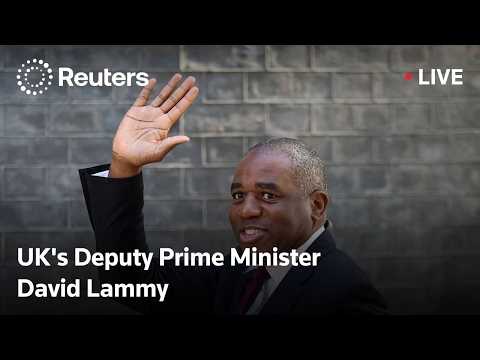
A Reuters live event from the Global Partnerships Conference centered on energy access in Africa, with an Octopus Energy/Global Citizen case study from Sierra Leone and a closing speech by UK Deputy Prime Minister David Lammy arguing for locally led development, shared partnerships, and reform of global finance and institutions.
Watch on YouTube ›Get the market thesis, key claims, assets, contradictions, and follow-up questions from any financial video — then unlock a version personalized to your portfolio, watchlist, and favorite speakers.
The transcript is a conference stage program rather than a market interview, but it contains two main substantive sections. First, Zoisa North of Octopus Energy describes a renewable-energy project in Sherbro, Sierra Leone built with local and government partners: five wind turbines, solar, and battery storage designed to deliver roughly 94% reliability in summer and 100% in some periods. She argues that energy access is transformative for livelihoods, healthcare, small business formation, and economic development, and says the project led to a broader effort to design a financial product for similar projects, including a plan to raise $450 million of institutional capital for more investments in Southern Africa. …
Tactically, the immediate watch is whether the conference commitments turn into announced funding, partnerships, or project pipelines; without that, the setup stays rhetorical. The market-relevant risk is execution slippage, because the story depends on financing and policy support materializing quickly.
Over the next few months, the base case is gradual progress in Africa electrification and development-finance coordination if the coalition can convert advocacy into signed capital and repeatable projects. Confirmation would come from follow-on project announcements and institutional funding closes; failure to scale would relegate this to a well-phrased policy theme.
The structural implication is a shift toward decentralized clean power and locally led development as the preferred model for frontier-market growth. If that regime takes hold, the lasting winners are likely to be platforms that can organize capital, policy, and implementation across systems rather than sell standalone assets.
A systems lens is required; renewables are not just about the generation asset but the grid and connective tissue to reach communities.
Speaker says the missing piece is the broader system, not only solar or wind farms.
The Sherbro project combines five wind turbines, solar, and a battery to provide about 94% reliable energy in summer and 100% at some times.
Concrete description of the operating setup and stated reliability.
Reliable electricity is already creating business formation on the island, including cold storage for fishing and an ice business.
Speaker cites emerging local business uses as evidence of economic effects.
What are your motivations for being so vested in this agenda?
Zoisa North says energy is the most transformative power, tied to her African diaspora background and family experience of lacking electricity and educational opportunity.
Why is it so important that businesses engage from a genuine point of view of building partnerships?
Zoisa North argues businesses create jobs, taxes, and the ability to design their own energy needs, making them catalytic for community electrification and decentralized renewables.
What is your hope on where we can get to over the next 12 months?
Zoisa North hopes more coalitions form across sectors and backgrounds, combining private sector, philanthropy, aid, and a systems lens rather than focusing narrowly on wind and solar buildout.
Unlock the full claims, asset map, scores, related transcripts, follow-up questions, and AI chat — shaped around your portfolio, watchlist, favorite speakers, and risks.
