TranscriptAgent
Try it free
TRANSCRIPTAGENT.AI · transcript analysis

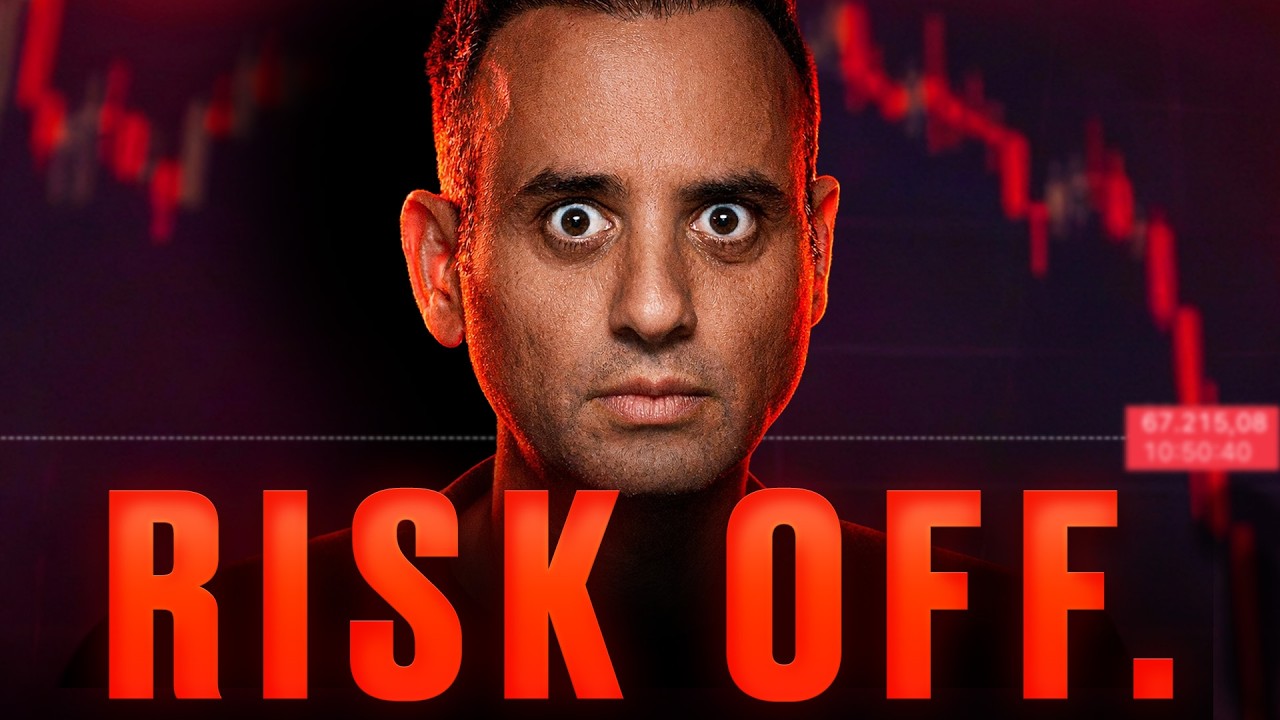
Why Markets Are Going RISK OFF Overnight! [Urgent Update]

Channel: Crypto Banter Published: 2026-03-03 10:06
Crypto Banter

The speaker argues that markets flipped from risk-on to risk-off overnight because the Iran war appears longer and more disruptive than initially priced, especially through oil and the Strait of Hormuz. He says Bitcoin’s rally was interrupted by the selloff in Korea/Japan and rising oil, but still sees supportive medium-term factors like a stronger ISM and progress on the U.S. Clarity Act.

Watch on YouTube ›

Get the market thesis, key claims, assets, contradictions, and follow-up questions from any financial video — then unlock a version personalized to your portfolio, watchlist, and favorite speakers.

Detailed summary

This is a fast-moving market update centered on the overnight shift from relief/risk-on to broad risk-off after escalation in the Iran conflict. The speaker says Bitcoin rallied sharply yesterday from the mid-60s to near 71,000 before reversing as news flow suggested the war could last longer and become more economically disruptive. He ties the reversal mainly to two things: rising oil prices and fear around the Strait of Hormuz, which he says is a critical route for a large share of global oil shipments. He emphasizes that market pricing is about the effects of war on liquidity, inflation, and stability rather than the war headlines themselves. He frames the oil chart as the key signal, describing a breakout above a long downtrend as a “war line” that implies the market is pricing in a longer conflict. …

🔒 The full detailed summary continues — read all of it free with an account. Read the full summary →

Main takeaways

  1. The immediate driver of the selloff is the market repricing the Iran conflict as longer and more disruptive than first expected.
  2. Oil is the key market signal: the speaker treats the breakout above a long downtrend as evidence of a real war-risk premium.
  3. The Strait of Hormuz and nearby shipping lanes are central because even partial disruption can change oil pricing and global risk sentiment.
  4. Bitcoin’s intraday strength was interrupted by the Korea/Japan equity selloff and the broader risk-off move.
  5. The speaker still sees constructive medium-term crypto supports from U.S. regulatory progress and improving U.S. manufacturing data.
  6. He treats the early move out of gold/silver as a first-stage cash/dollar reaction rather than a durable safe-haven rotation.

Market read by horizon

Short term

Tactically, this is a risk-off tape until oil cools and the market stops treating Strait of Hormuz disruption as a live threat; Bitcoin can stay choppy while Korea/Japan and energy prices drive sentiment. Any de-escalation headline that pulls WTI back under the breakout area would be the quickest bullish reset.

  • Watch oil first: as long as WTI stays above the speaker’s “war line,” he thinks the market is still pricing in elevated conflict risk.
Show more
  • Near-term crypto weakness is tied to Korea/Japan risk-off; if those markets stabilize, BTC could recover faster.
  • The biggest tactical risk is further escalation around the Strait of Hormuz or nearby terminals, which could trigger another leg lower in equities and crypto.
Mid term

Over the next several weeks, the base case is that crypto and equities trade through a volatility regime defined by oil, inflation fears, and war headlines. If U.S. growth stays firm and crypto legislation keeps advancing, Bitcoin can reassert its trend once the conflict premium fades; if not, the market may keep pricing a slower, more defensive path.

  • Over weeks to months, the base case is that oil and cross-asset volatility remain elevated until the market gets clarity on how long the Iran conflict lasts.
Show more
  • Bitcoin’s path depends less on the war headlines themselves and more on whether inflation fears and global risk appetite keep tightening financial conditions.
  • The speaker’s medium-term constructive case for BTC rests on two confirmations: continued U.S. economic expansion and ongoing regulatory progress on the Clarity Act.
Long term

Structurally, the transcript argues that geopolitical shocks matter most when they feed inflation and liquidity constraints, not when they exist as headlines alone. If U.S. crypto regulation continues to improve and macro growth remains intact, the long-term backdrop for Bitcoin can still be constructive despite recurring war-driven drawdowns.

  • The structural thesis is that markets ultimately price the macro consequences of conflict—oil, inflation, liquidity, and stability—more than the conflict narrative itself.
Show more
  • If U.S. crypto legislation keeps advancing, the long-term regime for Bitcoin and crypto may remain supported even through geopolitical shocks.
  • He implies that when macro growth improves and regulation clears, Bitcoin can trend higher despite episodic risk-off events.
Unlock the full horizon read See the full short-term, mid-term, and long-term implications with confirmation and invalidation signals. Unlock horizon read

Key claims (9)

MIXED crypto sentiment Bitcoin

Bitcoin rallied from the mid-60,000s to nearly 71,000 before reversing overnight.

The speaker explicitly describes the intraday move and reversal.

BEARISH risk-off Global markets

The market flipped from risk-on to risk-off across equities, oil, and precious metals.

He repeatedly describes a broad cross-asset de-risking move.

BEARISH geopolitics Iran war

The longer-war narrative is what caused the market reversal.

He says the market reversed when it began pricing a much longer war.

Unlock 6 more claims See the full bullish, bearish, and counter-consensus argument map extracted from the transcript. Unlock all claims

Assets discussed (10)

Bitcoin — BTC
BULLISH crypto

He says BTC rallied sharply yesterday and argues it is still supported by improving macro and regulatory conditions, though the rally was interrupted by risk-off.

South Korea index (KOSPI)
BEARISH index

He highlights an 8-9% drop as part of the global risk-off move and says it matters for Bitcoin because Korea is important for crypto flows.

Unlock the full asset map (8 more) See all assets mentioned, their directional bias, and the exact reasoning. Unlock asset map

Speakers

SPEAKER Unknown speaker

Where this transcript pushes against consensus

  • The speaker treats the Strait of Hormuz as effectively closed, but the transcript itself also notes that the U.S. says it remains open; the practical status is therefore less clear than he presents.
  • He assumes the war was partly planned around a Hormuz closure scenario, but offers no direct evidence beyond inference.
  • His claim that Iran cannot sustain the war for long is asserted confidently without concrete military or economic support in the transcript.
  • The idea that silver is a store-of-value asset is asserted loosely; in practice silver often trades more like a cyclical commodity than a pure safe haven.
  • He uses oil as the main market signal, but the link between a short-term oil spike and a durable broad market correction is not proven in the transcript.

Topics

Iran war escalationStrait of Hormuzoil breakoutBitcoin price actionglobal risk-offSouth Korea equitiesJapan equitiesstablecoin regulationISM manufacturinggold and silver

Create your free research agent

Unlock the full claims, asset map, scores, related transcripts, follow-up questions, and AI chat — shaped around your portfolio, watchlist, favorite speakers, and risks.

  • Full claims and asset map
  • Personalized relevance to your watchlist
  • Follow-up questions you can track
  • Related transcripts from your workspace
  • AI chat about this video
Create your free research agent
TRANSCRIPTAGENT.AI