
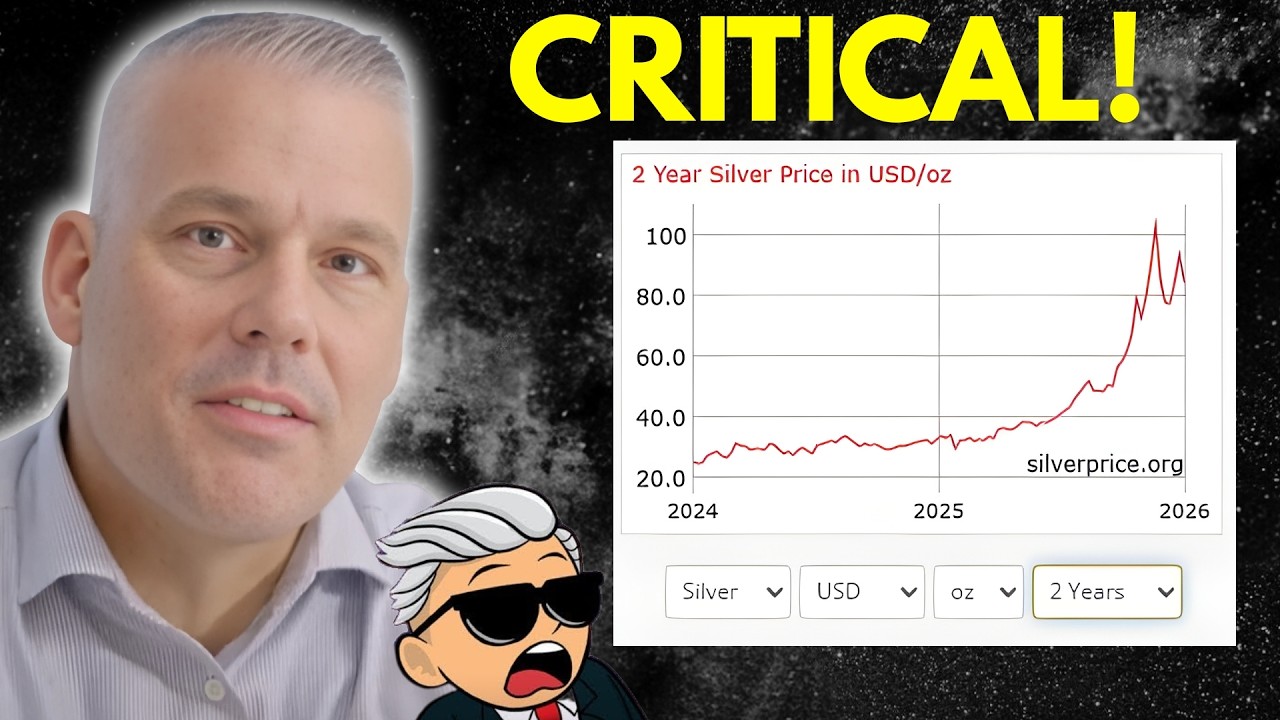
The video is a host-led silver giveaway wrapped around an interview with David Bush about why gold/silver are rising, AI-driven sector rotation, and how to think about a possible 2008-style drawdown. The core message is broadly constructive on precious metals as a safe haven, but the guest’s main actionable investing advice is diversification into AI infrastructure beneficiaries like energy, utilities, industrials, and materials.
Watch on YouTube ›Get the market thesis, key claims, assets, contradictions, and follow-up questions from any financial video — then unlock a version personalized to your portfolio, watchlist, and favorite speakers.
This is a mostly promotional interview on a silver-focused channel. The opening portion is a giveaway announcement: the host says he will give away 30 ounces of silver for March to a randomly chosen commenter who likes, subscribes, and posts a silver price prediction or favorite type of silver. He then introduces the guest, David Bush, as a Chartered Financial Analyst and co-chief investment officer at Trajan Wealth. The discussion starts with why silver and gold are rising. Bush attributes the move to a mix of hotter-than-expected PPI inflation, market concerns about AI-driven efficiency and layoffs, and geopolitical risk, especially tensions involving Iran and a large U.S. military buildup in the Middle East. He says investors often turn to gold and silver as safe havens in periods of inflation and geopolitical stress. The conversation then shifts to AI’s labor impact. …
Tactically, the immediate read is mildly constructive on silver and gold while inflation and geopolitical headlines stay hot, but the move looks narrative-driven and could fade if those catalysts cool. Near term, the cleaner trade idea is likely the AI-infrastructure beneficiaries rather than chasing the most crowded AI names.
Over the next few months, the likely path is continued rotation into energy, utilities, industrials, industrial materials, and related supply-chain names if AI capex keeps expanding. That view weakens if inflation rolls over, layoffs fail to widen, or the market stops rewarding the infrastructure theme.
The structural view is that AI is a durable productivity shock that will redistribute profits from software/platform hype toward the physical and resource-heavy layers of the economy. In that regime, precious metals remain a long-run hedge against policy stress, inflation surprises, and geopolitical instability.
Hot PPI inflation is helping push gold and silver higher because investors see them as safe havens when inflation risk rises.
Guest links higher-than-expected PPI to precious-metals strength and explicitly says investors turn to gold and silver in inflationary periods.
AI adoption will likely increase layoffs in sectors where software and automation can replace human labor more cheaply and quickly.
Guest directly says AI can do projects faster and does not require wages or benefits, implying more layoffs.
The best way to invest in the AI boom is to focus on the infrastructure layer rather than trying to compete directly with dominant AI platforms.
Guest says large language models are hard to displace and points investors to the next layer of beneficiaries.
Why do you think silver and gold are back on the rise? Is it geopolitics, monetary policy, or something else?
Bush says the move reflects a combination of hotter PPI inflation, AI-related efficiency and layoffs, and geopolitical tension involving Iran and the Middle East.
Are we going to start seeing more layoffs as companies move work to AI?
Bush expects more layoffs in specific sectors because AI can perform tasks faster and cheaper and requires no wages or benefits, though he says workers can adapt by learning the technology.
Where should investors put money now—AI, oil, commodities, or something else?
Bush says to look for opportunities in AI infrastructure rather than trying to compete with leading AI platforms, especially in energy, utilities, industrials, and materials.
Unlock the full claims, asset map, scores, related transcripts, follow-up questions, and AI chat — shaped around your portfolio, watchlist, favorite speakers, and risks.
