His recurring worldview is broadly anti-fiat and systemically cautious.
📈 See how Mario Innecco's thesis changed over time →Preview how this speaker shows up across market transcripts. Unlock the full archive, AI chat, and the version personalized to your watchlist, followed channels, and favorite speakers.
Mario Innecco presents as a market commentator focused on precious metals, macro risk, and energy. Across the supplied material, he frames himself as a long-running contrarian observer of monetary and financial systems, with a channel identity centered on “alternative economics.” He repeatedly discusses gold, silver, bonds, debt, central-bank behavior, and energy constraints, and he treats these as interconnected parts of a broader systemic picture. He also positions physical metal ownership as savings rather than speculation.
His recurring worldview is broadly anti-fiat and systemically cautious. He argues that rising debt, reserve weaponization, de-dollarization, central-bank gold buying, and bond-market stress point toward a transition away from the post-1971 debt-based order. He consistently sees gold as a hedge against monetary debasement, institutional loss of confidence, and geopolitical disruption; silver and select mining equities are secondary expressions of the same theme. He also emphasizes that energy, especially diesel and broader hydrocarbon constraints, can propagate through transport, agriculture, industry, and confidence in the global economy. More than a short-term trader’s view, his outlook is that governments and central banks will keep inflating or managing liquidity to preserve the system, which should remain supportive of hard assets over time.
Every analyzed appearance we have for this speaker, newest first. Open any transcript preview to read the underlying transcript.
Preview:The speaker argues that the bond market is breaking and that gold, silver, and miners are re-pricing first. His core thesis is that rising government bond yields no longer suppress gold the way they did in the 1981–2021 bond bull market; instead, he sees a new regime where higher yields, monetary debasement, and geopolitical stress support precious metals as alternative collateral and stores of value.
Preview:A solo monologue arguing that UK prime ministerial changes (including new PM Andy Burnham) cannot prevent an eventual gilt market crisis. The speaker traces the origin to the 2008 financial crisis bailout, contends that bond vigilantes have reawakened globally, and warns of a vicious fiscal feedback loop where rising yields → larger deficits → more borrowing → even higher yields. The core thesis: structural debt, not leadership, is the problem; markets, not elections, will increasingly dictate political outcomes.
Preview:China is accelerating its PBOC gold purchases dramatically — from under 2 tons/month in 2025 to nearly 15 tons in June 2026 — while simultaneously pushing retail investors away from leveraged paper gold (July 24 deadline) and toward physical accumulation accounts. The speaker interprets this as preparation for a more chaotic, less cooperative world order rather than a formal gold standard. Rising geopolitical tensions (Iran, Middle East), Japanese pension repatriation threatening Treasury demand, and the structural under-backing of the dollar (~20% gold backing vs. a ~45% historical average) all reinforce a bullish gold thesis.
Preview:Mario (maneco64) argues the "next big short" is already underway — a bet against fiat currencies themselves, particularly the US dollar. He draws a parallel to the 2008 Big Short: just as early subprime shorts were frustrated by manipulation before being vindicated, gold and silver bulls will eventually be proven right as the fiat debt system collapses. Key near-term catalysts include China's July 24th deadline for retail gold/silver futures closure and a diesel crack spread that signals an oil-market crisis. The core thesis is unchanged since 2006: own physical gold and silver outside the system.
Preview:A field visit to Par Gold's Brazilian mining operations, hosted by maneco64 (who sits on the board of Chance 3 Royalty). The video walks through the processing plant — crushing, grinding, magnetic separation, leeching, and gold bar smelting — then descends 280m underground into the Pilar mine. Safety protocols are emphasized. Par is a private, pre-IPO company with four mines, one (Pilar) expected to begin production in September 2026. Gold doré bars are shipped via Brinks helicopter, with payment arriving within hours to a day post-pickup. The video is essentially a site tour with no macro thesis or tradable calls.
Preview:The host returns from a trip to a Brazilian gold mine, more convinced than ever that physical gold and silver are deeply undervalued relative to tech stocks and bonds. He argues that war, soaring M2 money supply, a still-growing Fed balance sheet (despite QT rhetoric), and the precedent of Russia's frozen reserves make physical precious metals essential insurance. He flags a potential NASDAQ top as a catalyst for a rotation into hard assets, notes gold miners are historically cheap vs the S&P 500, and suggests silver may be touching the bottom of a falling wedge pattern.
Preview:From a tailings dam at the Pilar gold mine in Brazil, the speaker argues that the affordability crisis is fundamentally a currency-debasement crisis. He estimates real CPI at ~5.5%, implying purchasing power has eroded over 30% in six years. Fed Chair Kevin Warsh's tough-on-inflation rhetoric is dismissed as perception management — real tightening would crash Wall Street, so the Fed will keep inflating. The speaker frames gold as the best long-term insurance against currency debasement and provides a boots-on-the-ground look at the Pilar Gold restart operation.
Preview:The speaker, traveling to a Brazilian gold mine, addresses a follower's comment about the "mental challenge" of holding precious metals during a sharp selloff. He argues the gold/silver drawdown is driven by fears the Fed will get tough on inflation, but he dismisses that as empty talk — the system is too leveraged for genuine tightening. His core thesis: ongoing wars, currency debasement, and exploding money supply make holding physical gold and silver the right call, and current bearish sentiment is a contrarian signal reminiscent of past bottoms.
Preview:The speaker argues that the "debasement trade is over" narrative is a myth. He contends that fiat currencies are structurally destined to lose purchasing power over time because the legal power to create unlimited currency remains intact regardless of who chairs the Fed. Using historical examples (Rome, Weimar, Argentina, Zimbabwe) and the post-1971 dollar regime, he makes the case that gold and silver are superior stores of value. He also discusses his upcoming trip to the Pilar gold mine in Brazil and mentions his board role at Treasury Royalty.
Preview:Peter Carlin (guest) and Mario (host of maneco64) discuss a brewing diesel crisis driven by sour crude shortages, refinery misconfiguration, and geopolitical choke points. Carlin argues that distillate depletion will feed public panic, which will in turn drive gold sharply higher — because gold is a barometer of confidence, not merely an inflation hedge. The SPR is being drawn down for political purposes, diesel spiked 11.5% in one day, and Europe is short 500k barrels/day of jet fuel heading into winter with gas storage at a 15-year low. The conversation frames this as a more serious structural crisis than the 1970s oil shocks.
Preview:The speaker, a former government bond futures broker with over 20 years of experience, argues that the G7 sovereign debt crisis may have begun, triggered by a sharp spike in bond yields across G7 nations on July 8, 2026. He traces the roots back to the 2008 financial crisis, contending that quantitative easing merely transferred private banking losses onto public balance sheets without solving the underlying debt problem. Japanese government bond yields are leading the rout, and Japanese capital repatriation is now transmitting stress to other G7 bond markets. He sees hard assets (gold, silver, precious metals miners) as eventual beneficiaries once markets recognize this is a structural sovereign debt crisis, not merely a temporary yield spike driven by geopolitical events like the war in Iran.
Preview:The speaker argues that China's accelerated gold buying (largest since October 2023) alongside Japan's surging government bond yields are connected events: China sees fragility in the global fiat debt system and is strategically accumulating gold as a reserve asset with no counterparty risk, while Japanese yield spikes threaten to unwind the yen carry trade and push global bond yields higher, worsening sovereign debt burdens across the West.
Preview:Germany's new chancellor Friedrich Merz plans to borrow over €800 billion by 2030 — the largest debt-financed spending program since reunification — funding massive military expansion (€184B/year by 2030) and €500B in infrastructure. The speaker frames this as the death of Germany's fiscal conservatism and the "Schwarze Null" (balanced budget) doctrine, arguing it will pressure bond yields across Europe, weaken the euro versus gold, and confirm the thesis that governments always choose inflation over austerity. The core trade implication: gold benefits as sovereign debt spirals accelerate globally.
Preview:A solo commentary on maneco64 examining why central banks globally have flipped from net sellers to buying nearly 1,000 tons of gold annually since 2022. The speaker argues this reflects rising sovereign debt, weaponization of dollar reserves, inflation consequences, and a potential shift toward a multipolar monetary system where gold serves as the neutral reserve asset. He offers no price targets or timing calls; the thesis is purely structural and narrative-driven.
Preview:Mario Innecco (maneco64) hosts a live stream analyzing gold's technical position, holding a major trend line after eight down weeks. He discusses the potential US Treasury gold revaluation, a July 24th deadline for Hong Kong retail futures positions that could signal volatility, seasonal gold strength from July through October, and his long-term bullish thesis on gold and silver tied to fiat currency debasement. He also shares updates on Chancfree Royalty and an upcoming trip to Brazil's Pilar Gold mine.
Preview:This is an interview about Mickey/Manny’s book *The Entropy Trap*: his core claim is that the global economy is not in a normal cycle but in a phase transition between financial systems, where old rules like mean reversion and 60/40 may fail and control, scarcity, and collateral matter more. He argues the near-term period is especially dangerous because debt, demographics, credit stress, and geopolitical choke points are building faster than AI productivity can fully offset them.
Preview:The speaker explores the possibility that President Trump could announce a gold revaluation on America's 250th Independence Day weekend, resetting the statutory gold price from $42.22 to ~$4,222.22 per ounce. This would unlock ~$1.09 trillion in windfall for the Treasury, which could be used for household stimulus checks, debt retirement, or a sovereign wealth fund. The speaker sees scattered hints — Scott Bessent's past comments, COMEX options bets, US Mint collectible coin pricing — but stops short of predicting it will happen. The underlying thesis remains: own physical gold and silver as protection against fiat currency debasement.
Preview:The speaker argues that Japan's bond market is in the early stages of a crisis, with JGB yields surging (30-year above 4%, 10-year above 2.7%) while the yen simultaneously weakens past 162 USD/JPY — a 40-year low. He frames this as the unwind of the world's largest carry trade, where decades of near-zero yen borrowing funded global asset purchases. The core concern: rising JGB yields may eventually pull Japanese capital home, draining liquidity from US Treasuries, equities, and global markets. Gold is positioned as the beneficiary versus bonds, which he argues are no longer "risk-free."
Preview:Gold bull thesis defended against a negative Financial Times article calling gold "finished." The speaker argues the FT headline is a contrarian signal, citing historical corrections in secular bull markets (1976, 2008, 2020), unchanged bullish fundamentals (debt, money printing, central bank buying), and selective reporting by the FT on Chinese gold policy. The Q2 selloff is characterized as a buying opportunity, not the end.
Preview:Mario from maneco64 interviews David Jensen about oil, inflation, gold/silver, and the credibility of paper-market pricing. Jensen argues the recent drop in Brent/WTI looks disconnected from physical tightness, cites crack spreads, tanker flows, Cushing inventories, and refinery/fuel shortages, and extends the same critique to gold and silver futures pricing.
Preview:The speaker argues that the BIS’s warning on the AI boom matters because a funding bust in hyperscalers and AI capex could spill into the broader economy, much like past investment manias. He ties that risk to easier policy responses, higher liquidity, and ultimately a supportive backdrop for gold and silver, while also stressing government debt, Japan, and bond yields as key cross-currents.
Preview:Mario, joined by Peter Carlin, argues that the recent surge in very large gold call options could reflect more than speculation: possibly structured hedging, sovereign-related demand, or even positioning around a future gold revaluation. The conversation stays focused on how gold could be repriced higher, what that would mean for Treasury/Fed balance sheets, and why gold and silver are still favored long-term despite the risks of options and exchange intervention.
Preview:Elijah K. Johnson hosts Lobo Tiggre and Mario Innecco to debate the sharp pullback in gold and silver after an explosive run. Both remain structurally bullish on precious metals, but Lobo argues the recent washout is a normal chance to protect gains and wait for better entries, while Mario sees the move as a volatility-driven shakeout inside a still-bullish inflation/debasement regime.
Preview:Peter Carlin argues that the recent gold and silver pullback is healthy, not terminal, and that it is creating fuel for a much larger advance in precious metals. He pairs that view with a strongly bearish read on the yen and a broadly destabilizing geopolitical backdrop: Japan’s debt burden, a stronger dollar, escalating strain in Europe, and unresolved Middle East conflict all reinforce his case for higher gold prices and more hard-asset demand.
Preview:A metals-focused interview where both guests remain long-term bullish on gold and silver but think the recent washout could continue in the near term. Lobo Tiggre says he has taken profits in mining stocks and is waiting for a better entry, while Mario Innecco argues bullion is savings/insurance and sees the recent drawdown as a volatile but not thesis-breaking correction amid ongoing currency debasement, inflation, and geopolitical risk.
Preview:Mario Innecco argues that gold’s recent strength is being driven by real physical demand, especially from China, rather than paper-market speculation. He uses Bloomberg’s reported surge in Chinese imports and Alan Greenspan’s 1966 essay on gold and freedom to argue that fiat systems depend on suppressing hard money, deficit spending, and price discovery.
Preview:The speaker argues that America’s large, persistent deficit spending is a structural problem that props up GDP now but will ultimately weaken the dollar, lift yields, and keep pressure on the bond market. He is bullish gold and silver as long-term protections against a fiat system that, in his view, depends on ever-rising debt and monetary accommodation.
Preview:Maneco64 argues the viral $19,600 Liberty Bell gold coin is more likely a collector product than a literal signal that the U.S. is about to revalue gold to that level. He uses the coin as a springboard for his broader bullish case on gold and silver, tying them to debt growth, money-supply expansion, potential QE, and his view that fiat money is being debased.
Preview:Maneco64 argues that gold and economic freedom are inseparable, using both China’s surging physical gold imports and Alan Greenspan’s 1966 essay as evidence. He is strongly bullish on physical gold as a store of value and skeptical of paper gold markets, futures, ETFs, and central-bank/Wall Street price control.
Preview:A short market update from Switzerland, noting improving Iran-US negotiations in Lucerne and a modest pullback in gold (from ~$4,220) and silver (from above $67). The core argument is that silver could follow tungsten's 10x price surge over the past 14 months due to Chinese export controls, tight supply, and critical-mineral status — though the speaker hedges this as "a distinct possibility" not a certainty. Also promotes a tungsten-focused private company (Pure Tungsten, Sangdong Mine in South Korea) and an interview with a tungsten expert.
Preview:The speaker argues that the UK’s political churn, global debt expansion, and post-1971 fiat money system are all part of a larger breakdown that will end in currency debasement and a crisis. His remedy is to stay outside the system with physical gold and silver, plus related mining exposures, because he thinks central banks and governments will keep inflating away purchasing power.
Preview:Maneco64 argues the Iran–Israel conflict has exposed a major shift in energy and monetary power: he says Iran effectively “won” by proving it can hold global oil supply hostage, while Trump’s remarks about only having four weeks of U.S. oil reserves underscore vulnerability. He links this to sanctions, frozen assets, and declining trust in the dollar, and extends the point to Russia, China, and a broader move toward non-dollar settlement and gold reserves.
Preview:The video argues that gold and silver should be held as long-term insurance against fiat currency debasement, with the recent Fed-related selloff treated as noise. The speaker leans heavily on monetary history, inflation compounding, and dramatic comparisons between the gold-backed era and today to argue that precious metals are still undervalued and could rise much further, especially if policy makers ever revalue gold as part of a broader monetary reset.
Preview:The speaker argues that the Fed did not meaningfully change the long-run inflation/debasement story and that the recent drop in gold, silver, miners, and stocks was just noise around the June 18, 2026 FOMC meeting. His core message is that fiat money, not temporary events like oil or war headlines, is the true driver of currency debasement, so gold and silver should be held as long-term insurance.
Preview:The speaker argues that the Iran war’s aftermath may weaken dollar dominance, strengthen gold, and keep oil supported despite the recent Brent pullback. He frames the conflict as potentially analogous to a modern “Suez crisis” for the U.S., while saying it is still too early to be certain and that the next 2–3 years will determine the geopolitical outcome.
Preview:Maneco64 argues the world is in a long-running monetary breakdown driven by fiat currency, repeated devaluations, and government debt expansion. He contrasts that backdrop with gold, silver, and tungsten as assets that benefit from monetary disorder, and he uses a Switzerland trip plus recent price moves to frame the urgency of the call.
Preview:Simon Hunt argues the Iran-Israel/U.S. conflict is entering a messy transition phase, not a quick settlement. He thinks any near-term understanding with Iran would be only a memorandum, not a binding peace deal, and expects sporadic conflict after a delay past July 4 rather than a sustained campaign. He links that geopolitical shift to a broader move toward a multipolar order, with Russia and China helping reshape Gulf security and with gold regaining monetary importance.
Preview:Eric Yeung argues the key market event is the upcoming FOMC under new Fed chair Kevin Warsh, where he expects a hold for now but sees a path toward rate cuts after Warsh changes the inflation lens to trimmed/stripped core PCE. His bigger thesis is that gold and silver are being driven less by nominal yields than by liquidity, Treasury-market control, and real rates, with today’s weak Treasury demand and geopolitical stress setting up a bottom and rebound in precious metals. He goes further and says the most plausible way for the US to regain control of the Treasury market is a revaluation of the Treasury’s gold holdings, paired with gold-linked Treasury bonds.
Preview:Maneco64 argues that gold and gold miners remain the key hedge regardless of whether the world gets a new inflationary leg or a deflationary bust. He uses the Great Depression as his core historical analogy, saying gold mining stocks were the standout winners then because miners sold at higher gold prices while costs stayed depressed, and he extends that logic to silver and critical minerals today.
Preview:Maneco64 argues that large Western deficits, rising interest burdens, and persistent money creation amount to financial repression and a “war on savers.” He sees the US and UK as increasingly dependent on inflating away debt rather than fixing spending, and says he remains constructive on gold, silver, and miners despite weak sentiment. The video also includes a promotional update on SpaceX’s IPO and several mining-related IPO/royalty projects tied to his channel.
Preview:Manco64 argues the recent collapse in precious-metals sentiment is a contrarian setup, not a change in the underlying thesis. He says gold, silver, and miners remain supported by the same long-term forces he has cited for years—fiat debasement, central-bank buying, and worsening fiscal/monetary/social conditions—while the current drop is just a bounce in fiat currencies.
Preview:Mario Innecco argues that gold and silver remain the best protection against an inflationary, liquidity-driven, politically unstable backdrop. He says central banks and governments are unlikely to truly tighten financial conditions because they need stock markets and consumer spending supported, while China’s gold buying and Brazil’s move toward panda bonds point to a slower erosion of dollar dominance.
Preview:Maneco64 argues that fiat currencies, especially the U.S. dollar, are in a long secular decline versus gold and that recent gold weakness is just noise inside that bigger trend. He ties the durability of the dollar to U.S. military power and warns that a major geopolitical shock—especially involving Iran/Israel/U.S.—could quickly collapse confidence in the dollar and, by extension, other fiat currencies.
Preview:The speaker argues that the bottom 90% in the US, UK, and Europe are living through a real stagflationary environment, driven by war-related inflation, the Strait of Hormuz disruption, rising money supply (M2), and persistent fiscal deficits at 6-7% of GDP. He sees the ongoing Iran-Israel conflict keeping oil and geopolitical risk elevated, and points to China ramping up gold purchases, Brazil issuing Panda bonds to reduce dollar dependency, and a temporary World Cup jobs boost masking underlying economic weakness. His core advice: hold and accumulate physical gold and silver, which he believes are being irrationally sold off by weak hands.
Preview:The video is a solo live market chat from Monaco64 centered on a bearish macro view: he argues the U.S. Treasury is facing a rollover problem with more than $8 trillion in short-term debt due over the next year, while the broader Western monetary system is being propped up by debt creation and likely cannot be stabilized by current policy tools. He repeatedly says he prefers holding physical gold and silver outside the banking system rather than fiat, ETFs, or pensions. The stream also covers Japan’s rising JGB yields, China real estate weakness, U.S./UK fiscal fragility, AI and SpaceX hype, and his view that Russia/Ukraine, government investing, and possible gold revaluation all fit into a deteriorating financial regime.
Preview:The speaker argues that the post-selloff move in markets does not change the underlying problem: an overlevered, debt-based financial system propped up by central banks, banks, and derivatives. He frames derivatives as a giant leveraged casino, says bailouts socialize losses while profits remain private, and concludes that physical gold and silver are the only safe place outside the system.
Preview:The speaker argues that three developments point to a coming fiat and sovereign-debt stress cycle: a potential U.S. Treasury market bust, a geopolitical weakening of U.S. control over global waterways, and signs that a future Fed team may revisit gold-linked policy ideas. His conclusion is that the environment remains constructive for gold and silver, despite near-term frustration and possible stock-market melt-up or correction.
Preview:Bob Morardi argues that the US-Israel-Iran conflict is a dangerous accelerant for a much broader collapse of the Western debt-based order. He frames gold, real assets, and self-reliance as the correct defenses, while warning that energy shocks, food inflation, and geopolitical escalation could cascade into regime change or even nuclear war.
Preview:Maneco64 argues that gold’s rise to the top reserve asset is a major vindication for hard-money views and a rejection of fiat-currency orthodoxy. He leans heavily on an ECB-reported shift in central bank reserves, says central banks have been buying gold aggressively since 2022, and frames the Fed, BIS, and other monetary institutions as cartels that try to manage prices they cannot really control.
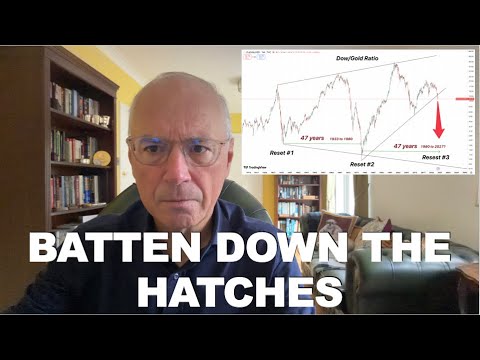
Preview:Maneco64 argues that the stock market may look expensive in fiat-dollar terms, but that framing is misleading if the dollar itself is losing purchasing power. He centers the Dow/gold ratio to claim equities are not unusually overvalued versus real money, and says the more likely outcome is a long melt-up in nominal stock prices alongside stronger outperformance by gold and silver.
Preview:Peter Carling argues that gold and oil are acting like currencies in a worsening geopolitical shock, with India and Turkey offering the clearest early signs of strain in oil-importing, gold-holding economies. He thinks the immediate backdrop is dangerous: if the straits stay closed and storage keeps drawing down, the last few months' moves in oil, currencies, gold, and treasuries could accelerate sharply.
Preview:Mario argues that Jim Sinclair’s “fifth pillar” for a historic gold bull market is now in place: the top in the long bond market. He says the other pillars are already visible too—weakness in the dollar, declining trust in paper assets, strong commodities, and persistent U.S. deficits—so the backdrop is turning structurally favorable for gold and precious metals.
Preview:The speaker argues that a U.S. gold revaluation would be a covert but powerful way to address debt and currency stress, and he sees unusual gold call-option activity as a possible tell that insiders may be positioning for it. He says he is not changing his own holdings: he remains long physical gold, silver, and miners.
Preview:Doug Casey argues the world is in a long-running civilizational decline even if the long-term arc of history has been upward, and he thinks the near-term path is worse because of the rise of the state, debt, and geopolitical stress. He and Matt Smith also make a strong case for gold and silver as monetary hedges, with Casey especially bullish on gold miners because he says they are still cheaply priced relative to gold.
Preview:Mario Innecco argues that precious metals are still the most attractive corner of the market, with silver technically close to a breakout and miners even more undervalued. He also says the bond bull market has ended, long yields are in a new uptrend, and confidence in paper metal exchanges like COMEX and LBMA is eroding in favor of physical delivery.
Preview:Maneco64 argues that inflation is not a natural market outcome but a government-created one, and that the only real solution is smaller government, sound money, and eventually ending fiat currency and the Fed’s ability to create money. He uses historical comparisons from the US, UK, and even Rome to claim that inflation rises with war, state expansion, and currency debasement.
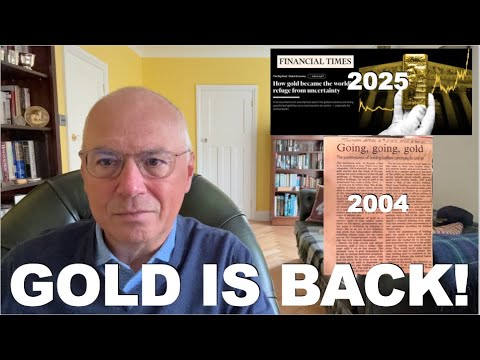
Preview:The speaker recounts his personal "Eureka moment" (~2003-2004) when he noticed the Bank of England £10 note still carried an archaic promise to "pay the bearer on demand the sum of 10 pounds" — a gold-standard relic rendered meaningless under fiat. He called the Bank of England to ask what they now promise to pay in; the answer ("a new note if yours is damaged") confirmed to him the system is deceptive. He ties this to his broader thesis: all fiat currencies historically go to zero, the current system is the same, and we are in the "biggest wealth transfer in modern history." He urges viewers to hold physical gold, silver, and mining stocks before the collapse accelerates, while noting markets show melt-up signs and that tech/IPO enthusiasm (SpaceX) contrasts with minimal precious-metals exposure.
Preview:Mario Innecco argues that the current rise in bond yields is not bearish for gold and silver because the real issue is a long-running bear market in bonds and a broader debt/refinancing crisis. He expects hard assets—especially gold, silver, and mining stocks—to outperform paper assets as fiat systems face strain, with some very aggressive upside targets for gold if the trend continues.
Preview:David Jensen argues that the global debt system is structurally breaking under compounding interest, while gold and silver are being managed to suppress the monetary signals that would expose that stress. He also says the Strait of Hormuz crisis is not the root cause of the coming inflation shock, but a catalyst that is already impairing oil, lubricant, fertilizer, and industrial supply chains and could help trigger the broader unwind.
Preview:Mario Innecco argues that silver and gold are in the early stages of a powerful repricing, driven by technical strength, physical tightness, and what he sees as hidden sovereign accumulation. He thinks silver could reach $100 by July and possibly $200 by end-2026 if it clears key resistance, while gold could reach $7,000 this year and even $8,000-$10,000 in two years. His broader point is that central-bank liquidity, stagflation risk, and geopolitical uncertainty are all supportive of hard assets even if the market is still skeptical.
Preview:Maneco64 argues that central banks and powerful financial institutions are fleeing fiat and accumulating physical gold, which he sees as validation of his long-running bullish view on precious metals. He ties the recent move in gold, silver, and yields to geopolitical stress, especially Iran/Hormuz, and warns that broader political and fiscal trends—especially in the UK—amount to creeping socialism that is eroding prosperity and debasing currency.
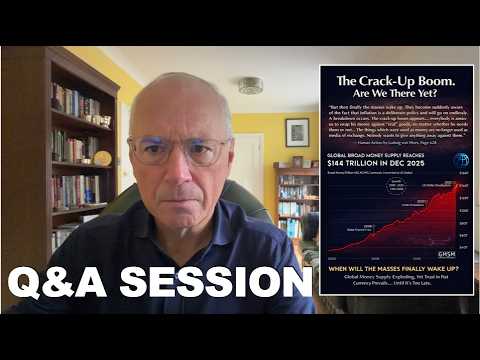
Preview:Mario (maneco64) delivers a solo live stream arguing that the US-led fiat currency system is entering its terminal phase — a von Mises "crack-up boom." He covers the petrodollar's decline, central bank gold buying, the bond bear market, and why gold/silver miners are just beginning a secular bull run. The session is mostly Q&A with viewers, touching on consumer sentiment vs. S&P divergence, AI stock concentration risks, the Iran/Strait of Hormuz situation as a potential trigger, and personal anecdotes.
Preview:Mario Innecco argues that the biggest coming crisis is not just rates or equities but a sovereign-debt and currency-system breakdown. He says higher bond yields are a symptom of a bond bear market, not a healthy sign, and that this environment should support gold, silver, and other hard assets while pressuring paper assets and highly leveraged sectors.
Preview:Maneco64 argues that AI may be deflationary for some wages or job categories, but it will not save the purchasing power of the dollar because broader money and credit creation keeps expanding. He frames the AI-deflation narrative as a justification for more monetary easing that ultimately benefits financial assets and hard assets differently, with gold and silver as the favored stores of value.
Preview:Mario Innecco argues that the broad market is euphoric and that precious metals remain the undervalued contrarian trade, with silver especially still in a bullish trend despite recent consolidation. He thinks rising sovereign debt, persistently expanding money supply, and cracks in bond markets point to higher yields, easier monetary debasement, and eventually renewed upside in physical gold and silver.
Preview:Clive Thompson argues that gold and silver miners are still cheap relative to the broad market, that cash and bonds are being eroded by inflation and debt monetization, and that precious metals should benefit as governments keep printing and capping yields. The conversation also showcases his portfolio simulator to illustrate how adding gold improves returns and the Sharpe ratio over long periods.
Preview:The speaker argues that despite the recent sharp correction in silver, the uptrend remains intact. Silver bounced off its breakout line, and a retest of $90 and even $100 by July is possible. Gold shows a similar constructive pattern. The macro backdrop is stagflationary — weak PMI data from the UK and Eurozone, elevated yields, and expanding central bank balance sheets — which he frames as bullish for precious metals and commodities, bearish for bonds and cash. He views the hard-asset secular bull market as still in its infancy.
Preview:Maneco64 argues that markets are entering a sovereign debt crisis and that physical gold and silver outside the banking system are the best protection. He frames rising bond yields as the key signal, says mainstream CPI data understate inflation, and uses the 1930s and 2010-2012 European crisis as historical analogies for why precious metals and miners can outperform when confidence in sovereign debt breaks down.
Preview:The speaker argues that gold and silver are benefiting from a broader sovereign-debt and fiat-currency stress regime, not being held back by rising yields. He cites Goldman Sachs’ higher central-bank buying forecast, Tether’s reported gold accumulation, and rising US/Japan bond yields as evidence that the market is moving into a bond bear market and possible summer turbulence.
Preview:Mario Innecco argues that rising inflation, persistent liquidity, and a bond bear market are making gold and silver more attractive despite short-term volatility. He is broadly bearish bonds, skeptical that central banks can meaningfully tighten, and thinks geopolitical risk and debt overhang support hard assets.
Preview:The speaker argues that central bankers can reframe inflation through statistical choices, with a potential shift from core PCE to trimmed mean PCE making the Fed look closer to “winning” on inflation and therefore more able to cut rates. He says the real inflation signal is money and credit growth, especially M2, and uses that to support a bullish case for gold and silver while criticizing bond market reliance.
Preview:The speaker argues that Goldman Sachs’ revised forecast for stronger central-bank gold buying supports a bullish medium-term case for gold, especially as sovereign debt stress and rising bond yields intensify. He pairs that with a broader anti-fiat, pro-gold-and-silver thesis, using Gresham’s law, Weimar-era volatility, and current Treasury/JGB yield moves to argue that central banks are signaling trouble and gold is acting as the preferred reserve asset.
Preview:Mario argues the recent pullback in gold and silver is temporary and that the bigger story is a bond bear market that is now spreading beyond the UK into the U.S., Japan, and Germany. He uses his Frankfurt gold conference experience, Jim Sinclair’s “fifth pillar” idea, and rising long yields to argue that paper currencies are weakening while physical gold and silver remain the main protection.
Preview:Mario Innecco argues that modern fiat money is unconstitutional, unstable, and controlled by central banks rather than ordinary citizens. He frames gold and silver coinage as the original U.S. monetary system, attacks Federal Reserve independence, and extends the critique to the ECB, BIS, and CBDCs.
Preview:Maneco64 argues that the recent drop in gold and silver should not be read as a bearish thesis break. His core message is that the real driver is a worsening global sovereign bond bear market: yields are rising in the U.S., U.K., and Germany, collateral is under pressure, and that kind of disorder ultimately supports physical precious metals as financial insurance.
Preview:Gary Savage argues silver has broken out of a huge 45-year base and may still have far more upside than most expect, with $250, $500, and even higher framed as possible over the full cycle. He thinks the recent pullback in gold and silver is a normal ABC correction inside an ongoing secular bull market, not the start of a major top, and says silver is leading gold and the miners.
Preview:The speakers argue that the Middle East conflict could keep energy and shipping risks elevated, with delayed spillovers into oil, fertilizers, plastics, and broader inflation. They pair that with a bearish view on the UK: rising gilt yields, persistent money-supply growth, elevated public spending, and higher taxes are presented as signs that the economy is under strain and that asset prices have been distorted by monetary expansion.
Preview:The speaker argues that silver and gold are being pulled by strong physical demand from central banks, sovereign wealth funds, and family offices that are bypassing COMEX/LBMA paper pricing and paying large premiums directly to miners. He pairs that thesis with a technical setup: gold/silver ratio breakdown, silver outperforming, and bullish-looking miner charts.
Preview:The speaker argues that Britain—and the wider West—has reached the end of a long Keynesian/debt cycle. He says rising government bond yields are not mainly about politics but about a mathematical and cyclical debt problem that no politician can fix, and he expects UK yields to keep rising sharply over the next few years.
Preview:Mike Small argues that the world is entering a larger reset driven by China’s property collapse, hidden losses, and the knock-on strain it could create for banks, local governments, and global trade. He links that view to his earlier calls in the ERM crisis and Dubai housing crash, and says the current setup is more dangerous because it is broader than 2008 and cannot be easily solved with another round of QE.
Preview:Maneco64 argues that central banking "independence" is a myth used to hide control by banking elites. He leans on gold/silver money theory, the US Constitution, and historical examples to claim fiat currencies and central banks systematically debase purchasing power while socializing losses and privatizing gains.
Preview:The video is a live discussion between Mario (Maneco64) and Clive Thompson about Gordon Brown returning as a UK government adviser, with most of the conversation arguing that Brown helped create today’s UK debt, gold, and banking problems rather than fixing them. They also cover silver supply tightness, gold’s technical setup, gilt yields, UK inflation/public spending, petrodollar erosion, crypto, moon-landing skepticism, and the channel’s own books/merch.
Preview:Mario Innecco argues that gold and silver remain structurally bullish despite recent softness, with short-term sentiment depressed but long-term supply/demand, central-bank buying, and monetary debasement still intact. He emphasizes declining futures open interest, persistent physical demand from Asia, especially China, and the idea that the West is suppressing paper prices while the East accumulates metal.
Preview:Mario Innecco argues that gold remains underpinned by central-bank buying and that silver should outperform gold once the current consolidation ends. He is broadly bullish on precious metals and hard assets because he sees persistent monetary inflation, rising debt, and eventual policy easing or intervention from central banks as the backdrop.
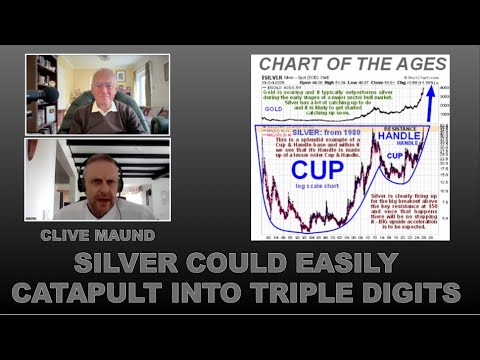
Preview:Clive Maund argues the recent pullback in gold, silver, and miners was an intermediate correction within a larger breakout, not the start of a new bear phase. His key signal is the Gold Miners Bullish Percent Index (BPGDM), which he says collapsed to unusually low readings, alongside bullish moving-average structure and improving momentum, suggesting a new major up-leg is beginning.
Preview:Mario Innecco argues that silver is becoming strategically important again because China, India, and parts of the Middle East are treating it less like a trading metal and more like a monetary/industrial reserve asset. He ties the setup to sanctions, deglobalization, critical-minerals policy, and weakening confidence in the dollar system, while saying the current consolidation in metals is normal and likely resolves higher.
Preview:Peter Carlin argues that gold and silver remain in strong bull markets, with the UAE/Gulf security and liquidity shock potentially acting as an additional catalyst. He frames the UAE as a possible sovereign-debt stress case whose weakened security posture, oil-export vulnerability, and reliance on swap lines could feed contagion fears and support precious metals.
Preview:The speaker argues that gold and silver are consolidating but still set up for another leg higher, driven by geopolitical fragmentation, de-dollarization, and rising bond-market stress. He uses the latest Treasury yield spike, China-related sanctions, and Iran/UAE oil tensions to argue that the dollar system is weakening and hard assets are the main beneficiaries.
Preview:Maneco64 argues that gold, silver, and miners may be ending a consolidation and resuming the broader bull market. His main technical anchor is the falling gold-silver ratio and a bullish setup in the miners-versus-gold chart, alongside better miner earnings and a supportive macro backdrop of Buffett-style dollar skepticism and heavy cash holding by Berkshire.
Preview:Mario Innecco argues that silver and gold are being re-rated as strategic money, not just commodities, because of China’s export restrictions, record imports, sovereign buying, and widening geopolitical fragmentation. He thinks the market is still underpricing silver’s monetary/industrial importance and sees gold’s current consolidation as a bullish pause before a much higher move, with $6,000 as only an intermediate target.
Preview:Mario Innecco argues that silver and gold are being re-monetized globally as China, India, and parts of the BRICS accumulate metals, while Western policymakers remain fixated on finance and sanctions. He sees this as bullish for precious metals, bearish for the dollar/petrodollar system, and a sign that bond-market stress and geopolitics are accelerating a rotation toward hard assets.
Preview:Tavi Costa argues the U.S. is in a debt trap that will be resolved by letting inflation run hotter, not by maintaining high rates. He says the Fed is understating inflation, rates are too high relative to debt servicing capacity, and investors should own hard assets—especially gold, miners, and select commodities—as the monetary regime shifts.
Preview:Mario argues that gold and silver are in a consolidation phase after a strong run, but the long-term setup remains bullish because of central-bank buying, low futures open interest, ongoing monetary expansion, and rising debt. He is especially constructive on silver, which he sees as more supply-constrained and undervalued than gold.
Preview:The speaker argues that gold’s long-term bull market is being validated by both market action and institutional forecasts, while silver is beginning to be reclassified from a purely industrial metal toward a monetary asset. He says bullion banks have historically underestimated precious metals, but are now turning structurally bullish, and he thinks gold around 4,600 still offers poor downside-versus-upside relative to targets as high as 6,000-7,200. He also expects mining stocks to eventually outperform gold once a long-standing ratio breakout triggers.
Preview:Maneco64 argues that U.S. sanctions on China-linked Hengli and Iranian refining assets may accelerate dedollarization, push China toward more treasury sales and gold accumulation, and eventually force higher rates or yield-curve control. He treats gold and silver as the main beneficiaries of a world moving away from dollar dependence and says current market noise is temporary while the broader debt and spending problem worsens.
Preview:Mario Innecco argues that inflation is primarily monetary expansion, not consumer prices or oil, and that the fiat system structurally requires ongoing credit growth. He says this is why gold and silver remain the best way to preserve purchasing power, especially as debt levels are too high for central banks to genuinely tighten without causing a collapse.
Preview:The speaker argues that the UK is approaching a historic debt and currency crisis driven by decades of fiat credit expansion, and says the bond market is beginning to expose that stress. He also frames gold and silver as practical protection outside the financial system, using Turkey’s gold reserve behavior as evidence that bullion still works as crisis insurance.
Preview:Maneco64 argues that the market is finally waking up to a multi-year neglect of hard assets—especially gold, silver, rare earths, critical minerals, and commodities more broadly. He links that thesis to deglobalization, geopolitical fragmentation, tighter supply chains, rising bond yields, and what he sees as a long commodity bull market that began around 2019-2020 and is still early relative to financial assets.
Preview:Mario Innecco argues that the recent selloff in gold, silver, and miners may be giving way to a rebound, with the stronger tell coming from rising bond yields, especially Japan’s long end, and from crude oil breaking higher. He frames the move as part of a larger breakdown in fiat and central-bank credibility, while highlighting low precious-metals sentiment and possible policy intervention as the key near-term variables.
Preview:Maneco64 argues that gold’s recent pullback may be the last good buying window before a move toward $6,000, and he extends the same bullish frame to silver and miners. He leans heavily on bullish bank forecasts, central bank buying, and a technical read that the recent lows in March marked the correction bottom.
Preview:Interview with Mario of Maneco64 and Eric Yeung, centered on Yeung’s argument that China is much more energy independent than commonly believed and therefore less exposed than U.S. allies to Middle East supply shocks. He says China’s coal-heavy grid, fast-rising EV adoption, domestic shale and coal resources, and Russian pipeline links all reduce dependence on imported oil and gas. Yeung then connects that energy model to precious metals, arguing that silver is strategically important for EVs and grids, while gold benefits from China’s growing preference for non-U.S. reserve assets.
Preview:Mario Innecco argues that silver is moving back into a monetary role, with India’s new silver remonetization rules, rising Asia-linked imports, and the broader de-dollarization trend as the main catalysts. He ties that to central banks staying easy, persistent money-supply growth, and a long-term shift away from debt-based fiat systems toward gold and silver as savings and collateral.
Preview:A solo Maneco64 market wrap arguing that the bond market is under severe pressure, crude is breaking out, and precious metals are holding up despite recent selling. The speaker pairs the market move with a strong anti-central-bank, anti-Fed political/economic critique and ends with a bullish sales pitch for gold and silver bullion dealers.
Preview:The speaker argues that a sovereign debt and bond-market crisis is becoming increasingly plausible because central banks are losing control of long-term yields even as they manage short rates. He expects weakness in government bonds, especially Treasuries and UK gilts, and sees the likely beneficiaries as gold, silver, and broader hard assets.
Preview:Monaco 64 argues that Ray Dalio’s stagflation warning understates how weak the economy already is. He says the U.S. has effectively been in a stagflationary recession, or even depression-like conditions, since 2020 once you adjust for deficit spending and inflation, and he extends that view to the UK, Europe, and Japan.
Preview:Mario Innecco argues that inflation is fundamentally monetary—created by money and credit expansion from governments, central banks, and banks—not by oil prices or CPI methodology. He says the practical response is to hold hard assets, especially physical gold and silver, because the fiat/debt system cannot be normalized without severe economic damage.
Preview:The speaker argues that the world is moving back toward “real money” backed by hard assets, with silver becoming a more explicit monetary asset alongside gold. He centers the discussion on India’s new silver remonetization policy, then extends the thesis to China, the broader BRICS bloc, and the global south as countries seeking less dependence on the U.S. dollar and the petro-dollar system.
Preview:The discussion centered on silver’s near-term delivery risk at COMEX, a possible “stealth force majeure,” and a broader bullish thesis for gold, silver, and miners. Mario, MBA Economics, and Clive argued that dwindling registered silver, persistent delivery demand, and widening physical premiums suggest the paper market is becoming harder to manage, while also linking the setup to trade-policy and critical-mineral actions from the US government.
Preview:The speaker argues that “financial stability” will become the Fed and Treasury’s standing justification for flooding the system with liquidity, which he thinks will debase the dollar, keep stocks/bonds elevated, and accelerate gains in gold, silver, and hard assets. He also pivots to a long personal segment on a South Korea trip and a private tungsten investment, framing tungsten as a strategic mineral with large upside.
Preview:Mario and Clive argue that the world is being flooded with liquidity while real assets remain cheap versus paper assets. The discussion ranges from a South Korea tungsten mine visit and the Pure Tungsten pre-IPO to the UAE swap-line story, US money growth, war spending, and why gold, silver, and broader commodities still look undervalued.
Preview:Maneco64 argues that the UAE’s reported threat to transact oil and gas in yuan is a major sign of dollar fatigue and supportive of hard assets, especially gold, silver, and commodities. He also uses the trip to South Korea to promote Pure Tungsten and the broader thesis that strategic mineral supply shortages and China’s control of critical commodities are creating a long-running capex/mining boom.
Preview:Mario Innecco argues that gold and especially silver are being held back by paper-market suppression, but that the physical market is tightening and a sharp repricing could follow once the paper system loses control. He ties that view to rising bond yields, central-bank credibility problems, fiat-currency erosion, and growing demand for real metal in Asia and from institutions.
Preview:Alex Krainer argues the Iran war is part of a long-running imperial project to control the Middle East, trade routes, and the financial system behind Western debt. He thinks the ceasefire is fragile, Trump is not dismantling the empire but may be trying to take London’s place inside it, and the market backdrop points toward inflation, stronger commodities, and weaker bonds.
Preview:Clive Maund (technical analyst, clivemaund.com) joins Maneco64 to discuss silver's massive 45-year cup-and-handle breakout. He argues the post-January 2026 parabolic peak correction is a normal consolidation back toward the $50–60 breakout zone, not a bearish top. The risk/reward is highly asymmetric: ~$10–20 downside vs. potential $150–300+ upside. He expects 1–6 more weeks of consolidation/pullback, then a massive second up-leg dwarfing the prior rally. On gold, he sees possible near-term weakness (a rising bearish wedge, three-black-crows candles) with potential retest toward ~$4,400, but the long-term uptrend remains intact. The interview is framed around the thesis that fiat debasement, geopolitical tension (Iran as "fulcrum of Asia"), and physical silver shortages support the structural bull case.
Preview:Mario Innecco and Clive Thompson discuss a potential US gold revaluation as a policy tool — repricing the official gold stock from the statutory $42.22/oz to $5,000–$15,000 to unlock over a trillion dollars without increasing national debt. They argue the mechanism (a Fed sale-and-repurchase agreement, as in 1934) would create fiscal room for war spending, stimulus checks, or debt reduction. Gold revaluation is framed not as fringe speculation but as a serious monetary option, potentially occurring in layered steps and dragging silver higher. The conversation ties revaluation to slowing consumer sentiment, weak employment data, and a secular bear market in bonds.
Preview:Peter Krauth argues that silver is being re-priced by a structural supply deficit, stronger industrial demand, and renewed investor interest after gold’s rally. He also makes a broader monetary argument: fiat money is an experiment, and the long-run ideal is some kind of digitally transferable, physically backed money using silver or gold.
Preview:Simon Hunt argues the Iran-Israel/U.S. situation is not close to resolution and that Washington is likely preparing a major attack on Iran. He says the market is too complacent, expects retaliation across the region, and recommends prioritizing safety and hard assets over trying to trade the chaos.
Preview:Mario Innecco argues that Trump’s threatened Strait of Hormuz blockade is really a pressure move on China, because most Iranian oil shipments ultimately flow to China and are increasingly settled outside the dollar system. He frames the situation as a test of US credibility: if the Navy blocks Chinese-linked tankers, the US risks direct confrontation; if it cannot, the dollar and alliance confidence could weaken further. He ties this to a broader de-dollarization thesis, gold accumulation by China and Gulf states, and rising stress in US rates, equities, and commodities.
Preview:The speaker argues we are at the start of a "crack-up boom" — a currency crisis driven by deliberate government inflation policy. Using UK data (M3 money supply, house-price-to-gold ratio, gilt market trends) and Austrian economics (von Mises), he contends that fiat currencies — especially the pound — are being abandoned for real assets. He warns the worst place to be is cash and government bonds, and recommends gold, silver, and real-asset-producing stocks as hedges.
Preview:Andy Schectman argues that the current war and rate backdrop are being used as “misdirection” to suppress the price of gold and silver, while the real signal is record physical demand, shrinking COMEX open interest, and sustained delivery/withdrawal activity. He says China, central banks, and large traders are accumulating metal on weakness, suggesting the paper price is being managed to facilitate physical accumulation rather than reflect true scarcity.
Preview:Peter Carlin argues that the world is sliding into a more dangerous geopolitical and monetary regime, with the biggest immediate market expression being higher demand for gold and especially silver. He says the Middle East blockade talk, China/Russia alignment, and collapsing trust in paper claims are pushing flows toward physical metals and away from Western market plumbing.
Preview:The speaker analyzes Trump's announced blockade of the Strait of Hormuz through a currency-war lens, arguing the real target is China—cutting off its yuan-denominated Iranian oil pipeline to force dependence on US dollar-denominated energy. He frames this as the petrodollar's "last stand," with gold emerging as the supreme reserve asset as central banks (especially China) continue shifting from Treasuries to gold. The analysis heavily relies on a thread by "Penguin X" and concludes both scenarios (US succeeds or fails at blockade) are dollar-bearish and gold-bullish.
Preview:Mario Maneco64 and guest Clive Thompson argue that Trump’s “world’s most powerful reset” likely refers to revaluing U.S. gold reserves, which they think could fund stimulus checks without adding to reported national debt. They tie that idea to rising war risk, weak U.S. consumer data, and a broader shift away from the long bond bull market toward commodities, precious metals, and miners.
Preview:Mario Innecco argues the current pullback in gold and silver is mainly a tactical, war-driven dislocation rather than a broken thesis. He says war spending, shrinking silver inventories, and de-dollarization pressures remain bullish for hard assets, and he goes as far as calling for triple-digit silver before mid-year.
Preview:Silver and gold are rallying despite a geopolitical ceasefire — a counterintuitive move explained by the "ceasefire → lower oil → lower inflation → Fed rate cuts → lower real yields → precious metals bid" chain. Mario Innecco highlights that silver's historical volatility is only at ~83 versus peaks of 231 (1980) and 133 (2011), suggesting the bull market has room to run. Clive Thompson walks through pre-market equity and crypto strength, and both see the move as liquidity/monetary-policy driven rather than safe-haven driven. The core thesis: precious metals are in a multi-year bull market supported by endless fiat debasement, and the current rally is not yet at speculative extremes.
Preview:Catherine Austin Fitts, former Dillon Read partner and FHA commissioner, sits with maneco64 for a wide-ranging interview. She explains how FASAB 56 (2018) effectively legalized secret government spending, rendering US financial disclosure meaningless and making Treasuries unsafe in her view. She describes the push toward a digital control grid via stablecoins and the GENIUS/Clarity Acts as a Treasury-funding scheme targeting global retail. On gold: excellent for preserving purchasing power, but worthless if an all-digital surveillance system eliminates rule of law and transaction freedom. Fitts sees the current system as an unprecedented kleptocracy and views the Iran conflict as a bid for resource control ahead of the digital reset.
Preview:Mario Innecco argues that gold is not a speculative trade but insurance against currency debasement, debt blowups, and central-bank money printing. Using examples like Iceland’s 2008 krona collapse and his own experience in Brazil, he says fiat currencies lose purchasing power slowly until they fail abruptly, while gold (and to a lesser extent silver) preserves value outside the financial-liability system.
Preview:The host relays a call from an anonymous retired Swiss banker ("the Gnome of Zürich") who argues silver is nowhere near a top because historical volatility remains far below 1980, 2011, and even 2020 levels — suggesting a fast, explosive move higher is still possible. The host shows silver and gold historical volatility charts, ties the thesis to fiat currency debasement, and shares his personal journey into precious metals alongside sponsor/affiliate promotions.
Preview:Peter Krauth argues silver has already passed through the stealth phase of its bull market and is now in an awareness phase marked by sharp corrections, FOMO, and a likely sideways consolidation before the next leg higher. He says the long-term setup remains constructive because industrial demand is now a much larger share of the market, inventories have been drained, and supply growth is still lagging consumption.
Preview:The speaker argues we are near the end of a 45-year unbridled credit expansion that began after Volcker broke inflation in the early 1980s. He draws a historical parallel between the Suez Crisis (1956) marking the end of British imperial/sterling dominance and the current Iran conflict as a similar turning point for US dollar hegemony. Two charts anchor the thesis: one showing dollar reserves overtook sterling around 1954, and another showing gold overtook the dollar in central bank reserves in 2025. His core recommendation is to shift from paper assets to hard assets — gold and silver in particular — as the financialization era reverses.
Preview:The speaker argues that gold and silver are staging a major bottom after a sharp correction, with gold up $700 from the ~$4,100 low to ~$4,838. The rally is driven by a weakening dollar, falling bond yields, and a US-Iran ceasefire agreement. The speaker contends the petrodollar is crumbling — citing a Bloomberg opinion piece — and that central banks will use the ceasefire as cover to resume rate cuts despite inflation risks. He also flags concerns about gold held at the New York Fed after France reportedly sold and repurchased its gold in Europe, and provides updates on two mining ventures (Chancery Royalty and Pure Tungsten).
Preview:Mario Innecco discusses gold's role during the Iran war shock, drawing historical parallels to 1973. He argues gold initially sold off (liquidity demand) but will resume its bull trend as structural inflation and debt dynamics overwhelm. He sees the Fed trapped between hawkish optics and dovish reality, with Kevin Warsh likely more inflationary than Powell, and expects stagflation or recessionary stagflation regardless of war outcomes.
Preview:Mario Innecco and Clive Thompson analyze the recent gold and silver corrections in early April 2026. They view the gold pullback (~24.7% from the post-Iran-war high of ~$5,400) as historically normal, citing 25% and 34% corrections in 2006 and 2008. They attribute recent selling pressure to Russia (forced gold sales for imports) and Turkey (stabilizing the lira), characterizing it as a potential "Brown bottom" moment. On silver, Thompson highlights a structural supply deficit with COMEX registered inventory halved to ~75M oz and industrial demand outpacing mine supply. Both remain structurally bullish on precious metals, framing corrections as healthy within a secular bull market driven by currency debasement and central bank buying.
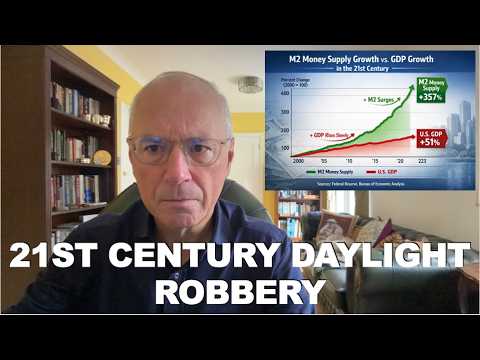
Preview:A solo livestream Q&A where the host (maneco64/Mario) argues that central banks are trapped between the need to cut rates and the impossibility of doing so without accelerating inflation, which he defines strictly as money supply growth. He reviews global M2/M3 charts showing money supply tripling since 2008, discusses the Iran-US war as a symptom of imperial desperation and a commodity catalyst, and fields viewer questions on gold, silver, oil, housing, and geopolitics. Core thesis: real assets — especially gold and silver — are the only durable protection against ongoing currency debasement.
Preview:The speaker argues that gold is essential insurance against fiat currency debasement, framing it as "your own central bank." He reads extensively from "A Pocket Book of Gold," draws on the Iceland 2008 currency collapse as a cautionary example, and points to UK house-price-to-gold and Dow-to-gold ratios as evidence that currency devaluation is accelerating. The core message: the real risk is holding fiat currency, not gold.
Preview:The speaker uses a Telegraph story about teenagers rampaging through an M&S store in Clapham, London, as a springboard to argue that Britain's decline into "lawlessness" reflects a deeper systemic rot: the state itself has become a legal plunderer through taxation, inflation, and fiat currency. Drawing heavily on Frederic Bastiat's "The Law," he frames Keynesian big-government policy as institutionalized theft that erodes respect for property rights, and ties his pro-gold/silver, Austrian-school economic views to the need for sound money to prevent state plunder.
Preview:The speaker argues that the bond market is flashing stress, which could push the Fed toward yield curve control and more QE-like intervention. He ties that to a weakening petrodollar system, foreign central banks selling Treasuries, and renewed strength in gold and silver, which he says are already outperforming equities.
Preview:The video argues that gold, silver, and miners are deeply undervalued relative to a debt-driven fiat system that keeps expanding liquidity and eroding currency value. The speaker is bullish on gold as a superior store of value versus sovereign debt, expects silver to be more volatile but to outperform gold in precious-metals bull markets, and thinks miners could re-rate sharply as capital gradually reallocates toward metals.
Preview:David Jensen argues that the war and energy disruption around the Persian Gulf are driving a structural squeeze in oil, LNG, fertilizers, and ultimately precious metals settlement. He thinks the immediate risk is a sharp bid in oil over the next one to two weeks as tanker flows fail, while silver remains the most stressed monetary metal in the background.
Preview:Mario Innecco argues that the Fed is more likely to protect financial stability and the broader economy than to force inflation fully back to target, because the system is already overloaded with debt and slowing growth. He thinks that means more liquidity support, tolerance for higher CPI, and eventually a stronger case for gold and silver despite their recent volatility.
Preview:Michael Oliver argues that the recent war/tariff headlines are distracting noise around a larger, more durable rotation into monetary metals and commodities. He says silver’s long suppression is ending, gold and silver remain structurally strong despite violent pullbacks, financials and major banks look weak on momentum, and the S&P/Nasdaq are vulnerable after breaking key momentum structures. His base case is that commodities, led by gold and silver, can outperform for years if the Fed is forced into easier policy and money printing continues.
Preview:Interview with gold advocate Maneco64 arguing that fiat currency fragility, war risks, and policy responses support higher gold over time, with bigger corrections along the way.
Preview:Fadi Hakura argues that the setup is “spectacular” for gold and silver, with copper and uranium also attractive, because U.S. money growth, deficit financing, and Fed/Treasury policy are all pushing toward higher inflation and currency debasement. He says the Fed is effectively practicing financial repression, the banking system is being supported with new liquidity, and the authorities will prioritize Treasury-market functioning and stock-market stability over protecting the dollar’s purchasing power.
Preview:The speaker argues that gold and silver's explosive moves signal markets are pricing in imminent yield curve control (YCC) and expanded QE from the Federal Reserve. He ties this to foreign central banks selling US Treasuries (custody holdings at lowest since 2012), the Iran war's disruption of the Strait of Hormuz, the unraveling of the petrodollar system, and Chinese government bonds emerging as a haven. He sees a structural shift toward hard assets and believes the Fed will be forced to cap bond yields through money printing, which will further inflate gold, silver, and commodities while punishing stocks and bonds.
Preview:Mario Innecco argues that gold and especially silver are being suppressed by short-term spread trading, liquidation, and possible bullion-bank pressure, but that the underlying fundamentals are stronger than the tape suggests. His core call is bullish: he says triple-digit silver before mid-2026 is a plausible gamble because wars, sanctions, and geopolitical fragmentation are boosting industrial demand while COMEX and Shanghai inventories are weakening.
Preview:Mario Innecco argues that gold’s sharp selloff is likely a correction within a larger bull market, not the top. He leans on historical pullbacks in earlier gold bull cycles, says he bought physical gold on the dip, and frames the move as a sign that investors are shifting toward hard assets as bond yields rise and financial stability concerns build.
Preview:Dario (Just Dario) joins maneco64 to lay out a deeply bullish case for gold, silver, and oil. He argues the recent correlated sell-off in gold, silver, and Treasuries signals a liquidity crisis that already triggered a UAE banking backstop. He sees another volatility burst coming from oil, where a structural supply deficit is being artificially suppressed by government intervention, setting the stage for a spike potentially toward $250. He warns of a spreading private-credit cancer — unregulated shadow-bank lending repackaged into pension/insurance products — that will ultimately force massive Fed balance-sheet expansion. His core conviction: medium-to-long-term, nothing has changed; the war, expanding government deficits, and inevitable money-printing make holding physical gold and silver a no-brainer.
Preview:Mario Innecco argues that gold's recent ~20% selloff since the war started is a liquidity event, not a failure of its safe-haven role — drawing a parallel to the 1973 OPEC oil embargo when gold initially dropped before taking off. He expects silver to outperform gold in the ongoing precious metals bull market, with registered COMEX inventories falling sharply and Shanghai stocks nearly depleted. Gold's structural advantage over sovereign debt is its lack of counterparty risk. With only ~1% of investable assets in gold, even a small rotation from Treasuries could be explosive. Miners were already undervalued before the correction and are even more so now, though extreme volatility makes risk management essential.
Preview:The video argues that gold and silver are entering an accelerated bull phase driven by global reallocation away from fiat and government bonds. The speakers link the move to China-Gulf de-dollarization, central-bank buying, and geopolitical risk around Iran, while still warning that a near-term liquidity shock could cause a sharp pullback before the next leg higher.
Preview:The speaker draws a historical parallel between today's US fiscal situation and France in the 1790s, arguing that Napoleon's key move was rejecting irredeemable paper money and paying in gold/silver specie. He urges President Trump to do the same: back the dollar with gold, abandon fiat, and warns that government bonds are mathematically doomed. Also covers current gold (~$4,526), silver (~$70), oil above $100, and a weak yen as stagflationary signals.
Preview:Maneco64 hosts an anonymous guest ("MBA Economics") who presents a speculative thesis that the US government, in coordination with Mexico, may implement a silver price floor around April 5, 2026 — 60 days after a critical minerals plan was announced. The core argument: a price floor would provide cover for the COMEX to declare force majeure on its unsustainable open interest, cash-settle shorts, and reset the manipulated paper market. The guest proposes three scenarios: (1) price floor with force majeure in April, (2) COMEX runs out of silver by May delivery, or (3) continued stealth force majeure via server outages. Both speakers remain bullish on physical silver regardless. The guest's thesis draws on government documents, COMEX inventory data, and circumstantial evidence from US Mint pricing.
Preview:Mario Innecco and Taylor from ITM Trading explain why gold and silver have fallen despite the Iran war, framing the decline as a product of professional spread-trading (long oil, short metals) and bullion bank manipulation rather than a failure of safe-haven thesis. They argue physical supply is tightening (COMEX/Shanghai inventories dwindling), the war is protracted and materials-intensive, and investors should view physical metals as counterparty-risk-free wealth preservation — not a short-term trade. Innecco gambles on triple-digit silver before mid-year; both emphasize dollar-cost averaging and ignoring paper-market noise.
Preview:Gold and silver rebounded sharply by week's end after a massive Monday capitulation ($400 drop in gold), forming a bullish hammer on the weekly chart. The host interprets this as the stagflation trade going live — gold decoupling from equities and rising alongside oil, with miners surging. He draws historical parallels to gold corrections during the 2001-2011 bull market and the 1973-74 oil embargo period. Citing comments from Tavi Costa, Peter Spina, and Robert Gottlieb, he argues the liquidation phase may be over and a new uptrend is forming, driven by constrained Fed policy, central bank buying, and under-allocation to gold.
Preview:A roundtable on precious metals argues that gold and especially silver have been weak despite the Iran war because paper-market trading, leverage, and bullion-bank dynamics are overpowering safe-haven demand in the near term. The guests remain structurally bullish on gold and silver, tie the move to fiat debasement and the erosion of the dollar/petrodollar system, and recommend holding physical metals outside counterparty risk.
Preview:The speaker argues that true inflation is M2 money supply growth (now running at 10.5% annualized), not CPI. He connects this to the Civil War-era Legal Tender Acts and National Banking Acts that centralized money creation, and dismisses the Trump-signed Treasury note rumor as meaningless symbolism. He remains structurally bullish on gold and silver, notes rising Treasury yields and oil prices, and briefly promotes private royalty company Golden Silver Royalty and a tungsten mining venture.
Preview:The speaker argues that gold and silver are at the start of a major bull run driven by asset reallocation out of government bonds. He frames fiat currency and Treasury debt as an inherent Ponzi scheme, notes weakening US Treasury auction demand, points to central banks (France, Russia) physically securing gold, and highlights that gold is still under-allocated globally (~0.5% of financial assets vs. ~30% in government bonds). A small shift from bonds to gold would have an outsized price impact. He also ties his thesis to geopolitics (Iran war, frozen Russian reserves, Gulf state reserve sales) and to a return of 1970s-style stagflation.
Preview:Mario Innecco argues that gold and silver are being deliberately suppressed or psychologically discouraged just as war, debt issuance, and liquidity stress intensify. He says a rate-cut/monetization response, possible intervention through Fannie/Freddie and the exchange stabilization fund, and escalating geopolitical conflict could ultimately drive precious metals much higher even if they stay volatile near term.
Preview:Mario and Eric Yeung discuss a Substack piece arguing that a little-known Chinese bank, Bank of Kunlun, helps route RMB payments for Iranian oil and thereby chips away at petrodollar dominance. Eric extends that idea to Gulf exporters, suggesting China and some Middle Eastern oil flows are increasingly settling in yuan, with gold acting as the main recycling asset for RMB surpluses.
Preview:Peter Carlin argues that gold's recent sell-off is not driven by fundamental weakness but by three forces: (1) professional trading desks rotating out of gold into oil via spread trades, (2) distressed sovereign selling by Arab Gulf states needing cash for war, and (3) a private-credit liquidity crisis forcing liquidations. He views the dip as a buying opportunity, predicting gold back through $5,000–$6,000 by October. He also highlights an unprecedented jet-fuel/gas-oil spread ($548 vs. normal $20–$60), signaling serious refining disruption. The core thesis: physical gold is the only asset with no counterparty risk and no gate risk — hold it through the panic.
Preview:A monologue from the Maneco64 host arguing that gold and silver are being temporarily hammered by official intervention and liquidity dynamics, similar to the 2008 pattern, but will ultimately prove the only reliable money as the world slides toward wider war and fiat instability. He urges viewers not to sell into the panic dip but to accumulate physical metal, citing Alan Greenspan's old essay and a Ron Paul anecdote.
Preview:Mario and guest Francis argue that the Iran/Hormuz war is not just geopolitics but part of a broader engineered inflation/debt-reset process. Their core thesis is that the petrodollar system is weakening, bond yields are signaling strain, and gold and silver are the key reserve assets in a coming regime where fiat, debt, pensions, and bank balances are less reliable.
Preview:The speaker argues that the sharp selloff in gold and silver is a volatile, likely temporary repositioning rather than a trend break, and he frames the bigger story as a coming crisis that will push the world further away from the dollar system. He ties the Middle East conflict and higher energy prices to a weakening petrodollar, more non-dollar settlement in yuan, and ultimately more monetary easing and hard-asset support.
Preview:Mario Innecco argues that the Iran war is creating a delayed stagflationary shock that should ultimately help gold and silver, even if prices have been rangebound in the short run. He uses the 1973 oil embargo as the main historical analogy: oil repriced higher first, while gold and silver initially dipped before rallying strongly later. He also criticizes government stimulus in Japan and the UK as a debasement cycle that will worsen inflation, dependence, and currency weakness.
Preview:The speaker argues that the recent selloff in gold and silver is a volatile but temporary shakeout, not a breakdown in the precious-metals thesis. He links the move to war-driven positioning, bullion-bank behavior, and overextended speculators, while insisting the bigger story is de-dollarization, weakening confidence in the financial system, and rising demand for hard assets.
Preview:The speaker argues that the 40-year bond bull market definitively ended in 2020 and the current bear market in government bonds is accelerating, with yields breaking higher across US Treasuries and UK gilts. He draws an analogy to the pre-tsunami tide receding — the consolidation since late 2022 was deceptive calm before the real move. The fundamental driver is society-wide over-indebtedness now reversing as rates rise. He expects central banks to eventually resort to yield curve control and accelerated QE, leading to massive inflation, and forecasts double-digit bond yields within a few years. He remains bullish on gold, silver, mining stocks, and hard commodity assets despite the recent gold sell-off, framing it as a liquidity event within a structural bull market for real assets.
Preview:Mario Innecco discusses extreme recent volatility in gold (down ~$500 in 24 hours) and silver (from $80 to $65 before bouncing to $70). He argues the selloff is driven by algorithmic trading misreading bond yields and inexperienced speculators capitulating after the war spike. His core thesis: the petrodollar is dying as Iran accepts yuan for oil through the Strait of Hormuz, confirmed by Pakistani and Indian tankers. China is building a gold-backed yuan reserve system via the Shanghai Gold Exchange. He expects gold and silver to rebound sharply once markets recognize the distinction between energy-driven price rises and monetary inflation, and views any dip as a long-term accumulation opportunity.
Preview:The speaker argues that true inflation is money supply expansion (M2 growing at 6.2% annually since 2000 vs. 2.37% real GDP growth), which has destroyed the dollar's purchasing power to 38 cents. He recommends gold and silver as the only real monetary protection, noting their historical annual returns of ~10-12% since 1971. The latter portion is a sponsored pitch for Pure Tungsten, a private Canadian company raising C$5M at C$0.50/share ahead of a planned IPO, with a tungsten mine restart in South Korea aiming for production by June 2026.
Preview:Mario Innecco argues the recent selloff in gold and silver is a violent but probably temporary shakeout, not a thesis break. His bigger view is that the Iran conflict may be accelerating de-dollarization, with oil trade potentially shifting into yuan and gold-backed settlement, which he thinks would weaken the petrodollar, pressure Treasuries and equities, and ultimately force more central-bank support.
Preview:Mario Innecco argues that gold's rally is driven by fear and loss of confidence in fiat currencies, not greed. He claims Western paper precious metals markets function like "bucket shops" — only ~1% of contracts result in physical delivery — and that rising physical demand from central banks, sovereign wealth funds, and family offices is breaking the paper system. Silver trades at a $10+ premium in Shanghai, signaling a structural disconnect. He sees two paths for a monetary reset: the gradual one already underway (rising bond yields, gold climbing in all currencies), or a sudden weekend revaluation à la 1934. His portfolio advice: hold physical gold/silver outside the banking system, favor consumer staples over financials, and prepare for capital controls under a digital euro. The message is patient accumulation — the endgame for manipulated paper markets is near.
Preview:Alex Krainer argues the Iran war could become a major macro and civilizational inflection point: energy prices, food costs, currencies, and Western geopolitics may all worsen over time. He expects the market to remain complacent at first, but thinks the long-run response will be inflationary policy, weaker Western power in the Middle East, and renewed stress on the debt-based fiat system.
Preview:The speaker argues that gold and silver's sluggish performance since the Iran war started is temporary and mirrors the 1973 oil embargo pattern, where precious metals initially dipped before rallying significantly. He expects massive stagflation ahead, fueled by government stimulus packages (citing Japan's $135B and UK's £50M support measures), and frames the current moment as the early stages of a long-term shift from paper to hard assets. His core thesis: patience and continued stacking will be rewarded as the petrodollar era ends.
Preview:The speaker argues that the US has quietly abandoned its decades-long "strong dollar" policy and is now settling its trade deficit with China in physical gold — a tectonic shift that makes a higher gold price explicitly in the US national interest. Drawing heavily on a Metals and Miners Substack article, he contends that gold has been the single largest US export by value in three of the last four months, likely flowing to China in exchange for rare earths and strategic goods. This, combined with the Strait of Hormuz conflict and yuan-denominated oil settlement, signals the end of financialization and a structural bull case for physical gold and silver.
Preview:Mario Innecco delivers an impassioned monologue arguing that the world is entering "hyper-stagflation" worse than the 1970s. He rebuts deflationist arguments (specifically those of Edward Dowd), insisting that the true definition of inflation is monetary expansion (M2), not rising prices. He points to Fed balance sheet expansion, $358B in T-bill purchases surpassing 2019 repo crisis levels, and US government spending at 2x revenue as evidence. His core thesis: fiat currencies will continue to lose value, bonds are in a secular bear market, and gold/silver are the only refuge.
Preview:The host argues that the current Iran/Middle East conflict is an engineered "energy non-crisis 2.0," modeled on the 1973 oil crisis he claims was orchestrated by the US government to create the petrodollar system. He contends today's war is similarly staged to dismantle the petrodollar, crash economies, usher in Agenda 2030, and force a new gold-backed monetary order. The episode centers on reading a chapter from Lindsay Williams' book documenting how pipelines were deliberately shut down in 1973.
Preview:This livestream argues that the Iran/Strait of Hormuz conflict is the kind of geopolitical shock that can expose already-fragile financial conditions and accelerate a broader economic and monetary breakdown. The speakers stay bullish on gold, silver, and miners over the medium to long term, while warning that short-term price action is noisy, manipulated, and disconnected from the physical market.
Preview:The host argues that Iran's reported offer of safe passage through the Strait of Hormuz for oil tankers paying in Chinese yuan represents a "financial shot across the bow of the petrodollar." He connects this to a broader thesis about the dollar's decline: Gulf Cooperation Council countries are allegedly unwinding Treasuries and buying gold, BRICS nations want 40% gold-backed currencies, and the yuan-for-oil mechanism via the Shanghai Gold Exchange is maturing. He sees rising US bond yields as evidence of stress, warns that a T-bond futures close below 114 would trigger Fed alarm, and views the escalating US-Iran conflict as accelerating de-dollarization. He also claims oil physical prices are ~$140 vs. $100 futures, silver physical premiums are elevated, and gold/silver remain the essential hedges.
Preview:The host argues that inflation is properly defined as an increase in the money supply (not CPI), and that the fiat debt-based system is mathematically doomed to fail. He rebuts "deflationist" voices who predict falling bond yields and a strengthening dollar, contending that relentless government spending and central bank monetization will produce hyper-stagflation. Gold and silver are presented as the only reliable stores of value.
Preview:David Jensen argues that the global $270 trillion financial asset bubble is unravelling, with physical silver as the canary in the coal mine. He presents exchange inventory data showing a 27% drawdown across London, COMEX, and Shanghai silver vaults in just five weeks, and frames the Iran war as a deliberate trigger to explain the coming reset. His core thesis: promissory note markets in London (since 1987) suppressed gold and silver prices, enabling 40 years of credit expansion — and that system is now breaking down.
Preview:The host relays a technical update from his anonymous Swiss banker friend ("Gnome of Zürich"), who sees silver's multi-month triangle consolidation nearing an upside breakout. The Gnome's next Elliott Wave / Lucas-number target is ~$199, expected to be reached quickly, with an even higher target by end of June. Gold is also bullish but silver is his primary conviction. The host adds his own chart measurements (~$217-218 on a breakout) and reiterates a stacking/physical accumulation thesis with anti-establishment framing.
Preview:The speaker argues the US-Iran war is an unintended catalyst accelerating BRICS and de-dollarization. Gulf states, caught in the crossfire and not consulted, are reconsidering their dollar-oil arrangement and US investments. He sees gold breaking higher (potential $6,500 in 1-2 months), silver beginning to outperform, oil remaining structurally bullish regardless of war duration, and a stagflationary environment taking hold as the dollar weakens against real money. His core thesis: the petrodollar system is being destroyed faster by the very actions meant to preserve it.
Preview:Mario Innecco argues that the Israel/Gulf conflict is a long-term inflationary disaster for ordinary people, funded by debt and paid via inflation. He sees crude oil price spikes as temporary market noise and insists only government money-printing creates real inflation. His core thesis: hold physical gold and silver outside the banking system as the only durable protection. He notes silver's relative resilience versus gold, highlights rising bond yields as a fiscal warning, and recommends Smedley Butler's "War Is a Racket" as essential reading.
Preview:The speaker argues that the ongoing Middle East war is driving oil above $115, spiking bond yields, and hammering equities — but the real cost is not just higher energy prices. It is the debt and inflation burden that governments will pass onto the public. He contends that only governments (via central banks and borrowing) create inflation, not oil prices, and that physical gold and silver are the only protection. The piece is heavily promotional for his affiliates and a recommended anti-war book.
Preview:Mario Innecco presents a thesis centered on David Jensen's research about extreme leverage in the global silver market. He argues that major exchanges (LBMA, COMEX, Shanghai) hold only ~199M oz of vault stock against billions in paper claims, creating acute vulnerability given years of silver supply deficits. He ties this to the breakdown of the 40-year bond bull market, rising Treasury yields, geopolitical fragmentation (Iran war), and recent Chinese bank gold bar sellouts as evidence the fiat currency regime is collapsing. Gold and silver are rising alongside yields — breaking the traditional inverse relationship — which he frames as confirmation that physical metals are replacing sovereign bonds as safe havens.
Preview:Eric Yeung (King Kong 98) lays out three scenarios for the Iran war and their effects on oil, gold, and silver. Scenario 1 (US/Israel quick win): oil crashes, gold/silver consolidate but rise long-term. Scenario 2 (bogged-down war, Strait of Hormuz disruption): oil spikes above $100, everything including gold/silver dumps temporarily in a USD liquidity squeeze akin to March 2020, then rebounds. Scenario 3 (US declares victory but retreats with nothing changed): oil falls moderately, gold/silver go sideways then up — this is the "taco" best-case for precious metals investors. Host Mario pushes the de-dollarization/BRIICS angle; Yeung argues it continues in all scenarios but at different speeds.
Preview:Mario Innecco and David Morgan argue that gold and silver are still in the early-to-middle acceleration phase of a secular bull market, with gold potentially reaching $10,000 and silver reaching roughly $300 if the historical gold-silver ratio compresses toward 30:1 or 33:1. They frame the move as being driven by currency debasement, rising strategic interest in silver, and a slow shift by institutions and the public from paper assets toward hard assets.
Preview:The speaker argues that the post-1971 fiat currency system is unraveling, driven not by oil prices, the Iran war, or private equity stress — those are merely symptoms — but by the unsustainable debt overhang created since the dollar was detached from gold. He draws a direct historical parallel to the 1966–1982 period of sideways stocks, collapsing bond purchasing power, and massive gold/silver outperformance. His core prescription: asset reallocation out of paper (stocks, bonds, Treasuries) into hard assets — primarily gold and silver, plus commodity-related equities. Year-to-date data shows gold up ~19.6%, silver ~17.9%, while the Dow, S&P, and NASDAQ are all negative. He believes the Dow-to-gold ratio (currently ~9.2) is heading toward 1:1 or below.
Preview:Maneco64 host Mario interviews Clive Topham (former Swiss wealth advisor) about precious metals outperforming the traditional 60/40 portfolio YTD. They discuss gold (+18.35%), silver (+17.63%), and miners significantly beating equities and Bitcoin (-18.74%). The Iran war, Hormuz shipping halt, rising oil prices and Treasury yields are flagged as stagflationary risks. Clive advocates gradual rotation from tech into commodities, noting upcoming miner earnings at much higher gold prices. Both see central banks diversifying reserves into gold as a durable structural bid.
Preview:The speaker argues that the fiat currency regime is collapsing, evidenced by the end of the bond bull market and surging gold/silver prices. He connects physical gold/silver shortages — including major Chinese banks selling out of gold bars — with the LBMA/COMEX's highly leveraged paper markets. The Middle East war (US/Iran conflict) is accelerating the breakdown by pushing Treasury yields higher instead of lower, breaking the traditional inverse relationship with gold. He cites David Jensen's analysis showing silver exchange leverage is extreme (~199M oz vault stock against billions in claims) amid a 300M oz supply deficit. Gold has risen from $2,700 to $5,500+ and silver from $30 to ~$120 in the past year, and he expects this to worsen over the next 12 months.
Preview:Mario Innecco argues the Middle East war has not produced the classic flight-to-quality pattern because the market is pricing a quick US-Israel victory and possible regime change in Iran. He says that weak Treasury reaction, rising yields, and continued strength in gold, silver, and oil all point to a broader monetary realignment away from paper assets and toward hard assets.
Preview:Josh Phair, CEO of Scottsdale Mint, argues the world is witnessing a "controlled demolition of the financial system" driven by governments aggressively accumulating physical gold — not for tariff reasons, but as preparation for a monetary system reset. He reports firsthand that gold shipments into the US are overwhelming logistics, with flight costs 3-4x normal and vault-to-vault transfers taking weeks instead of days. Phair believes China, the BRICS, and now US states (Wyoming, Utah) are all buying hard assets, silver is being re-monetized in Southeast Asia, and that no one got "a knock on the door" for disrupting gold markets — implicating sovereign buyers. He sees gold at $5,000 potentially looking like a "steal of the century" and references the Ferris-Sinclair ratio implying a $35,000 gold target.
Preview:Mario Innecco delivers an urgent monologue arguing the world is already on the hyperinflationary path, comparing the current gold breakout to Weimar Germany. He highlights a growing disconnect between COMEX/LBMA paper prices and physical bullion markets, where Chinese silver trades at $114 vs. $96 in the West, and UK dealers are suspending orders despite orderly price action. The Iran conflict serves as the immediate catalyst — he cites Scott Ritter's warning that the strike on Khamenei could backfire catastrophically. He recommends gold/silver as the only real protection, suggests gold could reach $20,000–$30,000 within 18 months, and notes the surprising absence of safe-haven bids in Treasuries despite equity futures dropping ~1.5%.
Preview:The speaker argues that US Treasuries are failing as a safe haven during the Iran war (day 4). Instead of rallying on flight-to-safety, Treasury yields rose ~10 bps, which he interprets as a massive asset reallocation — foreign holders (China, Gulf states) selling Treasuries and buying gold/silver. He sees the failed regime-change strategy (killing Iran's Ayatollah did not collapse the government) as the core miscalculation, and warns the longer the war drags on, the worse for Treasuries, potentially forcing Fed rate cuts or QE. Gold around $5,300 and the Dow/gold ratio approaching 9 are cited as evidence of the rotation out of stocks and bonds into precious metals.
Preview:The speaker argues the US attack on Iran ("neocon blunder") could trigger fiat currency hyperinflation, citing failed safe-haven flows into Treasuries (yields unchanged), surging gold/silver prices, and oil spiking ~9%. He draws parallels to Weimar Germany and revolutionary France, warns of loss of public confidence in the state, and sees gold heading toward $20,000–$30,000/oz in the next 18 months. Silver is already in triple digits on physical markets. He suspects the Plunge Protection Team is suppressing precious metals and that real price discovery will resume when US markets open.
Preview:Mario (maneco64 host) and guest Clive discuss the market implications of US-Israel military strikes on Iran. They expect gold and silver to gap up sharply Sunday evening, possibly triggering limit-up halts on COMEX, while oil could open ~$80. The conversation ranges across the Strait of Hormuz risk, a potential US gold revaluation thesis, the gold/silver ratio, and skepticism toward paper silver ETFs. Clive argues the precious metals bull case is structurally intact regardless of the war. Both express wariness about leveraged trading amid extreme volatility.
Preview:An interview with Jonathan Newman of the Mises Institute examining the Federal Reserve as a bank cartel, the Austrian economic critique of central banking, and the unsustainable trajectory of US fiscal and monetary policy. Newman argues the Fed incentivizes the very banking instability it was designed to prevent, that government spending is on an "astronomical path" requiring ever more money printing, and that public education — not political theater — is the prerequisite for meaningful reform.
Preview:The speaker argues that India following China in abandoning LBMA/COMEX pricing for domestic gold and silver price discovery is a landmark shift, reflecting the growing disconnect between Western paper prices and physical bullion values. He uses a personal anecdote about Bank of England notes as "fraudulent promises" to frame gold stacking as rational, then walks through India's new mutual fund valuation rules (effective April 1, 2026), expanded equity fund gold allocations, and silver-as-collateral legislation — all as structural catalysts for higher gold and silver prices. He closes with a yearly bar chart showing gold in a long-term channel targeting $8,000+ and an update on Chancery Royalty, a private royalty company he joined as a board member.
Preview:Eric Yeung (King Kong 98) joins Mario on maneco64 to dissect the February 25 COMEX silver trading halt. They argue the 90-minute shutdown was not a technical glitch but a deliberate move to negotiate off-exchange cash settlements with marginal longs standing for delivery — preventing physical metal from leaving vaults below a secret floor. Yeung notes 31,828 of the day's 36,000 March contracts traded while the exchange was supposedly closed, which he interprets as backroom OTC deals. He expects a near-term consolidation/dip, followed by a potential old-fashioned short squeeze when remaining shorts must cover on-exchange. Both see the repeated halts (this being the second in three months) as fatally undermining COMEX/LBMA credibility and driving global buyers toward Shanghai, Hong Kong, and Singapore.
Preview:Peter Carlin, co-author of a pocketbook on gold with Jim Sinclair, presents gold not as an inflation hedge but as a barometer of fear and confidence in existential security. He walks through gold's monthly price action since the Ukraine war began, mapping each major move to operational war developments. Carlin argues the West has suffered strategic miscalculation after miscalculation — from underestimating Russia's military adaptation to freezing Russian assets (an "own goal" that accelerated de-dollarization). He sees the US now heading toward a similar blunder with Iran, framing it within a broader grand-strategic contest over oil chokepoints and BRICS. On the domestic side, all-time low consumer confidence adds fuel. Carlin warns the post-war fiscal hangover — when forward wartime spending gets realized into the present — could produce a 1975-80 style 200% gold move that hasn't begun yet. The tone is deeply bearish on Western policy competence and structurally bullish on gold.
Preview:A host-led interview links astrology, fiat debasement, and silver market mechanics to argue that gold and especially silver are being re-rated as “real money.” Mario from maneco64 says the main drivers are debt expansion, M2 growth, bank stress in repo markets, COMEX paper shorts, and rising physical demand from China, India, and other buyers. The astrology side frames late January as an authenticity shock and points to March/April/July as windows for bigger market aftershocks.
Preview:Mario Innecco reviews year-to-date performance data showing gold and silver both up ~18%, neck-and-neck, with miners outperforming (GDX +24%, SIL +29%). He frames precious metals strength not as dollar weakness but as broad fiat debasement, then walks through an Adam Lockwood analysis arguing that gold's portfolio allocation has collapsed from 6-8% in 1980 to ~0.5% today — implying a structural reallocation trend still in its early innings, driven by central banks and sovereign wealth funds rather than retail mania.
Preview:The speaker presents a thesis that financial assets are approaching a "golden jubilee" reset, using the Dow/Gold ratio and a ~49-50 year cycle from 1932 → 1981 → 2030-2032 as evidence. He argues gold will dramatically outperform equities, the Dow/Gold ratio could fall to 1:1 or even 0.5:1, and national debts will be effectively wiped out in real terms. He recommends holding physical gold and silver as a store of value through what he expects to be a turbulent, chaotic period lasting into the early 2030s, after which gold will be reintegrated into the monetary system.
Preview:Mario and Clive argue that gold has entered a new monetary regime: not just a portfolio hedge, but a core asset in the financial system as fiat confidence erodes. They connect that view to dollar debasement, central-bank buying, silver tightness into the March COMEX delivery cycle, and the idea that any future currency reset or CBDC rollout would likely require a much higher gold price.
Preview:Mario Innecco argues that gold and silver remain in a strong secular bull market despite violent pullbacks, with the key short-term setup being whether silver can hold recent gains above the low-80s after a major selloff. He links the move to persistent physical demand, a silver deficit, central-bank and institutional accumulation, and a growing geopolitical bid for hard assets.
Preview:Mario Innecco presents an "emergency" thesis on silver, arguing that a $30.5 billion NY Fed repo operation on February 17, 2026 signals desperate liquidity injections tied to suppressing precious metals prices. He highlights the approaching March COMEX silver delivery period (Feb 27), where open interest of ~285 million ounces dwarfs registered vault inventory of ~92.5 million ounces. He also notes a Shanghai Futures Exchange rule change targeting near-term silver futures — coinciding with the same Feb 27 date — which he frames as China protecting its physical stockpiles. Despite recent sharp selloffs, gold and silver have rebounded strongly and remain up year-to-date, which he interprets as evidence that the structural bull market is intact.
Preview:Mario Innecco argues that debt, war, tariffs, and geopolitical risk are reinforcing an inflationary, currency-debasement backdrop that remains broadly supportive of hard assets, especially gold and silver. He also thinks oil and some commodities could be catching up after lagging the metals, and he views the recent precious-metals volatility as a correction within a larger bull market rather than a thesis-breaker.
Preview:The speaker reviews year-to-date 2026 performance showing gold (+18.18%), silver (+18.13%), and miners (GDX +23.9%) dramatically outperforming US equities (NASDAQ -0.94%, S&P +0.94%) and bonds (TLT +2.58%). He cites an Adam Lockwood LinkedIn post arguing gold allocations remain at just ~0.5% of global financial assets versus 6-8% in 1980, implying a structural reallocation is barely beginning. He flags Trump tariff reversal by the Supreme Court as fiscally bearish and notes anemic GDP (Q4 at 1.4% vs 3% expected) which may support further rotation into hard assets.
Preview:The host returns from Ethiopia and argues that regardless of what happens with Iran/US tensions, the world is in a structurally turbulent, de-globalizing era. He sees this as bullish for commodities — particularly gold, silver, oil, and copper — citing historical parallels (Napoleonic Wars, WWI, the 1970s) where currency debasement and geopolitical division drove commodity strength. The second half is an interview with Harry Anagnostaras-Adams, executive chairman of Kefi Gold and Copper (AIM: KFI), discussing the Tulu Kapi gold project in Ethiopia, which just secured full funding and government backing, with the thesis that Ethiopia's geology mirrors pre-boom Western Australia.
Preview:The speaker argues that a recent Fed repo operation ($30.5B on Feb 17) was linked to a coordinated attack on paper gold and silver prices during thin holiday trading, enabling short covering by bullion banks. Both metals rebounded sharply, and the speaker sees this as a "last gasp" by shorts in a new paradigm — especially for silver after breaking $50. He highlights the approaching Feb 27 COMEX March contract delivery window, shrinking registered silver inventories relative to open interest, and a coinciding Shanghai Futures Exchange rule change targeting paper silver. He also reports from Ethiopia where he attended a groundbreaking ceremony for the Tulukapi gold project as a board member of Chancery Royalty, a company now launching a $3 funding round.
Preview:Mario Innecco argues the recent silver selloff is an artificial shakeout engineered by bullion banks to scare physical-delivery buyers away from the COMEX and LBMA. He points to extraordinary January COMEX delivery demand (~50M oz), a persistent Chinese silver premium, and unchanged fundamental drivers (soaring debt, geopolitical fragmentation, de-dollarization) as reasons the correction won't stick. He dismisses comparisons to 1980/2011 as ignoring today's vastly higher debt-to-GDP levels, and sees the banks' desperation as a sign the system is cracking — not a reason to sell.
Preview:The speaker argues that the UK and EU are pursuing their own de-dollarisation path — not joining BRICS but building independent payment infrastructure to reduce reliance on US-controlled Visa/Mastercard. The trigger is fear that Trump could weaponise payment networks and freeze reserves. The core thesis: this fragmentation accelerates gold's return as neutral, un-cancellable money, and individuals/nations should diversify into physical gold and silver.
Preview:The speaker argues Japan is approaching a "crack-up boom" — a currency collapse akin to Weimar Germany — driven by unsustainable public debt (252% of GDP), decades of zero-rate policy and quantitative easing, and a weakening yen. He contends Japanese investors are fleeing the yen and JGBs into equities and gold, with the Nikkei-225 at 57,000 representing unhealthy financial repression rather than genuine growth. Gold in yen terms is nearing 1 million yen per ounce, which he frames as proof the yen is dying. He warns the same trajectory awaits the US, UK, and Western Europe.
Preview:The speaker argues the UK Labour government is deliberately destroying the UK economy through EU-aligned net-zero policies, framing it as a "controlled demolition" by globalist forces. He cites a Telegraph article about Starmer's "dynamic alignment" with EU renewable energy rules, warns of draconian measures (carbon tracking, restrictions on meat/flying/driving), and predicts pound hyperinflation. His core advice: hold physical gold, silver, and miners as a hedge, pay off debt, build community, and consider leaving the UK.
Preview:Mario Innecco argues that nominal stock market records like Dow 50,000 are a distraction from underlying economic weakness and political corruption. Using the Dow/gold ratio (now below 10, near 2013 lows), he contends equities have actually been declining when priced in real money. He analyzes UK stagflation (1% GDP growth, 3.4% CPI, budget deficit ~4.3%), warns the Bank of England faces an impossible choice between cutting rates and defending the pound, and presents US jobs data showing Trump 47's first year created only 311K jobs vs. 2.25M under Trump 45. His core thesis: fiat currencies are being "trashed," gold and silver remain essential for preserving purchasing power, and the Epstein files controversy reveals systemic corruption that, if fully exposed, could implode the financial system.
Preview:Andy Schectman argues the recent gold and silver selloff was a paper-driven smash that exposed tight physical inventories, record delivery demand, and a growing disconnect between futures pricing and actual metal availability. He extends that thesis into a broader macro view: de-dollarization, Treasury demand weakness, and a likely policy response of keeping the front end of rates low while quietly devaluing the dollar versus gold.
Preview:Tavi Costa (Azora Capital, ex-Crescat) lays out a secular hard-asset bull case: the US has hit a debt wall and the only path is rate suppression — potentially to zero — fueling gold, silver, miners, and eventually energy. He argues the Fed/Kevin Warsh will cut far more than the market prices, that the long end will be manipulated lower, and that gold is in a "very critical position" for the next 5-10 years as central banks and BRICS nations accumulate reserves. He also flags Latin America — especially Bolivia, Argentina, Brazil — as an under-priced commodity-linked opportunity and details his three-pillar mining fund strategy.
Preview:David Jensen argues that the latest silver (and gold) price smash only worsens a global physical silver shortage. He points to dwindling vault stocks on COMEX (under 100M oz) and Shanghai (down >90% since 2020), persistent backwardation in silver futures, and a ~$20/oz China-vs-West price spread as evidence. The digital paper market is fighting physical reality and losing: price smashes shorten the lifespan of the leveraged pricing system. Jensen sees a forced repricing to much higher levels within weeks or months, with the gold market likely breaking similarly afterward.
Preview:A contrarian macro monologue critiquing the "strong economy" narrative. The speaker dissects the Dow-at-50K cheerleading (Pam Bondi's congressional deflection), showing the Dow/gold ratio is at its lowest since 2013 and trending toward 1:1. He compares Trump 47's first-year job creation (~311K) vs. Trump 45's (~2.25M), arguing GDP is propped up by deficit spending and AI data-center capex. Gold is bouncing sharply from a $1,200 correction, with the speaker expecting $6,000 soon; silver supply on COMEX remains tight (98M oz registered vs. 325M oz open interest).
Preview:Host Mario (maneco64) interviews Mark O'Byrne, founder of GoldCore and now Tara Coins, about the persistent mainstream media bias against gold and silver, the structural devaluation of fiat currencies, and why physical precious metals remain the best wealth preservation strategy. O'Byrne argues that gold's rise to ~$5,000 is really a dollar decline, that global debt at 300%+ of GDP makes the system a "giant Ponzi," and that retail ownership of gold remains below 1% in most Western countries — meaning the bull market has far to run. He advocates 50/50 gold-silver allocations, geometric cost averaging for new buyers, and geographic diversification of storage. The conversation is explicitly bullish on precious metals and dismissive of crypto, bonds, and mainstream financial media narratives.
Preview:Mario Innecco presents a gold-bull thesis anchored in a 2004 FT editorial he laminated as a contrarian souvenir. He argues gold's structural bull market is still early compared to the 1970s and 2001-2011 cycles, dismisses the recent pullback as invisible on quarterly charts, and expects gold to be "a lot higher" by end of March. The core argument: fiat currencies are inherently terminal, central bank buying since 2022 confirms gold's monetary role, and the real bubble is sovereign debt — not precious metals.
Preview:The speaker argues that the US Dollar Index is on the verge of a major breakdown to ~85, driven by de-dollarization, Chinese gold accumulation, and unsustainable US fiscal deficits. He contends that while a falling dollar may accelerate gold's rally toward $6,000–$7,000 in the short term, the long-term lesson is that all fiat currencies sink together — gold is the only durable hedge. He expects the Fed will be forced to cut rates aggressively and resume QE when a liquidity crisis (possibly in shadow banking/private credit) materializes, which would further propel gold, silver, and hard assets.
Preview:The speaker argues that yield curve control (YCC) talk under the new Fed chair Walsh signals desperation, not a solution. He traces YCC history in the US (WWII-era, abandoned by 1951 after triggering "price rises") and Japan (2016–2024, ended badly with collapsing bonds and gold surging in yen). His core thesis: debt monetization via YCC/QE created the inflation problem, and attempting YCC again will fail, accelerating gold's rally and the bond bear market. He also flags China urging banks to reduce Treasury exposure and PBOC gold buying for a 15th straight month as evidence that "smart money" is positioning for the same outcome.
Preview:Mario and Clive argue that the paper precious-metals market is increasingly strained as investors, wealthy allocators, and central banks move toward physical metal. They focus heavily on COMEX silver delivery risk, vaulting/counterparty risk, and the idea that miners, royalties, and bullion products may benefit if physical demand keeps outrunning available supply.
Preview:Mario Innecco lays out a multi-pillar bull case for gold and silver: de-dollarization via BRICS+, unsustainable global debt ($300T+) that forces financial repression, geopolitical chaos under Trump-era unpredictability, and a structural shift from Western paper markets to Eastern physical markets (Shanghai Gold Exchange, Hong Kong as a bridge). He argues central banks are re-golding reserves toward historical 40%+ levels, that silver's persistent 5-6 year deficit and industrial demand make it increasingly viable as a reserve asset at higher prices, and that governments will inflate rather than cut spending — creating a trajectory toward hyperinflation if left unaddressed.
Preview:The speaker contrasts two FT editorials — one from 2004 calling gold "pointless" at $400/oz and one from February 2026 calling precious metals a "speculative mania" — to argue the FT and mainstream financial media are reliable contrarian indicators. His core thesis: gold and silver are not the bubble; fiat currencies and government debt are the real bubble, and precious metals simply reflect the system's collapse. He uses long-term quarterly charts to argue the gold and silver bull markets remain early-stage, with the Dow/gold ratio signaling continued outperformance of hard assets over paper assets.
Preview:Clive Thompson argues that the physical silver market is tightening, especially in Switzerland and the UK, while COMEX paper pricing is becoming increasingly detached from what buyers must pay for real metal. He focuses on delivery notices and shrinking registered inventory to warn of a potential March silver squeeze, and pairs that with a broader thesis that gold is also being bid for as a hedge against debt, counterparty risk, and possible revaluation.
Preview:Peter Carlin and host maneco64 discuss the dramatic silver sell-off from ~$115 to $73.50 (a 32% drop in a week) and gold's relative stability around $4,900-5,000. Carlin argues the fundamentals that drove gold and silver higher haven't changed — geopolitical chaos, sanctions, loss of confidence in fiat currencies, and central bank/reserve diversification into gold and critical minerals. He frames the silver crash as typical "games" in a manipulated market, notes his $4,500 gold support channel held, and suggests the sell-off is a buying opportunity. The conversation covers the gold-silver ratio flip, dollar/yen dynamics, the shift of financial power from West to East (Hong Kong/Shanghai), and the broader scramble for hard assets across the entire metals complex.
Preview:Mario Innecco argues that the recent silver selloff was a paper-driven, exchange-level shock rather than a healthy correction, and that it was used to shake out sentiment while physical demand and delivery remain strong. He extends that framework to gold, the dollar, central-bank buying, and broader institutional trust, framing precious metals as protection against policy, banking, and geopolitical fragility.
Preview:The speaker argues that 2026 presents a debt-rollover nightmare for Treasury Secretary Bessent, with ~$9 trillion in low-rate COVID-era debt needing refinancing at much higher rates. This complicates incoming Fed Chair Kevin Warsh's plan to shrink the balance sheet, especially since the Fed has already stopped QT and resumed QE. The speaker explores gold revaluation as a potential tool — revaluing the Fed's gold certificates to $5,000/oz could generate ~$1.2 trillion to retire maturing debt — but notes it would not actually shrink the balance sheet (gold assets would rise to offset retired Treasuries). He floats the speculative idea that the endgame could be a gold-backed Fed balance sheet with zero Treasuries, possibly involving Judy Shelton's gold-backed bond proposal. The underlying problem, he concludes, is uncontrolled government spending.
Preview:Mario Innecco argues the recent silver crash was an engineered paper-market smash, not a thesis change, and says the broader setup still points higher for silver and gold amid debt, geopolitics, and collapsing trust in institutions. He is skeptical of COMEX/CME price discovery, expects continued physical demand, and frames sound money as the only durable escape from a corrupt fiat system.
Preview:A solo market commentary on the gold and silver rebound, framed around the US announcement of a $12 billion critical minerals stockpile ("Project Vault"). The speaker argues the recent sharp sell-off was a paper-market shakeout driven by bullion banks, and that the long-term precious metals bull market is still in its early stages. He shows quarterly charts of gold and silver to make the case, advises patience over leverage, and dismisses an FT article blaming retail for silver's volatility. The core thesis: the world is rotating from financialization into hard assets, driven by geopolitical commodity competition and US policy shifts.
Preview:Mario Innecco presents a deeply bullish long-term thesis for gold and silver, arguing we are in the early stages of a generational breakout. He draws on multi-decade technical patterns (cup-and-handle formations dating to 1980), the Dow-to-gold ratio as evidence of structural equity weakness in real terms, and a potential US gold revaluation as a powerful catalyst. His core message: ignore those calling for profit-taking — gold's move since March 2024 is just the beginning, and silver is only now breaking out of a 44-year consolidation.
Preview:The speaker argues that the sell-off in gold and silver is a manipulated COMEX paper-market event, not a fundamental shift. He frames China's recent announcement (via Xi Jinping) that the renminbi should attain global reserve-currency status as a declaration of war on the dollar, and sees the precious-metals smash as a pre-emptive raid by Western bankers who fear a gold-backed yuan. His core message: hold physical gold and silver as insurance; do not trust banks, ETFs, or futures.
Preview:Mario (maneco64) and guest Clive Thompson discuss the sharp silver correction on Friday (Jan 30, 2026) that saw silver plunge from ~$104 to $74 before recovering to ~$85. Mario relays a call from "the Gnome of Zürich" — a retired bond fund manager who uses Lucas numbers — who predicted the drop to $90 and now sees a next target of $199, possibly in February. Both speakers dismiss the selloff as a paper-market liquidation cascade orchestrated by bullion banks triggering stop-losses, not a fundamental change. They remain structurally bullish on physical silver and gold, emphasizing that physical metal is scarce in Europe while some US dealers are overloaded. The conversation covers silver miners, the Weimar hyperinflation volatility analogy, the new Fed chair nominee, and practical advice for stackers navigating extreme volatility.
Preview:Stefan Gleason, CEO of Money Metals, discusses the recent all-time highs and subsequent pullback in gold and silver, attributing the correction partly to the nomination of Kevin Warsh as Fed chair but arguing any Fed chair will remain dovish given US debt burdens. He shares a personal anecdote about Warsh hinting at US government involvement in gold markets. The core message: individuals should adopt their own gold/silver standard rather than waiting for government reform. He details severe operational stress across the physical precious metals industry, including refinery backlogs, supply-chain bottlenecks (especially for silver, where 60-65% of refining capacity is Chinese), and local coin shop liquidity crunches. He also discusses state-level sound money legislative efforts, criticizes public-private gold partnerships, and describes Money Metals' fast-growing depository and collateralized lending business.
Preview:Mario Innecco discusses silver's surge above $117 and gold breaking $5,100, the rapid gold-silver ratio compression to ~50, and reports that JP Morgan is advising clients to sell silver for gold — which he suspects masks a large institutional short position. He argues physical metals represent "God's money" and warns the real modern confiscation is psychological: holders voluntarily selling into fiat at elevated prices. He draws historical parallels to 1933 and urges long-term conviction through volatility.
Preview:Mario Innecco argues the gold bull market is being driven by dollar de-dollarization, unsustainable debt, geopolitical fragmentation, and the shift from paper to physical pricing. He is especially bullish on Shanghai/Hong Kong as a physical-gold bridge, expects silver to keep catching up, and thinks a future gold revaluation is a real possibility that could force broader monetary changes.
Preview:Peter Carlin joins Maneco64 to discuss the extreme volatility in precious metals following gold's ~$490 intraday range (nearly 10%). Carlin frames the move as a blow-off top that likely sends gold back into its long-term weekly channel, with the bottom around $4,500 as key support. He highlights Iran geopolitics as the dominant driver, warns traders to cut size and avoid margin, and distinguishes between stackers (who should stay calm) and chasers (who will pay the price). He also discusses silver's premium bifurcation in Shanghai, the sovereign debt default cycle, and the impossibility of competitive dollar devaluation against anything but gold.
Preview:The speaker argues that gold's unprecedented $200+ single-day surge followed by another $130 overnight implies either an imminent US Treasury gold revaluation or war with Iran. He uses the 2004 FT editorial calling gold "pointless" as a contrary indicator, urges holding silver despite "nervous Nellies" selling, and frames the entire fiat system as terminal — the S&P hitting 7,000 is a "crack-up boom" masking deep rot, with gold revealing falsely stated wealth.
Preview:Dario argues that silver’s move is being driven by real physical tightness, not a retail mania, and that misinformation is causing traders to misread the setup. He says COMEX registered stocks are shrinking relative to open interest, China is effectively prioritizing domestic supply amid export controls, and the result is a physical squeeze that can keep pushing prices higher and make shorting very dangerous.
Preview:A solo market commentary covering silver's surge past $100 and extreme intraday volatility (gold above $5,100, silver to $117 before sharp reversal). The speaker relays claims that JP Morgan is advising clients to sell silver and buy gold — which he interprets as protecting their own short book rather than fiduciary duty. He dismisses gold confiscation fears as anachronistic given the fiat regime, and shares an Elliot Wave analyst's ("Gnome of Zurich") forecast: gold $8,400 and silver $840 by summer 2026 as an interim top. He contextualizes these targets using ShadowStats inflation-adjusted 1980 silver of ~$1,639 to argue $840 is conservative.
Preview:Mario Innecco argues that silver and gold are breaking out decisively against equities on long-term ratio charts, signaling a structural rotation into hard assets. He highlights silver's breakout vs. the S&P 500, gold approaching $5,000, and a potential dollar breakdown driven by unsustainable US debt. The prospective nomination of BlackRock's Rick Reeder as Fed chair, who reportedly favors rate cuts to ~1.5%, yield curve control, and tolerance of 3-4% inflation, is framed as a catalyst for further precious metals outperformance.
Preview:The host argues that Rick Rieder, BlackRock's CIO of Global Fixed Income and likely next Fed chair, shares the same monetary ideology as Rudolph Havenstein — the Reichsbank president who printed Germany into hyperinflation in 1923. Using a 2021 Goldman Sachs interview and passages from "When Money Dies," he builds the case that Rieder's desire to cut rates to ~3% while CPI is ~3% (and gold/silver at all-time highs) will trigger a dollar currency event. The host urges viewers to shift fiat wealth into physical gold, silver, and miners before the collapse accelerates, framing the current gold chart as a slower-motion fractal of Weimar Germany.
Preview:A long roundtable with Mario, Clive, Phil, and Rafie argues that fiat currencies are entering a terminal phase and that gold and silver are the preferred refuges. The conversation centers on the recent surge in silver, the dollar’s weakness, the mechanics and risks of ETFs/vaulting, and what a currency-collapse or deflationary shock could do next.
Preview:Silver hit $100 for the first time, closing the week at ~$103. The speaker argues this is significant but that the bigger milestones are silver's breakout vs. the S&P 500, gold nearing $5,000, and the Dow/gold ratio breaking below 10 — all signaling hard assets outperforming paper. He ties the dollar's likely weakness to the prospective Fed chair nominee Rick Rieder (BlackRock), who he claims favors yield curve control, rate cuts to ~1.5%, and tolerating 3-4% inflation — a financial repression recipe that benefits precious metals.
Preview:Peter Carlin argues that metals are entering a momentum/acceleration phase driven by geopolitics, industrial electrification, and a broad shift by funds into gold and silver. He thinks silver is especially important because it sits at the intersection of monetary demand and strategic industrial use, while platinum and nickel may offer more upside from lagging levels.
Preview:Mario Innecco argues that the Japanese government bond market is experiencing an unprecedented meltdown — 30-year JGB yields spiking 30 basis points in a single day, a move he compares to emerging-market crises. He frames this as the beginning of the end for the 40-year bond bull market. As sovereign bond safety erodes, capital will rush down the liquidity pyramid toward gold and silver, which he positions as the only remaining safe havens. He cites Ray Dalio's recent warning about the breakdown of the fiat monetary order as confirmation. He is not selling mining stocks and expects central banks to respond with liquidity that only accelerates the gold/silver rocket ship.
Preview:A solo market commentary framing the US-Greenland deal as confirmation of the "commodities are ours" thesis (Zoltan Pozsar). The speaker argues the end of the 40-year credit bubble means natural resources, not financial assets, will dominate, and ties this to bullish gold ($5,200-5,300 target) and silver. Discussion includes the Greenland minerals map, COMEX silver delivery anomalies, European pushback, and Trump's stock-market sensitivity.
Preview:Mario Innecco argues that gold and silver are in the early stages of a structural bull market driven by unstoppable government debt, Eastern physical demand, and silver's persistent supply deficit. He sees the Shanghai premium, silver's outperformance vs gold, and the still-elevated Dow-gold ratio as confirming signals. He advises retail investors to accumulate physical metal via dollar-cost averaging, warns that mints are restricting supply, and suggests silver miners are undervalued vs the metal itself. Near-term corrections are expected but the long-term trend remains intact. The interview covers the DOGE/Fed independence tension, COMEX margin dynamics, and the historical precedent of credit-cycle bottoms driving PMs dramatically higher vs equities.
Preview:The speaker, unwell with a stomach virus, uses Ray Dalio's Davos comments about the monetary order breaking down as a springboard to explain why he will not sell his gold and silver. His core thesis: fiat currencies and sovereign debt are losing their status as stores of wealth, central banks are aggressively buying gold, and precious metals are the only lifeboats on a sinking monetary Titanic. He frames gold and silver not as things to sell for fiat profit but as the ultimate store of value to be exchanged directly for real assets in a post-monetary-order world.
Preview:The speaker argues that a historic meltdown in Japanese government bonds (30-year JGB yield up 30 basis points in one day) signals the end of sovereign bonds as safe havens. He ties this to Exter's inverted pyramid, claims Japanese financial institutions are panic-buying gold, warns of contagion to US and UK bond markets, and positions gold and silver as the only remaining safe havens. He cites Ray Dalio's recent post about the fiat monetary order breaking down as confirmation of his long-standing thesis.
Preview:Mario Innecco and Clive Thompson argue that gold and silver are in a structural bull market driven by fiat debasement, supply deficits, and rising real-world demand. The most aggressive idea they discuss is a possible U.S. Treasury revaluation of gold reserves—at today’s market price or even much higher—to create a windfall that could reduce debt or be redistributed to Americans.
Preview:Mario Innecco argues silver is entering a powerful physical-market squeeze: supply is tight, Asia is paying meaningfully more than the West, and retail investors should keep accumulating rather than waiting for clean pullbacks. He ties the move to inflation, chronic mining deficits, higher CME margins, and a broader loss of confidence in fiat and central-bank independence.
Preview:The speaker argues gold and silver are making new all-time highs not because of geopolitical events like Greenland tensions or US-BRICS conflict, but because the post-1980 "Paul Volcker fiat regime" is collapsing under an unsustainable debt load. He frames this as a structural end to 40+ years of financialization, where fiat currencies lose purchasing power and hard assets reassert themselves as real money. He warns against trading this collapse with leverage and advises holding physical gold and silver, noting that the Japanese government bond market is already breaking down. He draws a parallel between gold's current chart pattern and the Weimar Reichsmark run-up to hyperinflation.
Preview:Mario and Clive argue that silver is in a physical shortage regime and that the paper market is becoming less credible. They think silver miners are unusually cheap versus bullion, but they still prefer holding physical metal and buying miners only as an added, leveraged bet.
Preview:Mario Innecco (Maneco64) argues that the precious metals bull market — especially silver — is still in early stages. He sees the Fed independence controversy as noise; the real drivers are unsustainable debt, supply shortages in physical silver, and heavy Asian buying. He expects silver to continue outperforming gold, warns against selling for cash, and points to the gold-silver ratio dropping from ~100 to ~50 as confirmation the bull market is genuine. His core view: we risk hyperinflation, and stacking physical silver remains the best strategy for 2026.
Preview:David Jensen argues that the global physical silver shortage has become acute and is insoluble at current prices. He points to the Shanghai silver premium over $100/oz, SLV vault depletion (~16M oz withdrawn since mid-December), refinery bottlenecks, and bullion banks' massive net short position (~300M oz on COMEX) as evidence. He expects a price reset to multiples of current levels as the paper-market suppression breaks down, and advises stackers to hold physical metal directly rather than through financial instruments.
Preview:Mario Innecco delivers a sponsor-driven segment built around Vanguard Mining, arguing that a deglobalizing world marked by tariffs, export controls, and geopolitical realignment makes friendly-jurisdiction multi-metal miners essential. He frames gold as the forgotten monetary anchor — all fiat currencies trace back to the dollar/gold link severed in 1971 — and positions copper, lithium, uranium, and molybdenum as strategic pillars for AI, defense, and energy security. The transcript blends genuine macro insight (Bretton Woods history, gold vs. fiat depreciation) with a thinly-veiled promotional pitch for a micro-cap explorer, and the "something huge just snapped in London's silver market" title is barely addressed.
Preview:Mario Innecco argues that gold and silver's record highs are driven by unsustainable global debt, ongoing currency debasement, dedollarization, and a structural supply deficit in physical silver. He sees a steepening yield curve (lower short rates, higher long rates) as bond vigilantes return, fueling more inflation. He believes the precious metals bull market has years to run — potentially into 2027–2032 — and favors silver miners over gold miners. Geopolitical risk (Iran, multipolar fragmentation) and Asian physical-market dominance add further upside catalysts.
Preview:The video argues that silver is entering a powerful physical-supply squeeze: pricing in Shanghai is rising, physical demand is overtaking paper-market liquidity, and multiple real-world signals — US Mint delays, Costco purchase limits, tighter exchange margins, and alleged export controls — all point to scarcity. The speakers frame this not as a temporary trade but as part of a broader geopolitical and monetary shift toward physical metal ownership, especially for sovereigns, wealthy buyers, and BRICS-related institutions.
Preview:The speaker argues that the shift to a multipolar world is driving intense competition for physical natural resources, particularly silver and gold. He ties US foreign policy (Venezuela, Greenland, Iran) to resource desperation, notes the petrodollar is eroding, and presents long-term technical charts showing silver and gold in powerful bull markets. Despite daily paper-market smashdowns, he believes physical demand — especially from India and Gulf states — is overwhelming the bullion banks, and that precious metals are underowned relative to paper assets.
Preview:Bill Holter argues that the silver market’s recent strength shows paper-price suppression is breaking down, and he expects a failure-to-deliver event in silver to trigger wider stress across gold, derivatives, and ultimately the broader financial system. He links that stress to Japanese carry-trade unwinding, rising Japan yields, de-dollarization, and a coming period in which physical precious metals become hard to obtain. He also says investors should think in terms of survival, owning real assets, and preparing for a more localized and fragile world.
Preview:Mario Innecco argues that gold and silver’s breakouts reflect a broader fiat-currency debasement story: lower short rates, higher long rates, persistent inflation, de-dollarization, and rising geopolitical risk. He is bullish on precious metals, sees silver as especially underappreciated because of physical tightness and exchange leverage, and thinks related miners and hard assets still have room to run.
Preview:Mario (maneco64) hosts Eric Young ("King Kong 98") to discuss silver's explosive price move. Shanghai spot silver crossed $101/oz — a three-digit price for the first time — while the Western spot price lags near $91, creating an unusual ~$10 arbitrage that isn't closing. They argue this reveals LBMA/COMEX paper-market suppression breaking down as physical silver flows East. Eric reports his Hong Kong broker (cleared via Citigroup) can no longer execute buy orders for junior miners under $300M market cap — framed as a sign the establishment is locking retail out ahead of a supply crisis. Both are holding physical and miners, see no reason to sell, and expect silver to break $100 in Western markets soon.
Preview:Mario Innecco covers two major catalysts for gold and silver's recent all-time highs: a criminal investigation into Fed Chair Powell by DOJ prosecutors (framed as retaliation for not cutting rates), and Trump floating military operations in Iran. He draws a historical parallel to the 1979 Iranian revolution, when gold rose from ~$200 to $887 and silver from below $7 to $50 within a year. His core message: precious metals can move violently fast, and the current mix of Fed independence threats, geopolitical tension, dollar weakness, and physical silver shortages creates a potent setup. He promotes Miles Franklin (US) and Gold Investments (UK) for physical purchases.
Preview:The speaker argues that the probability of hyperinflation—what Austrian economists call a "crack-up boom"—is worryingly increasing. He contends inflation is a deliberate government policy of currency creation, not merely CPI price rises. Drawing on historical examples (Weimar Germany, France in the 1790s, Venezuela) and Austrian economists (von Mises, Somary), he asserts that the symptoms—soaring debt, geopolitical turmoil, moral decay, and public gambling—are all present. He notes gold's price chart increasingly resembles Weimar Germany's pattern and recommends holding physical gold and silver, while cautioning that hyperinflation would be a painful, socially destructive event even for precious metals holders.
Preview:Gold hit a new all-time high of $4,601 and silver broke above $84.50 overnight, driven by a DOJ criminal investigation into Fed Chair Powell over a $2.5B HQ renovation — which the speaker frames as Trump attempting to seize control of the Fed to force rate cuts. The speaker also flags escalating Iran tensions as a potential second catalyst, draws a historical parallel to the 1979-1980 gold/silver mania, and recommends stacking physical metals. He is anti-Fed but warns Trump wants to control the central bank, not end it.
Preview:The speaker argues that gold's rise is fundamentally explained by the sinking of all fiat currencies, tracing this back to the collapse of Bretton Woods in 1971. He re-reads his own 2006 blog post to show the thesis hasn't changed — politicians always choose inflation over the painful rate normalization needed to save currencies. The video also features a paid sponsorship segment promoting Vanguard Mining (WWFF) for its diversified exposure to gold, copper, lithium, uranium, and molybdenum across US-friendly jurisdictions.
Preview:Mario hosts a long live discussion with Phil and Rafie about gold revaluation, fiat debasement, and signs that the U.S. economy is weakening despite official optimism. The core claim is that rising debt, easing pressure, and political desperation could eventually force a gold revaluation, but the guests stress that any such move would be the endgame for the dollar rather than a stabilizing fix.
Preview:Maneco64 and guest Clive Thompson discuss the intensifying physical silver squeeze, with silver trading ~$77 in the West but $82 equivalent in Shanghai and reportedly above $130 in India. They cover a sudden delivery rush on Comex January contracts (8.1M oz delivered, mostly by JPM), anecdotal evidence of bullion dealer bottlenecks in Geneva, sharply higher premiums at SD Bullion, and the broader macro backdrop of rising bond yields, Trump's defense spending proposals, and a potential return to "guns and butter" policy reminiscent of the late 1960s — all framed as bullish for gold and silver.
Preview:Patrick Karim argues the market is in the early stages of a very large, multi-decade rotation away from equities and toward hard assets, with silver, gold, oil and other commodities set to benefit. The core of his case is a set of long-term ratio charts: Dow/silver, gold/silver, yields/silver, and oil charts all suggesting that rising yields, inflation pressure, and relative commodity strength are now building after long consolidations.
Preview:A solo monologue from the maneco64 host arguing that escalating geopolitical chaos and de-dollarization make hard assets — especially silver — the standout trade. He presents long-term S&P/silver and NASDAQ/silver ratio charts to argue silver is dramatically undervalued versus equities and has enormous room to outperform. He also pitches a pre-IPO gold royalty company (Chancery Royalty), thanks a viewer for a gift, and reports that European central banks are reportedly buying gold and silver — framing this as a structural shift toward physical assets.
Preview:The speaker argues that rising long-term bond yields across the US, Japan, and Germany signal the unraveling of the largest global debt bubble in history. Drawing on an article by David Jensen, he contends that the decades-long LBMA/London paper gold-and-silver pricing scheme disconnected precious metals from their role as monetary warning signals, enabling central banks to inflate $320 trillion in global debt. Now that physical metal shortages are breaking the paper market, gold and silver are repricing upward — revealing falsely stated wealth — while sovereign bond yields march higher regardless of short-term rate cuts. The thesis: hard assets (gold and silver) are the survival mechanism as currency devaluation and sovereign debt contagion unfold globally.
Preview:Peter Carlin (co-author of "A Pocket Book of Gold" with Jim Sinclair) joins host Mario on maneco64 to argue that silver has entered a structural, physical-demand-driven bull market unlike anything since the 1970s. He contends that India and China are leading a global scramble for physical silver—driven by solar energy build-out, GDP growth, currency depreciation, and geopolitics—while Western exchanges become increasingly irrelevant. Carlin sees a potential Chinese floor at $75/oz, backwardation signaling severe physical tightness, and a multi-year liftoff that could take silver to $100+ and gold through $5,000.
Preview:Mario Innecco makes an aggressively bullish case for silver, predicting triple-digit and eventually $200+ prices, driven by chronic supply deficits, industrial demand from electrification, and the unraveling of decades of paper-based price suppression. He argues retail FOMO hasn't arrived yet — the real urgency is among bullion banks covering shorts and large sovereign buyers accumulating physical metal. He links gold's trajectory to a weakening dollar, coming Fed rate cuts, and a multipolar world rebuilding gold-backed settlement. Silver's recent 143% YTD gain is just the beginning, in his view.
Preview:Eric Yeung joins maneco64 to discuss Chinese silver export controls, precious metals price outlook, and physical market dynamics. He argues that China's new licensing regime for silver exports is a significant change — not a "nothing burger" — requiring case-by-case approval with end-use verification. He sees silver potentially reaching $100/oz and possibly $200+ if free float and free flow are disrupted. Gold and silver are consolidating near all-time highs with structural deficits and continued central bank buying. Yeung sold leveraged call options due to volatility but holds all physical and miner positions.
Preview:Mario reacts to the US-led operation that captured Venezuelan President Maduro, framing it as an illegal coup that will accelerate de-dollarization. He argues the rest of the world now sees that US reserve-currency hegemony can be weaponized against any sovereign nation, driving countries toward physical gold and silver as the only assets beyond the reach of sanctions, freezing, or confiscation. He ties the event to the "Fourth Turning" thesis of increasing chaos, warns of more inflation from military adventurism, and stays structurally bullish on precious metals regardless of near-term paper-market manipulation.
Preview:The Fed conducted $104.83B in QE during December 2025 — far exceeding its stated $40B/month plan — representing the largest monthly injection since the March 2023 regional banking crisis. The speaker argues the surge signals liquidity stress in the Treasury market and financial plumbing, evidenced by steepening yield curves (30Y approaching 5%, 10Y near 4.20%), unusual Fed repo operations, and a bearish chart setup in T-bond futures. Silver gets a bullish mention: India and Saudi Arabia are reportedly buying 55 metric tons/month, tightening the free float. Silver was up ~$1.20 and gold ~$10 on the day.
Preview:The speaker argues gold and silver are starting 2026 strongly (gold +1% above $4,375, silver +3.2% near $74) despite China/Japan holidays. He claims the Fed has quietly restarted QE — adding $46 billion to its balance sheet in 3 weeks and injecting ~$75 billion via repo operations — signaling "panic" under the surface. The core thesis: institutional portfolios have negligible precious metals allocations (~0.17% of $112 trillion in US financial assets), and major players like Morgan Stanley and New York Life are shifting toward 5–20% gold allocations. Even a modest reallocation could drive massive inflows into the sector.
Preview:David Jensen argues that the silver market is experiencing a global physical scramble triggered by the revelation that LBMA vaults in London are effectively empty. The core problem is decades of leverage and rehypothecation in London's OTC market. COMEX margin hikes are a desperate but futile rear-guard action. Jensen believes the world is transitioning from paper-promise markets to local, physical-only markets. He also warns that the "Asian guy" Twitter phenomenon may be a disinformation operation mixing truth with falsehoods.
Preview:Michael Oliver argues silver has broken out of a 50-year trading range and entered a “new reality,” with the move likely to become vertical over the next several months. He thinks the recent volatility is not a failed breakout but the start of an accelerated repricing that could take silver far beyond prior highs, while gold, miners, and monetary metals broadly should benefit from weakening bond-market stability and renewed central-bank liquidity support.
Preview:Mario Innecco and David Morgan make a structurally bullish case for silver, arguing it remains deeply undervalued despite its recent surge. They point to the gold-silver ratio (15:1 implying ~$300 silver), decades of paper-market suppression on COMEX/LBMA now unraveling, and sovereign/physical buyers absorbing supply. Both warn that silver's volatility will shake out most holders and emphasize the need for a disciplined exit plan measured in real-asset ratios rather than fiat price. Gold is seen as the steadier core position, with rate cuts and dollar weakness adding tailwinds.
Preview:Mario Innecco presents a bullish thesis on silver, arguing that a 50-year paper manipulation scheme on COMEX/LBMA is collapsing as sovereign nations and institutions drain physical supply. Silver just hit a new all-time high (~$79.30) and he expects the squeeze to intensify. He frames silver as monetary metal alongside gold, cites a multi-year supply deficit, China's 2026 export controls, and sovereign buying through Shanghai as catalysts. He ties this to the decline of dollar hegemony and the emergence of a gold/silver-backed BRICS monetary architecture.
Preview:The host relays analysis from an anonymous contact he calls "the Gnome of Zurich" (a former bond trader and Elliott Wave specialist) who believes the sharp correction in silver is already over. Using Lucas numbers (a Fibonacci-like sequence), the Gnome predicted the spike to ~$79, the subsequent plunge, and now targets $123 near-term and ~$200 by spring 2026. The host adds supporting evidence: falling open interest during the selloff (suggesting short covering), a persistent 15% premium in Shanghai, and institutional shifts toward precious metals allocations (New York Life suggesting up to 20%, Morgan Stanley's new 60/20/20 model). He dismisses an FT article calling the silver rally over as superficial anti-precious-metals bias.
Preview:Two precious-metals commentators argue silver is in the early stages of a structural breakout, with gold and platinum also confirming a broader hard-asset repricing. They attribute the move to supply deficits, industrial demand, paper-market suppression, and a wider loss of trust in fiat currency and Western financial plumbing.
Preview:The host argues that physical gold and silver are essential for financial sovereignty, framing the banking system as fundamentally fraudulent. He notes extreme volatility in silver (swinging from ~$79 to ~$86 overnight), advises long-term physical holding without leverage, and relays an unconfirmed rumor that a systemically important bank may have had its silver position forcibly liquidated, with the Fed injecting $34 billion via overnight repo.
Preview:Mario Innecco argues that the COMEX and LBMA are losing control of the silver (and increasingly gold) paper-pricing scheme. He frames the current move not as a speculative short squeeze but as a "rolling physical squeeze" driven by sovereign and institutional accumulation of physical metal, structural supply deficits, and Chinese export controls. He believes physical demand is overwhelming the paper shorts, that margin hikes signal desperation not control, and that price discovery is migrating to Shanghai. He advises holding physical silver and miners but warns against leveraging or shorting into the rally.
Preview:A live discussion on maneco64 centered on the claim that 2026 debt rollover and record Treasury issuance will stress the financial system, but the conversation quickly became dominated by silver’s explosive move, the bullish case for miners, and fears that fiat money is entering a late-stage breakdown. The speakers broadly agreed that central banks will end up monetizing debt, that the dollar is weakening structurally, and that physical precious metals matter more than paper exposure.
Preview:Mario Innecco delivers a passionate monologue arguing that silver is entering a historic breakout driven by the inherent flaw of fiat currency systems. He traces the intellectual lineage from Bernanke's 2002 "printing press" speech through the French assignat collapse to today, contending that central banks cannot stop expanding money supply without systemic collapse. His core thesis: silver will eventually become "priceless" as fiat trust erodes, with physical demand from non-Western central banks cracking the paper-dominated COMEX/LBMA structure. He advises holding physical silver and miners through any tops called along the way.
Preview:The speaker argues that COMEX and LBMA are not genuine physical-gold-and-silver markets but "bucket shops" designed to suppress prices and protect dollar dominance — and that this decades-long paper scheme is now breaking under relentless sovereign and institutional physical buying from BRICS, Middle Eastern countries, and India. He ties the historic silver breakout (~$79.30 spot) to a structural supply deficit, Chinese export controls, industrial demand, and a rolling physical squeeze that margin hikes cannot stop. His core thesis: the dollar is finished as the premier reserve asset, and gold/silver are the emerging reserve architecture.
Preview:Mario Innecco and Clive Thompson argue silver is in a structural supply deficit since 2021, with physical markets in Shanghai pricing several dollars above COMEX/LBMA — evidence of real price discovery separating from paper markets. Innecco presents a Dow/Gold ratio cycle thesis pointing to a major reset by 2027, forecasting gold and silver to massively outperform stocks and bonds amid dollar weakness, Fed easing, and potential currency crisis. Thompson adds the industrial demand case: solar, EVs, and AI infrastructure are competing for increasingly scarce silver supply while investment demand for physical coins grows as a hedge against CBDCs and banking restrictions.
Preview:The host presents a long-cycle thesis using the Dow/Gold ratio, arguing that a ~47-year reset cycle points to a major decline in that ratio toward 1:1 or even 0.5:1 by ~2027–2032 — implying gold and silver will massively outperform stocks. He ties this to the recent silver breakout from a 45-year teacup-and-handle pattern, a bearish dollar index flag targeting ~87 by April 2026, and a view that the entire financial system is due for a reset that will ultimately launch a new credit cycle.
Preview:The speaker argues that Ben Bernanke's 2002 "helicopter speech" on deflation sealed the fate of the fiat dollar by explicitly endorsing unlimited money printing. He contends the Fed deliberately redefined inflation/deflation from money-supply terms to price-level terms to deceive the public. Silver's surge (~$72) is the canary in the coal mine — physical demand is overwhelming the paper COMEX/LBMA markets, signaling an accelerating fiat currency collapse. He draws a historical parallel to France's assignat inflation and recommends holding physical silver and miners.
Preview:Clive Maund argues that gold and silver are in the early-to-middle phase of a powerful parabolic move driven by the final stages of fiat-currency decline, with the dollar and broader paper assets losing real value. He says pullbacks should be treated as buying opportunities, sees miners and related metals confirming the move, and thinks copper, palladium, and platinum are joining a broad metals rally. He also promotes his charting/subscription service and frames silver as the most asymmetric long-term opportunity.
Preview:Mario Innecco delivers a silver-bull thesis centered on currency debasement and physical shortage. Using Australia's silver-coin monetary history and Don Bradman's 99.94 average as metaphor, he argues silver near A$100/oz reflects fiat erosion. He highlights COMEX backwardation, 7-8% lease rates, central bank buying, and Samsung's solid-state EV batteries (up to 1 kg/car) as catalysts. The UBS-estimated 300M oz supply deficit may be "multiples" larger. He sees the move as early-stage, with the public still unaware.
Preview:Alex Krainer argues gold and silver are in a "hockey stick" vertical phase driven by $220 trillion in shadow banking liquidity chasing tiny tradable markets — making price predictions impossible. He sees the European Union unraveling like the USSR due to self-destructive sanctions, expropriation of citizens, and loss of national sovereignty support, while the US has enough robustness to engineer a soft landing. On Venezuela, he dismisses the official narco/oil narratives and speculates Trump may be pressuring Maduro to expose rogue CIA/Biden-era dealings.
Preview:Mario (maneco64) delivers a solo live stream arguing that the global financial system is built on "falsely stated wealth" — trillions in paper assets inflated by central bank money creation since 2008. He expects fear to eventually grip markets as confidence in fiat evaporates, driving gold and silver dramatically higher. He advises holding physical metals through volatility, notes growing retail silver demand and a breakout from a 45-year "teacup and handle" chart pattern, and frames silver's long-term target in the hundreds of dollars, possibly $330+. Recurring themes: physical over paper (GLD/SLV), patience through swings, and preserving health alongside wealth.
Preview:Mario Innecco delivers a solo monologue built around John Exter's 1972 essay "The I Owe You Nothing System" and Exter's inverted pyramid of risk. He argues that fiat currencies are terminally broken, that gold and silver are re-emerging as monetary reserve assets (especially among BRICS nations), and that a hyperinflationary/deflationary collapse will drive precious metals to "levels no one really expects." Silver just made new highs ($66.55) and is outperforming gold, which Innecco frames as confirmation that the endgame is underway. He advises avoiding fixed income, bonds, insurance, and private equity, and owning hard assets — physical gold and silver above all.
Preview:Simon Hunt, a global strategy consultant, paints a stark geopolitical and macro picture: no near-term peace in Ukraine (Russia will take Odessa then Kyiv, dictating terms), an EU that won't exist within five years, a coming US-Venezuela confrontation as a test case of the new Monroe Doctrine-style national security strategy, and China-US tensions escalating after the current "truce" expires in H2 2026. His investment advice: use any market upticks to liquidate risk assets and prepare for a sovereign debt crisis by late 2027-2028, when inflation hits double digits and bond yields surge past 10%. He recommends physical gold and silver held outside the banking system, and sees copper doubling to ~$14,000 by late 2027 as financial institutions hedge stagflation.
Preview:A solo monologue arguing silver is in a physical supply shortage with backwardation and abnormally high lease rates as evidence. The speaker dismisses an unexpectedly low CPI print as politically manipulated, claims the bond market agrees via elevated long-term yields, and frames silver's rally (near $66 USD, above $100 AUD) as still early in a multi-year bull market driven by central bank buying, industrial demand (Samsung solid-state batteries), and intractable sovereign debt.
Preview:A solo monologue from maneco64 arguing that Western nations (NATO countries) are approaching a dangerous inflection point driven by unsustainable debt, demographic decline, and elites using war rhetoric to distract from economic failure. The speaker ties this to the "Fourth Turning" framework, critiques the 2008 bailouts as the missed off-ramp, and suggests gold/silver reflect this systemic risk. He also flags potential trouble in tech/AI (Oracle down 50%, Nvidia concerns) and warns of future AI bailouts. The tone is broadly pessimistic but ends with advice to invest in oneself rather than live in fear.
Preview:Mario Innecco discusses India's pension regulator allowing gold and silver ETFs for the first time, unlocking ~$1.7B in potential demand. He reviews charts of gold, silver, the gold-silver ratio, the silver-to-S&P ratio, and GDX, arguing recent pullbacks don't signal a top. His core thesis: fiat currency debasement and massive global debt (~$300T) continue to drive precious metals structurally higher, and India's move mirrors China's earlier insurance-sector gold pilot — both part of an institutional shift toward monetary hedging.
Preview:A solo monologue from the maneco64 channel arguing that the post-1971 fiat currency era is ending, with gold and silver re-emerging as true store-of-value money. The speaker draws heavily on a 1972 essay by John Exter and Exter's inverted pyramid framework to claim that a deflationary/hyperinflationary collapse of the fiat system is underway, BRICS nations are leading the exit, and physical gold and silver are the only safe havens.
Preview:The speaker argues that true inflation — an abnormal increase in the volume of money and credit — is accelerating, not dead. Using a 1964 silver quarter-vs-fiat-quarter demonstration and M2 charts, he contends the US is on a Weimar-style path toward currency destruction. He criticizes Trump for misunderstanding inflation, warns the wealthy are exiting bonds, and urges physical gold and silver ownership as the only protection.
Preview:Peter Carlin argues the EU is destabilizing under German hegemony, with the imminent confiscation of frozen Russian assets acting as a geopolitical shock that will drive central banks back into gold. He sees the gold-silver ratio ("the diff") potentially bottoming after a sustained collapse, expecting a near-term rebalancing favoring gold while maintaining a long-term structural bullish outlook on both metals.
Preview:The video argues that the long end of global bond markets is rolling over and that this is more important than short-term moves in gold or silver. Mario and Rafi Fabber frame the setup as a broader crisis of faith in sovereign debt, fiat currencies, and official institutions, with precious metals as the main refuge.
Preview:The host of maneco64 discusses India's pension regulator permitting gold and silver ETF investments in the National Pension System (NPS) for the first time, unlocking ~$1.7B in potential demand. He sees this as a bullish structural tailwind for precious metals, reinforcing a thesis that fiat currencies are debasing and gold/silver remain in a secular bull market. He reviews weekly charts showing gold, silver, GDX, and the silver-to-S&P ratio all at or near all-time weekly closing highs, pushing back against those calling a top.
Preview:Lynette Zang and Mario host a wide-ranging macro and technical discussion arguing that gold and silver have broken out into sustained rallies, the US Treasury's record $122.5B buyback signals deep bond market stress, a massive wave of 5-year debt maturing in 2026-2027 threatens corporate refinancing, and the Federal Reserve is trapped between a broken monetary system and diminishing returns on each round of intervention. The speaker case is that hard assets — gold, silver, and miners — function as insurance against a currency regime reaching its end-of-life cycle.
Preview:Mario Innecco presents a "layered gold revaluation" thesis: he argues the US will gradually revalue its official gold price from the 1973 level of $42.22/oz upward in stages — first to ~$4,000-5,000, then eventually to $7,000-12,000+ — as a way to create non-borrowed trillions for the Treasury and ease global sovereign debt burdens. He ties this to growing distress in government bond markets (BOJ interventions, rising long-term yields), people in the Trump administration and Fed signaling openness to monetary realignment, and Judy Shelton's proposed gold-backed "Trust Bond" targeted for July 4, 2026. Silver naturally follows: he sees $200 silver and $10,000 gold as conservative. His advice: dollar-cost average into physical gold and silver like central banks do.
Preview:Maneco64 interviews Lior Gantz of Wealth Research Group about what he sees as a monetary regime shift. Gantz argues the post-2008 dollar/Fed framework is breaking down, that gold and silver are signaling uncertainty about future Fed behavior and bond yields rather than simple inflation, and that the Fed is becoming less central as fiscal policy, Treasury, and a more Trump-aligned economic model take over. He ties the thesis to the December Fed meeting, reserve-management/T-bill buying, reindustrialization, and a broader move away from globalized dollar dependence.
Preview:The speaker argues that the Fed's recent $40 billion Treasury bill purchase program marks a structural shift to "QE forever," triggering a precious metals super cycle and an approaching crack-up boom (currency collapse). He uses Austrian economics frameworks — von Mises's human action theory and the French assignat hyperinflation — to support the thesis that once money printing starts, it cannot stop. Gold and silver's recent price action (gold near $4,300, silver above $63) is interpreted as confirming this regime change from financialization to hard assets.
Preview:The host reacts to Jay Powell's December 2025 FOMC press conference, arguing that Powell inadvertently exposed how the fiat currency system systematically robs savers. He uses CPI charts from FRED and the Bank of England inflation calculator to claim that the gold-standard era (1800–1914) saw mildly negative inflation (-0.28% annually) while the fiat era (1914–present) has averaged over 4% — a stealth confiscation of purchasing power. He ties this to the Fed cutting rates despite admitting inflation is too high, and to the newly announced $40B bill-buying QE program. Silver and gold are presented as the beneficiaries of ongoing currency debasement.
Preview:Mario Innecco lays out a case for a layered gold revaluation by the US Treasury, starting near $4,000-$4,222 (100x the $42.22 statutory price), then stepping to $7,000, $12,000, and potentially into the $20,000s. He ties the catalyst to Trump-administration figures (Bessent, Mnuchin) and suggests a first move could signal before July 4, 2026 via Judy Shelton's "trust bond" proposal. Silver at $200 and gold at $10,000 are framed as conservative targets. He warns revaluation is not prosperity — it exposes currency debasement and hurts wage earners — but advises calm, central-bank-style accumulation of physical gold and silver as protection.
Preview:The speaker presents a "layered gold revaluation" thesis: the US Treasury will gradually revalue its gold from the $42.22 statutory price to levels like $4,000–$4,222/oz, then higher in steps, creating a floor under gold and sparking a massive bull run. He ties this to Judy Shelton's proposed gold-backed "trust bond" potentially launching July 4, 2026, and argues corporate bonds will suffer haircuts (bail-ins) as central banks let them fail rather than rescue them. Silver's breakout above $61 is framed as early confirmation, with $200 silver and $10,000 gold called conservative targets.
Preview:Clive Thompson and Mario Innecco discuss the likelihood that fund managers will face uncomfortable questions from clients in early 2026 for missing gold and silver's stellar 2025 run. They explore a little-noticed executive order that could open 401(k) assets to commodities and mining equities by February 2026, potentially bringing significant institutional flows into the sector. The conversation also covers silver's physical shortage and cultural dynamics in Singapore and China, with the hosts arguing the precious metals bull market remains underappreciated by mainstream financial media.
Preview:Dario (macro analyst, @JustDario) argues silver is in a structural physical deficit that is now colliding with the paper market. COMEX and LBMA inventories are being drained, industrial buyers are facing game-theory pressure to frontload demand, and recent delivery events (Thanksgiving server outage, $65M roll settlement, Dec 2025 contracts with 10K+ pending deliveries) signal the physical market is breaking the paper structure. He sees a tail-event probability far higher than models price, with silver potentially hitting $100 (host Mario suggests even by year-end). The bond market discussion frames this within persistent government deficits, stealth monetary inflation, and a yield curve that resists central bank compression — rising long-end rates as the "bucket of water" spills over.
Preview:The host argues that trouble in German and Japanese government bond markets poses contagion risk to all sovereign bonds, including US Treasuries. German 30-year yields hit ~14-year highs (3.46%) after pension spending concessions; JGB 10-year yields approach 2%. He frames this within a broader fiat-currency debasement thesis, using silver's purchasing power since 1964 to illustrate wage erosion, and expects a Fed rate cut on Wednesday that could perversely push long-end yields higher. Gold, silver, and copper are highlighted as beneficiaries.
Preview:A wide-ranging discussion between host Mario (maneco64) and recurring guest Clive Thompson on the bullish case for silver and gold. The core thesis: silver could re-emerge as a monetary/reserve asset — not merely an industrial metal — as its price reverts toward fair value, the gold-silver ratio compresses, and de-dollarization/debt dynamics accelerate. Key catalysts include India monetizing silver holdings via collateralized loans (April 2026), a possible Fed QE restart, and structural bond market weakness. Both speakers are heavily allocated to precious metals and miners.
Preview:The video argues that gold, silver, and miners are still under-owned despite huge year-to-date gains, and that two catalysts could extend the move: visible physical demand in Asia and a potentially large 401k policy channel in the U.S. The speakers also think the Fed is cutting with stale data and that political uncertainty around Fed appointments adds another layer of volatility.
Preview:Mario Innecco and host Eric discuss silver's shrinking physical free float — estimated at just 10,000–20,000 metric tons globally (≈$36.8 billion at recent prices) — against surging demand from China, India, South Korea, billionaire investors, and Gulf states. They argue that paper-market smashes are accelerating physical buying, that a 45-year cup-and-handle technical breakout is underway, and that the setup represents a "trade of a lifetime" with systemic risks in ETFs and COMEX.
Preview:David Jensen argues the LBMA (London Bullion Market Association) is a leveraged Ponzi scheme at the heart of a decades-long gold/silver price suppression operation. He contends the unallocated promissory-note structure — where billions of ounces of silver claims rest on virtually no physical metal — is now in "criticality mode" after trading halts in January and October 2025. With $270 trillion in global paper assets versus only $80 billion/year in silver supply, the math of exponential demand versus linear supply makes calling tops impossible. Jensen sees the system as terminally failing, with participants now quietly trying to exit before the avalanche.
Preview:Mario (maneco64) and guest Clive Thompson discuss silver's price action near $58-59, a Singapore physical-silver buying frenzy, Trump's August 2025 executive order potentially opening 401(k) plans (~$9.3T) to commodities and miners, Italy's political move to reclaim central-bank gold, the gold-silver ratio breakdown below 73 favoring silver outperformance, rising Japanese yields threatening the yen carry trade, and the dollar's recent weakness. Clive teases a new video with his top gold-miner picks and recommends SIL over SILJ for silver exposure.
Preview:Mane (maneco64) argues that a major battle for physical silver is underway, with Middle Eastern/Gulf central banks cleaning out JP Morgan of 34 million ounces of silver and demanding delivery, which he believes triggered the CME/COMEX shutdown on Thanksgiving weekend (officially blamed on a cooling system). He claims JP Morgan then reclassified 13.4 million ounces from registered (deliverable) to eligible (customer-owned) to protect its stack. He frames silver as the Achilles heel of the fiat dollar system and the banking system, and sees the bullion banks fighting a losing war against sovereign physical demand.
Preview:Mario from Maneco64 interviews Eric Yeung about silver’s breakout, physical tightness, and why he thinks the metal and miners are entering a historic bull phase. The pair argue that the free float of physical silver is small enough that large buyers, bullion users, ETFs, and strategic buyers in Asia and the Gulf can move price quickly, while the recent sharp intraday selloff looks like a desperate attempt to cap the market.
Preview:Mario Innecco argues silver has just completed a 45-year "teacup and handle" formation by closing above ~$51, triggering a measured-move target of ~$600/oz. He extrapolates from gold's 2024 teacup breakout — which took ~13 years to form and then surged in under two years — to estimate silver could reach $600 in approximately six years or less. He frames this within a broader cyclical view (the "Fourth Turning" generational theory), expresses optimism about long-term societal renewal, and repeatedly emphasizes patience and emotional discipline amid short-term market manipulation.
Preview:Peter Carlin argues that silver’s recent squeeze was driven less by a true delivery failure than by a thin, holiday-stretched market where options traders and gamma players forced a sharp move. He then broadens the thesis: the bigger story is China using Hong Kong, Shanghai, vaulting, and a new exchange structure to build a long-term bullion center that could weaken the LBMA-centric Western paper system. He ties this to de-dollarization, sanctions risk, central-bank demand, and ETF fragility.
Preview:The speaker argues that renewed Fed repo-market interventions ($13.5B in December 2025, following October's $29.4B peak) echo the 2019 repo crisis that preceded massive QE. He connects this stress to the leveraged basis trade (hedge funds using Cayman Islands vehicles holding $1.8T in Treasuries), possible bullion-bank trouble linked to COMEX precious-metals activity, and broader economic weakness. He ties in rising UK gilt yields, US fiscal stimulus talk as a desperation signal, the Venezuela situation as a distraction, and advises holding physical gold/silver and miners as protection.
Preview:Mario Innecco and Clive Thompson discuss gold and silver's technical breakouts, with silver piercing a 45-year "teacup" pattern and gold forming a bullish flag targeting $5,200 by January. They debate gold price models tied to US debt — Clive projects $5,900 by 2027 on a cautious log-trend basis, while Mario argues foreign-held US debt ($9T) points to even higher numbers, referencing Jim Sinclair's 1970s framework. Both see silver miners outperforming gold miners. They note Dubai's emergence as a physical silver hub by 2030 and JP Morgan moving bullion traders to Singapore as structural shifts. The conversation emphasizes dollar-cost averaging and warns that sharp rallies invite psychological selling. Debt-to-GDP deterioration (25%→~100% since 1971) is the core macro driver.
Preview:Mario Innecco argues silver is entering uncharted territory after breaking above $50 to a new all-time high of ~$56, driven by a structural shift: central banks (Gulf states, Turkey, China, Russia, South Korea) are beginning to accumulate physical silver, India now allows silver as loan collateral, and Dubai is developing a tokenized silver instrument. He believes the gold-silver ratio breakdown signals a powerful bull cycle, with $100 "not out of the question" via a potential quick double reminiscent of the 1979-80 move. He urges retail investors to prioritize physical over ETFs/futures and to dollar-cost-average in calmly.
Preview:Mario Innecco argues the silver market has entered a structural regime change driven by sovereign and central bank physical buying (Middle East, China, Turkey, Russia, South Korea), replacing the failed 2021 retail squeeze. Silver's breakout above the ~$51 "teacup" technical level, COMEX delivery stress including a suspicious trading halt during Thanksgiving, and new financial infrastructure (tokenized silver in Dubai, Indian loan collateral rules) signal a historic shift. He sees $100 as plausible via a double from current levels, urges physical ownership over ETFs/futures, and positions silver as the re-emerging half of a bimetallic monetary system.
Preview:The speaker argues that rising JGB yields and a strengthening yen signal the yen carry trade is on the cusp of unwinding, creating volatility across global assets. He connects this to Trump's upcoming Fed chair pick — someone who will deliver rate cuts and a weaker dollar — which he sees as bullish for gold/silver and bearish for the dollar. US equity futures are down, Bitcoin is struggling, while gold and silver are holding up as safe havens. The overarching thesis: the fiat debt regime is ending and hard assets are the way forward.
Preview:Mario Innecco argues silver has entered a new phase driven by sovereign and central bank accumulation (Turkey, India, China, Middle East), not just retail speculation. He points to drained Chinese silver inventories, LBMA backwardation, a 45-year technical cup-and-handle breakout above $51, and an unprecedented divergence where mining equities haven't yet outperformed the metal — which he interprets as an early-stage signal before an "explosive" rally. His core thesis: silver is the canary for a monetary regime change, and $50 will soon be history.
Preview:Mario Innecco and Vince Lanci argue that physical silver demand is overwhelming the paper market, driven by a new wave of sovereign buying from Middle Eastern, Asian, and emerging-market central banks — a historic shift since central banks previously only accumulated gold. Silver has broken to new all-time highs above $50, and they see $70–$100 as the near-term target, drawing parallels to the 1979–1980 move. The CME/COMEX outage during Thanksgiving weekend is analyzed as exposing fragile Western market infrastructure at a critical breakout moment, accelerating the shift toward Eastern price discovery venues like the Shanghai exchanges.
Preview:Mario Innecco argues that physical silver is entering uncharted territory above $50, driven by a structural shift: central banks and sovereign buyers (China, Gulf states, Turkey, South Korea) are now accumulating physical silver, overturning the old narrative that only gold attracted official-sector demand. He points to backwardation in London, India allowing silver as loan collateral, and Dubai showcasing a nearly 2-ton silver bar as evidence of this monetary repricing. He sees $100 silver as plausible near-term, warns against paper-market fragility after a multi-hour CME outage during thin holiday trading, and recommends physical metal over futures/ETFs, with mining stocks as the only acceptable leverage alternative for those who understand the risks.
Preview:Mario Innecco (Maneco64) discusses silver's historic breakout above $55-56 with Liberty and Finance's Elijah K. Johnson. Core thesis: physical silver demand is overwhelming the paper market, driven by a new wave of central bank and sovereign buying (Gulf states, China, Russia, Turkey, South Korea) that didn't exist during the 2021 silver squeeze. He argues $100 silver by year-end or January is plausible given historical analogs (1979-80 tripling) and technical breakout above the multi-decade "teacup" resistance at ~$51. He strongly advocates physical over futures/ETFs, highlighting the CME outage as suspicious, and recommends dollar-cost averaging for new buyers.
Preview:Andy Schectman and Mario Innecco discuss growing physical silver scarcity, evidenced by sustained backwardation since early October, shrinking inventories, and central bank buying. They highlight China restricting silver exports, India's new collateral rules, and the LBMA's year-end delivery deadlines. Both caution against betting on a specific "January 1" blowup but argue structural supply stress, surging industrial demand (solar, EVs, military), and institutional rotation into metals signal a regime change where physical silver becomes protection, not speculation.
Preview:A discussion between Mario Innecco and Clive Thompson on silver's physical shortage, central bank buying, and precious metals' structural undervaluation relative to equities. Key points: London silver inventories are critically depleted with backwardation signaling scarcity; central banks are buying silver directly from miners; gold reserve rebalancing by Asian/emerging-market central banks provides a multi-year bid; silver's ratio vs the S&P 500 sits at historic lows suggesting massive upside; and even a tiny rotation out of the $55T equity market into the $2T silver market would produce dramatic price moves. Platinum gets a cautious long-term nod. The conversation also touches on Trump's proposed stimulus checks as an asset-price tailwind and briefly dismisses climate-change narratives.
Preview:Michael Oliver and Mario Innecco present a multi-layered bullish case for gold and silver, arguing gold is only at a 4x gain versus historical 8x bull cycles, implying $8,000+ is structurally reasonable. Technical analysis shows gold coiling in a bullish triangle above $4,000, while a long-term gold/S&P spread chart signals a fresh breakout — indicating a major asset-class rotation out of equities. Silver's spread versus gold is breaking a multi-year ceiling, suggesting it will take leadership and outperform. Oliver sees gold hitting $5,000-$6,000 in early 2026, potentially $8,000+ in this cycle; Innecco maps a near-term doubling scenario to $8,000 with silver reaching $115-$160 depending on the gold/silver ratio.
Preview:Mario Innecco and Clive Thompson discuss China's strategic gold accumulation, arguing official reserves vastly understate reality — possibly 7,000+ tons vs. the declared ~2,300. They highlight 400oz LBMA bars flowing to China, domestic mine output (~20% of global supply) being retained via export restrictions, and China's flat FX reserves since 2014 despite growing trade surpluses. Silver is being reclassified alongside rare earths, signaling commodity nationalism. On the macro side, they see rising US debt service costs, deteriorating repo market trust, and likely QE resumption as the catalyst that triggers a rush into hard assets — with gold poised to "explode upwards" the day bond-buying restarts. The dollar is structurally bearish in their view, and they draw parallels to Weimar-era gold revaluation.
Preview:Mario Innecco argues that a US gold revaluation is historically precedented and may be closer than markets think. He cites Roosevelt's 1934 reset, the current flow of physical gold back into US vaults, and mounting economic stress — government shutdown, shadow banking cracks, commercial real estate weakness, and a stock market "wobbling" — as catalysts. A revaluation to $4,200/oz would yield ~$1T windfall; to $20,000/oz, ~$5T, without QE. He also flags a potential Supreme Court ruling against tariffs as a wildcard that could crash stocks and make revaluation the only remaining policy tool. The presentation is heavily editorialized by the channel itself.
Preview:Mario Innecco and Clive Thompson analyze gold's recent pullback from $4,380 as a healthy consolidation within a structural bull market. They argue that the Dow-to-gold and gold-to-S&P ratios are flashing major capital rotation signals — away from inflated financial assets toward real stores of value — echoing patterns seen before prior credit bubble unwinds. The Fed's hawkish hold on rate cuts, Chinese VAT policy confusion, and institutional portfolio math favoring gold for 2026 all reinforce the long-term bullish thesis. Near-term, gold could retrace to $3,500 and trade sideways into year-end before a potential rally as fund managers add gold allocations.
Preview:This is a long, interview-style market talk centered on the ECB’s digital euro plans, CBDCs, biometric control, and the broader case for holding physical gold as protection against currency debasement and financial repression. The host, Clive, and Francis Hunt argue that cashless systems, face recognition, carbon tracking, and central-bank digital currency all point toward tighter surveillance and control, while gold remains the preferred outside-system asset.
Preview:A monologue arguing that Western governments are controlled by bankers who are looting citizens through inflation, taxation, and fiat currency debasement. The speaker frames the UK's upcoming budget (November 26) and potential council tax doubling as desperate extraction to prop up the government bond market. His prescribed defense: exit the system by holding physical gold and silver, avoid bank deposits, and maintain mental/philosophical independence.
Preview:Dr. Mark Thornton of the Mises Institute argues that the US is approaching a potential hyperinflationary crack-up boom, with runaway government debt, deficits, and Fed policy undermining civilization itself. He sees all preconditions for a dollar crisis in place, with gold and silver serving as essential insurance. Thornton is optimistic about bottom-up awakening via alternative media but warns the trigger could be a stock market collapse. The conversation is a sustained Austrian economics critique of fiat money, central banking, and government overreach.
Preview:Clive Thompson returns from China and discusses gold's recent surge above $4,000 and sharp correction to ~$4,020 as classic bull-market "wall of worry" behavior. He shares on-the-ground observations from China (no recession visible, EV dominance, gold shops with high premiums), flags unusual COMEX gold custody shifts from Brinks/JP Morgan to HSBC, and notes delivery notices at multiples of last year. Mario brings up falling US bank reserves, basis-trade risks via Cayman Islands Treasury holdings, and AI/stock market froth. The core message: gold is long-term financial insurance, not a trade — own physical, buy gradually, treat it as a parachute.
Preview:Sarah Charlton, an accountant and YouTube creator, joins maneco64 to discuss the anticipated 2026 UK Budget. She argues the most alarming tax rumors are likely sensationalized — a full simultaneous implementation would collapse the UK economy. Her base case: the government will target pensions, tweak VAT by broadening the net to previously exempt goods and services, and possibly lower the VAT registration threshold. She advises small business owners to incorporate, move assets into limited companies and trusts, and consider offshore structures. Both speakers agree the UK's core problem is government mismanagement, not insufficient taxation, and that career politicians lack real-world business experience.
Preview:The host argues that the UK is approaching a critical window before the November 26th budget, where he expects a basic-rate income tax hike (20% → 22%+), a Bank of England rate cut on November 6th, and consequent pound weakness. He sees cable testing key support around 1.3150 and warns of an accelerating breakdown below that level. His core recommendation: convert spare fiat sterling into physical gold (sovereigns/Britannias for CGT-free status) during this "window of opportunity" before the currency weakens further, noting gold in sterling is up 44% year-to-date.
Preview:John Forest Little (Silver Academy) discusses two major silver demand catalysts: Samsung's solid-state silver battery (1 kg silver/vehicle, 2x range, 2026 production) and India's new policy allowing up to 10 kg of silver as bank loan collateral. He argues these structural drivers, combined with US import dependency (83%) and strained Latin American relations, create a supply squeeze. Technicals show a bullish hammer pattern after recent correction. Silver targets: $60 near-term, $100 within a year.
Preview:The speaker claims that BRICS-aligned central banks, particularly Gulf Cooperation Council countries and Brazil, have been aggressively buying physical gold during the recent ~10% price correction. He cites an anonymous retired bond-market source who reports $72 billion in purchases over ~10 days (~560 metric tonnes). He frames this as part of a broader move toward a new monetary architecture where gold replaces the dollar as the primary reserve asset, and argues the COMEX/LBMA paper-gold system will become obsolete. Technical, historical, and anecdotal evidence is presented to support a bullish gold thesis.
Preview:The speaker argues that the Dow-to-gold ratio has triggered a rare "death cross" below its 7-year moving average — only the fourth such signal in ~100 years — which he interprets as a major regime shift favoring gold over stocks. He ties this to an impending currency reset, endorses Judy Shelton's gold-backed Treasury bond proposal, and advocates a 60% gold / 20% bonds / 20% stocks portfolio allocation. Despite recent ~10% pullbacks in gold and silver, he remains firmly bullish, noting gold is still up 52% year-to-date and that fundamentals haven't changed.
Preview:ManeCo64 argues that gold and silver prices merely reflect fiat currency debasement, not precious metals getting expensive. Using charts showing the USD, EUR, GBP, JPY, CHF, and others down 95–100% against gold since 1971, he makes the case that the real risk is holding fiat currency. He draws a historical parallel between the Weimar paper mark's collapse and the current USD/gold trajectory, predicting the fiat dollar system will eventually be replaced by a gold/silver-backed monetary system. The video includes sponsor plugs for precious metals dealers and emphasizes holding physical metal over ETFs or miners.
Preview:Mario (maneco64) delivers a solo monologue arguing that the UK faces an insurmountable debt crisis driven by decades of financialization, bloated government, and rising bond yields. Using long-term Kondratiev cycle analysis, he forecasts UK bond yields surging toward 2028, triggering a pension crisis and fiscal collapse. He weaves this into a broader thesis: fiat currencies are dying, the bond bull market is over, and gold/silver remain the essential hedge. The stream is informal — half live-chat Q&A — but the core argument is clear: the system is rotten and precious metals are dramatically undervalued in a secular bull market still in early innings.
Preview:Francis Hunt argues that gold, silver, and other hard assets are entering a long snapback phase after decades of suppression, while fiat currencies and many financial assets are being distorted by debasement, leverage, and accounting illusions. He is tactically open to some near-term dollar strength and yen weakness, but his broader view is that measuring wealth in dollars, pounds, or euros is increasingly invalid.
Preview:Peter Carlin (formerly "Siga Pedro" on JS Mindset) joins maneco64 host Mario to discuss the ongoing gold and silver correction. Carlin argues the bull market is intact, frames the pullback as a buying opportunity, and warns about deteriorating geopolitics — specifically the attack on Romanian/Hungarian oil refineries — as a reason to hold physical gold. He provides technical levels (gold support at the main trendline, possible retest of ~3,443, eventual return to 4,500+) and emphasizes scaling into purchases on the way down. He strongly cautions against margin trading in silver, advocates segregating core vs. trading positions, and advises taking profits on the way back up. The conversation includes discussion of potential Fed QT ending, US equity overvaluation, China's gold strategy, and Scott Bessent's comments on dollar devaluation.
Preview:The host argues that Trump's sanctions on Russian oil giants Rosneft and Lukoil represent an economic war against China and India that could escalate into kinetic conflict. He ties this to the BRICS challenge to dollar hegemony, gold's structural bull case, silver's undervaluation (gold/silver ratio at ~83), and emerging cracks in private credit markets.
Preview:The host argues that gold and silver volatility will intensify as fiat currency debasement accelerates, using October 21st's sharp sell-off (gold -5%, silver -7%) as a case study. He cites retired bullion banker Robert Gotlieb's analysis: the drop was triggered by US-China trade optimism, crowded speculative longs unwinding, and CTA/hedge fund momentum selling. The long-term bull case remains intact — central banks continue accumulating, silver is in a 5-year structural deficit, and gold is a strategic reserve asset, not a bubble. UK CPI data (3.8%) is dismissed as manipulated; true inflation is closer to 5%. The host recommends physical gold and silver as insurance, not leveraged speculation.
Preview:The speaker argues that shadow banking — private credit, private equity, and hedge funds — poses a systemic risk because regulated banks remain indirectly exposed through funding lines. Recent collapses of First Brands and Tricolor have exposed opaque linkages, and JP Morgan has warned that poor disclosure is driving up banks' funding costs. The speaker speculates the Fed may soon end QT and resume QE, and draws parallels to pre-crisis complacency in 2007-08 and 2020.
Preview:A solo monologue arguing that gold and silver are inexorably re-emerging as the world's true monetary reserves, which will destroy the Fed's global hegemony. The speaker cites central bank buying, a JP Morgan banker's structural-rerating view, and the trajectory of Fed balance-sheet expansion since Greenspan/Bernanke as evidence. He frames gold not as a get-rich trade but as protection of purchasing power against fiat debasement, and advises viewers to acquire gold/silver while they still can.
Preview:Mario hosts a live discussion with Rafi Farber about gold, silver, fiat currency, and signs of stress in credit markets. The core message is bullish on gold and silver as symptoms of a failing fiat regime, while noting the near-term move may pause or consolidate after a very sharp run-up.
Preview:Interview with Eric Yeung (King Kong 98) discussing the LBMA silver crisis, Chinese physical silver buying, and gold's macro setup. Yeung argues the LBMA's free float of physical silver has gone to zero, that COMEX outflows are insufficient to rescue it, and that Chinese industrial users and investors are front-running the shortage by taking delivery of physical silver from the SGE. On gold, he connects a Fed paper on gold revaluation, Trump's January call to buy gold, and Jamie Dimon's recent $5,000–$10,000 gold comments into a thesis that the US Treasury could revalue its gold holdings to retire foreign-held long-duration debt.
Preview:Maneco64 argues that the sharp gold/silver selloff was less important as a price event than as a signal of the deeper case for holding physical metal: it pushes people toward paper assets, but real protection comes from owning gold and silver directly. He centers the episode on Howard Buffett’s 1948 essay arguing that gold-redeemable money is tied to human freedom, because redeemability disciplines politicians and protects savers from debasement and state overreach.
Preview:Mario of maneco64 discusses the surging gold and silver prices amid emerging cracks in the US banking sector. He highlights a major Fed repo facility drawdown ($15B+ over two days — the largest since COVID), falling regional bank stocks (Western Alliance, Zion's Bank), and fraud-driven bank failures (TriColor, First Brands). He argues the Fed will end QT and restart QE soon, possibly before Christmas, which would be powerfully bullish for gold and silver. He references John Exter's inverted liquidity pyramid, suggesting we may be approaching a moment where liquidity drains from risk assets into gold. He notes gold at ~$4,365 and silver above $54, with silver still holding significant relative upside. The overall tone is cautious but structurally bullish on precious metals.
Preview:Lynette Zang argues that the current gold and silver rally reflects a deeper monetary regime shift, not a speculative bubble. Her core claim is that stablecoins, the Fed’s weakened credibility, and broad debt monetization are setting up a major reset in which fiat money loses purchasing power and physical precious metals preserve value.
Preview:The speaker argues that gold's recent surge is not a mania or bubble but a safe-haven response to the ongoing collapse of the fiat currency system, tracing the root cause to the 1971 detachment of the dollar from gold. Drawing on Ludwig von Mises's concept of the "crack-up boom," he contends that the public is waking up to deliberate currency debasement and rushing into real assets. He compares the current dollar gold chart to Weimar Germany's hyperinflation pattern, warning that once confidence in currency is lost, it happens overnight — making gold and silver unobtainable for fiat holders.
Preview:This interview argues that the LBMA silver market is breaking under physical demand. David Jensen says London’s unallocated paper-claims structure has run out of credibility, citing zero liquidity, a 200% lease rate, and backwardation as signs that real bars matter more than futures contracts.
Preview:Clive Maund (technical analyst, clivemaund.com) joins host Mario (maneco64) for his third appearance. Maund is structurally mega-bullish on gold and silver — he sees global hyperinflation accelerating and fiat currencies dying — but is tactically nervous because gold is at "frighteningly overbought" levels he calls unprecedented. His core advice: do NOT sell physical gold/silver under any circumstances because physical supply is drying up and you won't get it back. Instead, sophisticated holders should consider buying out-of-the-money puts as insurance against an engineered short-term smash (possibly triggered by a stock market crash). Silver is the star: an enormous 45-year cup-and-handle base is just breaking out, and a blistering short squeeze could send it toward $100–$200+. The stock market looks fragile — Trump's 100% China tariff threat, an AI bubble, and a deteriorating real economy are creating a dangerous divergence. Tanzanian Gold (TRX) gets a bullish call based on recent strong drill results and momentum.
Preview:The speaker recounts a personal story from ~2004 when Citibank Switzerland sold him "FX gold" — paper gold rather than physical — and refused to deliver physical metal when he requested it. He ties this lesson to the current LBMA silver squeeze, arguing that bullion banks have always been paper peddlers and that the London silver market is now facing a delivery default, vindicating warnings from David Jensen and GATA. The thesis: the LBMA and COMEX are glorified bucket shops; much higher silver and gold prices are needed to resolve the physical shortage.
Preview:A solo monologue reacting to Kyle Bass's suggestion to remove China from the dollar/SWIFT system, arguing this would backfire and accelerate de-dollarization — just as Russia sanctions did. The speaker covers rare-earth export controls, tariff threats, gold/silver bullion and miners, the LBMA silver shortage, and fields live viewer questions on precious metals, jobs, and macro. The core thesis: the dollar system is fragile, gold and silver remain the best long-term savings, and the West is in early structural decline akin to the late Soviet Union.
Preview:Peter Carlin argues that gold is becoming the de facto reserve asset for BRICS while the West leans on stablecoins, and he sees the current rally in gold and silver as part of a larger monetary breakdown rather than a short-lived trade. He ties today’s move to historical episodes like the 1968 gold-pool collapse and the 1970s gold bull market, while warning that silver’s breakout and the yen’s weakness are telling us the regime is changing.
Preview:Alex Krainer argues that the recent vertical move in gold and silver is being driven by central-bank buying, a huge shadow-banking pool with little prior gold exposure, and a broader collapse in trust in fiat and bank custody. He says price targets are increasingly meaningless because trends can accelerate into “hockey stick” moves, and he sees the rally as part of a bigger shift toward hard assets amid financial repression, capital controls, and worsening institutional opacity.
Preview:A solo monologue arguing silver has been suppressed for 150+ years — from the Crime of 1873 through the Hunt brothers, JP Morgan, and the 2021 squeeze — and that breaking $50 would mark the end of that suppression. Gold's breakout above $4,000 and Brazil resuming gold purchases are cited as confirming signals of de-dollarization and a broader precious metals bull market.
Preview:Mario Innecco discusses gold's historic break above $4,000/oz and silver's approach to $50, framing both as signals of systemic stress — whether economic, financial, or geopolitical. He warns against selling physical metals for fiat, drawing parallels to Weimar Germany and Zimbabwe, and argues the precious metals bull market remains early with mainstream and retail interest only beginning to awaken.
Preview:The speaker celebrates gold breaking $4,000/oz for the first time, framing it as validation of a 21-year thesis that began when he bought gold at £225 and laminated a 2004 FT editorial declaring "gold is finished" at $465/oz. He argues the fiat currency system is entering a catastrophic phase where gold reveals falsely stated wealth, all paper currencies are devaluing together, and holding precious metals is essential for preserving savings against the coming currency collapse.
Preview:The speaker argues that multiple indicators — silver backwardation, surging SLV borrow rates (~9%), national mint shortages, and large retail orders — point to an intensifying global physical silver and gold shortage. He interprets this as a profound loss of confidence in the fiat system, comparing it to historical regime transitions. The proximate catalyst is unknown but could be AI-related debt implosion, war, or something "out of left field." He urges viewers to acquire physical precious metals, emphasizing fractional gold coins, and references an interview with technical analyst Kevin Wadsworth who sees a decade-long bull market ahead.
Preview:Kevin Wadsworth argues that gold’s breakout versus stocks marks a confirmed capital-rotation regime: capital is moving out of fiat assets and broad equities into gold, silver, and eventually other real assets. He says this pattern has repeated in the 1930s, 1970s, and early 2000s, and he expects a roughly decade-long precious-metals bull era from the breakout point.
Preview:The speaker argues that tokenization of real-world assets is a dangerous Wall Street scheme — a "backdoor to the great taking" — designed to dispossess people of their wealth by replacing direct asset ownership with counterparty-laden digital tokens. He opens with a brief market scan: Japan's new PM Sanae Takaichi and the return of Abenomics are driving yen weakness (USD/JPY ~150), spiking JGB yields, and boosting gold (approaching $3,945). The core warning: tokenization gives institutions like BlackRock control over your gold, real estate, and other assets while offering only a "token" — a symbol, not the real thing.
Preview:Mario and Clive argue that the surge in gold and silver looks less like a normal precious-metals bull market and more like a loss of confidence in fiat currencies, especially the dollar. They tie the move to debt, deficits, political instability, and a growing willingness by central banks, institutions, and retail buyers to seek hard assets instead of cash or bonds.
Preview:The speaker argues we are in the early stages of a third major financial reset, measured by the Dow-to-gold ratio. He expects gold to massively outperform equities over the next 3–4 years, with the ratio potentially falling below 1:1. Silver is positioned to outperform gold, as it has in prior precious metals bull markets. Near-term, he sees the Dow-gold ratio breaking down from a rising wedge, signaling further equity underperformance vs gold. He frames this as a fiat currency crisis akin to Zimbabwe/Venezuela, where gold is the only protection.
Preview:The speaker, reporting from Venice, gives a brief bullish technical read on gold and silver, noting gold's continuation pattern suggests little resistance until the $4,300–$4,400 area. He ties the rally to geopolitical and economic uncertainty, mentions a weak ADP jobs print, and flags the US government shutdown and the Supreme Court ruling against Trump on Fed governor removal. The video is light on detailed analysis — more of a travelogue market check-in with a single chart observation.
Preview:Peter Carlin argues that the monetary system is already in crisis and that gold is the best practical hedge, with the current environment of war, debt stress, and derivatives risk reinforcing the case. He also expects the dollar to rally sharply in a squeeze if European war stress forces short-dollar positions to be covered, even while gold rises alongside it.
Preview:Arie van Gemeren (The Timeless Investor) joins maneco64 to discuss how banking crises repeat across history — from the 33 AD Roman credit freeze to the 1866 Overend Gurney collapse to 2008 and SVB 2023. The core thesis: human nature (greed, ambition, leverage) never changes, so trust-based banking panics recur regardless of regulation. Van Gemeren shares concerning recession indicators from his real-estate vantage point: rising late rent payments, the LEI index negative for 38 of 40 months, record-high corporate default probability, and massive BLS payroll revisions. He views the stock market as dangerously overvalued, propping up the LEI, while real estate and gold offer safer havens. He stops short of calling a recession but sees alarming signals.
Preview:John Perez argues that a disruption to undersea cables could become the catalyst for a violent repricing in silver, gold, and precious-metals miners, while also exposing how dependent COMEX/LBMA price discovery is on Western financial communications. He repeatedly ties the setup to Russia/UK geopolitics, Trump-era policy shifts, and the belief that paper silver is massively overissued relative to physical metal.
Preview:The speaker covers the bankruptcy of First Brands Group (a private equity-owned auto parts company with $10-50B in liabilities), framing it as a potential "tip of the iceberg" for opaque private credit markets. He ties this to growing pressure on the Fed to halt QT and resume QE — a view he notes Eric Trump and Peter Schiff share — and argues gold and silver are surging in anticipation of both credit stress and coming monetary expansion. Gold could reach $5,000 by year-end and silver could test $50 within the week.
Preview:The host argues China is challenging dollar hegemony by courting foreign central banks to store gold in Shanghai, and proposes the US should symbolically revalue its Treasury gold from $42.22 to $4,222/oz — generating ~$1.09 trillion in accounting profit that could be used to retire long-term debt and stabilize the bond market, rather than a more extreme revaluation that would benefit China and Russia's gold holdings.
Preview:The speaker argues that silver is on the verge of a historic breakout above $50, confirming the endgame of the fiat currency system. He presents a "teacup and handle" formation on silver's quarterly chart, a breakout in the silver-to-gold ratio, and gold hitting all-time highs in every major fiat currency as evidence. Silver miners are positioned for outsized gains. The thesis ties monetary collapse to a broader anti-globalist, anti-digital-ID narrative, with physical gold and silver as the only reliable defense.
Preview:Clive Maund argues precious metals are in a powerful but overbought melt-up, with the gold/silver miners still in the early stages of a bigger advance. He remains bullish despite near-term consolidation risk, ties the move to a wider monetary/financial breakdown, and repeatedly frames gold, silver, and miners as the best “lifeboats” if the system worsens.
Preview:A solo monologue by the Maneco64 host examining rising stress in the asset-backed securities (ABS) market, focusing on the recent collapses of subprime auto lender Tricolor Holdings and car parts supplier First Brands Group. He draws parallels to the 2007 subprime mortgage crisis, highlights the ECB's concern about non-bank/shadow banking lenders, and warns of sudden, contagious credit events. He briefly touches on gold and silver price action, attributing recent weakness to COMEX options expiry dynamics.
Preview:The speaker, a solo host on maneco64, argues that Trump's recent UN comments signaling NATO/US help for Ukraine to retake all territory — and "go further" — represent a 180-degree reversal that effectively greenlights World War III. He ties this to long-running geopolitical theories (Mackinder, Brzezinski) viewing the Ukraine conflict as a proxy war driven by globalist/neo-con interests. The core market implication: major war turns economies into command economies via inflation, yield curve control, and government dominance, benefiting bankers and big corporations while the public suffers. Gold and silver are positioned as the key assets to hold; he gives a technical target of $4,400 for gold based on a measured move from the 2025 rally.
Preview:The speaker frames current Fed tensions as a "second bank war" — a historical echo of Andrew Jackson's 1830s battle against the Second Bank of the US. He argues Fed Governor Steven Mirren (a Trump appointee) could be a "Trojan horse" whose aggressive rate-cut demands (down to ~2%) might destroy Fed credibility by tanking the long end of the bond market. He's uncertain whether Trump wants to abolish the Fed or merge the executive branch with it — the latter being "even worse." Throughout, he advocates holding physical gold and silver as a hedge, notes silver's quarterly breakout above $44, and discusses UK fiscal deterioration. The video is part market commentary, part constitutionalist/anti-central-bank manifesto.
Preview:Gold's surge above $3,700 signals that central bankers and politicians are losing control of the fiat currency regime. The speaker argues gold is a monetary proxy — a "revealer of falsely stated wealth" — not a risky commodity. He cites Bernanke's 2002 helicopter speech as the moment he knew this outcome was inevitable, references Jim Sinclair and Jesse Livermore for the "sit tight" philosophy, and points to sovereign debt stress in France and the UK as potential confidence-loss triggers. Gold is making all-time highs in every major currency, not just USD.
Preview:A long, two-person discussion arguing that cash and bonds are poor shelters against inflation and taxation, and that physical gold—especially sovereigns—and selected miners are the better long-term stores of value. The hosts also frame the current era as one of fiat debasement, debt stress, and rising interest in gold as institutions walk back the old 60/40 model.
Preview:Alasdair Macleod argues the US dollar is heading for a severe crisis driven by a massive overhang of ~$130 trillion in foreign-held dollars, a debt trap, and the Fed's politically-motivated rate cuts. Meanwhile, China is positioning the yuan as the new gold-backed international reserve currency for the SCO and BRICS bloc. He sees gold as the ultimate safe haven, expects a credit bust in equities, and believes mining stocks — both precious and base metals — are poised for enormous gains once investment flows rotate in. Silver is viewed as a cheaper entry to the bull market with strong outperformance potential relative to gold.
Preview:The host argues that Wall Street is finally pivoting bullish on gold, citing Morgan Stanley CIO Mike Wilson's call for a 60/20/20 portfolio (20% gold) and Jeffrey Gundlach's suggestion of up to 25% gold allocation. He frames this as an early-inning signal: with institutional gold allocations currently around only 1%, a shift toward 20% could drive a multi-year repricing, and compares the setup to the 1970s when gold rose more than 20-fold. He also flags a Saudi-Pakistan mutual defense pact as a seismic blow to the petrodollar, notes rising long-end Treasury yields despite the Fed cut, and criticizes UK fiscal policy as a reason to hold physical gold.
Preview:Congressman Thomas Massie (R-KY) warns that the "big beautiful bill" will simultaneously increase spending and cut taxes, accelerating US debt toward an additional $30 trillion over the next decade. He argues sovereign wealth funds are already growing reluctant to finance US debt, seeing inevitable currency debasement ahead. Massie critiques the Federal Reserve as a non-independent institution whose power is waning, advocates for auditing US gold reserves (citing uncertainty about Fort Knox), and urges Americans to hold gold, land, and hard assets as preparation for a potential currency collapse. The interview blends fiscal policy, monetary critique, and personal preparedness themes.
Preview:The speaker argues that "The Great Taking" is already happening — not via a deflationary collapse seizing securities (David Rogers Webb's thesis), but through stealth currency debasement. By measuring stocks and bonds against gold, he shows that equity and bond investors have been losing real purchasing power for decades. He frames gold as the true denominator of wealth and urges viewers to hold hard assets outside the financial system before an accelerating currency event makes fiat portfolios worthless.
Preview:Eric Yeung lays out a speculative but detailed thesis: China is building an offshore RMB repo market collateralized by gold warrants from the Shanghai Gold Exchange (SGE), potentially displacing US Treasuries as the dominant repo collateral. He points to a sharp rise in SGE gold warrant levels from ~4 to ~40 metric tons in 2025, coinciding with two events — the February launch of an RMB repo facility and the June announcement of offshore SGE vaults in Hong Kong. If validated, this would increase the "use case" for physical gold, reduce demand for US Treasuries as collateral, and potentially drive gold prices higher over time.
Preview:The speaker argues that China's overseas yuan bond market is growing rapidly, citing a $2B yuan loan to Australian miner Fortescue and Hungary's panda bond as evidence. He frames this as part of a multi-year de-dollarization trend he has tracked since 2017, predicting the Chinese bond market could overtake the US bond market within 1-2 years, further eroding dollar hegemony. He ties this to sanctions fatigue among Global South/BRIICS countries seeking alternatives to the dollar system, and teases a future interview on gold's role.
Preview:Mario and guests Clive and Francis argue that France’s downgrade is a warning sign for a broader sovereign-debt problem, not a one-country issue. They think governments will first expand surveillance/registration and then use taxation, bail-ins, or monetary debasement rather than outright gold confiscation, while the deeper market setup is rising long-end yields, financial repression, and eventual central-bank monetization.
Preview:Mario Innecco argues that gold and silver are flashing a warning that fiat debasement and liquidity creation are likely to accelerate, especially as the Fed cuts rates into weakening labor data. He frames the setup as bullish for gold, silver, and miners, while warning that aggressive easing could eventually trigger broader inflation, bond-market pressure, or even a crisis.
Preview:David Jensen argues that central-bank-led credit expansion, interest-rate suppression, and understated inflation have created a debt-dependent Western economy that is now nearing a breaking point. The interview uses gold and silver as the key market tell: he thinks rising long-bond yields, strong physical demand, tight vault supply, and higher lease rates show the paper pricing system is losing control.
Preview:Mario and Clive argue that silver is on the verge of a major breakout toward $50+ while gold continues to benefit from monetary debasement, rate cuts, and central-bank demand. They also discuss AI as a deflationary force at the company level, but contend that central banks and politicians will likely offset those gains with more money creation and spending.
Preview:A solo monologue from the maneco64 host reacting to former Bank of England governor Lord Mervyn King warning about UK debt levels. The host argues King is a hypocrite — the very man who launched quantitative easing in 2009 and expanded the Bank of England's balance sheet to £375 billion, enabling the debt binge he now criticizes. The host ties this to generational crisis theory (the Fourth Turning), shares a personal 9/11 anecdote, and maintains a hard-money, pro-gold/silver stance, expecting double-digit yields and currency debasement ahead.
Preview:The speaker argues the fiat dollar has lost 99.434% of its value vs gold since 1929 and is entering a parabolic final collapse within ~10 years. He demonstrates this by weighing $100 face-value of pre-1933 gold coins (4.855 troy oz) now worth ~$17,700 in paper dollars. US foreign policy under Trump — particularly Middle East actions and tariff threats against China/India — is accelerating de-dollarization by pushing BRICS countries toward multipolarity and away from dollar reliance. He frames the current economy as stagflation masked by deficit spending, dismisses China's negative CPI as "not deflation," and warns that offshore dollars returning to the US will create a supply tsunami, crushing the currency's value. Bottom line: stack gold and silver before the endgame.
Preview:Simon Hunt presents a macro thesis centered on a temporary bond yield reprieve through mid-2026, driven by coordinated central bank intervention, followed by a sharp inflationary takeoff into 2027-2028 that pushes long-term yields into double digits. He ties this to a geopolitical framework where the multilateral bloc (Russia, China, India) is preparing for confrontation with the US-led order, with specific flashpoints in Ukraine, Israel-Iran, and European civil unrest. On assets: gold near-term to $2,900+ then a correction to $2,800 as a massive buying opportunity, a 15% equity correction before year-end, and eventually a DXY collapse to 50 by 2027-2028. His bottom line: don't invest for the long term, play short cycles, hold physical gold outside the banking system.
Preview:The speaker revisits a 2006 blog post arguing that all fiat currencies are sinking against gold and silver — a trend he sees accelerating. He traces the breakdown from Bretton Woods through Nixon's 1971 gold window closure, frames the current gold rally (~$3,600) as confirmation, and warns that government debt levels make a Volcker-style rate-hike rescue impossible this time, leaving inflation as the only path.
Preview:A multi-speaker livestream argues that the PBOC’s large reverse-repo injection and an expected Fed cut are signs that major central banks are turning accommodative, which the panel reads as supportive for gold, silver, and miners. The speakers repeatedly frame the backdrop as a looming liquidity event, higher real inflation, and a broader breakdown in fiat credibility, while also debating risks like a short-term liquidation spike, custody/brokerage risk, and whether China is truly “winning” or simply sinking with the West.
Preview:Technical analyst Clive Maund lays out an aggressively bullish case for silver and gold, arguing that silver is poised to break above its $50 all-time high and enter a multi-year bull market. He points to a massive 14-year consolidation pattern (cup and handle), gold's recent breakout, the historically low silver-to-gold ratio signaling minimal retail participation, and a large short position that could trigger a short-squeeze. Maund also discusses a specific miner, Guanajuato Silver (GSV), and his paid service at clivemaund.com.
Preview:Mario and Clive argue that gold is breaking out against equities in a way that has historically preceded major stress, with the Dow/gold ratio breaking a rising wedge similar to 2007. They think the setup points less to a precise crash call than to a continuing re-rating of gold as fiat confidence erodes, while the near-term market focus remains the U.S. jobs report and the Fed’s likely September cut.
Preview:Mario Innecco argues that gold and silver’s breakout reflects a larger loss of confidence in fiat money, rising sovereign yields, and accelerating dedollarization. He thinks the move could extend much further over the next few months, especially if markets lose confidence in the Fed or if gold is formally revalued.
Preview:Eric Yeung (King Kong 98) joins maneco64 to argue that the "dollar milkshake" era is ending as central banks — led by India — shift reserves from US Treasuries into physical gold. He sees the recent gold/silver breakout as driven not by tariff confusion but by this sovereign reserve rotation, and maps the current setup to the 1970s Nifty Fifty era where gold and miners rallied even as equities corrected. His core tactical advice: hold quality miners through volatility because the sector is historically under-owned, trades below NAV, and could see 6× capital inflows.
Preview:Andy Schectman argues that BRICS-led settlement infrastructure, gold convertibility, and rising de-dollarization are accelerating quickly and are being deliberately obscured by the mainstream. He ties this to a possible long-run revaluation of gold, declining foreign demand for Treasuries, and a U.S. policy response that could include a weaker dollar, gold-linked bonds, and synthetic Treasury demand via stablecoins.
Preview:The speaker argues that gold surging past $3,500 reflects a historic bond market meltdown — the end of a decades-long "reckless experiment" of artificially suppressed interest rates by central banks. Drawing on a five-millennia chart of interest rates (historically 3-6%), he contends the zero/negative-rate era created a speculative bubble in government bonds that is now violently unwinding, with the Japanese 30-year JGB yield hitting all-time highs and US 30-year yields approaching 5%. He ties rising geopolitical tensions (China-Russia-Kim military parade, BRICS new-world-order rhetoric) to gold buying and warns the unwind of the yen carry trade will force liquidation of higher-yielding assets. His core message: sovereign debt crises are going global, and gold is the fear barometer.
Preview:Mario Innecco argues the gold and silver breakout is more than a technical move: it reflects a broader loss of confidence in the dollar-based reserve system, rising central-bank gold demand, and growing geopolitical fragmentation. He is bullish gold, silver, and miners, and skeptical of stablecoins as a meaningful fix for U.S. funding or monetary credibility.
Preview:The speaker argues that India's central bank is shifting reserves from US Treasuries into gold — a move he frames as part of a broader global de-dollarization trend. He draws a historical parallel to sterling's post-WWII decline, warns that dollar debasement will accelerate, and notes that gold just hit a new all-time intraday high above $3,500. He also flags emerging market countries swapping dollar debt into yuan, euros, and Swiss francs — reducing structural dollar demand. Near-term, he points to Friday's non-farm payrolls as a potential catalyst: a weak number could trigger an emergency Fed cut that would propel gold and silver sharply higher.
Preview:The speaker (a solo host from maneco64) argues that gold and silver's price breakout is exposing the terminal fragility of the fiat currency system, which he calls a "fraudulent" IOU-nothing regime. He contends that central banks will respond to bond market stress with more money printing, accelerating rather than preventing currency debasement. Gold at ~$3,482 and silver above $40 are confirmation signals. He promotes Austrian economics, recommends physical gold/silver as the only safe haven, and announces a forthcoming reprint of Jim Sinclair's "Pocketbook of Gold."
Preview:Mario and Clive argue that the precious metals mining sector is only in the early stages of a larger re-rating. They emphasize that miners have recently started outperforming bullion, that silver looks especially tight, and that investors should still expect volatility, counterparty risk, and the need to take some profits along the way.
Preview:Host Mario (maneco64) interviews Arie van Gemeren, founder of Lombard Equities and the Timeless Investor Group, in a historically-grounded discussion about property rights, fiat currency debasement, wealth inequality, and why real assets — particularly real estate — are the essential hedge. Van Gemeren traces revolutions from Rome to the French Revolution to today, arguing that when people lose property rights and a stake in society, extreme political movements follow. He sees central banking as entrenched and unlikely to disappear, and advises investing in scarce, income-producing real assets rather than trusting paper currency.
Preview:The speaker argues that the world has now entered the early stages of hyperinflation/currency collapse, driven by loss of confidence in the state and its currency rather than supply-demand inflation. He draws parallels to Weimar Germany's crack-up boom, citing Mises, and uses gold charts and S&P ratios to argue that precious metals and miners are the correct place to be. He warns against trading physical gold for fiat profits and predicts the gold bull market — which he ties to a 32-year cycle — will continue chaotically.
Preview:Mario (maneco64 host) and Clive discuss the historic shift: foreign central banks now officially hold more gold than US Treasuries for the first time since 1996. They frame this as a return to a de facto gold standard, driven by deficit spending, M2 money supply growth, and declining trust in US dollar assets. They also cover the US adding silver to its critical minerals list, BRICS realignment, Vietnam liberalizing its gold market, and the implications of Trump's trade policies — all reinforcing a bullish precious metals thesis.
Preview:The speaker argues that gold revaluation is not a panacea for America's debt problems because it amounts to dollar devaluation, which hurts ordinary currency holders. Using Italy vs. Switzerland as a historical case study, he shows how a century of lira devaluation left Italy with a weaker economy, higher debt/GDP, and lower GDP per capita than Switzerland. His core thesis: gold revaluation may benefit gold holders temporarily, but real solutions require smaller government, deregulation, sound money, and personal responsibility — not currency debasement.
Preview:Paul from The Sirius Report and host Mario (maneco64) discuss the accelerating decline of Western economies, drawing explicit parallels to the Soviet Union's rapid collapse. Paul argues that financialization, deindustrialization, and refusal to accept multipolarity have put the West on an irreversible path toward third-world economic status. The conversation covers the Alaska Trump-Putin meeting as a sign the US is being forced to accept multipolar reality, the role of Russia's vast energy resources, why bond markets and private equity are likely collapse triggers, and why only physical gold and silver remain as true safe havens. The tone is deeply pessimistic about Western prospects but not apocalyptic — Paul frames it as a system reset, not the end of the world.
Preview:A solo monologue arguing that Rachel Reeves' anticipated UK tax rises (wealth tax, employer NI hikes) will accelerate rather than solve Britain's economic decline. The speaker frames the problem as a dying fiat currency, blames the Bank of England's QE and interest-rate policies, and uses the UK house-price-to-gold ratio to argue perceived housing wealth is an illusion created by currency debasement. Proposed solutions are politically impossible: slashing welfare, scrapping net zero, deregulation, and mass deportations — which he says would require a "strong man" dictator, though he claims not to advocate for one.
Preview:The speaker argues that central banks exist to socialize Wall Street losses while privatizing profits. Inflation is defined as currency debasement — not rising prices — and central bankers are the primary counterfeiters, not inflation fighters. He uses historical examples (Roman coinage debasement, the Panic of 1907, the Rothschild/Belmont connection, Jekyll Island) and recommends three books to support the thesis. A brief technical note flags $3,400 as the key gold resistance level to break this consolidation. The structure is a solo monologue: a long ideological argument followed by a brief market scan.
Preview:The video is a long live market discussion arguing that Fed rate cuts, fiscal deficits, and political pressure are symptoms of a weakening fiat system, not a cure for it. The panel stays bullish on gold, silver, and especially miners, while stressing physical ownership, custody risk, and the possibility of a future gold revaluation.
Preview:An interview with Matt Smith, co-host of Doug Casey's Take and co-author of "The Preparation," discussing the book's alternative path for young men to bypass college, develop practical skills, and become capable adults through a structured four-year program organized around the verbs "Be, Do, Have." The conversation covers the book's genesis (written for Smith's anxious 17-year-old son), the collapse of higher education's value proposition, the perils of AI-driven job displacement, and the importance of personal virtue and self-reliance. Light mention of the fraudulent monetary system and precious metals appears in passing but is not the focus.
Preview:The speaker argues that central banks are beginning to monetize silver — a trend that hasn't existed for half a century. He cites the Saudi Central Bank's recent $30M purchase of SLV ETF shares and Russia's announced silver purchases as early evidence. He ties this to a broader thesis: as the world moves toward real-money reserves, silver provides necessary liquidity alongside gold. On the macro side, he discusses Powell's Jackson Hole pivot toward September rate cuts, warns of a potential stock market top (citing Michael Oliver's momentum analysis and the 2007 parallel), and remains structurally bullish on precious metals, miners, and commodities. The video also includes a personal anecdote about buying a 10oz silver coin in London.
Preview:Mario (maneco64) and guest Clive Thompson discuss bearish technical divergences on the S&P 500 (RSI making lower highs against new price highs), hedge funds at record-low cash levels, and the Fed balance sheet tightening. They argue that gold, silver, and miners are set to outperform during a potential stock correction, backed by S&P-to-miner ratio charts. Fed politics at Jackson Hole, rising bond yields in the US and UK, tariff-driven inflation, and fiscal dominance fears round out a broadly bullish precious-metals thesis tempered by near-term stock market caution.
Preview:The speaker critiques an FT opinion piece calling for the BIS to oversee London bullion trading, arguing the BIS is even more opaque than the LBMA. He provides a detailed history of the BIS's founding (1930, by private central banks and J.P. Morgan), its diplomatic immunity, and its WWII-era dealings — including the Bank of England handing Czech gold to Nazi Germany. He views the FT's embrace of gold as a 180-degree reversal from its infamous 2004 editorial declaring gold a "barbarous relic" at $400/oz, and sees the BIS proposal as a distraction that would make gold markets less transparent, not more.
Preview:The speaker argues that UK inflation is worse than official figures suggest (real CPI ~5%, RPI ~6%) due to methodology changes in 2022. He warns of an imminent sovereign debt crisis centered on the UK but likely spreading globally, driven by record sovereign borrowing ($17T among high-income countries), rising bond yields, and fiscal dominance. Central banks will be forced to abandon independence and resume QE. He predicts a crisis culmination around the autumn equinox (September 22, 2025), drawing a historical parallel to the 1931 sterling crisis. Physical gold and silver are presented as the key hedge.
Preview:Alex Krainer argues that the Alaska Trump-Putin summit was a meaningful signal of a possible U.S.-Russia strategic reset, not just a Ukraine meeting. He frames the agenda as centered on trade, investment, and frozen Russian assets, and says the symbolism of Alaska fits a broader push to physically and economically reconnect the two powers. He is bullish on Trump’s willingness to use tariffs, asset transfers, and state power to re-industrialize the U.S., while warning that Europe and Britain are in the weakest position and likely to lose leverage if Washington and Moscow cooperate.
Preview:The speaker argues that precious metals and miners are on the cusp of a major move higher, driven by the investment public's near-total unawareness of gold/silver returns. A UK financial-services insider shared fund-performance data showing 8 of the top 10 performing funds over 12 months are gold/precious-metals funds — a first. The speaker contends financial advisors will be forced to rebalance client portfolios into the sector, and with current gold allocation at only ~1% of investable assets, even a move to 6% would be massive. Technicals on the FTSE-to-gold ratio and the underperformance of miners vs. bullion add to the bullish case.
Preview:Mario and Clive argue that sovereign bond markets are under pressure heading into September, with Germany, the UK, Japan, France, Canada and the U.S. all showing rising long-end yields. Their core view is that higher government borrowing, persistent fiscal deficits, and central-bank backstops are pushing bond prices lower and increasing the odds of broader financial strain, with gold and silver viewed as the main beneficiaries.
Preview:Eric Yeung (King Kong 98) and host Mario (maneco64) discuss unprecedented physical metal accumulation at COMEX vaults despite ongoing withdrawals, arguing this signals insider front-running ahead of a major precious metals event. They examine an FT article that inadvertently vindicates gold-bug critiques of LBMA opacity, the ECB's financial stability warning about gold markets, and the persistent high level of COMEX inventories. Yeung speculates that connected parties — possibly Berkshire Hathaway or US Treasury proxies — are front-running an unknown catalyst within 6-18 months. Near-term, he expects a gold/silver dip on Trump-Putin summit headlines followed by a bounce once markets realize nothing material changed.
Preview:The discussion argues that the post-1971 monetary regime has led to a long-running debasement of fiat currencies, rising bond yields, and a renewed bid for gold and gold miners. The hosts also argue that even a small rotation out of mega-cap tech into the tiny gold-mining sector could have a large impact, and that recent producer-price inflation makes Fed rate cuts more complicated than markets expected.
Preview:The speaker compares Treasury Secretary Bessent's recent statement — that President Trump will have the power to direct allied nations on how to invest their surplus dollar reserves — to Nixon's 1971 default on gold convertibility. He frames this as a soft default via "debt-for-equity swap" imposed on allies like Japan, South Korea, and European nations, and argues this will accelerate BRICS de-dollarization, trigger further gold buying, and contribute to a "melt-up" in hard assets as confidence in the dollar erodes. The episode ties the news to the 54th anniversary of the Nixon shock (August 15, 1971) and presents gold/silver as the rational response for individuals and sovereigns alike.
Preview:The host argues that persistent market melt-ups signal an inflationary "crackup boom" ahead. He contends the Fed is desperate to cut rates — not because inflation is low, but because the US Treasury faces ~$1.6 trillion in net debt issuance over the next four months and needs cheaper short-term financing. Rising long-end bond yields in the US, UK, and Germany indicate bond vigilantes are pushing back. The host sees gold and silver miners breaking out versus gold as a leading indicator that the precious metals bull market is resuming, and he expects gold, silver, and miners to outperform stocks in relative terms.
Preview:A solo monologue from the maneco64 host explaining the Austrian economics "regression theorem" of money, arguing that fiat currency since 1971 is a "non-system" that has led to economic and societal decay. He recommends Murray Rothbard's book and advocates personal accumulation of physical gold and silver as a hedge against ongoing currency debasement, which he estimates at ~10% annually since 2000 based on gold's price appreciation against major fiat currencies.
Preview:The host argues that Trump's August 7 executive order allowing alternative assets (private equity, private credit, real estate, crypto, commodities) into 401(k) retirement plans is a dangerous move designed to offload illiquid private equity holdings onto unsuspecting retail retirement savers. He warns that private equity is under stress from higher rates and that small investors will become "bag holders" for Wall Street firms like Apollo, Carlyle, and BlackRock who lobbied heavily for the rule change. He also flags a weakening US economy (weak jobs data, low consumer sentiment, declining restaurant meals) and suggests the Fed may be forced into a panicked inter-meeting rate cut, which could trigger a stock market correction.
Preview:Mario, Clive, and Francis argued that gold and silver are in an important breakout phase within a broader era of debt debasement, persistent inflation, and financial repression. They were generally bullish on precious metals and miners, while debating whether any official gold revaluation would be a market-marking event, a confiscation vector, or mostly a symbolic step.
Preview:David Jensen argues that the LBMA/LPPM platinum market is effectively drained of physical inventory, with data showing UK/European stocks tapped out by 2021. A mere 300,000 oz draw in July 2024 drove platinum lease rates to 44%, exposing extreme market fragility. Jensen infers that US and Chinese platinum stockpiling since the 1990s reflects an unknown technological application — not idle vault holdings — meaning those stocks are unavailable to market. He argues platinum is "dropping the kimono" on the entire London OTC system, and that the same dynamic will eventually spill into silver, palladium, and gold as the unbacked paper-trading structure collapses.
Preview:Lior Gantz argues the Trump administration is systematically dismantling the post-1913 progressive-statist order — targeting the Fed itself — and returning America to a pre-1901 free-market model. He sees gold revaluation as a near-term slam dunk, expects gold at $5,000+ and silver at $100+ by end of Trump's term, and frames tariffs not as inflationary policy but as wartime tools that will force reshoring. Markets aren't in a bubble, he argues; AI productivity gains will make current valuations look cheap. The dollar remains dominant but its global trade share will keep declining. He dismisses isolationist critiques from both the right (Rogan, Carlson) and left as naive about geopolitical reality.
Preview:The US has imposed tariffs on Swiss 1-kilo and 100-ounce gold bars, disrupting the COMEX-LBMA arbitrage triangle. Mario and guest Eric discuss how this breaks the EFP hedging mechanism used by bullion banks, creates a dislocation between COMEX and London spot prices (COMEX trading at a ~$50+ premium), and could accelerate a potential US Treasury gold revaluation. They see the tariff as a deliberate policy move — possibly linked to Stephen Miran's appointment to the Fed board — that favors domestic US gold miners and may structurally weaken the paper gold shorting game.
Preview:The speaker argues that the UK's £50 billion fiscal "black hole" is not a tax problem but a structural consequence of the fiat currency / central banking system dating back to the 1694 creation of the Bank of England. He contends the real "enemy" is the central banking cabal (the Bank of England, the Rockefellers, the Rothschild network), which creates money "out of thin air" and needs taxation to sustain demand for its otherwise worthless currency. The solution, in his view, is sound money (physical gold and silver), cutting government, and ultimately abolishing the Bank of England's charter. The video ends with a brief scan of markets — gold at $3,385, silver just under $40, copper below $5, WTI at $64.20, and a slightly weaker dollar.
Preview:The speaker argues the post-WWII dollar system is being actively destroyed, driven by Trump administration policies (tariffs, desire for a weaker dollar), BRICS bloc formation, and central bank gold buying. He frames this as a historic monetary regime change that will devastate dollar-based savings but create enormous opportunity in gold, silver, and mining stocks, which he believes are early in a massive bull market.
Preview:Former investment banker Dario (Just Dario) explains blockchain tokenization as a double-edged sword: it brings radical transparency to asset ownership, making rehypothecation and collateral fraud nearly impossible, but banks will resist it where it threatens their profitable opacity. He walks through the Archegos case as the poster child of what tokenization prevents, discusses stablecoins as a bank profit engine (zero-interest deposits that boost T-bill demand), and argues gold/silver tokenization could expose the paper-market games but banks will fight it. The host (Mane) anchors the conversation in gold/silver skepticism and questions whether banks will hijack rather than adopt genuine blockchain transparency.
Preview:A solo monologue from maneco64 arguing that the over-the-counter derivatives market remains an opaque, multi-quadrillion-dollar systemic threat, and that post-2008 "bail-in" legislation — including a Bank of England resolution manual — will convert depositor funds above insured limits into bank rescue capital during the next crisis. The speaker contends that low volatility masks the iceberg below the surface, that physical gold and silver outside the banking system are the only real protection, and that government inflation statistics are being manipulated to preserve confidence in the fiat system.
Preview:Mario and Clive argue that confidence in central banks, fiat money, and government bond markets is deteriorating. They frame the latest weak U.S. jobs data, persistent money-supply growth, and rising long-end yields as evidence that rate cuts are not restoring trust, while both remain strongly bullish gold and silver as long-term hedges against currency debasement.
Preview:Michael Oliver argues that the U.S. stock market has already entered a major topping process, with weak weekly momentum, a broadening-top chart pattern, and narrow leadership in only a few megacaps. He thinks the latest jobs data will lag the market, that the Fed will be forced into cuts and look political, and that the bigger setup is a shift out of an oversized U.S. equity bubble into gold, silver, and possibly emerging markets.
Preview:Mario and Clive argue that gold and silver remain in a larger bull trend despite recent pullbacks, supported by physical demand, monetary debasement, and unusually heavy COMEX gold deliveries. They also say Trump’s tariffs and pressure on BRICS are likely to accelerate de-dollarization, while the Fed’s latest message sounded less dovish than markets wanted.
Preview:A solo monologue from the Maneco64 host arguing that gold and silver should be held despite price volatility. He makes his case through three lenses: (1) the US Treasury's pivot to short-term debt issuance under Bessent, which he labels "financial repression," "stealth QE," and "yield curve control"; (2) a skeptical read of the 3% GDP print as unremarkable and partly driven by import pull-forward; and (3) a structural bear case for the dollar tied to tariffs alienating trade partners and reducing demand for Treasuries. The World Gold Council's view that geopolitical fragmentation supports gold demand is cited favorably.
Preview:The speaker argues that a US government-mandated monetary reset via gold revaluation is increasingly likely after 52 years. He sees the Dow/gold ratio trending down since 2000 as evidence of an ongoing market-led reset from paper to hard assets. Weak economic indicators, Japan's debt crisis, geopolitical tensions with China, and the "Big Beautiful Bill" deficit trap all point toward the need to revalue gold from its $42.22 statutory price to $10,000–$15,000/oz, which would generate ~$4 trillion to clear the Fed balance sheet. He remains long-term bullish on physical gold and silver regardless of whether the reset happens.
Preview:Mario Anko (Maneco64) discusses with host Danny the macro case for precious metals amid record M2 money supply, Fed rate policy tension, and geopolitical risks. He argues gold's price action is a leading indicator for a second CPI inflation wave, with silver best positioned to outperform, followed by platinum then gold. The conversation also covers the Russia-Ukraine situation, the EU trade deal, and UK political tensions.
Preview:A wide-ranging macro interview with Just Dario argues that the real fragility in the system is not just rates or yields, but a broader loss of trust in central-bank backstops, legal agreements, and counterparty solvency. He says trade-deal headlines, low summer liquidity, and low-volume algorithmic flows can still move markets in the short run, but the larger story is a leveraged financial system that can only function while everyone believes bailout support will arrive.
Preview:A solo monologue by the maneco64 host warning that UK economic collapse is inevitable due to decades of debt accumulation, bi-partisan Keynesian policy, and currency debasement. He briefly reviews muted market reactions to the US-EU trade deal, flags the upcoming FOMC meeting, and notes gold/silver resilience. His core advice: own physical gold and silver (especially UK legal tender coins for CGT advantages), get out of debt, and don't wait for politicians to fix things. He ties UK decline to net-zero energy subsidies, the loss of reserve currency status, and a political class captured by banking and corporate interests. Near-term, he eyes September-October as a historically dangerous window for financial crises.
Preview:A long live discussion centered on the idea that China is moving further toward gold and away from the dollar, alongside a broader case that fiat money is being debased and that gold/silver remain the safest long-term stores of value. The hosts also spent substantial time on the new reported US-EU trade deal, the China tariff delay, and the possibility that the Federal Reserve may ultimately enable a gold revaluation that improves Treasury financing without new debt.
Preview:The host argues the US is in a dollar-destroying "melt-up" driven by Trump pressuring the Fed to cut rates. He frames the stock market's all-time highs as a symptom of currency debasement, not economic strength, and predicts gold will outperform as the dollar collapses. He also briefly critiques gold tokenization and reiterates his long-standing anti-central-bank stance.
Preview:A long market discussion focused on Japan’s rising bond yields, Japan’s election/political instability, and the knock-on risk to U.S. Treasuries and global bond markets. The hosts also covered gold miners, Newmont’s earnings, Trump’s pressure on the Fed, tariffs as a hidden tax, Bitcoin treasury buying, and the broader theme of money printing and asset bubbles.
Preview:The speaker argues that the FTSE 100 hitting all-time highs is misleading because the UK operates a "dual currency system" — the fiat pound (bad, inflatable) and the gold pound (good, sound money). Measuring the FTSE and UK house prices in gold reveals a deflationary collapse, not prosperity. He contends the government is deliberately fostering social unrest to justify a digital currency crackdown, and urges viewers to exchange fiat pounds for gold sovereigns.
Preview:Mario Innecco argues that the silver market is tightening because COMEX physical inventories are at record lows, SLV borrow costs are spiking, and more investors may be trying to force delivery of real metal rather than hold paper claims. He extends that thesis into a broader critique of fiat systems, tariffs, sanctions, and government debt, saying the real story is an increasingly fragile credit structure being propped up by policy and paper markets.
Preview:The video is a host interview about a proposed Federal Reserve/Treasury gold revaluation and monetization scheme. The guest argues that the Fed’s new manual and Treasury/Fed accounting mechanics imply gold will be remonetized, likely at a much higher price, and that this could act like QE without new debt while also setting up a broader monetary reset.
Preview:The speaker argues that gold and silver miners are poised for significant upside, citing a technical breakout in the XAU-to-gold ratio from a falling wedge pattern dating to 2022. Key drivers: gold at elevated nominal prices makes physical ounces harder to buy, pushing the public toward miner equities and silver as cheaper alternatives. The broader macro backdrop is fiscal unsustainability — rising government spending/GDP ratios in the UK and US, pension Ponzi-like dynamics, and eventual systemic collapse — which supports holding physical gold and silver as real savings outside the system. Silver approaching $40 is expected to be hard for bullion banks to suppress. A follow-up on Japanese government bonds is teased for the next episode.
Preview:The speaker argues that Japan's ruling coalition losing its upper-house majority is a potential trigger for a global bond crisis. The LDP-Komeito coalition failed to secure 50 seats, and the speaker contends this political instability will force more fiscal stimulus/tax cuts, driving JGB yields higher, strengthening the yen, and unwinding the global yen carry trade — with ripple effects across US Treasuries, equities, and commodities. He references analyst Weston Nakamura's X thread and frames the next 24 hours (until Japan markets reopen Tuesday) as a critical window.
Preview:Maneco64 (Mario) and guest Clive Thompson discuss why they believe a fiat currency meltdown is closer than most realize. The conversation weaves together declining institutional credibility in the US and UK, the "Genius Act" stablecoin bill as a debt-avoidance gimmick, the mechanics and rationale of a potential US gold revaluation to $15,000–$30,000/oz, and the erosion of social cohesion as a signal of systemic fragility. Both speakers advocate gold and silver as the only sound money, dismiss stablecoins and crypto as traps, and frame the current moment as historically parallel to the South Sea Bubble and post-Assignat France.
Preview:Eric Yeung (King Kong 98) joins Maneco64 to argue that the LBMA/COMEX EFP (Exchange for Physical) basis trade is breaking down, creating a "doom loop" that will force sharply higher gold and silver prices. He presents three data points: silver lease rates in London surging to 6%, the EFP spread widening to a $1/oz New York premium (widest since 2020), and TD Securities reporting London's silver free float at a record-low 155 million ounces. The climax: banks dumped 483 million ounces of paper silver in one hour (~57% of annual global mining supply) but the short is now underwater, and zero SLV shares were available to borrow — suggesting the physical cupboard is bare. A sponsor segment for Gold Mining Inc. (GLDG) is embedded mid-transcript.
Preview:Mario Innecco argues that silver’s recent breakout is technically significant and may be signaling broader financial stress, while also saying bullion banks and swap dealers are still short and fighting the move. He expects higher silver prices soon, sees tight physical supply in London, and says rising long-end government bond yields in Japan, the U.S., and the U.K. are the key macro variables to watch.
Preview:Mario (maneco64 host) and regular guest Clive Thompson discuss US fiscal deterioration, the possible firing of Fed Chair Powell over a $2.5B HQ renovation, UK stagflation, and the central thesis: the US Treasury could revalue its statutory gold price ($42.22/oz) to ~$15,000/oz, creating ~$4 trillion in liquidity for the Treasury via a 1934-style gold certificate maneuver — a potential stealth recapitalization that bypasses Congress and neuters the Fed.
Preview:The speaker argues that Federal Reserve independence is irrelevant because the Fed has been inflating the currency and enabling debt expansion since its 1913 creation. Using historical debt data, book recommendations, and the claim that central banks exist to socialize bankers' losses, he contends the only real solution is abolishing the Fed entirely — and he doubts Trump will do that.
Preview:A brief, informal monologue touching on the latest CPI print (dismissed as untrustworthy), the state of gold/silver/miners after a minor pullback, Japan's rice-price inflation and the BOJ's policy dilemma, UK inflation and expected Bank of England rate cuts, and speculation that the sacking of Fed Chair Powell could trigger aggressive rate cuts and a surge in hard assets. The speaker frames persistent inflation as a symptom of bad money and central bank/government malfeasance.
Preview:The speaker argues that silver and Japanese government bonds (JGBs) are flashing warning signals of a major financial upheaval. He draws historical parallels: silver near $50 preceded the 1980 dollar crisis and the 2011 euro sovereign debt crisis. Now, rising JGB yields threaten the yen carry trade that underpins global liquidity. Combined with a dovish Bank of England considering rate cuts despite sticky inflation, and a bullish technical breakout in Newmont Mining shares, he sees a Western sovereign debt crisis as a high-probability outcome in the coming months.
Preview:Mario from maneco64 interviews Clive Thompson about silver’s sharp breakout, arguing that the metal’s latest squeeze looks like a failed attempt to smash price lower. They extend the discussion into copper strength, the broader commodity/asset melt-up, the weakening dollar, rising U.S. fiscal deficits, and the likely market effects if Trump forces Powell out or otherwise pushes the Fed toward faster easing.
Preview:The speaker argues we are in a "once-in-a-millennium monetary event" — an unprecedented global currency debasement that accelerated after WWI and especially post-1971 (end of Bretton Woods). He traces the problem to central banking (founded with the Bank of England in 1694), fiat debt-based currency, and the 2008 bailouts that papered over systemic rot. Using the UK as his case study, he shows the pound's collapse from 2.50 CHF (2008) to ~1.07 CHF today, arguing Britain has been impoverished by currency inflation masked by financial-sector bailouts and deficit spending. His prescription: live within your means, get out of debt, ignore mainstream consumption culture. The video is a broad historical/philosophical macro critique, not a trading call.
Preview:A solo monologue arguing that America's trade deficits are not caused by foreign predation but by the US abusing its reserve-currency privilege since the 1960s. The speaker traces the problem from the London Gold Pool through Nixon's 1971 default to the petrodollar, and concludes that tariffs alone cannot fix it — only a painful return to fiscal discipline and sound money, which he sees no political will to attempt.

Preview:David Jensen argues that the LBMA is a privately-run, opaque black-box market controlled by four banks (HSBC, ICBC, JPMorgan, UBS) through the LPMCL. He contends that the published trading volume data is inconsistent—gross-to-net ratios dropped from ~10x in 2011 to ~1.5-3x recently without explanation—and that actual claims likely far exceed available physical metal. The Bank of England's 4-8 week delivery delays earlier this year constituted a technical default, papered over by leasing central bank gold. Jensen sees platinum/palladium as the most acute squeeze risk. His long-term view: gold and silver will reassert themselves as money through fiat revulsion, not through a Shanghai exchange takeover.
Preview:The speaker argues that all fiat currencies are "IOU nothings" — a term from former central banker John Exter — that will ultimately collapse versus gold and silver. He ties this to the unraveling of the Trump administration, the Epstein files cover-up, Japan's bond market as the coming "eye of the storm," and a domino effect threatening global sovereign bond markets. His core advice: hold physical gold and silver "for dear life," along with miners, as the currency system continues to deteriorate.
Preview:Maneco64 analyzes the recent spike in long-term Treasury yields following the passage of the "Big Beautiful Bill," arguing that US fiscal profligacy, geopolitical tensions (tariff threats against BRICS nations), and de-dollarization trends are converging to create a structurally bearish bond market. He sees technical breakdowns in T-bond futures, warns that the Fed cutting rates would signal concern rather than strength, and maintains gold/silver/commodities as the best medium-to-long-term positioning.
Preview:The host argues that the UK's signing of the UN Seville Agreement — alongside 192 nations — represents a "slow creep" toward global government and taxation, while the US under Trump did not sign. He then shifts to a bullish outlook on gold and silver, seeing the current consolidation as a normal pause within a secular bull market, and warns that long-term bond yields are likely to rise, hurting financialized Western economies.
Preview:A walking monologue from Switzerland arguing that BRICS is not falling apart — Western wishful thinking. The speaker frames BRICS as a loose conglomerate of Global South nations united by a desire to escape Western financial dominance. The core thesis: commodities and "real things" are replacing financialization as the basis of global power, and BRICS nations now hold the commodity advantage. Brazil is highlighted as pragmatically keeping one foot in each camp. Tangents cover US constitutional history, state-level gold/silver legal tender bills, and a brief mention of Chinese commodity acquisitions in 2024.
Preview:Marc Faber argues hyperinflation is "almost inevitable" in democracies because vote-buying creates structural deficits that must eventually be monetized. He sees Trump's rate-cutting push as backfiring, warns residential real estate demand is collapsing on affordability, and recommends precious metals — particularly platinum and silver — as undervalued hedges. He dismisses reshoring/tariffs as a "gigantic lie" and advises avoiding dollar-denominated assets, though he cautions no currency looks desirable.
Preview:The speaker draws on Andrew Dickson White's 19th-century history of French fiat money inflation to argue that the US cannot grow its way out of $37 trillion in debt with yet more deficit spending (the "Big Beautiful Bill"). He contends that fiat currency debasement follows an inescapable historical pattern — initial stimulus, then diminishing returns, moral decay, and eventual collapse. The near-term market read: bond prices will fall (yields rise), commodities (CRB) and hard assets (gold, silver) will continue outperforming, and all fiat currencies, including the dollar and Swiss franc, will depreciate against gold.
Preview:This is a panel interview about gold, silver, the dollar, and a possible monetary reset. The speakers argue that the recent Middle East conflict has been less disruptive to markets than expected, while the bigger story is weakening fiat trust, rising central bank gold buying, and a gradual move away from the dollar. They see gold as an ongoing reserve-asset revaluation rather than a one-day event, and they view silver as positive but still earlier and more frustrating than gold.
Preview:The host argues UK Chancellor Rachel Reeves is orchestrating a "great taking" by targeting pensioners' and savers' wealth — specifically by proposing to slash the cash ISA allowance from £20,000 to £4,000 to force savings into the struggling stock market, and by pushing defined-benefit pension schemes into private equity. The solution, per the host, is getting "one foot out of the system" via physical gold/silver (with UK tax advantages on sovereigns and Britannias), hard assets, and community resilience ahead of fiat currency collapse.
Preview:The host argues that the Senate version of Trump's "Big Beautiful Bill" — which masks $3.8 trillion in tax-cut costs and raises the debt ceiling by $5 trillion — could be the catalyst for a "crack-up boom" (currency collapse / hyperinflation). He draws on Austrian economics (von Mises), historical hyperinflation episodes (France, Germany, Continental dollar), and notes that even Elon Musk and ZeroHedge have criticized the bill. He advises holding gold and silver as insurance, expects gold/silver to outperform stocks in real terms, and suggests watching the Dow-gold ratio as the key metric.
Preview:The speaker argues the Trump administration is deliberately devaluing the US dollar as a "de facto tariff," making US goods cheaper abroad. He sees dollar weakness continuing, driven by fiscal deficits, the "big beautiful bill," and Trump's push for aggressive Fed rate cuts to 1-2%. This, he warns, could backfire as bond vigilantes push long-term yields higher, worsening debt refinancing. The core safe-haven thesis is physical gold and silver, with a global "race to the bottom" in fiat currencies expected. Near-term technical levels on the dollar index (98.34) and silver ($35) are highlighted.
Preview:Host Mario and guest Paul from The Sirius Report discuss a quiet Chinese development: new Shanghai Gold Exchange contracts and a designated vault in Hong Kong that allow surplus yuan from international trade to be fully redeemable for physical gold at market price — effectively making the yuan a gold-backed currency. Paul argues this is a major but slow-burning development that will internationalize the yuan, weaken the dollar, and eventually reprice gold higher. Broader discussion covers central bank gold buying, distrust in US-held gold reserves, and the weaponization of the dollar.
Preview:Michael Oliver argues the recent U.S. equity highs are a laborious, momentum-broken top rather than a durable breakout, with the strongest warning sign coming from his momentum work rather than price alone. He thinks the dollar is also breaking down, T-bonds are not a safe haven here, and the main beneficiary of the coming turn is gold—especially silver and silver miners, which he expects to start outperforming sharply.
Preview:Paul of The Sirius Report argues that neither the US nor Israel truly wants a prolonged war with Iran. He details a decade of Israeli provocations aimed at triggering regime change, a plan that catastrophically failed because Iran's military resilience — especially its hypersonic missiles and tunnel networks — was massively underestimated. The recent ceasefire, he contends, was a choreographed face-saving exercise where both sides bombed empty facilities to claim victory. Trump's frustration is genuine: Israel is becoming a US liability, and a regional war would be disastrous. Paul sees China's quiet support (jamming technology, rare-earth leverage) as decisive and speculates the US may be forced to concede ground on Taiwan.
Preview:The speaker argues that the US dollar is losing global faith and confidence — not just in the currency but in US leadership. He analyzes the DXY approaching a critical support at 97.50 on the monthly chart, warns that a dollar breakdown would hurt all fiat currencies (not just the USD), and positions gold as the ultimate real-money benchmark. He also flags a potential "melt-up" in equities as capital flees the dollar into real assets and real companies, drawing parallels to Germany in the 1920s, Venezuela, and Brazil. The core thesis: own gold, silver, and commodities — not other fiat currencies — as the dollar regime erodes.
Preview:Alex Krainer argues that modern empires are really money-lending oligarchies that create misery at home and war abroad. In this interview with Mario from maneco64, he applies that framework to the U.S., Israel/Gaza/Iran, Europe, sound money, Russia under Putin, and the idea that Trump may be trying to break with the imperial model but is acting inconsistently.
Preview:The speaker argues the Nasdaq 100 hitting all-time highs alongside collapsing dollar demand signals a "crack-up boom" — a terminal phase where the public flees fiat currency for hard assets. He cites Von Mises's definition, central bank gold buying (with the dollar falling to 7th place in the latest OMFIF reserve manager survey), and his personal experience of Brazilian hyperinflation. His tactical view: gold, silver, and commodity/mining equities are the only sensible holdings; government bonds and financial equities face wipeout. He suggests a 12–24 month window, with a potential trigger around the Fed leadership change in May 2026.
Preview:The speaker argues that geopolitics (Israel-Iran conflict) is a distraction from the real danger: the Fed preparing to cut rates and reignite inflation. He highlights Fed governors Waller and Bowman calling for July rate cuts, questions the integrity of CPI data (citing Steve Hanke), and maintains that precious metals remain in a long-term bull market driven by fiat currency debasement.
Preview:The speaker argues that Germany and Italy are facing mounting political pressure to repatriate over $245 billion in gold from the New York Fed, driven by Trump's attacks on Fed independence and geopolitical risks. He ties this to a broader thesis: the COMEX paper gold/silver market is structurally breaking down as physical demand outstrips futures delivery capacity, with 1,400+ tons of silver delivery shortfalls. He references a 1974 Wikileaks cable showing the gold futures market was designed to suppress physical hoarding, and concludes that physical gold and silver ownership is the rational long-term response to eroding trust in US custodianship and fiat currency.
Preview:Mario (maneco64) and guest Clive Thompson discuss the US bombing of Iran and its implications for the dollar, gold, silver, oil, and broader markets. The core thesis: the dollar's credibility will accelerate its decline because the attack reinforces Global South/BRICs disenchantment with the US-led financial system. Gold is positioned as the ultimate safe haven; the speakers discuss a potential BRICS gold settlement system, the Strait of Hormuz risk, and how to protect wealth against a possible currency reset. Market direction is treated as highly uncertain in the short term, with scenarios ranging from a quick resolution to escalation drawing in Russia and China.
Preview:The speaker argues the Bank of England is quietly unloading its gilt portfolio onto unsuspecting investors because it knows the gilt market is deteriorating, while short-term repo lending to distressed financial institutions has surged to nearly £70 billion — an all-time high. He connects this to hidden banking stress in the UK, US, and Australia, warns of commercial real estate vulnerabilities flagged by the BIS/FSB, and advocates physical gold and silver as insurance against a systemic crisis that will ultimately be papered over with more money printing.
Preview:A conversation between the maneco64 host and regular contributor Clive about why central banks are "adding fuel to the fire" via rate cuts even as money supply is expanding again. They walk through M2 data across the US, Eurozone, Switzerland, Sweden, and Norway, argue the real driver of persistent price rises is monetary debasement not supply-chain stories, and flag the coming US debt-ceiling X-date (~August 15) as a forced-liquidity event that will require the Fed to monetize roughly $1 trillion in new issuance. The discussion also covers gold's role as the emerging reserve asset, a historical cautionary tale about the Poseidon nickel bubble of 1969–70, and the risk of AI atrophy on human cognition.
Preview:John Lee, CEO of Silver Elephant Mining, argues that Israel is a disposable pawn in a decades-long transnational elite plan to encircle and control China and Russia. He weaves this geopolitical thesis into a silver bull case: gold has had its run, capital is rotating into silver, and a multi-decade cup-and-handle breakout targets $50+ imminently — possibly $100 within two months. The conversation also covers Iran's strategic role, the coming CBDC surveillance grid, and Lee's silver mining operations in Bolivia.
Preview:Fadi Hakura argues the US will not face an imminent debt crisis (contrary to Druckenmiller, Dalio, and Gundlach) but instead a prolonged "great stagnation" or moderate stagflation — a more pernicious outcome. He sees the Israel-Iran conflict as contained, bullish on gold/silver/commodities for the next decade, and views the gold-to-S&P500 ratio as signaling major structural economic decline toward zero growth.
Preview:The speaker argues that the US dollar is losing global reserve status as foreign exporters increasingly demand payment in their own currencies and central banks hoard gold at record levels. He ties this to inflation (framed as monetary debasement), financial repression, and geopolitical distrust — particularly after the Russia sanctions and the Iran-Israel conflict. Silver and gold are both bullish, with silver having significant catch-up potential.
Preview:Mario (maneco64) argues the Bank of Japan is trapped between a collapsing currency and a debt explosion. He explains how decades of QE and yield suppression have left the BOJ holding >50% of JGBs, with yields now rising dangerously. A potential Iran-driven oil shock could force Japan to sell US Treasuries to pay for energy imports, strengthening the yen and triggering a carry-trade unwind. He sees the JGB market as a potential global financial "black swan," recommends watching 10-year JGB yields and the USD/JPY 140 level, and views gold as the best measure of yen weakness (approaching ¥500,000/oz).
Preview:The speaker argues that wars are used by elites as a pretext to expand state control and permanently erode civil liberties, citing historical examples from the Napoleonic income tax to FDR's gold confiscation. He connects this pattern to current Israel-Iran tensions and a proposed UK fraud bill that would let civil servants spy on bank accounts, warning viewers to hold gold and silver outside the banking system. Markets are noted as oddly calm given Middle East escalation, which he attributes to possible Plunge Protection Team intervention.
Preview:Maneco64 argues that gold has been vindicated after a 21-year-old FT hit piece declared it effectively dead. He says the recent surge is being driven by geopolitical stress, record central-bank buying, and growing distrust in fiat currencies and U.S. dollar reserves, with silver and oil also likely to move higher if the Middle East conflict escalates.
Preview:NYU finance professor William Silber (author of "The Power of Nothing to Lose") argues that a US debt default, while a low-probability event, should not be dismissed — especially under a second-term president who has "nothing to lose." He draws parallels from history (Washington crossing the Delaware, FDR's court-packing scheme) and points to Trump's private-sector default history, the proposed tax on foreign bond holdings, and the Triffin-dilemma-like tension between wanting lower rates and maintaining dollar credibility. Central banks are accumulating gold because they do not trust the dollar, and Silber advises holding gold and silver as portfolio insurance — but only in amounts you can stomach through short-term swings.
Preview:Maneco64's Mario and Clive discuss the Israeli bombing of Iran's nuclear facilities and the assassination of two Iranian generals. They review the immediate market reaction — gold spiking above $3,400, oil hitting $75 before settling at $71, stocks down ~1.2% — and frame the event as a potential escalation flashpoint given Iran's control of the Strait of Hormuz. The conversation then pivots to a broader precious metals thesis: gold's technical consolidation breakout, platinum's surging supply deficit and catch-up trade, the ongoing debasement of fiat currencies via M2 expansion and government borrowing, and the argument that commodity prices are poised to follow gold higher. Central to their view: CPI understates real inflation, and holding fiat-denominated assets over the long term is a losing proposition.
Preview:Vince Lancy (VBL Goldfix) argues that the neo-Keynesian correlation framework — linking gold to rates and the dollar — is collapsing asset by asset, starting with gold and now spreading to silver. He contends the COMEX/LBMA paper game is breaking under physical demand from de-dollarizing central banks, and that silver is poised for a historic catch-up rally after gold's lead. The conversation also covers US-China rare earth negotiations, Taiwan as the ultimate flashpoint, and the LBMA's governance as a "Wild West" legacy structure.
Preview:The host argues that Treasury Secretary Scott Bessent emerging as a contender to replace Jerome Powell as Fed Chairman could be the trigger for a "crack-up boom" — a currency collapse where all assets rise in nominal terms but lose value against gold and silver. He draws parallels to Abenomics, the French Revolution's assignat experiment, and the Mississippi/South Sea bubbles. He also discusses the gold-silver ratio, noting it fell below 10 during the US Civil War, and speculates that current civil unrest rhetoric and Bessent's potential Fed leadership could drive silver dramatically higher.
Preview:The speaker argues silver has definitively broken above $35, confirming a major precious metals bull market. Drawing historical parallels to the 2003-2011 period, he projects silver could reach $100 by end-2027 and $280 by 2032, with gold reaching $8,680–$14,000 depending on the gold/silver ratio. He emphasizes extreme volatility ahead and advises holding physical metals as insurance while considering profit-taking on miners during spikes.
Preview:The speaker argues that inflation is deliberately misrepresented by governments and central banks — true inflation is money supply expansion, not CPI. He presents M2/M3 charts showing relentless money creation globally, warns this is a deliberate policy to impoverish the middle class, and predicts an eventual "crack-up boom" currency collapse when the public realizes inflation will never end. Investors are urged to hold gold and silver as protection.
Preview:Mario Innecco argues gold is still early in a new bull-market leg—“maybe the third inning”—and that central-bank buying, sanctions-driven reserve diversification, Basel III, China’s gold demand, and rising debt burdens all point to higher prices. He is similarly constructive on silver, but says patience is needed until a breakout above roughly 35, while miners offer upside with more risk than physical metal.
Preview:Mario and guest Clive argue that Western governments are drifting toward a confiscatory model: first pushing into pension assets and higher taxes, then moving toward capital controls and CBDC-style monitoring. The episode ties that thesis to the UK pension bill, HMRC crackdowns, U.S. debt-ceiling stress, Treasury buybacks, and a breakout in silver above $35/oz.
Preview:The host of maneco64 discusses two historical books — *When Money Dies* (on Weimar hyperinflation) and *Fiat Money Inflation in France* (on revolutionary France's assignat collapse) — that he read ~25 years ago and claims prepared him for an impending dollar currency collapse. He draws parallels between past fiat money failures and current monetary policy, arguing that QE, which he predicted would never stop, is leading toward a hyperinflationary end. The video also contains a sponsored segment promoting US Gold Mining Inc. (USGO), an Alaskan gold-copper-silver explorer, positioned as a beneficiary of Trump-era resource development policy and a lagging gold miner play.
Preview:Silver breaks $35 and $36 to 13-year highs. Host Mario and guest Clive discuss the silver breakout, the collapsing gold-silver ratio, platinum's catch-up potential, and the structural case for precious metals amid deteriorating US fiscal conditions — a $2.1T deficit, debt ceiling brinkmanship, and central bank gold buying at record pace. They also cover UK pension reforms as fiscal desperation, the case for gold/silver miners as mispriced value stocks, and the risk that long-end bond yields rise even if the Fed cuts short rates.
Preview:The host presents a bullish gold thesis centered on a JPMorgan analysis suggesting that a mere 0.5% shift of foreign-held US assets into gold could push gold to $6,000/oz by 2029. He argues this is conservative, noting central bank gold reserves historically reached ~40% of total reserves vs. current levels just above 10%. He ties the thesis to accelerating de-dollarization by BRICS nations, institutional investors rotating away from US markets due to Trump's trade war and mounting US debt, and continued central bank gold purchases (~1,000 tons annually). He briefly reviews spot gold, silver, bonds, crude oil, and copper, noting a quiet morning session.
Preview:The speaker argues that the 40-year bull market in bonds (1981–2021) is over and that a protracted bond crisis lasting 2–3 years is imminent. He points to the breakdown of the long-term T-bond chart below its multi-decade trendline and notes that gold is rising alongside yields — a historically unusual relationship that he interprets as gold "telling us there's trouble in bond land." Rising yields will tighten financial conditions, strain government finances, and eventually spread to stocks, housing, and the broader economy. He cites Jamie Dimon's recent warning about a "crack in the bond market" and Elon Musk's criticism of spending bills as aligning signals. The beneficiaries, in his view, will be gold, silver, commodities, and mining stocks.
Preview:Eric Yeung joins maneco64 to argue that gold is definitively not in a bubble — it's in the early stages of a monetary reset led by China. He details three concrete Chinese policy moves in 2025: the gold accumulation program linking commercial banks to the Shanghai Gold Exchange, insurance companies being allowed to buy physical gold (potentially ~300 tonnes/year at 1% AUM), and SGE establishing offshore gold vaults to assure trading partners their RMB can convert to physical gold. Technical charts show a multi-decade teacup-and-handle breakout on gold. Sentiment in Hong Kong remains overwhelmingly anti-gold ("milkshake simpletons"), which Eric uses as a contrarian bullish indicator. Both speakers see gold miners as deeply undervalued, priced as if gold were at $2,000, with juniors still moving sideways and offering significant upside.
Preview:A monologue deep-dive into the Bank for International Settlements (BIS), arguing it is a legally untouchable cartel created in 1930 to place central banking beyond democratic control. The speaker reads extensively from two books — Adam LeBor's "Tower of Basel" and Christopher Story's work on "synarchy" — to build the case that intelligence agencies and banking dynasties have governed through the BIS for nearly a century. The final segment covers brief market color: gold up $45 to $3,334, silver lagging, copper surging 4%, equities futures lower, and the dollar weakening.
Preview:This is a long, host-led macro discussion on bond-market fragility, debt monetization, capital controls, CBDCs, gold/silver, and a brief geopolitical escalation update on Ukraine/Russia. Mario and Clive frame Jamie Dimon’s warning as a sign that stress in the Treasury market is real, while Francis Hunt adds the idea that powerful insiders are already ‘establishing alibi’ and may later be blamed for a collapse they helped engineer. The practical conclusion of all three is consistent: own physical precious metals, keep leverage low, and expect more controls if the debt system comes under pressure.
Preview:Mario Innecco argues that gold is still early in a secular revaluation, driven by global de-dollarization, central-bank buying, and only modest participation from institutions and the public. He also warns that U.S. Treasury demand is weakening, the bond bull market is likely over, and Japan’s yen carry trade could become a global contagion risk.
Preview:Nomi Prins, geopolitical financial expert and PhD economist, joins maneco64 to discuss gold's accelerating role in the international monetary system. She argues central bank buying, Basel III reclassification of gold as a high-quality liquid asset (HQLA), and US state-level legal tender laws are combining to push gold toward $4,000 by 2026 and $5,000 by 2027. The conversation covers BRICS de-dollarization, the upcoming Rio summit, Trump's tariff uncertainty as an accelerant, and why silver lags gold despite the historically wide gold-silver ratio.
Preview:Mario (maneco64) and Clive Thompson discuss Section 899 of the Trump budget bill, which would incrementally raise withholding taxes on foreign investors' US dividends and interest by 5 percentage points per year for four years. They argue this could drive foreign capital away from US equities and bonds, worsening the fiscal situation. They also cover the Trump-Powell meeting, rising US CDS spreads (now riskier than Canada, France, Spain, etc.), the dollar index vs gold, UK pension surplus raids, and a historical anecdote about Timothy Dexter. Clive promotes his recent video on 14 AI-adopting companies.
Preview:Maneco64 argues that governments and central banks use inflation, taxation, and debt to extract wealth from the public, and that policy promises to cut deficits are mostly political theater. He uses the 1992 Black Wednesday pound crisis as a personal lesson in how currency devaluation hurts savers, then applies that framework to the US and UK, where he says spending pressures, welfare reversals, and rising debt show the same pattern. He ends with a cautious market check: gold is consolidating after a big run, equities are up on the US tariff-court ruling, and yields are climbing, which he reads as a sign of underlying stress.
Preview:The speaker argues that all wars are "bankers' wars" and warns that financial elites may again push for war—specifically escalating the Ukraine conflict—to save bond markets under severe pressure. He draws on historical examples (WWI Liberty Bonds, the 1934 gold clause default, 1930 German bonds underwritten by JP Morgan) to claim that governments and bankers systematically defraud bondholders by devaluing currency, defaulting on gold clauses, and exploiting patriotic fervor. He ties this to a present-day thesis: the 40-year bond bull market is over, interest rates will keep rising, and the debt overhang leaves elites with two options—hyperinflationary money printing or war. His asset advice is consistent: own physical gold and silver outside the banking system.
Preview:David Jensen argues the ECB's recent gold-market warning is a "limited hangout" designed to deflect attention from the real problem: the Bank of England-created system of unbacked spot gold/silver contracts in London. He contends that ~500M oz of gold and 5-8B oz of silver exist only as paper claims, that central banks rigged precious metals to enable the debt bubble, and that this fraud is now being exposed by physical withdrawals — setting up a systemic crisis where bullion banks face massive liabilities and holders of paper claims (ETFs, brokerage accounts, bank deposits) are at risk.
Preview:ManeCo64 argues China's pilot program allowing insurers to invest in gold will be expanded from 1% to potentially 5% of assets, transforming gold demand globally. He predicts Japan and other countries will follow, driven by falling bond prices and rising yields. He uses a 2004 FT editorial declaring gold "on its way out" as a contrarian frame, recommends gold/silver accumulation, and dismisses near-term gold price volatility as fiat currency weakness. The thesis rests on central bank buying since 2022 and the end of the multi-decade bond bull market.
Preview:Mario and Clive argue that markets are in the early stages of a regime shift away from a 40-year bond bull market and financialisation toward hard assets, especially gold and commodities. Their immediate focus is on rising yields, unrealized losses in bond-heavy institutions, and signs of stress in bank and bond plumbing, while they remain open to the possibility of policy intervention or a currency reset if yields move too far.
Preview:Maneco64 argues that Treasury Secretary Scott Bessent's recent comments effectively greenlight a weaker dollar, framing devaluation as a stealth wealth confiscation. Drawing on his Brazilian upbringing, he sees dollar weakness as structural and bullish for gold, projecting a potential move to ~$4,000 by mid-October 2025 based on the prior $700 rally from January to April repeating after the current consolidation. Silver is also bullish once it breaks $35.
Preview:Mario (maneco64) and guest Clive discuss the US "big beautiful bill" extending tax cuts, which they argue will dramatically widen deficits. Thomas Massie's floor speech is played, warning the bill is a "debt bomb" that could add $20–30 trillion in new debt over 10 years. Clive's own spreadsheet analysis suggests ~$471B extra deficit in year one. They connect this to rising bond yields, bank balance-sheet risks, and the case for physical gold/silver as insurance. Clive floats a hypothetical scenario of a Japan-driven currency crisis leading to a gold-standard reset. The conversation also covers UK CPI, platinum's breakout, and Basel III delays.
Preview:Mario (maneco64) argues that deteriorating US Treasury auctions and a resurgent yen carry trade unwind are converging into a "cocktail for disaster" in summer 2025. He points to a weak 20-year bond auction, rising JGB yields, and a strengthening yen as signs that the fiat debt pyramid is wobbling, and recommends physical gold and silver as insurance against the coming volatility.
Preview:The ECB published a warning that gold derivatives markets pose systemic risk due to leverage, opacity, and potential physical delivery failures — essentially describing a paper-gold Ponzi scheme without naming it. The speaker (maneco64) argues China is racing to secure physical gold to avoid being left holding the bag when the dollar/fiat system unravels, and that private equity is being opened to US retail retirement accounts so insiders can dump illiquid leveraged positions onto the public.
Preview:The host argues gold remains in the early stages of its current bull market based on historical all-time-high counts (74 since 2020 vs 209 in the 1970s), strong fundamentals, and a structural supply crunch in gold mining. The core pitch is that junior gold explorers (particularly sponsor Axcap Ventures) represent a deep-value opportunity after massively underperforming bullion, with GDXJ down 63% since 2011 while gold rose 75%.
Preview:The host reviews rising long-end Treasury yields (30Y hitting 5%) amid Moody's downgrade of US debt, framing this as the wobbling of Jim Sinclair's key pillar for a long-term gold bull market. He reads through Sinclair's "Aphorisms of Gold" from the book *A Pocket Book of Gold*, emphasizing gold as insurance, currency, and protection against governmental and monetary collapse. Markets are described as relatively calm post-downgrade, but the host sees the acceleration of foreign disinvestment from Treasuries as structurally bullish for gold.
Preview:A three-way discussion between host Mario (maneco64), Clive, and John Perez covering the Moody's US credit downgrade to AA, its market implications, the upcoming BRICS summit in Rio (July 6-7), Donald Trump Jr.'s Birch Gold letter warning of a "Rio reset," geopolitical tensions in the Baltic involving NATO, Estonia, and Russia, and a broadly bullish case for gold amid eroding confidence in US Treasuries.
Preview:Moody's downgraded the US from AAA to AA1 on Friday May 16, 2025 — the last of the three major agencies to strip America's pristine rating. The host frames this as a historic psychological blow to the dollar's reserve-currency status, likely accelerating sovereign and institutional demand for physical gold. He draws a parallel to the 2011 S&P downgrade, which preceded a ~15% gold rally in about a month. The second half of the video is a visit to Peter Morris Coins in Bromley, London — a long-time local coin dealer — with no further market commentary.
Preview:Mario (maneco64) and guest Clive discuss the 700% surge in COMEX gold deliveries in May 2025, speculating on who is taking physical delivery (Berkshire Hathaway, US Treasury, sovereign wealth funds). They also cover the disconnect between LBMA's statement that Basel III does NOT change gold's regulatory treatment versus widespread internet claims that it does, the deteriorating global bond market with 30-year yields near multi-decade highs, and the impending US debt ceiling crisis. Both speakers remain structurally bullish on gold, viewing any dip as a buying opportunity.
Preview:The speaker argues that the UK economy is being strangled by a fusion of socialism and corporatism that benefits only the top 1% and state dependents while crushing the middle. The core thesis: government spending as a percentage of GDP (now near 50%) crowds out the private sector, and the latest symptom is Chancellor Rachel Reeves' plan to force UK pension funds to allocate up to 10% into private equity and infrastructure — a move he sees as endangering private pensions and presaging a private equity crisis. He advocates holding gold and silver as hard assets outside the system, notes the ongoing correction in both metals, and warns that rising JGB and US Treasury yields pose risks to the broader financial system.
Preview:The host responds to a BBC article warning that gold may be in a bubble. He argues gold is not a bubble but rather a revealer of the "everything bubble" in stocks, bonds, and fiat currencies that has built up since 1981. He cites Jim Sinclair's framework that gold reflects falsely stated wealth and currency devaluation, and warns that rising bond yields (US 10-year approaching 4.5%, JGB stress) signal the everything bubble may be bursting.
Preview:Andy Schectman of Miles Franklin joins Mario (maneco64) to argue that the dollar-centric monetary system is collapsing under the weight of eroding trust, fiscal irresponsibility, and the rapid emergence of BRICS-led alternatives. He frames this through the Fourth Turning generational crisis model, pointing to unprecedented COMEX gold/silver deliveries, the BRICS Bridge payment system now open to non-BRICS nations, and his view that gold is being repositioned as a foundation for a future trade settlement system — possibly involving a US gold revaluation.
Preview:The speaker argues that long-term US Treasuries are structurally losing to gold as the premier safe-haven asset. He cites JP Morgan's $6,000 gold forecast by 2029, rising JGB yields threatening the yen carry trade, massive US fiscal deficits (potentially reaching 10-12% of GDP in a recession), and an accelerating de-dollarization trend among sovereign wealth funds and Asian financial centers. He frames the US-China "trade deal" as likely overhyped and suspects it may be more about securing Chinese support for the Treasury market. His core trade: bullish gold vs. long-term Treasuries on a multi-year structural basis, with near-term caution on stock and bond markets.
Preview:The speaker argues dollar hegemony is accelerating toward collapse, citing a Bloomberg article that documents growing Asian demand for currency derivatives bypassing the USD. He frames this as part of a long-running dedollarization trend he has tracked since 2017, now acknowledged by mainstream financial press. The core thesis: reduced dollar demand weakens purchasing power, drives gold higher, and ultimately leads to stagflation in Western economies. He also briefly covers Spain's cash withdrawal reporting rules as evidence of government desperation, pitches a safe company, and references his prior interview with Eric Young about China's gold infrastructure build-out.
Preview:The speaker argues that a Trump administration gold revaluation — raising the statutory gold price from $42.22 to potentially $3,000/oz or higher — would generate ~$780 billion for the Treasury, acting as a fiscal stimulus without Fed rate cuts. Drawing on the 1934 Gold Reserve Act precedent, he contends this would put a floor under gold, boost the economy and stock market in the short-to-medium term, but ultimately be inflationary and continue currency debasement. He is personally opposed to government intervention but sees revaluation as a plausible policy move that would benefit gold stackers.
Preview:David Jensen argues that the LBMA/Bank of England have rigged gold prices since 1987 through a promissory-note trading system that severed gold's inverse relationship with real interest rates, enabling a massive debt bubble ($102T total US system debt, 350% GDP). He believes this price-fixing scheme is ending, that China's yuan-gold trade settlement facilities will blow up the London rigging system, and that a fiat dollar crisis and bond market dislocation are coming as gold reasserts its warning-signal role. Jensen sees Trump's tariff chaos as intentionally forcing the world into trade blocs, while China's gold-accumulation strategy is aimed at supplanting the dollar — though both face their own crises.
Preview:The speaker argues the Fed's recent Treasury purchases (~$35B over two days via SOMA operations) mirror the "not-QE" pattern seen in September 2019 – a precursor to full-blown QE. He contends the Fed is monetizing Treasury debt because there's too much issuance (~$8T this year) and financing costs are rising. The historical precedent: "not-QE" began ~6 months before the balance sheet exploded from ~$4T to ~$9T. He suggests this time the acceleration to real QE may come even sooner, and that gold's sharp rally reflects front-running by big banks. The video also covers India-Pakistan military strikes, China's stimulus measures, German political instability, and a critique of the US education system's design.
Preview:The host argues Trump's tariffs are accelerating Asian economic integration — Japan, South Korea, and ASEAN nations issued a joint statement opposing trade protectionism and building financial infrastructure to reduce US dependence. He ties this to China's push for yuan-gold internationalization via offshore gold depositories, and sees the US Treasury market as increasingly reliant on hedge funds while sovereigns step back. On markets, he suggests gold's correction may be over, notes silver's relative underperformance, and warns the long end of the Treasury curve is under pressure — a structural problem that will ultimately require central bank intervention and weaken fiat currencies versus gold.
Preview:The host of maneco64 reads from Ludwig von Mises's "Human Action" (Chapter 18, Section 8) to explain the Austrian economic theory of how inflation evolves into hyperinflation, triggered by Warren Buffett's recent warning about "runaway inflation" at his final shareholder meeting. The core argument: inflation is a deliberate government/central bank policy, not a natural phenomenon; once the public collectively realizes inflation will never stop, they flee into real goods, the currency collapses, and only gold and silver survive. The host believes we are "on the cusp of something monetary happening" and that a financial crisis followed by aggressive QE/fiscal spending could be the trigger.
Preview:Mario (maneco64) and guest Clive Thompson draw explicit parallels between Weimar Germany's hyperinflation and current Western fiscal/monetary conditions. Their core thesis: gold is the essential hedge against an accelerating currency crisis, and waiting for pullbacks is dangerous because the breakout pattern mirrors the 1920s German experience. They cover gold price action, central bank buying, Basel III reclassification of physical gold, debt unsustainability, CBDC risks, and the decay of trust in fiat currency.
Preview:The host of maneco64 recounts his "eureka moment" about fiat currency's fraudulent nature, then discusses Japan's warning that its $1.27T in US Treasury holdings could be used as a bargaining chip in trade negotiations with the US. He frames this alongside Japan's resistance to joining a US-led trade bloc against China, arguing these developments signal eroding confidence in US debt. The core thesis: the 40-year bond bull market is over; the 10-year yield breaking trendlines since 2022 points to a coming currency crisis that central banks cannot solve without destroying fiat money entirely. He advocates gold and silver as the only real money.
Preview:Mario (maneco64) and guest Clive Thompson discuss the fragility of the US Treasury market, arguing its safe-haven status is threatened by massive hedge fund leverage, unsustainable deficits, and China's quiet diversification into gold. They contend the Treasury market is a derivatives casino propped up by speculative basis trades, with a debt-ceiling resolution in August potentially triggering a crisis. The conversation also covers tariff impacts on the deficit, gold as the ultimate safe haven, and stock market uncertainty.
Preview:A solo monologue on the Bank for International Settlements (BIS), arguing it is the world's most powerful and nefarious financial cartel. The speaker traces its 1930 origins in WWI reparations, its role financing both Axis and Allied sides during WWII, and its continued operation as a sovereign entity above national law where central bankers meet in secret. He ties current stagflationary conditions to the broader system the BIS anchors and recommends gold/silver as a hedge.
Preview:M2 money supply in the US has broken to new all-time highs (~$21.76 trillion as of March 2025), surpassing the April 2022 peak. The speaker argues this signals the Fed is "cornered" — it waited too long to cut rates, the economy is weakening (Jamie Dimon's recession warning is cited), and a major crisis followed by massive stimulus is now likely. The core thesis: fiat money supply can only expand over time; brief M2 contractions are met with QE and fiscal stimulus. Gold, silver, and copper are already pricing in trouble ahead.
Preview:A solo monologue from the maneco64 host covering the silver squeeze (April 30), a warning about private equity being dumped onto retail investors, and Ray Dalio's "too late" thesis on the end of dollar hegemony. The speaker walks through different types of physical silver (bullion coins, constitutional/junk silver, bars), emphasizes gold alongside silver as essential insurance, and expresses skepticism about the stock market's recent rebound. Heavy promotional content for affiliated bullion dealers.
Preview:Mario Innecco (Maneco64) joins Danny on CapitalCosm to discuss gold's rally, arguing the precious metal remains in a structural bull market driven by central bank buying, de-dollarization, and M2 money supply expansion. He sees the stock market rebound as a dead-cat bounce, expects more tariff-driven disruption, and views the yield curve disinversion as a recession signal. He remains bullish gold and silver long-term but cautions against trading around the noise.
Preview:The speaker analyzes the Dow/Gold ratio over a century, arguing we are in the unwinding phase of the biggest credit bubble in history. He projects the ratio could fall to 1:1 or even below, implying gold will massively outperform equities. Using cycle analysis — 47-year intervals (1933→1980→2027) and Bert Dohmen's 31-year gold bull call (2000→2031) — he suggests the reset could complete around 2027-2031. His core advice: own gold as protection against the unraveling of credit-based assets.
Preview:Mario (maneco64) argues the West is undergoing a Soviet-style collapse, with the UK as the first domino due to its peripheral status, lack of reserve currency, and incompetent government. His core thesis: decades of debt addiction, central bank bailouts, and fiat currency debasement are reaching a terminal phase that ends in hyperinflation and currency collapse. Gold and silver are the only reliable hedges. He presents long-term charts of gold, silver, and M2 money supply to support the view that the trend is intact, dismissing short-term pullbacks as noise. The tone is apocalyptic but not doomsday — he frames collapse as a painful but survivable transition akin to Eastern Europe's post-Soviet experience.
Preview:Mario Anko (maneco64) argues gold's surge above $3,400 reflects 25 years of currency debasement since Bernanke's 2002 "helicopter speech." He sees the Dow/gold ratio heading to 1:1 (as in 1980), driven by central bank buying, sovereign repatriation of gold, and a potential Bretton Woods-style monetary realignment. He expects gold pullbacks to be quick and sharp, advises against waiting to buy, and notes retail hasn't arrived yet — it's still institutional/smart money. He views the dollar index as a distraction since all fiat currencies depreciate versus gold. Silver remains frustratingly lagging at a ~103 gold/silver ratio.
Preview:Eric Young (King Kong) and host Mario discuss China's accelerating moves toward a gold-backed international monetary system. Key developments: the PBOC plans offshore gold storage vaults to let trade partners convert yuan into physical gold locally, cross-border yuan usage hits records, and China is reportedly buying massive amounts of physical gold. Both see gold's bull market as structural — driven by collapsing trust in US Treasuries, trade-war flip-flopping, and a Bretton Woods-style realignment where the US and China sit at the table with the most gold.
Preview:Mario from maneco64 interviews Ed Steer about precious metals, arguing the monetary system is fraying, central banks are accumulating gold, and bullion banks are managing prices through COMEX paper trading. Steer is bullish on gold and especially silver, says physical demand is draining London and Switzerland into the U.S., and recommends owning physical metal first, then diversified miners if you can tolerate risk.
Preview:A solo monologue arguing the Federal Reserve and all central banks are fundamentally illegitimate institutions designed to extract wealth, create credit bubbles, and finance wars. The speaker laments Trump backing down from firing Jerome Powell, traces the Fed's origins to the Rothschild/J.P. Morgan "crowd," and makes the case that gold and silver are the only protection against inevitable hyperinflation and currency collapse. Assertion-heavy with historical narrative, minimal data, and a strong gold-bullish conclusion.
Preview:The speaker argues that a "gold war" is underway, driven by US-China competition for physical gold ahead of a looming Bretton Woods-style monetary reset. He cites Trump's "golden rule" Truth Social post, Treasury Secretary Bessent's earlier comments about a monetary realignment, and the massive flow of physical gold into the US as evidence. He believes gold will move much higher in months, not years, and that the announcement of a conference to renegotiate the monetary order will signal the endgame. Silver is frustrating but will eventually catch up and possibly outperform.
Preview:Mario Innecco argues that gold’s surge past $3,400 is mainly a reflection of long-running currency debasement, central-bank buying, and an emerging monetary reset narrative. He sees silver lagging, the Dow/gold ratio breaking down, and the recent stock selloff as evidence that hard assets are still in the early stages of a bigger move higher.
Preview:The speaker argues we are in the early stages of a global fiat-currency collapse, with gold at ~$3,391 acting as the canary. He warns against waiting for a correction, framing dollar-index strength as a distraction, and urges viewers to accumulate physical gold (and silver) as insurance. Charts compare the current gold breakout to a Weimar-style pattern, though he stops short of calling for hyperinflation.
Preview:This live stream is a gold-and-silver macro discussion centered on Trump’s pressure on Jerome Powell, the Fed’s independence, and what that could mean for rates, bonds, precious metals, and the broader monetary system. The speakers argue that replacing Powell would likely trigger a short-term market wobble, but could ultimately be bullish for hard assets if the successor is more dovish and supportive of Treasury financing. The conversation also spends substantial time on gold’s long bull market, silver’s lagging but potentially explosive setup, platinum’s relative cheapness, Basel III, and whether central-bank gold buying is changing the regime.
Preview:Mario and Clive argue that Basel III will favor physical gold over unallocated or paper gold, potentially weakening COMEX/LBMA-style paper pricing. They also connect gold strength to tariff-driven equity weakness, rising Treasury concerns, and the possibility that Powell’s removal or subordination could trigger a stronger gold market but initial market panic.
Preview:Lynette Zang joins Mario (maneco64) to argue that gold's recent record highs signal the accelerating loss of confidence in the US dollar and Treasury bonds as the world's reserve assets. She frames gold and silver as "sound money" — a bridge to transport purchasing power intact from the collapsing fiat system into the next monetary regime. The conversation covers gold's "true fundamental value" (~$42,000/oz based on global debt divided by above-ground gold), the dangers of tariffs deepening an already-fragile system, the fragility of physical gold markets (Bank of England delivery delays, potential central bank repatriation demands), and the importance of local community resilience alongside precious metals ownership.
Preview:Manco64 argues that the U.S. Treasury and Fed face a growing refinancing/rollover problem because huge amounts of debt must be rolled over into a market where foreign demand for Treasuries is weakening and long yields are rising. He frames gold as the immediate beneficiary of this stress, with silver likely to catch up later, while equities, mortgages, and the broader economy face pressure from higher rates.
Preview:The host explains the concept of backwardation in gold and silver futures — where spot prices exceed futures prices, signaling physical shortage. Citing the late Professor Antal Fekete's 2008 warning and a recent article by David Jensen, he argues that permanent backwardation would signal the death of the irredeemable fiat currency system, and that silver has already tipped into backwardation on COMEX. He urges viewers to hold physical metal and briefly reviews quiet morning market prices.
Preview:The speaker argues silver is the biggest threat to bankers' CBDC ambitions because it represents private, uncontrollable money that has served as currency for millennia. He demonstrates this by showing old silver coins from ~18 countries, traces the etymology of "silver" as "money" across multiple languages, and ties the word "dollar" to the silver Thaler. The manipulation thesis: bankers suppress silver via COMEX/LBMA paper shorts to keep public attention away, just as regulators changed rules to crash silver in 1980. He advocates physical stacking over ETFs, briefly scans gold/silver spot prices, stock indices, FX, copper, and bond yields, and closes with the view that cultural cycles are turning toward quality and silver will "shock the world."
Preview:A gold-and-silver discussion centered on the claim that fiat currencies are being debased, gold is in a long-term secular bull market, and a monetary reset could come before 2030. The speakers argued that U.S. gold could be revalued, the dollar could weaken sharply, and silver and miners may lag briefly before a violent catch-up move.
Preview:Michael Oliver argues the recent stock-market break is the start of a much larger structural bear market, not just a tariff-driven correction. He says momentum has already broken in the NASDAQ 100, bonds are no longer a reliable safe haven, and the main alternatives are now gold, silver, the gold miners, and eventually selected commodity assets.
Preview:Mario and Clive argue that the market is signaling a loss of confidence in US assets: stocks, Treasuries, and the dollar are all falling while gold makes new highs. They frame the move as a broader shift toward hard money, with gold ETFs seeing renewed inflows, gold breaking out technically, and silver/miners starting to participate. They also think tariffs, geopolitical tension, and the possibility of future Fed/central-bank intervention are reinforcing the rotation.
Preview:The speaker argues Trump's tariff policy backfired when long-term Treasury yields spiked to 5% on the 30-year and the Nasdaq entered bear-market territory — forcing a 90-day pause that he dismisses as a capitulation to Wall Street, not a negotiating victory. He warns the stock-market reprieve may be short-lived, bonds remain dangerous as banks may be forced to hold more Treasuries via SLR changes, and gold/silver are still the safest long-term stores of value in a world of fiat-driven debt.
Preview:A solo macro commentary arguing that China holds the upper hand in the escalating US-China tariff war through two "nuclear" options: revealing its true gold reserves (estimated at 30,000+ tons vs. the official 2,290) or dumping its ~$760 billion in US Treasuries. The host also warns the US could freeze China's Treasury holdings, which would destroy confidence in the dollar and the entire fiat system. He frames gold and silver as essential insurance against this systemic unraveling, notes the 10-year yield spiking to 4.51%, and views the public as dangerously complacent.
Preview:The speaker argues that Treasury Secretary Scott Bessent made a strategic error by publicly revealing in a Tucker Carlson interview that the 10-year Treasury yield is his most important indicator and that he wants it below 5%. The "gambit" — using tariffs and a stock-market correction to drive bond yields lower so the Treasury can refinance ~$9 trillion in maturing debt more cheaply — is backfiring because yields are rising despite the equity selloff. The speaker sees bond vigilantes and possibly China (holding ~$700B in Treasuries) forcing the administration's hand, and recommends physical gold and silver as crisis hedges while disclosing a recent purchase of Avino Silver & Gold Mines (ASM).
Preview:Gold and silver staged a sharp overnight rebound on April 7, 2025 — silver slingshotted from $28.30 to $30.61 (~9%) and gold from $2,970 to $3,060 (~2.8%) — amid a continuing equity meltdown (Dow futures down another 1,500 points). The host argues silver is finally being recognized as a monetary metal, not just an industrial one, and that gold/silver are sniffing out coming central bank intervention. He warns on private equity illiquidity, banking sector stress, and derivatives risk, while urging viewers to hold physical gold and silver as fiat insurance.
Preview:Mario and Clive discuss Germany's potential demand to repatriate the remaining 1,200 tonnes of its gold from the New York Fed, the chaos in markets from Trump's tariffs, silver's 16% weekly plunge, and gold's resilience. They argue the trade war will trigger a global recession, the Fed will eventually restart QE, and physical gold/silver remains the best insurance. The conversation is framed around distrust of paper markets and central banks, with both speakers urging viewers to hold physical metals through the volatility.
Preview:A narrated daily market analysis focusing on a bearish divergence: the 10-year Treasury yield spiked back to ~4% late Friday while the Dow dropped over 2,000 points. The speaker argues this contradicts the Trump administration's strategy of crashing stocks to force yields lower, warns of a sovereign rush into physical gold, and frames the entire system through Exter's Inverted Pyramid — where gold and silver are the only assets without counterparty risk.
Preview:The host argues that Trump's aggressive "Liberation Day" tariffs represent a deliberate abandonment of America's "exorbitant privilege" — the benefit of the dollar being the global reserve currency. Using a personal analogy of his recent heart surgery, he frames this as necessary painful medicine: the US dollar system has been slowly dying for decades (since 1971, or even 1944), and abrupt action is required. He predicts gold and silver will continue outperforming, the dollar will weaken, and deglobalization will boost commodity demand.
Preview:Mario Innecco argues that the gold market is signaling deeper financial stress: rising bullion, rising yields, and heavy bond exposure across the system could force the authorities toward QE or other crisis response. He thinks gold’s strength is not really about tariffs, but about repatriation, lease closures, and a wider shift away from London toward eastern bullion hubs. He also sees silver as late but increasingly close to a catch-up move, and he frames Europe’s war rhetoric, especially around Russia and Iran, as part of a broader fiscal and geopolitical breakdown.
Preview:Dr. Stephen Leeb and host Mario (maneco64) discuss gold's role as the foundation of a future monetary system, arguing that the abandonment of the gold standard in 1971 led to America's decline in education, infrastructure, and governance. Leeb frames gold as uniquely spiritual and beautiful, making it the only resource capable of allocating other resources. They explore the theory that Warren Buffett may secretly hold gold, and that China's massive gold reserves position it to dictate a new global monetary order. Leeb is deeply pessimistic about US prospects absent a return to gold, seeing AI as an energy-grid catastrophe, and views the next 2-3 years as hinging on whether Trump can resist the entrenched financialized system.
Preview:Eric Yeung (aka King Kong 98) explains his "diabolical flowchart" of how the LBMA, COMEX, and gold/silver ETFs are interconnected via Exchange for Physical (EFP) mechanisms, allowing bullion banks to suppress precious metal prices using paper promises. He argues the system is now breaking down as LBMA delivery delays widen the EFP spread against COMEX, creating a "doom loop" where insiders drain physical metal from London to deliver against COMEX shorts. He also shares a personal story about his grandfather's banking philosophy of self-reliance and 1:1 gold backing during China's hyperinflation.
Preview:Mario Innecco argues that today’s market turmoil is less about a single trigger than the end of an artificial, debt-fueled system. He says the combination of deficit spending, central-bank easing, geopolitical weaponization of reserves, and tariffs is exposing overvaluation in stocks while pushing real assets like gold and silver higher.
Preview:Mario Innecco joins Elijah K. Johnson on Silver Squeeze 2.0 day (March 31, 2025) to discuss gold breaking above $3,100 and silver's stalled but promising setup. Innecco argues the bullion banks are running out of ammunition, the paper-physical disconnect is unsustainable, and patience is key — citing the 1970s pattern where silver flatlined before exploding. He highlights David Baitman's 12.6M oz COMEX withdrawal, silver deficits, and political chaos in Europe as tailwinds, while warning that gold is flashing hyperinflation risk. His core message: hold physical, ignore short-term noise, and treat precious metals as currency-collapse insurance.
Preview:The speaker argues gold (and silver) is the ultimate safe haven, not US Treasuries, during the current currency and credit-bubble turmoil. He contends Treasuries carry massive counterparty risk because the US government has defaulted twice — in 1933 on Liberty Bonds and in 1971 by suspending gold convertibility. Using John Exter's inverted pyramid of liquidity, he claims all liquidity ultimately flows to gold in a collapse. A monthly chart of gold vs. 10-year Treasury futures shows gold breaking out to all-time highs. He sees early-stage currency collapse/hyperinflation driven by tariffs, the unwinding yen carry trade, and the culmination of a credit bubble since 1980.
Preview:Andy Schectman of Miles Franklin discusses with host Mario (maneco64) the unprecedented physical silver drain from the LBMA, record gold/silver inflows into the US, potential gold revaluation by the Treasury, suppression of PSLV via short selling, and the broader thesis that major powers are repositioning for a gold-backed monetary reset. He notes the striking lack of mainstream media coverage despite gold at all-time highs and argues the retail public remains largely unaware while sovereign-level actors accumulate physical metal.
Preview:Mario Innecco discusses the gold/silver bull market, the fragility of London's bullion market, and the structural drivers behind rising bond yields. He argues that gold's recent surge is driven by US government gold repatriation ahead of a potential Bretton Woods-style monetary realignment, not tariffs. He sees the LBMA/Bank of England losing its 150-year status as the world's bullion center to eastern hubs like Shanghai. He remains cautious on bonds, sees silver as close to catching up with gold, and ties the European war drums to failing financial systems.
Preview:Mario (maneco64 host) and Clive discuss the EU's plan for a digital euro and potential expropriation of European savings, framed as "Von Der Leyen's Great Taking." They review an article by Thorsten Polleit outlining three mechanisms the EU could use to seize private savings (ECB term funding, forced bank bond purchases, compulsory government bonds), plus the Cyprus bail-in precedent. They argue the digital euro/CBDC represents a surveillance and control tool that will ultimately eliminate cash, weaken property rights, and enable government expropriation. The conversation pivots to gold's all-time highs, silver approaching a breakout above $34-35, and a Weimar-era gold/mark chart fractal suggesting accelerating currency debasement ahead.
Preview:The speaker argues that gold and silver are poised for significant gains driven by two catalysts: Moody's warning about deteriorating US public finances (which could pressure Treasury yields and potentially lead to a US credit downgrade, reminiscent of summer 2011) and Chinese institutional gold buying (insurers and pension funds being permitted to allocate into gold). He sees silver as a "pressure cooker" ready to "put a rocket up the gold market" once it breaks above $40-50, and views fiat currencies as structurally doomed relative to precious metals. He also flags bearish technical patterns in equities and rising bond yields as additional concerns.
Preview:ManeCo64 delivers a bleak assessment of the UK economy, arguing that the country is already on the "road to serfdom." He predicts recession at best within 12–18 months, with depression a real possibility. He pins blame on socialist policies, central banking, fiat currency, energy policy (Net Zero), and covid-era money printing and lockdowns. The video uses Hayek's two major works as a framework to argue that centralized planning inevitably leads to stagnation and tyranny. He promotes gold and silver as the escape from a corrupt financial system.
Preview:Eric Yeung (King Kong 98 on X) argues that the recent unprecedented shorting of PSLV shares is a deliberate tactic by bullion banks to suppress the ETF's ability to buy physical silver. He explains that PSLV's prospectus prevents the borrowing-then-redeeming arbitrage that works with SLV/GLD, so banks short the shares to neutralize net buying. He cites Robert Goip's data showing LBMA free-float silver has fallen to ~247M troy ounces (under 7,670 metric tons), being drained at ~1,000 tons/month — leaving roughly seven months of inventory at current rates. His core thesis: the US government is repatriating gold via bullion bank proxies, silver is "tagging along," and the shorting is a desperate attempt to keep physical silver from being siphoned away before the public catches on.
Preview:The Bank of England's short-term repo operations have surged from £3.5 billion to £62.5 billion in 12 months — a 1,670% increase. The speaker argues this is a stealth bailout of UK pension funds and insurance companies still suffering from the 2022 LDI/gilt crisis, and that it represents ongoing currency debasement that will keep gold trending higher. He sees the 10-year gilt yield as the key signal: a break above 5% would force even more emergency liquidity, accelerating the pound's loss of purchasing power against real assets.
Preview:A Maneco64 livestream panel argues that the Federal Reserve system, fiat dollars, and even sovereign debt markets are built on unstable foundations, with gold and silver as the real money. The guests disagree on whether official gold revaluation, Treasury gimmicks, or a CBDC transition will come first, but they broadly see the endgame as higher inflation, a loss of confidence in paper claims, and a return to some form of sound money.
Preview:Eric Yeung (King Kong 98) lays out a detailed thesis that the US Treasury is preparing to revalue its 8,133 metric tons of gold from the legacy $42.22/oz to a market price (~$3,500–$6,000/oz), recapitalizing the government via a gold-certificate mechanism with the Federal Reserve. He argues the mechanics are validated by language in Senator Lummis's recent Bitcoin reserve bill, that the massive gold inflows into the US are about recalling leased gold ahead of an audit, and that zero-coupon gold-backed bonds would help stabilize US external debt. The endgame: gold prices find a defended floor at the revaluation level then overshoot dramatically to $5,000–$10,000, making gold, silver, and especially miners a generational opportunity.
Preview:Mario (maneco64) and guest Clive discuss China's escalation in the strategic minerals war, the dire UK fiscal situation, and the investment case for gold/silver miners. Clive argues mining stocks are exceptionally cheap on historical earnings while the underlying metals have surged, creating a value opportunity. He reveals he's been rotating from expensive industrial stocks into gold miners, betting professional and retail investors will eventually follow. The conversation also covers central bank gold buying, stagflation risks, and a 50% probability of another UK gilt crisis before end-2025.
Preview:The host argues that the US is in stagflation — slowing growth, persistent inflation above 3.5%, and rising unemployment — as reflected in the Fed's updated forecasts. He claims the Fed's reduction of quantitative tightening is a stealth easing that will worsen the inflationary backdrop. The thesis: precious metals (gold, silver), miners (GDX, GDXJ), and commodities like copper are the place to be — similar to the 1970s — as fiat currencies lose purchasing power. The video is roughly half market analysis and half a personal tangent on the JFK files and a conspiracy-theory book recommendation.
Preview:A monologue arguing that massive fiscal stimulus from Germany (€1 trillion) and China ($1.4 trillion), combined with ongoing US deficit spending, will unleash a second inflationary wave worse than the 1970s. The speaker sees stagflation taking hold, with gold above $3,000, silver near $34, and copper near all-time highs as evidence that real assets are the only safe harbor while stocks, crypto, bonds, and fiat currencies erode. He dismisses T-bill yields as insufficient to offset currency debasement and warns that central banks will eventually be forced to monetize the debt, setting up a catastrophic third wave for fiat currencies.
Preview:Phil Low, guest on maneco64, argues the endgame for the fiat dollar system is absolutely inevitable — either a deflationary collapse or hyperinflation — with no way out given the enormous disparity between physical gold (~8,300 tons at Fort Knox) and the notes printed against it (equivalent to ~90 million tons). He critiques Trump's economic advisers (Navarro, Bannon, Bessent) for believing the fiat dollar can be saved, warns tariffs will accelerate a deflationary crash, and explains why a gold revaluation would catastrophically backfire by launching spot gold into the tens of thousands of dollars per ounce. The prescription: accumulate physical gold and silver as real money, not as an investment, and hope the market is allowed to clear without socialist interventions when the system breaks — which he expects could begin this year.
Preview:The host argues the fiat US dollar is on an accelerating, irreversible collapse measured against gold since Nixon closed the gold window in 1971. Using a long-term inverted gold chart (USD/XAU), he shows a parabolic decline with only counter-trend rallies, and expresses extreme skepticism that Trump, Musk, or Bessent can "catch" the falling dollar. The only protection he sees is physical gold and silver. The video opens with a reading from 14th-century theologian Nicholas Oresme's *De Moneta* on who truly owns money, and ends with a brief market check.
Preview:Mario (maneco64) analyzes a newly discovered clause in Senator Lummis's reintroduced Bitcoin Strategic Reserve bill that would require the Federal Reserve to tender its gold certificates to the Treasury and have them reissued at fair market value — effectively revaluing US gold from the statutory $42.22/oz to ~$3,000/oz. He argues this is the real reason behind the massive gold flows into the US, sees the bill as likely to pass because it gives Congress more money to spend, and views gold revaluation as extremely bullish — predicting it could trigger a rocket-like move in gold and silver similar to what followed the 1972-73 revaluations.
Preview:Mario Innecco argues the London Bullion Market is experiencing a de facto default — gold delivery times have stretched from T+2-3 days to 4-8 weeks — exposing fractional-reserve practices. He frames this as a "run on physical gold" signaling the death of the fiat dollar system, with the US Treasury or heavy hitters pulling gold from London to COMEX vaults. He sees the Dow/Gold ratio breaking down from ~15 toward potentially 1:1, implying gold could reach $20,000+ while the stock market stalls. Retail investors remain asleep, but early signals (premiums creeping up, yield curve steepening, Buffett's record cash, GDPNow plunging to -2.8%) suggest a recession and a rotation from paper assets to hard assets is beginning.
Others tracked across the same asset focus or market thesis.
Unlock every transcript this speaker appears in, compare them with your other followed voices, and ask the agent for the bull, bear, and consensus read in one workspace.
Type a question. Create a free agent to send it and keep the answer linked to this speaker.
Your question is preserved across sign-in.
Free. No card. Takes about a minute.