His recurring economic worldview appears pessimistic and defensive: he emphasizes gold, oil, cash, bonds, real estate, and emerging markets as core portfolio themes, and he…
📈 See how Marc Faber's thesis changed over time →Preview how this speaker shows up across market transcripts. Unlock the full archive, AI chat, and the version personalized to your watchlist, followed channels, and favorite speakers.
Marc Faber is presented in the supplied material as a market commentator and investor associated with contrarian, macro-oriented views. The available evidence is limited, but it consistently frames him as someone who watches portfolio construction, global risk, and geopolitical stress rather than short-term trading noise.
His recurring economic worldview appears pessimistic and defensive: he emphasizes gold, oil, cash, bonds, real estate, and emerging markets as core portfolio themes, and he repeatedly links markets to war, politics, and central-bank or policy distortions. The overall stance is that investors should hedge against monetary debasement, instability, and crises, with precious metals playing a central role. Evidence here is thin and drawn mostly from external article titles, so this should be treated as a provisional summary rather than a fully established profile.
Every analyzed appearance we have for this speaker, newest first. Open any transcript preview to read the underlying transcript.
Preview:A composite of interview clips featuring Martin Armstrong and Marc Faber. Armstrong claims his computer models flagged an oil bottom around July 6, 2026, with Ukrainian refinery strikes and the Iran crisis set to drive oil sharply higher. Faber argues energy stocks are historically cheap (energy ~5% of S&P 500 vs. 35% in 1980) but warns a systemic bust will drag everything down — gold/silver/platinum could fall ~30%, speculative stocks to zero (Trump-family stocks singled out). He sees any gold correction as a buying opportunity and notes remarkably low speculative participation in precious metals versus crypto. Armstrong adds geopolitical color: he says he was asked to backchannel a peace plan to Putin, that Putin acts rationally, and that Zaporizhzhia-related escalation risks replacing Putin with a far more dangerous figure.
Preview:Marc Faber warns that US markets are approaching a major top, driven by historically narrow breadth, an AI capital-spending boom reminiscent of past speculative manias, and deeply embedded inflationary pressures that constrain the Fed. He is long US bonds, bullish on financials and homebuilders, bearish on Trump-family stocks and stablecoins, and sees a looming US fiscal crisis as politically intractable.
Preview:Marc Faber argues that gold's rise to ~$4,000 reflects not gold becoming more valuable but paper currencies losing purchasing power massively. He contends official inflation statistics are "grossly distorted," with government-heavy sectors (healthcare, education, insurance) seeing runaway costs while manufactured goods have cheapened thanks to Chinese production. Faber sees precious metals as the only stable currency, warns of an "inflationary depression" scenario, and predicts platinum could exceed gold's price. He ties geopolitical tensions between the US and a rising China to historical great-power conflict cycles.
Preview:Marc Faber and John Rubino discuss gold and silver's role as a hedge against fiat currency debasement and geopolitical uncertainty. Faber argues the US dollar will likely cease being the world's reserve currency within five years due to asset-freeze policies, and that gold is the safest store of value. Rubino focuses on near-term technicals: gold and silver have consolidated enough, seasonal tailwinds are approaching, and support levels near $4,000 gold and $50 silver could hold. He cautions against market-timing, noting wide dealer spreads and Trump-driven volatility, and recommends steady accumulation via physical ETFs or mining stocks.
Preview:Marc Faber sits for an interview discussing his macro outlook: he believes we are in a secular upward cycle for inflation and interest rates that began in August 2020, interrupted by short-term countertrends. He sees gold and silver in a correction that could last through September/October due to reduced liquidity growth, though he hasn't sold his own holdings. He highlights surprising strength in financials and home builders as signaling a near-term bond rally. Faber argues equities are grossly overvalued (record-low dividend yields, sky-high PEs), margin debt at $1.3-1.4 trillion is a systemic risk, and the US is heading toward a fiscal crisis because democracies cannot cut deficits. He sees value in select emerging markets (Indonesia, Thailand) and ultimately expects more money printing because the pain of tight money today would be far worse than Volcker's era.
Preview:Marc Faber argues China is quietly pulling ahead of the West in technology and manufacturing, capable of displacing Western car companies with lower-cost, advanced vehicles. He acknowledges China's domestic headwinds — a real estate overhang and declining population — but sees Hong Kong shares as an investable "warrant on China." He downplays AI hype, notes innovation is shifting outside the US/Europe, and frames safety/cost-of-living in Asian cities as underappreciated advantages.
Preview:Marc Faber argues that gold and other hard assets protect purchasing power over long periods because paper money is steadily debased. He says gold can be expensive in the short run and likely vulnerable near term if liquidity tightens, but over time he expects dollar-denominated gold to keep rising as currencies lose value. He also emphasizes diversification, foreign custody, and keeping some cash and bonds because crisis periods can make money movement and access harder.
Preview:Henrik Zeberg and Marc Faber discuss the final melt-up phase in US equities (Nasdaq target 33-34K), framing it as the late-1990s fractal repeating. Both agree the eventual unwind will be a disaster worse than 2008, driven by a larger stock bubble, a property market/balance-sheet recession, and private credit fragility. Zeberg is tactically bullish but warns it's "pure air"; Faber expects colossal AI-sector losses. Gold and silver are not safe during the credit-crunch phase — cash is king when the unwind begins.
Preview:Marc Faber argues gold and silver may be in a correction phase, but he is not selling and still sees them as part of a longer hard-asset case. His bigger message is macro: U.S. equities, especially expensive financial assets and AI-linked names, look stretched, while value, selected emerging markets, and eventually hard assets may benefit as inflation, deficits, and monetary policy constraints persist.
Preview:Marc Faber argues the US market is nearing a major top and that the eventual unwind could be severe because financial assets, credit, and the broader economy are now deeply intertwined. He sees the rally as narrow, concentrated in AI-related names and a few other leaders, while many stocks, real estate segments, and consumer conditions are already weak or deteriorating.
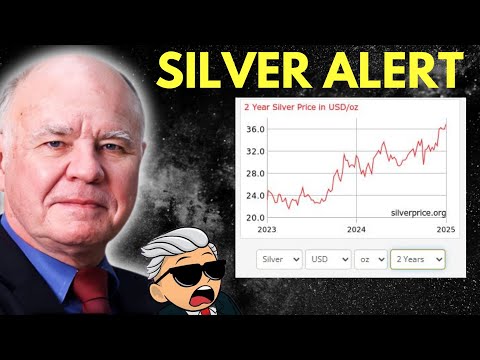
Preview:Marc Faber argues that the market is in a phase of asset-price deflation even while consumer prices stay sticky. His core message is defensive: he expects many inflated assets to weaken, thinks the stock market is vulnerable because of valuation and concentration, and prefers physical gold, silver, and platinum as a long-run hedge against money printing and debt accumulation.
Preview:Dr. Marc Faber argues that investors should focus less on chasing upside and more on minimizing losses in what he sees as a broad asset bubble. He says many asset classes are already rolling over — commercial real estate, condos, meme stocks, crypto, and some bonds — while gold, silver, and platinum remain his preferred stores of value even if they can correct in the near term.
Preview:Marc Faber argues that gold is still the cleanest long-term store of purchasing power, but the real issue is not just owning gold — it is owning it in the right form, custody structure, and jurisdiction. He prefers physical gold, warns against bank deposits and potential confiscation/expropriation risk, and also sees silver, platinum, oil, and several agricultural commodities as cheap relative to gold.
Preview:Marc Faber argues the gold pullback is a normal shakeout inside a much larger, decades-long inflation of financial assets, and he says he would buy more gold on further weakness. He links tightening liquidity not just to central bank policy, but to falling prices in real estate, crypto, and private credit, which he says is already hurting ordinary households and signaling broader fragility in asset markets.
Preview:Marc Faber argues that markets are being distorted by liquidity, speculative crowding, and weak breadth, while rising oil prices and higher bond yields will ultimately pressure inflation, deficits, and financial assets. He says China cannot stay passive much longer if Middle East oil flows are disrupted, expects action within a month, and thinks the geopolitical backdrop is worse than the headline S&P strength suggests.
Preview:A debate on how the Iran war affects inflation, the dollar, and U.S. power. Marc Faber argues the conflict worsens an already fragile debt-and-inflation backdrop and accelerates global diversification away from the dollar; Brent Johnson agrees the shock is inflationary but thinks the U.S./North America is still better positioned than most and may even use the crisis to reinforce dollar and energy dominance.
Preview:Marc Faber argues that war, debt, and asset-price declines are tightening global liquidity, which he thinks will pressure stocks, households, and Western economies while keeping gold and some bonds as relative shelters.
Preview:Marc Faber argues that the Iran/Israel/US ceasefire changes little, that the war may resume or escalate, and that markets have overreacted. His main positioning advice is defensive: hold more cash, own some bonds, and keep gold and silver as long-term stores of value rather than chasing them after the move.
Preview:Marc Faber argues the Iran escalation could be the catalyst for a broader asset deflation phase, with liquidity shrinking and most assets vulnerable over the next 12 months. He favors capital preservation, selective bonds, precious metals, and diversification outside the U.S., while warning that war-driven money printing could eventually weaken the dollar and fuel inflation.
Preview:Marc Faber argues the Iran war is likely to be prolonged, inflationary, and disruptive for markets, with gold and other real assets still attractive as insurance while U.S. stocks and bonds look expensive or weak. He also sees a turning point in emerging markets and warns that political elites, Epstein-related blackmail, and war could be interconnected, though he expects little accountability.
Preview:Marc Faber argues that Trump’s 15% U.S. growth promise is unrealistic, current GDP figures overstate real economic strength, and policy is increasingly interventionist and inflationary. He says the market is inflated by a small set of mega-cap tech stocks, while gold, silver, and platinum better reflect the long-run erosion of fiat purchasing power.
Preview:Mark Faber argues 2026 should be a difficult year for asset holders, with low return expectations, modest or negative real returns, and a likely continuation of international markets outperforming the U.S. He remains constructive on precious metals as insurance but says gold is no longer cheap and mining stocks have become somewhat crowded and speculative, so he has recently trimmed exposure. He also likes energy and still sees select emerging-market and Asian equities, especially Thailand, as relatively cheap compared with expensive U.S. assets.
Preview:Marc Faber argues that the market regime has shifted from a simple 'stocks always up' era to a more uneven environment where monetary debasement, wealth inequality, and asset-class rotation matter more than headline index gains. He is cautious on U.S. equities and sees a lot of valuation risk in the MAG 7, while finding better relative value in precious metals, select foreign markets, and some beaten-up or underowned assets like long bonds, oil, and certain banks. His core message is that investors should expect big distribution effects from money printing and policy intervention, not broad-based prosperity.
Preview:Marc Faber argues that gold and silver are rising because paper currencies are being debased, the global asset bubble is vulnerable, and precious metals are one of the few reliable stores of value if the system weakens. He ties the rally to monetary inflation, weak real economies, geopolitical tension, and commodity scarcity, and says investors should own precious metals to lose less if assets deflate.
Preview:Marc Faber argues that 2025’s big story was stronger-than-expected precious metals and a broad asset boom that masked deteriorating real purchasing power. He is bullish on gold, silver, and other hard assets as protection against underreported inflation, money printing, and eventual asset-price weakness, while saying stocks and government debt remain vulnerable in real terms.
Preview:This Wealthion market recap is a broad, multi-guest discussion arguing that the old passive, US-only playbook is breaking down in a more multipolar world. Jacob Shapiro and Marco Papic are the clearest macro voices: both see geopolitics, sovereignty, energy transition, and industrial policy as investable themes, with Latin America, Canada, Mexico, Chile, Brazil, and parts of Europe singled out as beneficiaries. Jonathan Wellum then shifts the conversation toward valuation discipline, saying the big AI/mega-cap names are expensive, but that investors can still participate through infrastructure, energy, royalty companies, insurance, and selected software and industrial names. The second half turns more explicitly bearish on the structure of the US economy and financial system. The speakers argue that fiscal deficits, not the Fed, are driving the economy; that monetary policy has become less effective because of debt; and that inflation may be tolerated because it helps manage the debt burden. Marc Faber adds a strong warning that markets are complacent, asset prices are stretched, and that investors should consider diversification across gold, bonds, cash, and non-dollar assets rather than relying on tech-heavy US portfolios. The tone is opinionated and thematic rather than data-heavy, with a recurring message that geopolitics, valuation, and capital allocation matter more now than they did during the last 30 years of globalization.
Preview:Marc Faber argues 2026 could be a “doom” year for risk assets because decades of falling rates gave way to rising inflation, money printing, and stretched asset prices. He thinks the key risk is a big breakout in interest rates, which would hurt stocks, real estate, and likely long-duration bonds; he prefers thinking in terms of preserving purchasing power rather than chasing upside. Despite the bearish macro stance, he remains constructive on gold, silver, platinum, some dividend-paying stocks, and selected emerging markets, especially Asia and parts of Latin America.
Preview:Marc Faber argues that gold, silver, and platinum are rising because of long-running monetary debasement, central-bank money printing, and the incentives of the financial industry. He says the U.S. and broader fiat system are structurally vulnerable, favors precious metals over cryptocurrencies as “safe currencies,” and thinks platinum may outperform gold. He is also bearish on government intervention, skeptical that debt can be resolved without more inflation, and mildly constructive on oil and some cheap Latin American markets.
Preview:Marc Faber argues that geopolitical aggression, heavy money printing, and rising debt are eroding the current system, while making hard assets and select equities more attractive than cash or bonds. He is especially constructive on oil/natural gas stocks, some emerging markets, Thai banks, and precious metals, but he also warns that many assets are already expensive and that future returns may disappoint broadly.
Preview:Marc Faber and Grant Williams argue that fiat systems, bloated governments, and central-bank money printing have eroded living standards while boosting asset prices. Their core trade is that gold is being remonetized, platinum looks especially mispriced, and paper currencies face long-run purchasing-power loss and possible reserve-currency decline.
Preview:Dr. Marc Faber (the "Gloom, Boom, and Doom" editor) sits down for a short interview. He reiterates his long-standing view that gold, silver, and platinum preserve purchasing power over time and are in a multi-year bull market — but he cautions that after significant runs, speculation is elevated and a "substantial setback" or correction is likely. He is critical of US foreign policy under Trump for uniting BRICS nations against America, agrees (surprisingly) with the Fed's reluctance to cut rates, believes inflation is understated, and dismisses the idea that cryptocurrencies will replace government debt as "a complete joke." His core message: it's a good time to already own precious metals, but not necessarily a good time to buy them.
Preview:Dr. Marc Faber (Gloom, Boom & Doom Report) delivers a deeply bearish macro outlook: he argues the US is in a "gigantic asset bubble," already in recession, and that Trump is an arrogant interventionist who will bring about a depression. He sees eventual civil unrest, favors gold for long-term purchasing-power preservation, and is bullish on mining stocks (Barrick, Newmont) which he thinks could double. He expects US bonds to rally to 3-3.5% on the 10-year and believes emerging markets will outperform the US going forward.
Preview:Marc Faber argues that monetary policy is not actually tight despite rate hikes — evidenced by booming asset prices across stocks, crypto, gold, and real estate. He expects the Fed to cut rates in September but warns the bond market may not react favorably. He sees the US fiscal trajectory as unsustainable, with money printing as the inevitable path, and recommends individuals hold 20-40% of their wealth in physical gold and silver as purchasing-power protection. He also flags platinum as undervalued relative to gold and notes emerging market equities as relatively cheap compared to overvalued US stocks.
Preview:Dr. Marc Faber argues that official inflation statistics grossly understate real cost-of-living increases (6-12%), that tariffs are a consumer tax, and that all classic bubble symptoms are present — record margin debt, extreme complacency, and speculative excess. He suggests the Fed should tighten, not cut, but acknowledges liquidity from money printing can sustain the bubble longer than expected. His preferred wealth-preservation assets are gold, silver, and especially platinum, which he calls unusually cheap relative to gold. He floats the possibility that money could rotate out of overvalued US assets into Europe, Latin America, and Asia.
Preview:Marc Faber argues that decades of money printing have created a broad asset-price illusion that will eventually unwind. He is bearish on all paper currencies, expects further weakness in the dollar, thinks rates should not be cut now, and sees precious metals, some resource equities, and select real assets as relatively better shelters if the system deteriorates.
Preview:Marc Faber argues the US is on an accelerating path toward debt default under Trump, making precious metals essential. He sees Trump as erratic and untrustworthy — a "gift from God for precious metals holders." Faber is particularly bullish on silver and platinum relative to gold, citing historically extreme ratios and platinum's recent technical breakout. He also predicts Western democracies will slide into authoritarianism, dismisses the Russia-Ukraine war as a NATO-provoked distraction, and views BRICS as a genuine challenge to US hegemony.
Preview:Marc Faber delivers his signature contrarian-bearish macro view: persistent government money-printing fuels asset inflation for the wealthy while eroding living standards for everyone else. He argues monetary conditions remain loose despite rate hikes, that the US dollar is in structural decline under Trump, and that a turning point has begun where EM and European markets will outperform the US. His core advice: think about how to lose the least money, not make the most — own gold, silver, platinum (his top pick), and diversify outside the US.
Preview:Dr. Marc Faber argues that the U.S. dollar is weakening, U.S. markets are expensive, and precious metals remain the cleaner store of value in an era of heavy debt, protectionism, and political uncertainty. He is especially bullish on gold’s inflation/debasement hedge role and says platinum may be the more overlooked opportunity.
Preview:Dr. Marc Faber ("Gloom, Boom & Doom Report") sits down with Wall Street Bullion for a wide-ranging interview. He is highly critical of Trump, Bessent, and the recent US fiscal bill, arguing it will increase deficits and inflation. His core investment thesis centers on precious metals as wealth preservation — he makes a particularly strong case for platinum, calling its 122-year low against gold a "life opportunity" with a target to reach parity with gold within 12–18 months. He advocates monthly physical gold accumulation, warns against holding only cash, and dismisses tariffs as an inflationary tax that hurts the middle class. The interview is conversational with a single host and one guest.
Preview:Marc Faber argues hyperinflation is "almost inevitable" in democracies because vote-buying creates structural deficits that must eventually be monetized. He sees Trump's rate-cutting push as backfiring, warns residential real estate demand is collapsing on affordability, and recommends precious metals — particularly platinum and silver — as undervalued hedges. He dismisses reshoring/tariffs as a "gigantic lie" and advises avoiding dollar-denominated assets, though he cautions no currency looks desirable.
Preview:Marc Faber argues that Europe’s political economy is structurally broken, Germany’s fiscal loosening is another step toward decline, and U.S. tariffs are economically misguided. He remains broadly bearish on policy intervention, skeptical of democracies’ ability to cut spending, constructive on select Asia/China opportunities, and bullish on gold as a monetary hedge.
Preview:Dr. Marc Faber argues that Trump's tariffs are "a complete disaster," the US economy is already in recession, and the dollar faces significant downside risk. He sees gold as a relatively safe store of value — not because it's cheap or expensive, but because it's nobody else's liability. He doubts Fort Knox holds all the gold claimed, warns dollar reserve status is ending (question is when, not if), and advises young investors to diversify across real estate, stocks, cash, and physical precious metals while avoiding futures speculation. His overarching message: this is an environment for loss avoidance, not wealth creation.
Preview:Dr. Marc Faber sits down with CapitalCosm host Danny to deliver a deeply bearish macro outlook. He argues the Trump administration's tariff interventions reflect cluelessness and will backfire, forcing the Fed to print money, weakening the dollar, and driving a structural shift into precious metals. He sees US stocks as grossly overvalued, asset deflation as the real Federal Reserve fear, and gold as the ultimate safe haven in a world he believes is still massively underweight the metal.
Others tracked across the same asset focus or market thesis.
Unlock every transcript this speaker appears in, compare them with your other followed voices, and ask the agent for the bull, bear, and consensus read in one workspace.
Type a question. Create a free agent to send it and keep the answer linked to this speaker.
Your question is preserved across sign-in.
Free. No card. Takes about a minute.