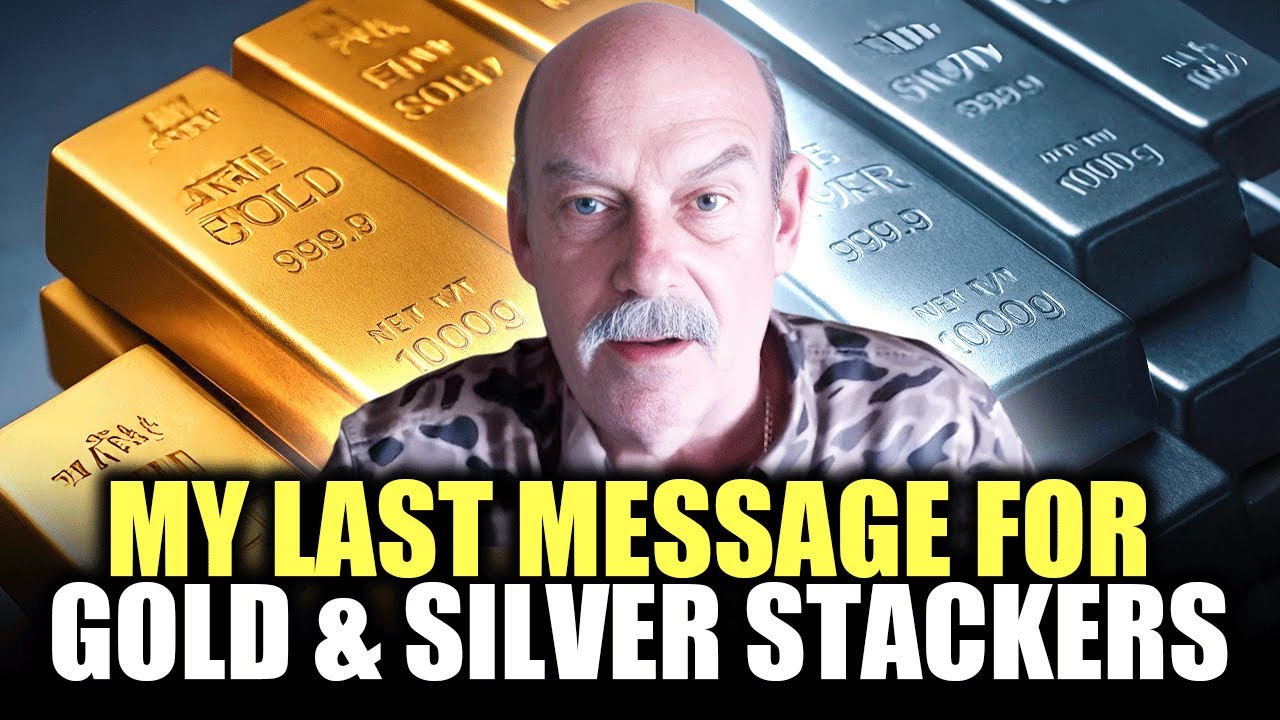
Holter’s recurring worldview is strongly sound-money and crisis-oriented.
📈 See how Bill Holter's thesis changed over time →Preview how this speaker shows up across market transcripts. Unlock the full archive, AI chat, and the version personalized to your watchlist, followed channels, and favorite speakers.
Bill Holter is a precious-metals-focused macro commentator who repeatedly frames markets through systemic fragility, reserve-currency risk, and counterparty/settlement failure. Across the supplied interviews he presents himself as a former Wall Street branch manager, licensed bullion dealer, and metals analyst. He tends to speak in broad, structural terms rather than company-specific or trade-tactical detail.
Holter’s recurring worldview is strongly sound-money and crisis-oriented. He argues that gold and silver are not primarily risk assets but long-term hedges against currency debasement, credit contraction, and loss of trust in paper claims. He repeatedly emphasizes: the U.S. dollar and Treasury system are fragile because of high debt and interest costs; gold often strengthens when confidence in fiat weakens; silver is especially important because he sees a persistent structural deficit and the possibility of a delivery failure; and a broader monetary reset may emerge through BRICS-style commodity-backed currency ideas. He also sees higher rates as deflationary for asset prices even while living costs can still rise, leading him to describe a mix of inflation, deflation, or stagflation rather than a stable regime. His preferred framing is that physical metal ownership is ultimately about preserving purchasing power and protecting against system stress, not short-term price calls.
Every analyzed appearance we have for this speaker, newest first. Open any transcript preview to read the underlying transcript.
Preview:Bill Holter presents a deeply bearish thesis on the fiat currency system, arguing that gold and silver are not "going up" but rather currencies are collapsing against them. He frames the dollar's decline from 1/300th to 1/14000th of an ounce of gold as a 93%+ loss of purchasing power. The current silver correction is "way overdone" — just another gut check in a secular precious metals bull market. His core argument: the global financial system is insolvent, derivatives are an unaddressed systemic threat, and higher interest rates will blow up the debt bubble. He advises using the pullback to move capital out of the banking system into physical metal.


Preview:Bill Holter argues that the global financial system is approaching an insoluble crisis — sovereign debt is too large, central bank balance sheets are already blown up, and there is no "white knight" left to bail out the system. He frames gold and silver as the only genuine hard money that will preserve purchasing power when fiat currencies devalue. He notes gold has outperformed the S&P 500 since 2000 when measured in real terms, and sees gold/silver as in a bottoming process with a big upside move ahead. He is dismissive of Bitcoin ("digital air") and criticizes CPI as a manipulated measure that hides true inflation.
Preview:Bill Holter argues that the dollar has already collapsed 93-99% against gold over 25 years, and what's coming is a credit crisis centered in the US that will be "10 on a scale of 1 to 10." The current gold/silver pullback is an overdone correction and a buying opportunity — a "gut check" that shakes out weak hands before the final reset. He advises moving all funds out of the banking system into physical metal with no counterparty risk, warning that once the crisis hits, fiat currency will not be accepted for gold.
Preview:Bill Holter, a former Wall Street branch manager and gold/silver bullion dealer, argues that the global financial system is mathematically insolvent and headed for an inevitable credit crisis centered on the US dollar. He frames the recent gold and silver pullback as an overdone gut check within a continuing bottoming process — not an exit. His core thesis: own physical gold and silver with no counterparty risk, hold stock certificates for commodity companies, and prepare for systemic breakdown because fiat currencies are derivatives of gold that have already collapsed 99.5% in real terms. He highlights the derivatives market as the "gorilla in the room," the Japanese yen carry trade unwinding as a potential trigger, and China's move to ban gold/silver rehypothecation as a signal that the paper market is losing credibility.
Preview:Bill Holter argues that gold and silver are in a bottoming process and that the recent selloff is a mispricing caused by treating them like risk assets rather than monetary hedges. He ties the move to rising inflation, seasonal weakness, central-bank buying, and a broader breakdown of confidence in the dollar-based financial system.
Preview:Andy Schectman (Miles Franklin) and Bill Holter argue that major institutions are quietly draining physical gold and silver from COMEX, LBMA, Shanghai, and the GLD/SLV ETFs via authorized participant basket redemptions — bypassing the spot market to avoid triggering a public shortage panic. They cite a 10:1 paper-to-physical ratio on COMEX silver, a February delivery month where 160% of expected metal left COMEX vaults, and GLD's largest single-week outflow in history ($4.2B) as evidence of structural supply stress. Schectman sees trust eroding inside the system and frames large-scale physical withdrawals as the "little by little, then all at once" setup. Holter anchors the bull case on silver's 450M oz annual deficit, invokes "you can't short a shortage," and predicts new gold and silver highs within 60–90 days. Both recommend exiting the banking/brokerage system and holding physical metal as the only defense against a systemic restructuring where depositors are legally unsecured creditors.
Preview:Bill Holter argues that precious metals, especially silver, are in the early stages of a structural move higher after an oversold washout. He ties the setup to persistent supply shortfalls, tight physical markets, and signs of stress in gold-silver arbitrage that he thinks could reflect delivery concerns in COMEX/LBMA rather than normal pricing. He also frames the broader backdrop as one of deception, supply-chain strain, geopolitical noise, and capital rotating toward tangible assets.
Preview:Bill Holter argues that gold and silver are in a structurally higher regime, but near-term paper-market pressure and liquidity needs are causing tactical weakness. He says central banks—especially China—keep buying gold, that commodities were knocked down with paper shorts, and that silver is especially vulnerable because it is a small market that can be 'clubbed' easily.
Preview:Bill Holter argues that the immediate Iran/US market rally is mostly a narrative-driven move built on an MOU rather than a binding deal. He thinks gold and silver have likely put in a near-term bottom after being oversold, and he remains structurally bullish on precious metals and miners because of silver’s ongoing supply deficit and broader distrust of current market and geopolitical messaging.
Preview:Bill Holter argues that the recent pullback in gold and silver is a correction within a larger monetary break, not the end of the bull case. He says silver is more likely to outrun gold on a percentage basis, that miners should be owned with attention to custody and geography, and that the real danger is a delivery failure in silver spilling into gold and then into the broader derivatives complex.
Preview:Bill Holter argues that the macro setup is one of simultaneous inflation and deflation: living costs can rise while financial assets fall. He says higher interest rates, rising debt service, geopolitical supply shocks, and a likely derivatives break will pressure credit and asset prices, while gold and silver should ultimately outperform as anti-fiat stores of value.
Preview:Bill Holter argues that the recent pullback in gold and silver is a tactical, paper-driven shakeout inside a still-higher regime, with the real thesis being currency debasement and eventual system stress. He says metals are being used as liquidity sources, silver is a tiny market that can be suppressed, and physical ownership matters because the financial system itself may eventually freeze.
Preview:The transcript is a high-conviction, gold-and-silver bullish warning about a fragile global financial system. The speakers argue that above-ground inventories have been drawn down, that energy and credit stress are converging, and that the next phase could force people toward hard assets because fiat money and financial institutions may not preserve purchasing power or claims.
Preview:Bill Holter and Rafi Farber argue that gold and silver are not really 'rising' so much as paper currencies are losing value. They frame the current metals setup as a confidence crisis: silver is in structural deficit, paper claims exceed physical metal, and any continued suppression can only delay an eventual repricing. The video leans hard on a collapse-in-confidence thesis, with repeated claims that gold at $10,000 to $25,000 would signal a major vote of no confidence in Western money.
Preview:The speakers argue that gold and especially silver are consolidating inside an ongoing bull market, with silver stronger relative to gold and potentially heading higher into year-end. Their bigger thesis is that the real driver is not chart noise but a debt-and-credit system that is becoming unstable, making precious metals a hedge against a possible credit crisis, currency debasement, and dislocated markets.
Preview:Bill Holter argues that the real story in gold and silver is not price action in dollars, but a long-term breakdown in confidence in fiat currencies, especially the U.S. dollar. He says recent weakness in metals is just a correction inside a larger suppression/deficit backdrop, and that any eventual price target in dollars will look small only because the currency itself will be badly devalued.
Preview:The speakers argue that gold and especially silver are in a volatile correction, but that the real story is worsening physical tightness beneath a paper-price selloff. They frame the move as a dollar-debasement and real-yield story, and say the current pullback could set up new highs within 60 to 90 days.
Preview:Bill Holter and David Morgan argue that gold and especially silver are in a long-term bull market that is being temporarily suppressed by paper selling and market manipulation. They expect sideways price action in the near term, but think structural deficits, rising monetary demand, banking stress, and debt overhang will eventually drive substantially higher prices, with silver viewed as the more leveraged hedge.
Preview:Bill Holter and David Morgan argue that gold and silver are still in a constructive bull market despite recent sideways price action, and that paper-market suppression is temporary compared with the underlying credit, debt, and money-supply math. They frame the real risk as a coming credit and liquidity crisis, not day-to-day price moves, and repeatedly say the main defense is to own physical gold and silver before the system breaks.
Preview:Bill Holter argues that the monetary system is cracking under debt, rising rates, and failed bond-market reactions to Fed easing, and he says that pushes investors toward gold and especially silver as real money. He is highly skeptical of cash, Treasuries, ETFs, brokered stock ownership, and Bitcoin, framing them as vulnerable claims on a system he thinks is increasingly rigged and likely to break.
Preview:Bill Holter argues that gold and silver’s pullback is a correction inside a much larger repricing trend driven by structural deficits, heavy shorting, and fiat-currency debasement. Francis Hunt largely agrees, framing the move as part of an “everything bubble” that looks weaker when measured in gold rather than dollars.
Preview:Bill Holter argues silver has already broken out of a multi-month triangle and is likely to outperform gold in the next leg higher. He ties the move to tighter silver supply, rising credit stress, and a broader loss of purchasing power in paper currencies, while warning that higher yields, energy prices, and debt burdens could force a larger economic disruption.
Preview:Andy Schectman and Bill Holter argue that silver has already broken out of a long consolidation and could be starting a much larger advance, with Holter floating a path toward $100, then the old highs around $122–123, and potentially $200–250 by year-end. Their bullish case rests on tight physical supply, China’s continued gold accumulation and silver imports, a rising gold/silver ratio setup, and the idea that currencies are losing purchasing power faster than people expect.
Preview:Bill Holter argues the next major leg in gold and especially silver has already started, and that it will be larger than the late-2025/early-2026 move. He ties the breakout to a broader drop in currency purchasing power, rising inflation, higher yields, commodity strength, and growing stress in the credit system.
Preview:Bill Holter argues that silver is breaking out after a severe correction and that the move is supported by persistent global supply deficits and rising industrial demand. He ties the price action to a broader monetary warning: if the credit-based financial system fails, paper claims may become unreliable, leaving gold and silver as the main monetary refuges. The conversation also emphasizes practical preparedness themes, especially the advantages of pre-1965 U.S. silver coinage and direct ownership outside brokerage and banking systems.
Preview:Bill Holter argues that silver is structurally too tight to absorb demand shocks and that an imminent failure to deliver in silver could spill into gold and expose fragility in the Western credit system. He ties the setup to rising sovereign yields, a weakening carry trade, and broader loss of confidence in fiat currencies, framing gold and silver as the assets people move into when that confidence breaks.
Preview:Two veteran precious-metals commentators — Bill Holter and David (likely David Morgan) interviewed by host Danny — dissect the silver market. The core debate: paper markets (COMEX/LBMA) still control price discovery, but physical supply tightness is building via industrial demand (solar, EVs, AI, robotics). Silver could consolidate sideways into summer around $75–$85 before resuming its bull trend. David dismisses the Bloomberg call for silver to fall to $50 or even $34 as wrong; both speakers see $100+ ahead. The broader macro warning: the credit system (private credit, student loans, auto loans, rising defaults) is fragile and a financial crisis could make gold and silver vastly more valuable in purchasing-power terms even if their nominal prices don't move.
Preview:The video is a long-form interview on CapitalCosm with David Morgan and Bill Halter about silver, gold, market structure, and the broader monetary system. Their core message is that gold and silver remain the best hedge against a fragile credit system and an eventual monetary reset, even if prices are volatile in the near term. They debate whether recent silver delivery stress and the Shanghai-vs-Western price gap are signs of a more serious physical squeeze, but both remain broadly bullish on the metals.
Preview:The video argues that gold and silver are entering a major repricing driven by broken trust in the dollar system, central-bank gold repatriation, and growing institutional endorsements for precious metals. The speakers are especially bullish on silver, with one arguing junk silver is the cheapest form today and will later become the most expensive form in the U.S., while also pointing to Bank of America, Morgan Stanley, and BlackRock comments as evidence that mainstream finance is finally validating the move.
Preview:Bill Holter argues that gold and silver are in a larger secular revaluation, but short-term price action is being distorted by paper futures, liquidity stress, and geopolitics. He thinks recent pullbacks were corrective, not structural, and says the bigger risk is a coming breakdown in fiat, banks, and delivery systems rather than a normal market cycle.
Preview:Andy Schectman and Bill Holter argue that the silver market is approaching a structural breaking point where persistent physical delivery demands, COMEX inventory drains, and backwardation across global markets signal that paper-price suppression is becoming unsustainable. Their core thesis: a COMEX failure-to-deliver is likely imminent in silver, followed within ~24 hours by gold, after which physical metal will be unobtainable at any fiat price. They frame this not as a price-squeeze narrative but as an availability crisis — own it or be locked out.
Preview:Andy Schectman and Bill Holter discuss the accelerating loss of trust in the dollar system, evidenced by surging physical delivery demands on COMEX/LBMA. They argue gold is the true measurement of value, silver is poised to dramatically outperform due to the 60:1 gold-silver ratio, and the world is moving toward regional trade settlement in gold. They warn of a potential financial panic driven by geopolitical conflict, overleverage in Western markets, and a historic re-pricing toward a 1:1 Dow-to-gold ratio.
Preview:Bill Holter argues that the recent softness in gold is likely a forced-liquidation event, not a broken thesis, and that physical demand plus institutional fear should drive a new leg higher in precious metals. He is especially constructive on silver versus gold, miners, and commodities broadly, while warning that rising rates, credit stress, and currency debasement could lead to real estate and equity repricing.
Preview:Bill Holter argues that gold and silver are not 'rising' so much as paper currencies are falling, and that the recent pullback is temporary and likely tied to paper-market suppression. He says physical silver is already tight, private credit and commercial real estate are early signs of broader systemic stress, and the global debt structure is making the financial system increasingly fragile.
Preview:Bill Holter argues that gold and silver remain the best place to preserve wealth, framing recent price pullbacks as paper-market manipulation rather than genuine weakness. He highlights silver's 450M oz annual structural deficit, insists both metals will hit new highs by year-end, and warns that systemic counterparty risk makes physical precious metals the only non-defaultable asset class. He also flags collapsing premiums on junk silver and pre-33 gold as a temporary liquidity/refining bottleneck, not a demand problem.
Preview:Bill Holter argues the financial system is already in the unwind phase, with private credit, rising sovereign yields, and bond-market fragility acting as early warning signals. His core prescription is to reduce exposure to the banking/brokerage/insurance system and hold physical gold and silver as the only reliable assets outside counterparty risk.
Preview:Bill Holter joins CapitalCosm's Danny to discuss gold, silver, the Iran/Strait of Hormuz conflict, and a brewing private credit crisis. Holter argues the war is dollar-negative and treasury-negative long-term despite near-term DXY strength. He highlights a $12 silver arbitrage gap between China and Western exchanges as evidence of stressed physical supply, warns of a cascading credit event starting in private credit, and frames gold as the "anti-dollar" signaling the endgame for the fiat system. His core advice: prepare to be self-reliant, because a credit freeze means everything shuts down.
Preview:Bill Holter argues silver is entering a delivery stress event that could expose COMEX/LBMA price-setting as largely paper-based. He says Shanghai and India are increasingly setting the real price, while Western futures and ETFs have functioned as pressure-release valves that suppressed physical demand.
Preview:Bill Holter and David Morgan discuss the bull case for silver in a wide-ranging interview. Core thesis: silver is in a structural supply deficit that will exhaust above-ground inventories within years, driven by solar/industrial demand and underappreciated investment demand. They argue silver miners are deeply undervalued relative to metal prices ($90 silver vs. miners priced as if silver were $30-35), that COMEX inventory dynamics are misunderstood, and that sentiment has reset from January's euphoria to neutral — setting up a more sustainable move higher. Morgan disagrees with analyst Matt Watson's conservative investment-demand forecast, arguing real demand will be higher, accelerating the supply crunch. Gold is framed as the institutional safe haven with central bank buying, while silver is the higher-upside grassroots play.
Preview:Bill Holter and David Morgan argue that silver is entering a potential physical-squeeze phase, with March delivery risk, falling COMEX registered inventories, and a widening gap between paper pricing and physical metal. They also frame gold as the more established central-bank safe haven, while mining stocks look undervalued because earnings are rising faster than share prices.
Preview:Bill Holter discusses the precarious state of COMEX silver deliveries heading into the March first notice day (Feb 27), arguing that registered inventory (~103M oz) is dwarfed by outstanding contracts (~400M+ oz). He warns that a delivery squeeze could expose COMEX as a fractional-reserve fraud, potentially triggering force majeure. Holter sees China's temporary absence (Lunar New Year) as a window for price suppression, but expects Chinese buying to resume. He cites structural supply deficits (~500M oz/year), BRICS currency developments, and a broader loss of confidence in fiat systems as drivers for triple-digit silver ($200-300) by mid-2026.
Preview:The video argues that gold and silver are not just in a bull market, but are approaching a systemic break caused by physical shortages, backwardation, and massive derivative short exposure. Andy Schectman and Bill Holter warn that if silver starts failing to deliver, the stress could cascade into gold and then across broader markets, but they repeatedly stress that the spectacular upside targets people talk about would come with financial chaos, not a normal winning trade.
Preview:Bill Holter argues the precious-metals rally is not a normal cyclical move but the market pricing in a global credit and currency failure. He says Japan’s rising long yields and yen weakness are a key stress point, silver is the most likely near-term “failure to deliver” flashpoint, and gold/silver should not be sold because fiat alternatives are deteriorating and there may be nowhere safe to rotate proceeds.
Preview:The video argues that silver is heading toward a failure to deliver in the March/April window, which the speakers frame as a cash-settlement event that would expose the fragility of paper precious-metals markets. They extend that thesis into a broader warning about dollar debasement, Treasury-market stress, stablecoins, and a likely structural bid for gold and silver driven by physical shortages and de-dollarization.
Preview:Bill Holter argues that the paper/physical bifurcation in precious metals markets signals an imminent COMEX silver failure-to-deliver, which will cascade into gold within 24 hours and trigger a systemic collapse. He frames the seizure of Russian reserves as the catalyst for de-dollarization, dismisses price predictions as meaningless, and emphasizes ownership of physical metal — particularly junk silver — as the only wealth preservation strategy. His thesis is that the entire financial system is insolvent, built on leverage that was also used to suppress metals, and that unwinding those positions will force a short squeeze followed by a default.
Preview:Bill Holter discusses the growing fragility of paper precious metals markets, the tightening physical silver supply, and central bank gold buying as a hedge against dollar devaluation. He warns of a coming credit event, advises a disciplined tranche-based silver-to-gold swap strategy as the ratio compresses, and cautions that once the paper system breaks, physical metals will become unavailable at any price. He also critiques AI-generated silver commentary for factual errors while acknowledging their directional logic.
Preview:Bill Holter discusses the structural deficit in silver (~450M oz annual gap), the growing bifurcation between paper (COMEX/LBMA) and physical (Shanghai) markets showing a persistent $7-8 premium in cash markets, and the threat of a massive short squeeze. He advocates direct ownership of physical metals and stock certificates (via DRS) to avoid intermediary risk, referencing "the great taking" laws from 2014. He dismisses crypto as "digital air" created as a pressure valve to divert demand from gold and silver. The conversation covers AI/solar/EV demand for silver, supply constraints as a byproduct metal, and Asian buyers sourcing doré directly from mines, bypassing western exchanges.
Preview:Bill Holter argues that the precious-metals market is becoming so tight that volatility is only going to intensify, especially in silver. He says physical supply is thinning, dealer premiums are rising, and a large enough order could now clear shelves in a way it might not have a few years ago.
Preview:Bill Holter lays out a hard-money thesis: silver is in a structural supply deficit, paper markets are breaking as physical delivery demands rise, and the entire fiat currency regime is in its end-stage. He argues that gold and silver have been systematically suppressed for decades so governments could borrow without constraint, but the paper shorts are now losing billions as the COMEX/LBMA system strains under delivery requests. Holter sees this rippling into broader credit markets, eventually forcing investors into mining equities as the only remaining exposure — though he warns miners carry confiscation and geopolitical risk. The interview is heavy on existential-system-collapse framing with limited discussion of counterarguments, timing, or precise levels.
Preview:Bill Holter and Lynette Zang argue that gold and silver are dramatically undervalued relative to outstanding debt and money printing, and that a failure to deliver physical metal on COMEX/LBMA could trigger a sudden, violent repricing. Holter sets a fair-value framework at $40,000 gold and $2,000 silver; Zang offers a nearer-term 2026 target of $6,000 gold and $200 silver. Both emphasize physical ownership and warn that backwardation and rising delivery demands signal the paper-market mechanism is breaking.
Preview:Bill Holter argues the physical silver market is approaching a delivery failure on COMEX/London, driven by structural deficits, declining inventories, and an accelerating shift from paper settlement to physical delivery by institutional buyers. He claims Fed liquidity injections are propping up short positions, junk silver (pre-1965 US coinage) is the best retail entry point, and when delivery fails it will trigger a trust crisis across all derivatives markets — not just precious metals. He views gold and silver as the only trustworthy currencies and believes we are still "early" in the bull case.
Preview:Bill Holter, in conversation with an unnamed host, argues that the London silver market and broader paper precious-metals system are breaking under a structural supply deficit — mines produce ~900M oz/year vs. ~1.3B oz demand. He sees a multi-year shift from paper contracts to physical delivery, driven by Asian distrust of paper promises. Holter contends the dollar is losing structural demand as Japan/China sell Treasuries, stablecoins are a Treasury-engineered backstop, and gold has become central banks' hedge since Russia's reserves were frozen. He warns equities are rolling over vs. gold, that one crisis away from systemic default exists, and that confiscation is more likely via punitive taxation than door-to-door seizure. On silver specifically, he sees the gold-to-silver ratio normalizing and advises staged conversion into gold at 50:1, 40:1, and 30:1. The episode blends macro dollar-decline thesis, precious metals supply analysis, and personal preparedness themes.
Preview:Bill Holter ("Mr. Gold") argues the silver market is in a structural deficit of 300–400 million ounces, with physical vaults being drained daily across LBMA, COMEX, and Shanghai. The Shanghai exchange is trading at a large premium to paper exchanges, signaling outright backwardation — investors want metal now, not promises. He expects a failure to deliver on silver contracts within 30–90 days, which would cascade into a broader derivatives trust crisis. He also discusses BRICS currency development, gold remonetization, the Fed's weekend repo lending as backstopping short positions, and retail dynamics including the opportunity in junk silver. His core message: hold physical metal for what you cannot afford to lose.
Preview:Bill Halter argues that silver is entering a physical shortage that will force a repricing as paper claims fail to match deliverable metal. He extends that thesis into a broader warning: gold, silver, miners, currencies, and credit markets are all tied to a breaking fiat system, with the East and central banks already moving away from dollar dependence.
Preview:Bill Holter and David Morgan discuss the endgame of the fiat currency system, arguing that gold and silver are transitioning from managed commodities to functioning monetary assets. They contend silver is the "fuse" or "blasting cap" for a derivatives-driven systemic break, with industrial demand creating structural shortages that paper markets cannot satisfy. Both warn that while extreme price targets ($100–$500 silver, $5,000–$50,000 gold) may materialize, they come with systemic collapse — "be careful what you wish for." North American retail selling (economic distress) contrasts with Asian physical accumulation. Mining equities lag but could catch up violently; grifters will proliferate in late-stage mania.
Preview:Bill Holter argues that physical silver and gold — specifically junk silver and pre-1933 US gold coins — are trading at historically anomalous discounts relative to modern bullion products. He contends this is a temporary window driven by a liquidation wave from long-time holders that is permanently destroying physical supply via melting. His broader macro thesis is that nothing was fixed after 2008, credit markets will seize up in 2026, and fiat currencies are collapsing in purchasing power, making physical metals the only durable money.
Preview:Bill Holter and David Morgan discuss silver as the breaking point for the financial system, arguing that physical silver shortages will trigger a paper-market failure, with gold following. They warn that extreme price targets ($200-500 silver, $10-50k gold) imply systemic collapse — bank closures, halted trading, frozen credit — not speculative windfalls. Silver remains structurally undervalued versus gold at a ~64:1 ratio, and mining equities still price silver around $35 not $70. The conversation centers on loss of confidence in treasuries post-Russian reserve confiscation, central bank gold buying, Fed loss of yield-curve control, and the inevitability of debt monetization. Their core message: own physical metal as insurance, not speculation, because in a cash-and-carry breakdown, availability matters more than price.
Preview:Bill Holter argues that silver and pre-1933 gold are mispriced relative to physical reality, because Western paper markets and fiat currencies are losing credibility while physical demand, central-bank buying, and supply stress are rising. He says the best U.S. forms to own are junk silver and pre-1933 gold because they may be more resilient to confiscation risk and future market dislocations, but he warns buyers not to overpay predatory premiums.
Preview:Bill Holter lays out an endgame thesis for gold and silver: the paper futures markets (COMEX, LBMA) are heading toward a failure-to-deliver event as physical demand outpaces paper supply. He argues Western price discovery is breaking down, with Asian physical hubs leading, while North American retail has been a net seller — yet prices surged anyway due to central bank and sovereign buying, triggered by the weaponization of the dollar and SWIFT. He sees junk/constitutional silver and pre-1933 gold as the best forms for Americans to own, noting the unusual discount in junk silver is a temporary glut from 1970s-80s holders finally liquidating, which will eventually flip to a premium once that supply is melted away.
Preview:Bill Holter and Mike Maloney discuss the accelerating breakdown of confidence in paper gold/silver markets. They argue that persistent backwardation, declining inventories, and sovereign buying signal a structural shift toward physical cash-and-carry markets where futures become irrelevant. They warn of an eventual COMEX failure-to-deliver that could send gold to $50,000-$100,000 and silver well above $50, while credit markets simultaneously unwind. The Hunt brothers saga is re-examined as a scapegoating event to cap gold and save the dollar in 1980. The core thesis: wealth will be counted in ounces, not currency units, as fiat purchasing power continues to collapse.
Preview:Bill Holter argues 2025 confirmed a major reset in precious metals and commodities, driven by rising global debt, a breaking carry trade, and worsening distrust in paper claims versus physical delivery. He sees backwardation, tight inventories, and widening physical premiums as evidence that the market is shifting toward cash-and-carry pricing and away from futures-based control.
Preview:Bill Holter argues that gold and silver are monetary assets, not industrial commodities, and that the coming crisis is a credit event that could break the dollar and the broader paper-financial system. He is very bullish on silver, framing the current move as a structural breakout driven by sovereign buying, supply deficits, and fear of counterparty risk, with a near-term target around $100 within six months.
Preview:Bill Holter argues that silver is in a fifth-year structural deficit, paper-market control is breaking down (visible in backwardation, rising lease rates, and short-squeeze pressure), and capital will eventually flee stocks, bonds, and crypto into physical gold and silver. He highlights junk silver as unusually cheap right now and frames the coming move as driven by fear, not greed. The interview also covers Japan's carry-trade unwind and sovereign debt levels as catalysts.
Preview:Bill Holter delivers an urgent call on silver, arguing the paper market is on the verge of a catastrophic failure to deliver. He highlights a five-year structural supply deficit, spiking lease rates, and imploding short positions in SLV. Holter ties the thesis to the unwinding Japanese carry trade and global sovereign debt unsustainability. He specifically recommends "junk silver" (pre-1965 US coinage) as the cheapest, most practical physical form, citing a temporary pricing anomaly caused by refinery backlogs. The interview is high-conviction, long-held-view rhetoric appealing to fear of systemic collapse.
Preview:Bill Holter warns that paper gold and silver markets face a looming delivery failure within 1–3 months, which could trigger a systemic financial shutdown. He argues investors must move capital out of banks and brokers into physical precious metals stored outside the financial system. He highlights a unique buying opportunity in "junk silver" (pre-1965 US coinage), where premiums have collapsed to near or below spot due to a temporary wave of selling by long-term holders — a supply that is now being melted down and will soon dry up, potentially making junk silver the most expensive form of silver in North America. The interview also covers re-emerging repo-market stress, the end of the buy-and-hold bond era, and institutional shifts toward gold.
Preview:Bill Holter argues that the paper precious metals markets are approaching a failure-to-deliver moment, urging viewers to own physical gold and silver outside the banking system. He singles out "junk silver" (pre-1965 US coinage) as the best current opportunity — premiums have collapsed to spot or below because long-term holders are selling into the rally, and refiners are melting down supply. He predicts junk silver will eventually become the most expensive form of silver in North America. The conversation also covers repo market stress, bond market risks, and the systemic danger of a derivatives collapse.
Preview:Bill Holter argues that silver and gold are in a meaningful physical squeeze, with London and Shanghai both tight and COMEX potentially at risk of delivery stress over the next 1-3 months. He says the recent pullback has merely relieved overbought conditions, while the bigger story is growing global demand for actual ounces over paper promises.
Preview:A dual-interview edit featuring Bill Holter and Gregory Mannarino, framed by Metal Sense narration. Holter focuses on the COMEX silver delivery squeeze: November — traditionally a quiet month — may see 20-40 million ounces stand for delivery, and he argues silver will be the market that "detonates" the derivatives complex. Mannarino takes a darker macro-political line: the GENIUS Act signed in July enables a privatized, Fed-overseen stablecoin/token system he calls a "company store model," and he sees zero chance of returning to a gold-backed system because central banks will never surrender power. Both advocate physical gold and silver ownership as the only asset that cannot bankrupt when the debt facade collapses.
Preview:Bill Holter argues silver is primed for a parabolic move because physical supply is so tight that a delivery failure on Comex is imminent. He sees the silver market as a fractional-reserve system under siege: lease rates above 30%, China's dealers hoarding or pricing silver at $128/oz, and first-notice-day deliveries piling up instead of shrinking. A silver delivery default, he contends, would within 72 hours shutter global markets, break gold, and destroy confidence in the entire credit-based fiat system. He also notes North American retail is selling — not buying — out of financial stress, and that junk silver being melted down now will eventually command the highest premiums.
Preview:Bill Holter makes an urgent case that silver is primed for a COMEX delivery failure, which would cascade into gold, break confidence across all financial markets, and lead to a systemic credit seizure within 72 hours. He describes silver backwardation, rising delivery demands, Chinese supply tightness ($128/oz), and notes that Western retail has been selling — depleting the very supply that would be needed. His advice: do not trade this rally; secure physical metal and DRS core mining stock certificates before the system breaks.
Preview:Bill Holter, interviewed by Francis Hunt (The Market Sniper), presents a deeply bearish view of the global financial system. His core thesis: the system is an over-leveraged, insolvent bubble dependent on credit that will inevitably collapse. Silver at $50 is a critical inflection point — a close above it triggers a COMEX "failure to deliver." He envisions a Mad Max-style social breakdown, followed by governments deliberately crashing markets to usher in CBDCs and universal basic income, culminating in a gold revaluation. Silver is framed as the strategic metal of the moment, with Russia, the US, and India all accumulating.
Preview:Bill Holter and host Francis Hunt discuss gold and silver's dramatic price rise, arguing that the dollar's hegemony is ending and a massive monetary reset is imminent. Holter points to surging physical delivery demand on COMEX, dwindling inventories, and central bank gold accumulation as signals that paper-market manipulation is breaking down. The conversation frames gold revaluation as inevitable, questions official economic statistics as propaganda, and warns of a tumultuous transition away from dollar dominance.
Preview:Bill Halter argues that gold and silver are in a genuine breakout, with silver likely heading toward at least $50 and gold already in uncharted territory. He ties the move to a broader loss of confidence in fiat, a stressed Japanese yen carry trade, falling trust in sovereign debt, and growing risk of a paper-asset failure to deliver that could cascade through markets.
Preview:Bill Holter argues the U.S. debt problem is beyond repair: if Treasury demand breaks, the Fed becomes the buyer of last resort, rates rise, credit seizes, and gold/silver are the only reliable stores of value. He also says metal holders may need to keep some liquidity because many people are already selling metal to pay bills, while banking-system and custody risks make direct ownership preferable.
Preview:Bill Holter argues that silver is the "fuse" to gold's "financial bomb" — a small, structurally undersupplied market where a failure to deliver would cascade into gold within 72 hours and end the financial system. He sees the 10-year Treasury yield as the key signal: if the Fed cuts rates and long yields rise through 4.5% to a 5% handle, it proves loss of control of the yield curve. Central banks are replacing Treasuries with gold, the US dollar's reserve status will end, and we'll go through one or two fiat resets before a gold-backed final reset. Gold has already doubled from $1,700 to $3,400 in two years, and Holter uses gold — not any fiat currency — as the measuring stick for real purchasing power.
Preview:Bill Holter argues the monetary system is fragile because it rests on U.S. Treasuries and confidence in U.S. gold holdings, while state-level legal tender laws and BRICS-plus de-dollarization are accelerating a move toward gold and silver. He recommends holding physical metal, especially U.S. mint lineage coins and junk silver for practical trade utility, and warns that paper claims, leveraged financial assets, and even real estate ownership can be vulnerable in a crisis.
Preview:Bill Holter argues the biggest near-term market risk is the silver market’s July delivery, where he says 250 million ounces are standing for delivery against only 3 days left. He reads that, along with a weaker dollar, rising geopolitical risk, and the Fed’s loss of control over rates, as signs that precious metals could reprice sharply higher and that the broader fiat/debt system is vulnerable.
Preview:Bill Holter argues the Israel-Iran escalation is not just a regional clash but a possible trigger for wider war, with the U.S. likely to join and the risk of Russia or China being drawn in. He ties that to tighter liquidity, wartime economic stimulus, higher oil, stronger gold and silver, and a broader collapse of trust in paper assets and Western institutions.
Preview:Bill Holter argues the dollar and Treasuries are built on a fragile debt system that is increasingly vulnerable to a loss of confidence, especially if gold holdings in the U.S. are shown to be encumbered while China/Russia visibly hold large physical reserves. He is broadly bullish on precious metals, especially silver, and bearish on U.S. real estate, U.S. debt, and the credibility of official economic data.
Preview:Bill Holter joins CapitalCosm's Danny to deliver a stark warning: the global fiat system is mathematically doomed. He argues rising bond yields worldwide signal an incoming credit/currency crisis, that gold's surge reflects mass capital flight from fiat, and that a COMEX/LBMA failure to deliver is inevitable because money supply growth has far outpaced gold production for decades. Holter advises listeners to exit the banking system, hold physical gold and silver, and prepare for a systemic collapse that could disrupt basic services.
Preview:This is a personal-profile interview, not a market analysis. Host Andy Schectman (Miles Franklin) interviews Bill Holter—his longtime colleague, precious metals writer, and former co-founder of JSMineset with Jim Sinclair—about Holter's life story. The conversation covers Holter's hockey career, martial arts, move from Connecticut to Texas, his career in brokerage (EF Hutton, Merrill Lynch, Shearson, and AG Edwards), his contrarian market calls (1987 crash, real estate collapse, dot-com bubble, the 2008 GFC), moving to Costa Rica and returning, his near-fatal back injury, his 20,000-mile horseback riding, and his entry into precious metals. About 95% of the runtime is personal narrative and character portrait. The only forward-looking macro statement is Holter's brief assertion that the coming crisis will be "way worse" than 2008 and that there is no "white knight" left to rescue an insolvent global financial system.
Preview:Bill Holter and host Danny discuss what they see as an unfolding debt/credit crisis marked by foreign flight from US Treasuries, a surging gold price above $3,300, and the Fed losing control of rates. Holter argues the derivatives complex (~$2 quadrillion) is the real danger, with a failure to deliver in gold or silver as the likely trigger. He sees a stagflationary setup — inflation in necessities, deflation in assets — and advises moving capital out of the banking system into physical gold and silver held privately before a bail-in wipes out depositors.
Preview:Bill Holter argues that rising volatility is not just a trading problem but a systemic risk because it can trigger margin calls, derivative failures, and ultimately a broader financial collapse. He pairs that macro warning with a strong physical-metal thesis: gold and silver are, in his view, the only assets that cannot be bankrupted, and he urges especially small-denomination, U.S.-mint-lineage silver and gold as protection against confiscation, rehypothecation, and legal claims on brokerage assets.
Preview:Bill Holter argues that the monetary system is opaque, fraud-prone, and close to breaking, with gold and silver signaling stress beneath the surface. He says the recent “magic money” revelations, record silver deliveries into Comex, and the move in gold above $3,000 all point to a coming financial crisis/depression, while tariffs, war tensions, and debt saturation could accelerate it.
Preview:Bill Holter argues that gold repatriation, rising COMEX/London metal flows, and Scott Bessent’s ‘monetize the asset side’ remark are all signs of a broad monetary reset already underway. He says the reset will likely revalue gold, expose strains in futures delivery, disrupt trade, and accelerate declines in real estate and other overleveraged assets.
Others tracked across the same asset focus or market thesis.
Unlock every transcript this speaker appears in, compare them with your other followed voices, and ask the agent for the bull, bear, and consensus read in one workspace.
Type a question. Create a free agent to send it and keep the answer linked to this speaker.
Your question is preserved across sign-in.
Free. No card. Takes about a minute.