US Treasury dominance and the financial-industrial complex
Preview how this speaker shows up across market transcripts. Unlock the full archive, AI chat, and the version personalized to your watchlist, followed channels, and favorite speakers.
Anthony Fatseas appears to be the host of WTFinance, a finance/interview podcast focused on macroeconomics, markets, housing, liquidity, debt, and central bank policy. In the supplied transcript material, he mainly serves as an interviewer who frames discussions around market cycles, housing supply, consumer weakness, and the economy’s direction. There is too little direct evidence here to infer a broader personal investing philosophy beyond curating and hosting macro-focused conversations.
Because the evidence is mostly from his interview framing rather than Anthony’s own substantive takes, his recurring worldview is only lightly visible. The show’s recurring emphasis suggests an audience-oriented macro lens centered on business cycles, housing, liquidity, debt, and policy transmission, with attention to how broad economic conditions affect households, markets, and asset prices. However, no strong personal economic doctrine can be confidently attributed from this material alone.
Every analyzed appearance we have for this speaker, newest first. Open any transcript preview to read the underlying transcript.
Preview:Eric Basmajian walks through his "four economy framework," arguing that elevated corporate profit margins — juiced by government deficits and industry concentration — are the buffer preventing the normal recessionary sequence from firing, even as housing and leading indicators have weakened for years. He sees large-cap stocks continuing to do well in the foreseeable future, rates staying rangebound, and the real pain concentrated on the household side in a K-shaped economy. The housing construction sector is the one place where margin compression is actually playing out, but the unwind from 21% to 11% margins still leaves builders above pre-pandemic levels, delaying layoffs.
Preview:Daniel Lacalle argues the AI bubble narrative is overstated: the real issue is not financing, but whether AI capex earns an adequate return, and he thinks hyperscalers are financially strong enough to keep investing. He is more constructive on the global economy than six months ago, sees the Iran/oil shock as shorter-lived than feared, and thinks the bigger hidden risk is sovereign debt in places like France, the UK, and Japan, not AI or the Fed.
Preview:Melody Wright argues the US housing market is already in a deeper correction than the mainstream recognizes because prices, incomes, and actual demand are badly out of sync. She says the market has been propped up by institutional buying, builder incentives, data quirks, and policy support, but those supports are fading as delinquencies rise, inventory is understated, and affordability has broken down.
Preview:Henrik Zeberg argues that the market is in a late-stage blowoff top and that the coming downturn will be worse than 2008. His core thesis is that weak consumers, falling real incomes, low savings, rising delinquencies, and a deteriorating labor market will eventually overwhelm asset inflation and trigger a balance-sheet recession.
Preview:Michael Howell argues that global liquidity has peaked and its growth rate is now slowing rapidly — not because economies are weak, but because they're too strong, crowding out financial markets. He maps the liquidity cycle across four phases (rebound, calm, speculation, turbulence), placing us firmly in the speculation phase with roughly 10-12 months' duration. Key implications: bear flattening of yield curves, rising bond yields toward 5.25-5.5%, a firming US dollar, and cash becoming increasingly attractive on a risk-return basis. He sees a potential debt-liquidity mismatch creating refinancing risks by 2027, which would eventually force central banks to print again — bullish for gold and Bitcoin long-term, but near-term caution is warranted. China's PBOC liquidity dynamics are flagged as the marginal driver of gold, and Howell suggests the Iran deal could restart Chinese liquidity, lifting gold. The Fed under new Chair Walsh is expected to tolerate tighter monetary conditions without hiking rates aggressively.
Preview:Gerald Celente argues that the ceasefire and recent de-escalation are temporary, not a real end to conflict, and that geopolitics is heading toward deeper instability. He connects the war cycle, AI-related credit stress, private equity/private credit losses, and a coming dollar decline to a broader crisis that he says is already underway.
Preview:Peter Grandich argues the U.S. stock market is in a late-stage bubble, driven by passive flows, retail euphoria, and a widening K-shaped economy, and that capital preservation now matters more than chasing upside. He is much more constructive on gold, silver, miners, copper, uranium, and some non-U.S. markets, while warning that inflation, politics, tariffs, and geopolitics are likely to stay more troublesome than the market is pricing.
Preview:Rick Rule argues the next decade should be strong for natural resources, but only for investors willing to endure sharp volatility and cyclical drawdowns. He remains constructive on gold, oil, uranium, and select miners, while emphasizing that the easy money in hated commodities has largely passed and that the best returns now come from buying quality on weakness rather than chasing momentum.
Preview:Francis Hunt argues that currency and bond markets are the earliest warning system for broader market stress, and says the current setup still points to fiat/debt weakness, persistent inflation pressure, and eventual weakness in risk assets. Near term, he is bullish gold and silver into the rate announcement and thinks oil may remain under pressure, while he treats the AI / mega-cap equity complex as highly engineered and vulnerable to a liquidity reversal.
Preview:Richard Wolff argues that U.S. hegemony is already in long decline and that recent shocks—tariffs, inflation, wars, debt, and political polarization—are symptoms of a deeper structural unraveling rather than isolated events. He says U.S. attempts to contain China over decades have failed, that the economy is hurting ordinary Americans through inflation and falling real wages, and that Trump’s politics work by scapegoating rather than solving underlying problems.
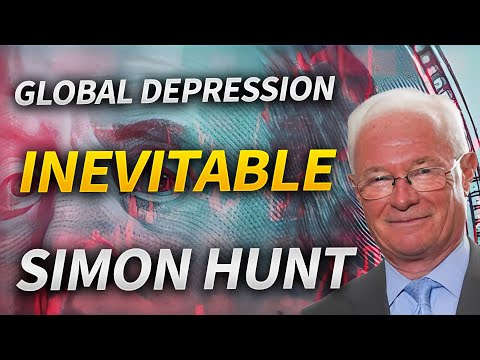
Preview:Simon Hunt argues the current Middle East escalation is not a contained event but part of a broader breakdown in the global order: oil shock risk, recession across the U.S. and G7, pressure on dollar-based trade, and eventually a shift toward a BRICS-linked, gold-backed settlement system. He expects equity markets to wobble near term, then weaken more materially into 2027/28 before a final inflationary rally into 2032 and a larger long-cycle crash.
Preview:Dr. Mark Thornton argues that the U.S. and other major economies are trapped in a politically protected inflation regime: deficits, central-bank balance-sheet expansion, and elite incentives are keeping money and credit easy, which he says benefits asset owners while squeezing workers through higher prices. He recommends owning gold, silver, precious-metals stocks, and broader commodities rather than bonds, because he thinks the old stock-to-bond rotation no longer works in a world where governments will keep inflating to finance spending.
Preview:Lyn Alden argues the world has shifted into a more chaotic, headline-driven regime where fiscal dominance, geopolitical fragmentation, and supply shocks matter more than traditional interest-rate policy. She thinks the Fed will keep providing gradual liquidity support rather than aggressive QE, but the bigger story is sovereign debt stress, resilience, and a gradual move toward neutral reserve assets like gold.
Preview:Ted Oakley argues US equities are broadly expensive, driven by an AI-centric market that resembles prior late-cycle manias, while his preferred exposures are hard commodities, especially energy, plus select metals, fertilizer, and other real assets. He is constructive on those commodity-linked positions, cautious on long-duration bonds, and thinks many investors are too concentrated in stocks given the stage of the cycle.
Preview:Vali Nasr argues that the 2026 US-Israel war with Iran failed to achieve regime collapse because Iran was stronger, more adaptable, and more willing to widen the conflict than Western leaders expected. He says Iran’s grand strategy—preserving independence, expelling US influence, and acting as a regional power—has not changed, but the tools changed after its proxy network weakened, with missiles, drones, and especially the Strait of Hormuz becoming the new leverage points. The interview frames the conflict as a strategic failure for Trump and Israel, and as a warning that simple military escalation is likely to be costly and inconclusive.
Preview:Michael Oliver argues the stock market is in a long topping process while the real stress point is the bond market, not CPI. He thinks the Fed will be forced to defend government bonds with more liquidity, which should support gold, silver, and broader commodities over the next several months and potentially trigger a major repricing of monetary metals.
Preview:David Hunter argues the market is still in the final melt-up phase of a long secular bull market, with further upside in equities, metals, and selected cyclicals before a later bust. His most immediate catalyst is a possible resolution of the Iran conflict, which he thinks could push oil lower, ease inflation fears, and fuel one last strong leg higher in stocks and metals.
Preview:Alasdair Macleod argues that the world is moving from a U.S.-led fiat/currency system toward an East-centered order anchored by China, Russia, and Iran, with gold and silver gaining because they are “real legal money” without counterparty risk. He says the Middle East conflict has exposed U.S. military limits, accelerated de-dollarization, and pushed states and portfolios to rethink reserve and asset allocation.
Preview:Simon Dixon argues the global financial system is in a late-stage debt and asset-stripping cycle, with power shifting from governments to transnational financial, military, and technical complexes. He frames current conflicts, sanctions, tariff policy, and payment-rail changes as parts of a broader move away from the dollar system toward multipolar settlement, gold, Bitcoin, and controlled digital money.
Preview:Cyrus Janssen argues that the Iran war is becoming a major geopolitical and economic win for China, largely because it exposes the U.S. as unable to quickly resolve the conflict while disrupting global energy flows and alienating allies. He says China is better insulated from the shock, has spent decades reducing oil dependence, and is gaining diplomatic leverage as more countries look to Beijing as a more reliable counterpart than Trump-era America.
Preview:Edward Dowd argues that a U.S. recession is already underway, with the official call likely lagging the real economy. He says the combination of a credit cycle rollover, weakening housing, slowing China, and an oil-driven inflation shock is creating a classic late-cycle slowdown that ultimately leads to demand destruction, lower core inflation, and eventually Fed cuts. He is bullish on cash and long-duration Treasuries, and remains constructive on gold and silver longer term.
Preview:Josh Young argues the recent Hormuz shock has not fully been priced in, but also says the market is now swinging between extremes: too complacent on one side, and too aggressive on $250-$300 oil on the other. His base case is that oil stays structurally higher for longer because inventories still need to be drawn down, restocking will be slow, and higher prices should pull through into drilling, services costs, and a potentially multi-year bull market. He also sees the U.S. and Canada as relative winners, while some import-dependent regions and some Gulf countries look more vulnerable.
Preview:Michael Pento argues the US economy is in stagflation (his "Sector 5"), driven by a triumvirate of asset bubbles — equities, housing, and credit — now worsened by an Iran-driven oil price shock. The Fed is trapped: cut and inflation accelerates, hold and debt becomes unserviceable. Pento sees the consumer bottom 80% as eviscerated while Wall Street thrives on Fed liquidity, creating a bifurcated "I-shaped" economy. He is long equities since March 2023 but positioned near the exit, and argues passive 60/40 portfolios are doomed in this regime. His framework tracks the second derivative of inflation and growth to rotate across sectors.
Preview:Glenn Diesen argues the Iran crisis is not mainly about nuclear weapons but about a wider struggle in which the U.S. and Israel are trying to weaken Iran, China, and Russia inside a fading unipolar order. He says Iran’s retaliation, especially around the Strait of Hormuz, is meant to restore deterrence and impose costs on regional states that enabled the attack, while the bigger story is the breakdown of U.S.-led dominance and the rise of multipolarity.
Preview:Matthew Piepenburg argues the current mix of war, debt, and central-bank policy is pushing the global system toward stagflation, currency debasement, and a much higher gold price. He frames gold as the key reserve and settlement asset in a world where paper money, US Treasuries, and the petrodollar are all under pressure.
Preview:Catherine Austin Fitts argues that the U.S. and its allies have been using war, sanctions, debt, and financial opacity to build a global digital control system while quietly looting public finances. She frames the $21 trillion in undocumented adjustments, plus crisis bailouts and direct injections, as evidence of a much larger hidden transfer that has hollowed out the real economy.
Preview:Todd Horwitz argues the market is set up for a prolonged equity drawdown, not a fast V-shaped recovery, and says investors should expect a 40% to 60% haircut over six months to a year. He pairs that bearish equity view with a strong preference for gold, silver, some grains, platinum, and selective crypto, while being bearish crude oil near-term because he sees a large fear premium.
Preview:Danielle DiMartino Booth argues the economy is moving from fragility into a more visible credit and labor downturn, with tariffs and higher energy prices hitting households and corporate margins at the worst possible time. Her core view is that the Fed is underweighting labor-market weakening, while rising delinquencies, tighter lending standards, falling home prices, and stress in private credit all point to more defaults and downside risk for growth.
Preview:Doomberg argues the Strait of Hormuz crisis is not just a temporary oil shock but evidence that the old, single global energy system is breaking into separate geopolitical blocs. He says the biggest near-term risk is escalating pain and supply disruption for countries that assumed oil, refined products, and reserve assets would always be fungible and accessible.
Preview:A macro strategist argues the Iran conflict has become a broader U.S.-China proxy struggle centered on the Strait of Hormuz. He thinks Iran has been more resilient than expected, China is now materially supporting Tehran, and the likely endgame involves a risky U.S.-led effort to seize or neutralize the coastline around Bandar Abbas rather than a clean diplomatic exit.
Preview:Dave Collum argues that U.S. markets are disconnected from fundamentals because of passive index flows, distorted valuation metrics, and a buildup of private-credit/private-equity leverage. He also spends a large share of the interview on the Iran/Israel conflict, arguing it is much more dangerous than the mainstream recognizes and could have major spillover effects on energy, shipping, inflation, and U.S. security.
Preview:Josef Schachter argues the market has entered a new energy/commodity supercycle that could last into 2030, with oil the main near-term lever because Middle East disruption is constraining supply while global demand keeps rising. He thinks the market is underestimating how long the conflict could last, and says energy equities still have room to rerate because most are not yet pricing sustained higher commodity prices.
Preview:Michael Every argues that the Iran crisis is a test of whether the US can convert geopolitical pressure into lasting control over key commodity chokepoints. He treats Venezuela as the warm-up, Iran as the pivot, and the potential outcome as either a stronger US-led bargain or a more fragmented, dangerous multipolar world.
Preview:Rick Rule argues the Middle East conflict matters far beyond oil, because Gulf disruption can hit LNG, fertilizers, helium, aluminum, sulfur, and shipping. He is constructive on resource equities over the rest of the decade, but says a lot of the near-term upside in oil, copper, gold, and silver has already been pulled forward, so timing and position sizing now matter more than being directionally right.
Preview:Michael How argues the liquidity cycle has peaked and is now slowing, which he thinks points to a sideways-to-lower market in 2026, with leadership rotating away from tech toward energy, commodities, and select defensive assets. He also argues the current gold move is more about China’s efforts to devalue the yuan/debt than a broad Western debasement trade, while the Fed’s footprint is being partly replaced by Treasury-led liquidity management.
Preview:Marc Faber argues the Iran escalation could be the catalyst for a broader asset deflation phase, with liquidity shrinking and most assets vulnerable over the next 12 months. He favors capital preservation, selective bonds, precious metals, and diversification outside the U.S., while warning that war-driven money printing could eventually weaken the dollar and fuel inflation.
Preview:Barry Eichengreen discusses the slow but real erosion of dollar dominance, driven by geopolitical fragmentation, digital technology enabling currency diversification, and US policy unpredictability. He sees no near-term replacement for the dollar but warns that a chaotic flight from it would trigger a global liquidity crunch. Gradual diversification into smaller well-managed currencies (CAD, AUD, NOK, SGD, KRW) is already occurring and is healthy. Gold buying by central banks reflects reserve diversification and sanctions-risk hedging. Europe is taking "baby steps" toward autonomy but lacks unity. The renminbi has stalled as an international currency due to China's lack of institutional checks and balances.
Preview:Francis Hunt argues the world is in a broad fiat-and-debt debasement cycle, not a healthy rates-led tightening cycle. He says nominal asset prices can rise while real purchasing power falls, so the right unit of account is gold ounces, not local currency. He uses Japan and U.S. markets to argue that stocks, bonds, and currencies are all being re-rated lower in real terms, while precious metals remain the key hedge.
Preview:John Rubino argues the financial system is moving toward a monetary reset because debt, money creation, and currency debasement are becoming unsustainable. He sees AI/tech as a likely near-term market risk, precious metals as the main beneficiary of the current regime, and silver miners as an especially interesting way to express that view.
Preview:Clive Thompson argues that gold demand is shifting from an inflation-hedge to an unknown-disaster insurance, driven by unsustainable government debt dynamics. He details a recent speculative blow-off in silver (to ~$123) triggered by the Kevin Warsh Fed appointment, followed by a cascade of stop-loss liquidations that sent silver into the $60s/$70s before settling mid-$80s. He remains structurally bullish on precious metals long-term but expects range-bound consolidation near-term. He also flags suspicious BLS employment data showing ~900K fewer employed despite population growth of 5.6M, and warns AI will displace 10%+ of workers at large firms within 12 months.
Preview:Dr. Jan Oberg argues that the West, led by the Trump-era U.S. and a submissive Europe, is normalizing militarism, violating international law, and weakening the UN in favor of a resource-driven power grab. His core answer is a nonviolent, future-oriented security model: diplomacy first, defensive defense only, no offensive deterrence, and a serious rebuild of peace thinking and the UN.
Preview:Professor Richard Wolff argues that the U.S. is in secular imperial decline, with the dollar, the G7, and U.S. geopolitical leverage all weakening as China and the BRICS become a larger pole of global power. He links that decline to domestic strain: cuts to social programs, rising militarization, labor unrest, and a political class that is willing to shift the costs onto workers and immigrants rather than reverse the imperial retreat.
Preview:Simon Hunt argues the financial system is entering a fragile period driven by excessive debt, weak real-economy data, and geopolitical shocks. He says the recent gold/silver selloff was an orchestrated intervention to protect the system, not the end of the metals bull market, and he expects major volatility across equities, bonds, currencies, and geopolitics through 2026-2028.
Preview:Henrik Zeberg argues the market is in a late-stage blowoff top: equities can still run higher, but the real economy is rolling over and the eventual turn should be sharp. He is especially focused on weakening labor data, fading inflation, and what he sees as a coming rotation out of gold/silver and into risk assets like large-cap tech, small caps, and crypto before the cycle peaks.
Preview:Alex Gurevich argues that 2025’s standout market move was the surge in precious metals, led by silver, with gold miners, uranium, and platinum also joining a long-dormant rotation. He sees the macro backdrop as gradually disinflationary, with slowing jobs, lower real rates, and a likely path toward lower rates, while also warning that fiscal support, AI-related capex, and policy responses can blur the usual recession/market links.
Preview:Jim Bianco argues that 2025’s standout macro feature was the U.S. 10-year yield falling while most developed-market yields rose, and he thinks that outlier can’t persist unless growth slows, inflation falls, or deficits improve. He is broadly constructive on equities and AI, but expects stickier inflation than the market assumes because immigration, deglobalization, tariffs, and remote work have structurally changed the economy since 2020.
Preview:Lyn Alden argues that the current market regime is being shaped less by a normal bull-cycle exhaustion and more by fiscal dominance, political volatility, and a slow shift toward persistent liquidity support. Her view is that major currencies and debt systems are moving toward a longer-run reckoning, but the true reset is likely still years away rather than a 2020s endpoint.
Preview:Steve Hanke argues the Fed has not fully beaten inflation and is now pivoting back toward easier policy, which he thinks risks re-igniting the inflation problem. He also says U.S. equities look bubble-like, the dollar is still strong but likely softer, gold and other precious metals remain in a secular bull market, and Venezuela and Iran show how extreme inflation destabilizes economies. He closes with a simple framework: the money supply drives inflation, asset prices, and activity, so investors should watch policy through that lens.
Preview:Jeff Park argues that the old US-centered monetary and geopolitical order is breaking down, and that 2026 will be shaped by a reset in rates, capital flows, and market behavior. His core investing frame is that markets are becoming more ideological and more event-driven, with AI helping create custom portfolios around beliefs, themes, and tail-risk views.
Preview:Michael Oliver argues 2026 could be a turning point for markets: gold and especially silver are entering a much larger breakout phase, while US and other bubble-like equity markets look late-cycle and vulnerable. He sees government bond weakness, not the AI trade itself, as the key trigger that could eventually pressure stocks and send more capital into monetary metals and select commodities.
Preview:Justin Huhn gives a detailed bullish framework for uranium: the market is structurally undersupplied, the fuel cycle is slow, utilities are still undercovered, and contract pricing likely needs to rise to stimulate new mine supply. He argues the spot price is only part of the story; term pricing, carry trades, utility contracting, and producer contract terms are more important for the next several years.
Preview:Alasdair Macleod argues that 2025 marked gold beginning to front-run an eventual dollar breakdown, with the real stress arriving in 2026-2027 as QE, weak credit creation, rising long yields, and a bursting equity bubble feed into a broader fiat-currency crisis. He expects gold and commodities to outperform sharply while equities, long-duration bonds, and credit-linked wealth are at severe risk.
Preview:Josh Young argues the oil market is less weak than headline price action suggests: 2025’s biggest surprise was fewer-than-expected supply disruptions, while OPEC+ added production sooner than he expected and U.S. supply held up longer than he thought. He thinks those bearish forces may fade into 2026 as non-OPEC growth slows, shale productivity rolls over, and several ‘growth’ stories outside the U.S. and Canada look less durable than the market assumes.
Preview:David Rosenberg argues that 2026 could bring a serious stock-market correction or bear market because valuations are stretched, breadth is still weak beneath the surface, and the economy is increasingly dependent on equity wealth effects. He is not broadly bearish on every asset: he likes parts of the market such as consumer staples, energy, some defensive sectors, bonds, Asia, and long/short relative-value trades.
Preview:Daniel Lacalle argues that governments and central banks have inflated GDP with spending and money creation while hollowing out productivity, real wages, and currency purchasing power. He thinks 2026 will look a lot like 2025: inflation stays sticky, bond yields remain elevated, gold and silver keep benefiting, and large-cap equities can still outperform even as households feel poorer and volatility rises.
Preview:Edward Dowd argues a late-cycle slowdown is already underway and that a recession is becoming visible through weak ADP employment, soft consumer confidence, rising delinquencies, tighter credit, and stress in financial plumbing. He frames the current strength in equities as an AI-driven bubble concentrated in a handful of mega-cap names, while housing, China, and the labor market are increasingly deteriorating underneath.
Preview:Bill Moreland of BankRegData presents a detailed case that US large banks are hiding credit deterioration through changed reporting rules on loan modifications. He argues that the flood of deposits during 2020-2021 led to an echo of reckless lending, that FASB rule changes now allow banks to conceal the true scale of modified loans, and that a second wave of delinquencies is coming as modified borrowers relapse. He flags Flagstar as an active trouble spot, notes commercial real estate and consumer credit are deteriorating simultaneously across portfolios, and warns the community bank segment is healthier than the large banks — where the real problems are concentrated.
Preview:David Hunter argues the S&P is in the final, parabolic leg of a 43-year secular bull market, with the S&P potentially reaching 9,500 before a major 2026-era bust. He remains bullish on equities, especially small caps, metals, miners, bonds, and some rate-sensitive sectors, while warning that the bigger setup is a coming global crisis and an eventual 80% equity drawdown.
Preview:Warwick Powell argues that the world is moving irreversibly toward a more multipolar, multinodal system, with BRICS and other regional institutions gaining weight as the U.S. loses leverage. He says Trump-era tariffs accelerated, but did not cause, deindustrialization, and that Western manufacturing problems are fundamentally long-run structural failures tied to finance, energy costs, weak skills, and poor infrastructure rather than trade alone.
Preview:Doomberg argues the big macro setup is still driven by energy geopolitics, with a possible US-Russia deal over Ukraine being the most important near-term catalyst. He thinks a ceasefire or sanctions relief would likely push oil and gas lower, while AI-driven gas demand, China’s coal-heavy system, and Western Hemisphere supply growth reinforce his view that commodity shortages eventually become gluts.
Preview:Alex Krainer argues the world is entering a major geopolitical regime shift away from a US/European-led order toward a new security architecture, with Ukraine as the immediate hinge. He thinks backchannel US-Russia talks are real, Ukraine is nearing collapse, and Europe is being sidelined because its leaders chose confrontation over peace. He extends the same framework to the Middle East, the Balkans, and Asia, saying Trump-era policy has so far reduced the odds of open escalation in several flashpoints, though he treats some rhetoric as misdirection.
Preview:Matthew Piepenburg argues that gold's surge is a symptom of a global monetary and debt crisis, not a normal commodity rally. He says the gap between Wall Street and Main Street is widening, the dollar is being debased, central banks are losing trust in fiat collateral, and silver may be the cheaper way for retail investors to participate in the same thesis.
Preview:Wasif Latif of Sarmaya Partners lays out his "return to tangibles" thesis: the market is partying like 1972 meets 1999 — richly valued tech/AI stocks face a reckoning as inflation resurges, rates rise, and fiscal dominance takes hold. He argues precious metals, commodity equities, and energy (especially oil in 2026) are the real opportunity, driven by persistent inflation, central bank gold buying, supply underinvestment, and a secular shift away from the free-money era.
Preview:Chris Vermeulen argues the market is approaching a major inflection point: equities, especially the Magnificent 7 and AI-linked names, are frothy and could unwind sharply, while gold, silver, platinum, and palladium are flashing a warning signal similar to prior major tops. He remains tactical—stay long until the trend breaks, then move to cash or inverse ETFs—and he is also bullish on the USD and cautious on Bitcoin.
Preview:Shaun Rein argues China is winning the trade war because the US misread China’s reduced dependence on American demand, China has diversified buyers and suppliers, and Trump’s broad tariff strategy pushed the rest of the world closer to China. He is bullish on China over the next several months, while warning the US is heading toward stagnation, policy chaos, and weaker investment. Long term, he sees a more multipolar world with China rising and the US remaining powerful but less dominant.
Preview:Michael Green (Simplify, chief strategist) lays out a bearish macro thesis: the US economy is slowing, credit conditions are deteriorating, and the government shutdown functions as an accelerant. He argues equity markets are disconnected from fundamentals due to the "passive bid" and warns of non-linear credit stress among lower-income households. He critiques Powell as the worst Fed chair, suggests Trump's tariffs create inflation risk if redistributed to consumers, and frames global geopolitics as a US strategic retreat to defensible positions. The conversation spans credit markets, Fed policy, geopolitical order, and a striking comparison of modern American governance to the transition from Roman Republic to Empire.
Preview:Michael Pento warns that the US economy sits atop three massive, record-sized asset bubbles (equities, housing, credit) that are now so large they cannot be allowed to pop without causing a depression. The Fed has resumed balance-sheet expansion and rate cuts despite above-target inflation. The crucial risk: when the next recession arrives, the traditional policy response of massive borrowing and money-printing may not rescue markets but instead cause long-term yields to spike, destroying asset prices with no policy remedy available. He advises active management over buy-and-hold and notes his model remains net-long for now because second-derivative macro data has not yet turned negative.
Preview:Bob Elliott says the U.S. is late cycle: household spending is being squeezed, labor markets are soft, and AI capex is helping growth but likely losing momentum. He is tactically cautious on gold, more constructive on bonds, and thinks markets may eventually have to catch down to weaker real-economy conditions.
Preview:Michael Howell of CrossBorder Capital argues global liquidity is approaching a cycle peak, with the Federal Reserve inadvertently draining liquidity — visible in repo market stress, trade fails, and declining excess reserves. He warns this setup risks a significant risk-asset selloff, with the S&P 500 vulnerable. Separately, China is aggressively expanding liquidity and accumulating gold to back its currency, driving the gold price higher. The key tension: US policymakers (Bessent, Miran, Powell) resist new QE, preferring stimulus directed at the real economy over financial markets.
Preview:Bill Fleckenstein describes US equity markets as structurally brittle, propped up by the relentless passive/mechanical bid. He argues a crash is structurally possible but requires a catalyst big enough to overwhelm that bid — a high bar. He sees the economy as "okayish," warns inflation psychology is entrenched, expects the Fed to eventually lose control of the bond market, and positions defensively via cash, gold, gold miners, and idiosyncratic stocks, while using tactical shorts for hedging.
Preview:Rick Rule argues the U.S. is in a long-running debt and entitlement ‘reckoning’ being handled via inflation rather than explicit default, which is why he is bullish gold and copper and skeptical of AI hype, weak labor productivity, and current policy fixes. He says the dollar will keep losing purchasing power, real rates are still too low, and resource assets should benefit as the system shifts toward higher capital scarcity and inflation.
Preview:Jeff Snider argues the economy is still working through a slow-motion credit and labor-market deterioration, not a clean “everything is fine” recovery. He says the real signal is in fixed income, private credit, and the dollar—not in upbeat GDP or stock indexes—and that the market is increasingly pricing lower rates for much longer because conditions are tightening beneath the surface.
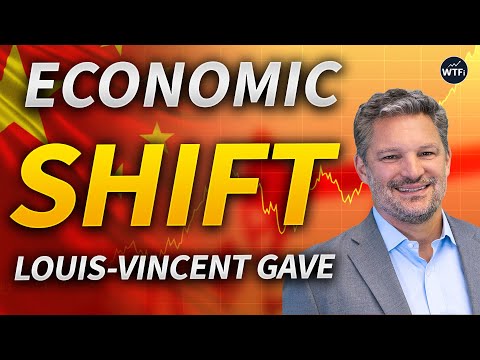
Preview:Louis Gave argues the world is in an "inflationary boom" driven by simultaneous fiscal and monetary stimulus across all major economies. He highlights a structural dollar decline as the US sends ~$2 trillion annually abroad via its current account deficit, while foreigners increasingly question the need to hold dollars. The centerpiece is China's policy pivot to "anti-involution" — ending the cycle of excess capacity addition — which he believes is powering a Chinese bull market that foreign investors are missing because they're fixated on weak macro data. He also sees the Russia-China-India economic integration as the next huge macro trend that almost no one is positioned for.
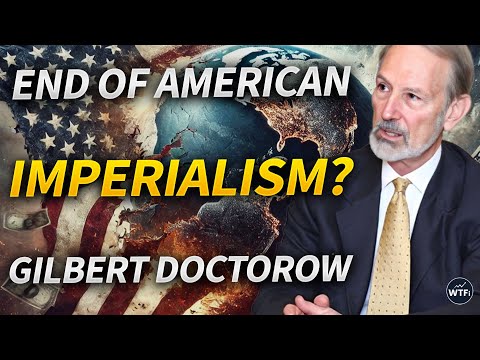
Preview:Gilbert Doctorow argues that current geopolitics is being driven by a broader ideological flip in the West: Democrats/progressives and European “federalists” have become the hawkish, globalist camp, while Trump and the post-Reagan Republicans now present themselves as the party of workers, tariffs, and limited foreign entanglements. He sees Trump as pushing a Monroe Doctrine-style consolidation in the Western Hemisphere, not true global retrenchment, while Europe remains locked into anti-Russia militarization. On the war side, he says Russia is winning in Ukraine through attrition and manpower destruction, with Odessa and the remaining Donbas areas likely next. He ends with a de-escalatory message: stay calm, the world is not ending, and Trump’s real aim is to reduce overextension and avoid a new arms race with Russia.
Preview:Jason Shapiro argues this is still a bull market, not an obvious top, even though it is the “most hated” all-time high he has seen. He thinks the market is rewarding the combo of lower rates, easier money, AI-driven earnings growth, and broad risk-asset strength, and he says he will only turn bearish when price/positioning/reaction actually change.
Preview:Mel Mattison argues for an 'everything, everywhere, all at once' rally: stocks, bonds, gold, and Bitcoin can all rise together into year-end and likely into 2026. His core case is a mix of persistent fiscal spending, AI-related capex, a global easing cycle, heavy sovereign debt, and a political willingness to suppress longer rates rather than allow a debt crisis.
Preview:Danielle DiMartino Booth argues the Fed is responding to a visibly weakening labor market and could be split internally at this meeting, but the bigger story is that official data has become less trustworthy and the K-shaped economy is becoming more pronounced. She says job growth revisions, household survey weakness, layoffs, and consumer strain all point to a softer labor backdrop even as the stock market and top-spending households keep asset prices and headline demand supported.
Preview:Lobo Tiggre (The Independent Speculator) lays out a stagflationary macro thesis: global inflationary forces — Trump tariffs, European rearmament, Chinese stimulus, deglobalization — are persistent and structural, not transitory. This is broadly bullish for real assets, but he discriminates sharply by metal. Gold benefits from a paradigm-shift in central bank buying (post-dollar-weaponization) and the early stages of institutional allocation reversion. Copper is his highest-conviction long-term play but faces near-term Trump-shock headwinds. Uranium has the best near-term setup among industrials. Oil is near-term bearish due to oversupply. His core message: have a method, not luck.
Preview:Francis Hunt returns to WTFinance to lay out an unrelenting macro-doomer thesis: Western sovereign debt is mathematically unpayable, the 40-year bull market in bonds is over, and gold is in the early stages of a historic meltup. He couples this with conspiratorial warnings about a totalitarian agenda, population reduction, and systemic collapse, advising listeners to stack gold/silver, build remote self-reliance, and exit the West. The conversation is long on rhetorical intensity and short on tradable specifics beyond "long gold, short long-end debt."
Preview:Simon Hunt paints a deeply bearish macro picture: the US is already in recession, official data is manipulated, and the Fed is politicized. He sees two paths — an imminent global collapse triggered by European escalation in Ukraine, or a breather followed by a 2-year stagflationary boom with double-digit inflation and bond yields reminiscent of the 1970s. His core conviction is that gold and real assets are the only safe harbor, with BRICS nations (China, Russia, India) coalescing into a gold-backed currency bloc that challenges the dollar's hegemony. Tactically, he expects a vicious dollar rally in the next 3-6 months that will correct gold before the longer-term bull resumes.
Preview:Kenneth Rogoff argues that the dollar is not about to be replaced, but it is likely to lose market share gradually as countries diversify away from U.S.-controlled financial plumbing. He links that trend to U.S. tariff policy, political dysfunction, rising debt burdens, and threats to Fed independence, which he says could ultimately weaken dollar dominance and raise inflation, rates, and market volatility.
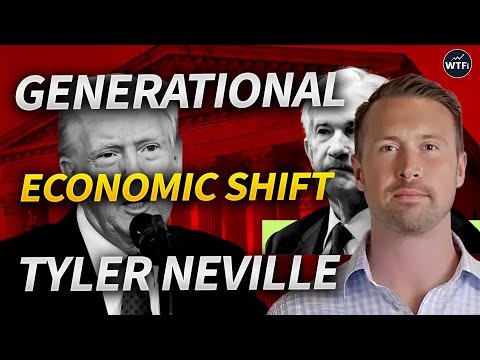
Preview:Tyler Neville argues that the last 40 years of institutional risk-adjusted, yield-seeking investing produced secular stagnation, widened generational and class gaps, and left the economy dependent on cheap capital and rising asset prices. He thinks Jackson Hole confirmed a shift toward financing the Treasury, negative real rates, and a policy mix that favors nominal growth, inflationary dilution, and frontier sectors like AI infrastructure, data centers, energy, Bitcoin miners, gold, and crypto.
Preview:Kevin Muir (The MacroTourist) explains his macro framework centered on the shift from monetary dominance to fiscal dominance. He argues that the post-COVID world ushered in an era where government deficit spending — not Fed rate policy — drives economies, asset prices, and inflation. Now, Trump's tariff policies are forcing the rest of the world (Canada, Europe, Germany) to spend aggressively too. Muir is structurally bullish commodities and ex-US equities, structurally bearish on long-duration US bonds, and warns that US equity concentration and valuations are at dangerous extremes. He sees inflation as a political choice that will persist for the next decade.
Preview:Michael Oliver, founder of Momentum Structural Analysis, argues the US stock market is in the largest bubble in history and that the recent new high was a trap. He believes a major decline is beginning, with capital rotating into gold, silver, and miners. He sees the Fed in a policy bind — weakening data will force rate cuts, but a pending commodity breakout (especially oil) could reignite inflation, creating political upset. Gold's four-month sideways consolidation is a launching pad, not a top. Silver and miners are entering an accelerated phase. He recommends being short US equities and long emerging markets as a market-neutral hedge, while positioning heavily in precious metals.
Preview:Professor Richard Wolff delivers a sweeping critique of American capitalism, arguing the US is in systemic decline marked by destruction of the middle class, self-destructive tariff policy, falling behind China in EVs, and rising inequality. He sees the ICE deportation violence and Epstein case rage as symptoms of a society on edge, and argues the taboo against questioning capitalism itself must break. He points to growing left-wing political movements (Zohran Mamdani, AOC) as evidence the public is ready for systemic alternatives, while framing the broader context as the end of Western economic dominance relative to the BRICS bloc.
Preview:Alasdair Macleod argues the global economy is entering a 1929-style credit bubble collapse, driven by sovereign debt traps, rising bond yields, and tariff disruptions. He sees no solution from Western central banks and advises getting out of credit entirely and into physical gold — the only "corporeal money" without counterparty risk. He dismisses Bitcoin as a speculative tulip-like asset that will collapse with credit. The crisis timeline: 18 months at most, potentially sooner, triggered when 10-year US Treasury yields break above ~4.75%.
Preview:Jim Bianco argues the US is moving into a structurally different macro regime: tariff costs should eventually lift consumer prices, labor supply is shrinking enough that weak payrolls may overstate labor weakness, and the Fed should stay on hold because inflation is likely to remain sticky near 3%. He also warns that pressuring the Fed to cut rates to reduce government interest expense would amount to fiscal dominance and could set up a much worse bond/inflation outcome later.
Preview:Dr. Jan Oberg, a sociologist and peace researcher, delivers a sweeping critique of Western militarism, NATO, and European foreign policy. He argues the West is in terminal decline — not from external threats but from self-destructive policies: the 5% GDP military spending target, blind adherence to US leadership, broken promises to Russia, and an inability to accept a multipolar world. His core thesis: peace is eminently possible, but the West's "kakistocracy" (rule by the least able) has replaced rational threat analysis with emotionalism and propaganda. He predicts NATO will fracture, with member states defecting, and that Europe is the biggest loser in the coming realignment. The conversation covers Ukraine, Russia, China, BRICS, Greenland, the EU's democratic deficit, and the ethical case against militarism.
Preview:Marc Faber delivers his signature contrarian-bearish macro view: persistent government money-printing fuels asset inflation for the wealthy while eroding living standards for everyone else. He argues monetary conditions remain loose despite rate hikes, that the US dollar is in structural decline under Trump, and that a turning point has begun where EM and European markets will outperform the US. His core advice: think about how to lose the least money, not make the most — own gold, silver, platinum (his top pick), and diversify outside the US.
Preview:Lyn Alden argues the US and much of the developed world are now in a fiscal-dominant regime, where large sovereign deficits and debt service matter more than traditional Fed tightening. In her view, that makes the macro backdrop more supportive for scarce assets and equities than for long-duration bonds and cash, even if there are periodic bond-market scares, tariff shocks, or policy reversals.
Preview:Marko Papic argues the world is not moving toward a clean bipolar order or a new transition, but is settling into a durable multipolar system that will keep producing volatility. For markets, he says geopolitics should mostly be faded tactically right after shocks, but used heavily in strategic asset allocation because multipolarity should mean a weaker dollar, lower US asset returns relative to the rest of the world, and less US exceptionalism over the next several years.
Preview:David Hunter argues the S&P 500 is in the final, steep stage of a long secular bull market and could run to 8,000 on the S&P, with similarly aggressive upside targets for the NASDAQ, Dow, and Russell before a top later this summer or in the fall. He expects the economy to weaken even as equities keep rising for a while, helped by falling rates, a softer dollar, Fed easing, Trump’s tax/deregulation agenda, and improving investor psychology as skeptics are forced back in.
Preview:Doomberg argues that the world is in a "global war for US dollar supremacy," framing the Ukraine war and the Israel-Iran conflict as phases of a broader bifurcation between the Western alliance and BRICS nations. He contends that the 12-day Israel-Iran war will accelerate nuclear proliferation, that the ceasefire was forced by Israel running out of air-defense missiles, and that the oil market efficiently priced in the performative nature of the conflict. His core investment thesis: all roads lead to gold, which he sees as the only neutral reserve asset in an increasingly divided world. He pegs oil's equilibrium price at ~$55/bbl based on the LNG-to-oil parity relationship.
Preview:Professor Steve Hanke argues the US economy faces a "one-two punch": a multi-year money supply slowdown (M2 growing only ~4% vs. his 6% golden growth rate) layered with Trump-era "regime uncertainty" — the first such regime change since FDR's New Deal. He sees a recession as "baked in the cake" by year-end, with the stock market in bubble territory comparable to 2001. Companies have stopped giving earnings guidance, M&A has dried up, and new graduates can't find jobs — all blamed on uncertainty. China is simultaneously in deflation. Hanke criticizes the Fed for being too hawkish and ignoring money supply in its models, and warns that Trump's ability to actually change the system is limited by Congressional resistance — "a big gap between rhetoric and reality."
Preview:Henrik Zeberg argues the business cycle is in its late stage — the "Titanic has hit the iceberg" but isn't sinking fast yet. He expects a summer pullback in equities, followed by a blow-off rally into autumn (S&P 500 to at least 6,800), and then a fast, severe crash and recession. He is sharply critical of the Fed for not cutting rates despite clear deterioration in housing, consumer credit, and labour markets. Longer term, he sees a new inflationary regime with structurally higher yields, but AI-driven deflationary forces as a partial offset.
Preview:Clive Thompson argues that rising long-term bond yields, large sovereign deficits, and weakening foreign demand for government debt are pushing central banks toward renewed bond-buying and balance-sheet expansion. He thinks this could eventually lead to financial repression, forced institutional demand for bonds, or even some kind of currency reset, while investors who own gold and selected miners may be better positioned than holders of fiat cash.
Preview:Dr. Komal Sri-Kumar (President, Sri-Kumar Global Strategies) warns of an approaching stagflationary storm in the US, driven by tariffs pushing inflation up while growth slows. He sees US sovereign risk as fundamentally higher than in 2011 — reflected in rising bond yields — and fears a failed Treasury auction. He targets 5% on the 10-year yield and 5.75% on the 30-year, expects gold to hit $3,500 by year-end, and argues the dollar will continue weakening. He is sharply critical of the Fed's dual mandate and Jerome Powell's rate cuts in late 2024, and advocates 10-20% portfolio allocation to alternatives (gold, commodities, real estate, distressed assets).
Preview:Danielle DiMartino Booth argues the US is already in recession, with layoffs accelerating since Q2 2024 and private sector job cuts resuming in early 2025. She contends the Fed is ignoring clear disinflationary signals — negative supercore inflation for the first time since the GFC, falling home prices, and deteriorating labor data — while refusing to cut rates, a stance she increasingly views as politically motivated. She draws a parallel to the 1980-81 double-dip recession and warns that rate cuts could paradoxically trigger a stock selloff as baby boomers lose interest income and are forced to sell equities.
Preview:Eric Basmajian argues the U.S. economy is still in a slow, bifurcated downturn: leading indicators remain tight, cyclical sectors like housing and manufacturing have been contracting for roughly two years, and that weakness is showing up first in margins rather than layoffs. He thinks that keeps small caps, commercial real estate, emerging markets, and other cyclical assets under pressure, while the S&P 500 and Nasdaq can keep holding up until labor-market deterioration becomes much more severe.
Preview:David Rosenberg argues a recession is already here — visible in economically sensitive stock sectors, not in the AI-distorted S&P 500. He warns tariffs are an inflationary quasi-sales tax that will crush real wages for the most vulnerable, while the US dollar's unusual decline signals foreign capital flight. His portfolio prescription: derisk aggressively, hold cash (4.4% yield), own bond proxies (utilities, staples, tobacco), aerospace/defense, gold and silver miners, European equities, and AI as a secular long-term holding.
Preview:Clem Chambers argues markets are in a state of unprecedented chaos driven by Trump's unpredictability, with the bond market acting as the "senior market" signaling stress. He's positioned defensively in precious metals and UK defense stocks, has largely stayed out of equities since the tariff-driven crash, and believes the dollar is overvalued and set to realign lower. He sees the midterms as the key waypoint and warns that passive buy-and-hold may not work in this environment. His core framework: high volatility creates both high risk and high opportunity for those who can decode the chaos.
Preview:Michael Howell, founder of CrossBorder Capital, argues global liquidity conditions are currently strong — driven by TGA drawdown from the debt ceiling (technical) and China's policy pivot toward liquidity injections (structural). Near-term he's bullish on risk assets, but warns of a second-half risk: the Fed's stated QT plans could drain reserves. He floats a key insight — the US Treasury may be doing "stealth QE" by issuing short-dated bills that banks eagerly buy, expanding their balance sheets and money supply. This echoes the 1970s where bank balance sheet expansion drove monetary inflation. His core prescription: own dedicated monetary inflation hedges — gold and Bitcoin — not bonds. He sees global yields rising structurally driven by term premia, with the US as a "price taker" not "price maker." China is explicitly devaluing the yuan against gold to escape its debt problem.
Preview:Michael Pento sees US markets in a trading range, fully valued at 22x projected 14% earnings growth. He maintains a defensive but not net-short posture. His core thesis: the long end of the bond market is the pin that will burst simultaneous equity, bond, and real estate bubbles. Tariffs at 10% baseline (30% on China) are a depressant to growth, while the national debt path ($37T heading to $67T by 2035) guarantees eventual stagflation or depression. He uses a 20-point model to time the credit-market catalyst and advocates active management over passive 60/40 portfolios.
Preview:Michael Every, global strategist at Rabobank, lays out his "economic statecraft" thesis: the world is shifting away from free-market economics toward zero-sum geopolitical competition centered on US-China rivalry. Reacting to breaking news of a 90-day US-China tariff truce, he argues this is a tactical ceasefire, not a strategic retreat — both sides will use the window to stockpile and rearm supply chains before the trade war resumes. He critiques free trade theory itself (Smith and Ricardo both hedged), explains why mercantilist China cannot be beaten by more free trade, and warns markets are in denial about the structural regime change underway. The interview touches pharma price controls, the dollar outlook, Europe's rearmament challenge, and India's role as a potential supply-chain fulcrum.
Preview:G. Edward Griffin, author of *The Creature from Jekyll Island*, argues the Federal Reserve is a private banking cartel disguised as a government agency, created in secret in 1910 to enrich its members at public expense. He contends central banks worldwide follow the same model — private bankers controlling national money supply with minimal accountability — and that this drives inflation, wealth concentration, and political corruption. His solution: constitutional chains on government power and a public awakening to the collectivism-vs-individualism divide. The conversation contains no specific market calls, asset recommendations, or tactical views.
Preview:James Lavish argues the market is being driven by a global debt spiral, sticky inflation risk, tariff uncertainty, and volatile bond yields. His core solution set is narrow: the U.S. and other sovereigns need to keep borrowing, refinance carefully, and increasingly lean on hard assets like gold and Bitcoin as confidence in fiat treasuries erodes.
Preview:Brent Johnson argues the world is moving into a more fragile liquidity regime, but not necessarily an immediate collapse. His Milkshake Theory has mostly played out so far—higher dollar, higher gold, weaker bonds, stronger U.S. assets—but he thinks the next phase could be a more prolonged dollar shortage / credit stress episode if tariffs, capital repatriation, and reduced Fed swap-line support tighten global funding.
Preview:Matthew Piepenburg (Von Greyerz AG) argues the US and global economy are in an inescapable debt crisis that manifests as serial liquidity crises. He frames Trump's tariff blitz as a deliberate but desperate 1971-style policy shock aimed at restoring dollar hegemony and isolating China — but warns the US is too indebted to sustain the tariffs without triggering a Treasury buyer's strike, rising yields, and ultimately forced Fed monetization. The endgame: continued currency debasement, structural gold demand from central banks replacing US Treasuries as reserve assets, and a multi-polar disorder where America survives but is no longer the empire it was.
Preview:Peter Boockvar argues tariffs, fading MAG 7 leadership, and slower government/AI-driven growth are creating a fragile macro backdrop. He expects near-term inflation pressure from tariffs, rising recession odds if equities keep weakening, and thinks the market is underestimating how much long-term yields can stay elevated even if the Fed cuts.
Preview:Rick Rule argues that the U.S. is repeating a 1970s-style debt and currency debasement cycle, and that gold should benefit as the dollar’s real purchasing power erodes. He is bearish on tariffs as a competitive strategy, skeptical that U.S. fiscal reform will meaningfully reverse deficits, and constructive on precious metals and natural resources—especially gold, with a later-stage case for silver and other commodities.
Preview:Jason Shapiro, a 30+ year trader featured in Unknown Market Wizards, warns that retail investors are aggressively buying this dip — unlike previous dips in 2023-2024 — which he finds dangerous. He argues this sets up a prolonged, grinding bear market that won't bottom until capitulation arrives, but capitulation is absent because investors are conditioned to "stay in." He favors short yen and short bonds as better risk/reward plays for any risk-asset rebound rather than buying stocks directly. His core methodology: fade positioning (not price), wait for market confirmation, and acknowledge that no one can predict the macro outcome given reflexive tariff dynamics.
Preview:Chris Vermeulen argues the stock market is already in a long topping process and that the recent selloff is likely the first leg of a broader decline, not a healthy reset. He sees weak breadth, leadership concentrated in a few mega-cap names, rising volatility, and a shift toward gold, energy, and eventually miners as classic late-cycle signals.
Preview:Michael Oliver argues that a major market top has already begun, driven by the breakage of the U.S. equity bubble, weakness in the dollar, and a shift of money into gold, silver, miners, and commodity-linked assets. He expects the decline to unfold in sharp layers rather than a single crash, while the precious-metals complex accelerates as central banks eventually react with easier policy.
Preview:Professor Steve Keen argues that the US government's obsession with cutting the budget deficit — spearheaded by Elon Musk and the Trump administration — is fundamentally misguided and will cripple the economy. Using double-entry bookkeeping logic, he explains that government deficits actually create fiat money and increase private-sector net worth, while surpluses destroy money. He warns that deficit-slashing could cause a recession "for no good reason" and that the real debt problem is private debt, not government debt. He proposes a "modern debt jubilee" as a theoretical solution to private over-indebtedness but concedes it will never happen.
Preview:Alex Krainer argues that we are witnessing the unraveling of the post-WWII global order, with the Trump administration explicitly embracing a multipolar world. He frames this as a fundamental restructuring of Western financial power, where the system is starved for collateral and must either inflate, default, or acquire new wealth. His market view is stark: the West faces stagflation turning into accelerating/hyperinflation, with stock markets eventually going vertical in nominal terms but real purchasing power destroyed. He identifies commodity futures and farmland as the only viable inflation hedges, and urges community-building as essential crisis preparation.
Preview:Edward Dowd argues the US economy is entering a deliberate, Trump-engineered recession aimed at restructuring away from fiscal dominance toward private-sector growth. He claims massive deficit spending and illegal immigration under Biden created a "fraud" economy, and the unwind is now accelerating. He expects risk-off conditions, declining bond yields, lower Fed rates, and a potential disinflation/deflation scare before eventual reflation. His near-term advice: go to cash and prepare for opportunities.
Preview:Gregory Mannarino argues the global economy is in its "death throes," driven by artificially suppressed interest rates and currency purchasing power destruction. He sees no policy — from Trump or anyone — actually helping the middle class, and predicts an imminent debt-market implosion that will freeze credit and crash equities worldwide. His preferred defense: physical gold and silver (especially silver), commodities broadly, and cryptocurrencies as a speculative yield-seeking destination during the meltdown. The only fix is higher rates to restore currency purchasing power, but he believes an uncontrolled demolition is more likely than a controlled one.
Preview:Richard Byworth argues Bitcoin is a structurally superior monetary asset to gold and, over time, should increasingly absorb gold’s role as a store of value. The conversation also covers his career path from traditional finance into crypto, why institutional crypto infrastructure is maturing, and how MicroStrategy’s Bitcoin treasury model uses convertibles and “creative dilution” to accrete value.
Preview:Lawrence Lepard, managing partner of Equity Management Associates, argues the US is in a sovereign debt crisis driven by decades of fiat monetary expansion, with a "big print" (massive money printing) inevitable within 1-2 years due to the math of debt. He advocates gold and Bitcoin as protection, sees gold heading to $10,000/oz long-term, and believes Bitcoin is superior sound money. His book "The Big Print" aims to educate average Americans on why the system is broken and how sound money can fix it.
Preview:Glenn Diesen argues that the US has recognized unipolarity is over and is now pivoting away from Europe to focus on China, throwing Ukraine and European allies under the bus in the process. He frames the Ukraine war as a failed Biden-era proxy war that accelerated US relative decline, and sees Trump's moves — negotiating directly with Russia, excluding Europe — as a rational if brutal adjustment to multipolarity. Diesen is skeptical the US can split Russia from China, expects NATO may collapse, and believes Europe's hysterical, unstrategic response reflects its new irrelevance.
Preview:Wasif Latif argues that markets are entering a more volatile, higher-rate regime where the biggest US growth and mega-cap names look expensive, while commodities, energy, gold, uranium, and select non-US or smaller-cap exposures may benefit. He thinks leverage in the system can produce sharp near-term selloffs, but the bigger picture is a secular shift driven by inflation, geopolitics, fiscal strain, and reindustrialization.
Preview:Alasdair Macleod argues we are in the largest credit bubble in history — the cumulative result of prior bubbles never being allowed to clear, amplified by deficit spending. He sees gold's rally not as gold rising but as currencies falling, and expects a violent credit collapse that will wipe out equities, bonds, and most assets. Geopolitically, he forecasts Trump withdrawing from the Ukraine conflict on Putin's terms, which would ultimately benefit Europe by restoring Russia trade. He emphasizes the money-vs-credit distinction and urges individual gold ownership as the only genuine de-risking.
Preview:Dr. Jan Oberg argues the West (US/NATO) is in terminal decline due to self-destructive militarism, broken promises after the Cold War, and a chronic inability to resolve conflicts peacefully. He contends that China and BRICS are ascending not through aggression but because the rest of the world is turning away from Western domination. Unless the West abandons exceptionalism and joins a cooperative multipolar order, it risks "militarizing itself to death." The conversation is a broad geopolitical critique, not a market call.
Unlock every transcript this speaker appears in, compare them with your other followed voices, and ask the agent for the bull, bear, and consensus read in one workspace.
Type a question. Create a free agent to send it and keep the answer linked to this speaker.
Your question is preserved across sign-in.
Free. No card. Takes about a minute.