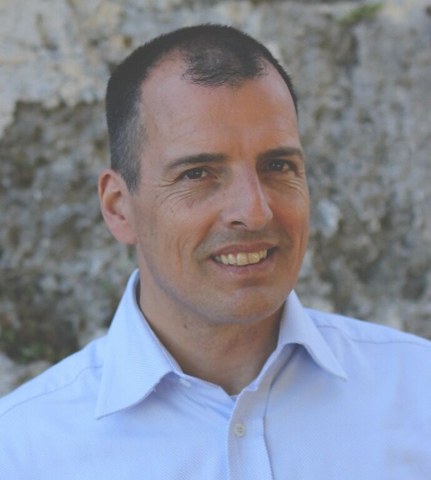
geopolitics and markets through a trend-following, anti-petrodollar lens
Preview how this speaker shows up across market transcripts. Unlock the full archive, AI chat, and the version personalized to your watchlist, followed channels, and favorite speakers.
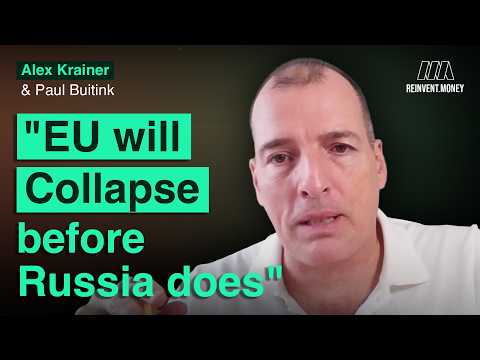
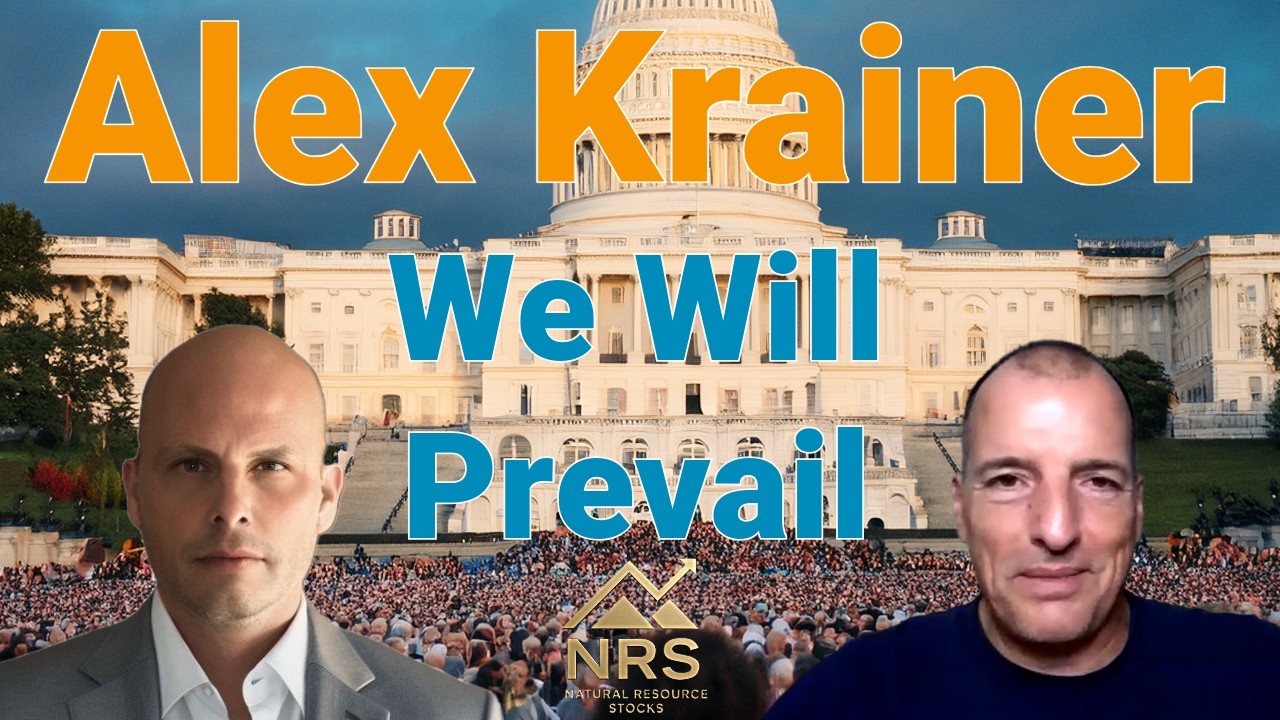
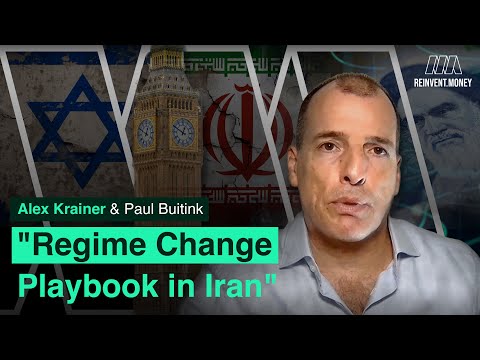
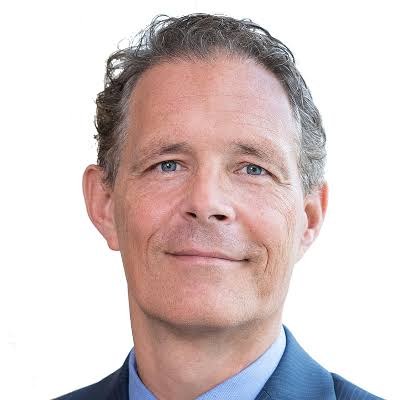
Alex Krainer presents as a macro/geopolitical commentator and commodities-market veteran who blends market analysis with a strong historical-political lens. Across the supplied interviews he repeatedly frames current events as part of larger power struggles rather than isolated incidents, and he speaks with confidence about energy, sanctions, war escalation, and financial systems. He comes across as skeptical of official narratives and attentive to incentives behind policy.
Krainer’s recurring economic worldview is anti-imperial and system-level: he sees wars, sanctions, and geopolitical pressure as tools used by Western financial and political elites to preserve hegemony, control collateral/resources, and sustain debt-based power. He often argues that banks and large financial interests benefit from conflict, that the petrodollar and Western monetary dominance are under strain, and that de-dollarization, energy constraints, and industrial decline are reshaping the global order. He also treats market moves in oil, gold, rates, and equities as downstream of geopolitics, not just fundamentals, and he frequently expects Europe to weaken further while Russia, China, and Iran push back against Western influence.
Every analyzed appearance we have for this speaker, newest first. Open any transcript preview to read the underlying transcript.
Preview:Alex Krainer and Mario Nawfal analyze the ongoing US-Iran standoff over the Strait of Hormuz. Krainer argues Iran views this as a unique historical opportunity to break free from Western colonialism and sanctions, and will use its control of the strait as leverage persistently. The US, constrained by midterm politics and lacking ground-force options, is unlikely to escalate into a full renewed war imminently, though both sides may continue pinprick strikes. Krainer frames the conflict through a broader lens of colonial wealth extraction and the banking system's incentive for forever wars.
Preview:Alex Krainer argues the apparent de-escalation around Iran is likely false, driven by market-management and political optics rather than real peace. He says the U.S. and Israel remain on a war footing, Iran has the leverage to keep pressure on, and the broader conflict is really about control of resources, corridors, and collateral rather than the stated nuclear or rights-based justifications.
Preview:Alex Krainer argues that Europe’s current economic and social breakdown is being driven deliberately, not accidentally, and that the pattern is most visible in Germany, Finland, and Ukraine. He links deindustrialization, high energy prices, sanctions, and NATO-linked military expansion to a broader social engineering process that, in his view, is preparing Europe for war.
Preview:Alex Krainer argues the China–US summit mostly exposed mismatched priorities: Beijing wants long-term Eurasian security architecture, while Trump wants short-term trophies and domestic wins. He then broadens into a thesis that the Iran conflict is accelerating dedollarization, weakening NATO and the petrodollar system, and pushing Western bond markets, currencies, and eventually stocks into a late-stage breakdown where gold and other real assets outperform in nominal terms.
Preview:Alex Krainer argues the driver of modern ‘forever wars’ is not corporations or governments alone, but a banking system that expands through debt, collateral control, and political capture. In the interview with Steve Yang, he links Iran, Ukraine, China tensions, pandemic-era controls, and domestic political conflict to a broader struggle between Western imperial power and countries or movements resisting it.
Preview:Alex Krainer argues that Trump is entering talks with China from a weak position and must de-escalate on Iran, while Europe is posturing about peace even as it continues preparing for confrontation with Russia. He sees the real pressure points as US economic fragility, Chinese leverage, and European political weakness rather than military dominance.
Preview:Alex Krainer argues that the Iran conflict is being held in check only temporarily, with a China trip creating a near-term off-ramp for Trump, while the more serious story is a broader geopolitical and financial rupture: oil disruptions, rising inflation, and accelerating de-dollarization/European weakness. He also says the Ukraine war is nearing a breaking point, with a Kiev source describing severe internal tension and possible civil conflict within weeks.
Preview:A long interview about Iran, empire, and elite conflict argues that the war is not really about winning on the battlefield but about using conflict to restructure global finance, chokepoints, and power. The two guests differ on details but agree the conflict likely shifts into a lower-intensity, longer war tied to sanctions, blockades, regime-change pressure, and a broader struggle between nationalist and globalist factions.
Preview:Alex Krainer argues the Iran conflict is less a clean tactical win for the U.S. than a chaotic escalation driven by failed regime-change logic, energy chokepoints, and pressure from entrenched Western financial interests. He says the U.S., Israel, and allied actors overestimated their ability to force Iran to capitulate, and that retaliatory moves around Hormuz and regional shipping have only raised the risk of a wider war that would hurt Europe, China, and eventually the West itself.
Preview:Alex Krainer argues the Iran war is part of a long-running imperial project to control the Middle East, trade routes, and the financial system behind Western debt. He thinks the ceasefire is fragile, Trump is not dismantling the empire but may be trying to take London’s place inside it, and the market backdrop points toward inflation, stronger commodities, and weaker bonds.
Preview:Alex Krainer argues the U.S. attack on Iran was strategically reckless, driven by a mix of Israeli influence and Western imperial aims, and that the attempted Hormuz blockade risks global recession and even U.S.-China military escalation.
Preview:Alex Krainer argues Trump’s brief pause on strikes against Iranian energy infrastructure is a sign of weakness, not a real diplomatic breakthrough. He says Iran is existentially committed, unlikely to stop fighting, and that the conflict is wider than Iran-Israel because Russia and China see Iran as strategically essential.
Preview:Alex Craner argues the world is in a struggle between two governance systems: a Hamiltonian, tariff/protectionist American model and a British-led free-trade/globalist model. He says the Trump administration has now clearly aligned with the American system, and interprets Venezuela, Greenland, and Iran through that lens as moves to block rival beachheads, protect Arctic trade routes, and avoid a costly war while Israel and British-linked actors push for escalation.
Preview:Alex Craner argues that Trump’s apparent chaos is a deliberate geopolitical reset: weakening the post-WWII order, separating the U.S. from Europe’s war agenda, and moving toward a multipolar alignment with Russia and China. He ties Venezuela, Iran, Ukraine, Greenland, and Bosnia into one broader struggle against an entrenched Western/European oligarchic system, and ends by saying European bonds, the pound, and the euro may be vulnerable if investors lose confidence.
Preview:Alex Krainer argues the world is entering a major geopolitical regime shift away from a US/European-led order toward a new security architecture, with Ukraine as the immediate hinge. He thinks backchannel US-Russia talks are real, Ukraine is nearing collapse, and Europe is being sidelined because its leaders chose confrontation over peace. He extends the same framework to the Middle East, the Balkans, and Asia, saying Trump-era policy has so far reduced the odds of open escalation in several flashpoints, though he treats some rhetoric as misdirection.
Preview:Alex Krainer argues that the leaked Trump Ukraine peace framework is serious, strategically important, and potentially able to halt Europe’s drift toward a wider war with Russia. He says the plan’s key value is forcing hard commitments on NATO non-expansion, Russian non-expansion westward, and a new European security framework, while also using corruption pressure inside Ukraine to push acceptance. He is similarly skeptical of the EU’s war messaging, Israel’s propaganda effort, and renewed lockdown talk, framing all three as symptoms of elite systems under stress.
Preview:Alex Krainer analyzes the leaked 28-point US peace framework for Ukraine, arguing it signals a genuine US-Russia realignment aimed at sidelining European warmongers. He details how frozen Russian assets (~$300B+) are the key leverage: transferring them to US custody would strip Europe of collateral, force regime changes, and fund Ukraine reconstruction under US-Russia control. He cites the de-escalation in Bosnia-Herzegovina as proof of Trump's peace intentions, and sees EU disintegration or radical reform as likely. On Venezuela, he dismisses war risk and views the saber-rattling as theater — likely about regional influence and oil. His core thesis: the US is pivoting from global policeman to business partner with Russia, and the European parasitic leadership cannot stop it.
Preview:Alex Krainer argues that commodity prices are the key variable for commodity businesses because they drive risk, hedging, and survival. He is constructive on gold and silver trends, but especially bearish on Western sovereign bonds, which he thinks are setting up for a major multi-year decline that could spill into currencies.
Preview:Alex Krainer argues that the West is being deliberately sabotaged by a global banking cartel that requires perpetual war and regime change to seize collateral (oil, resources) to backstop a collapsing financial system. He contrasts the West's decay and war obsession with the rapid infrastructure and trade-corridor development happening across Eurasia (Azerbaijan, China, Russia). The Venezuela and Nigeria threats are framed as collateral grabs, not genuine humanitarian or drug-war missions. Krainer ends on an optimistic note: the old imperial structures are collapsing noisily while new multipolar alternatives grow silently.
Preview:Alex Krainer argues that the recent vertical move in gold and silver is being driven by central-bank buying, a huge shadow-banking pool with little prior gold exposure, and a broader collapse in trust in fiat and bank custody. He says price targets are increasingly meaningless because trends can accelerate into “hockey stick” moves, and he sees the rally as part of a bigger shift toward hard assets amid financial repression, capital controls, and worsening institutional opacity.
Preview:Geopolitical analyst and former hedge fund manager Alex Krainer argues that Trump's 20-point Gaza peace plan is a delaying tactic to avoid war with Iran. He sees Trump as partially (60/40) breaking from the post-WWII globalist order, evidenced by renewed US-Russia cooperation and a rhetorical break at the UN. Krainer frames the broader conflict as a war between Western financial oligarchy and the rest of the world, warns of potential false-flag operations to escalate the Russia-Ukraine war, and views NATO "Russian provocation" stories as propaganda.
Preview:Alex Krainer discusses Trump's confusing foreign policy moves (demanding Bagram Air Base back, Venezuela escalations, Yemen bombing), arguing Trump is constrained by deep-state/Zionist interests and fears assassination. He analyzes the leaked Pentagon all-hands meeting as likely about internal security/purge rather than war prep. The conversation covers Russia's accelerating Ukraine advance, Europe's engineered collapse, and closes with the Theranos story as a parable about how small groups of truth-tellers can bring down seemingly invincible power structures.
Preview:Alex Krainer argues the Ukraine war is in its final stage, with Russia gradually advancing while Western propaganda intensifies to sustain a proxy conflict and justify escalation. He broadens that thesis into a larger warning: European elites, especially in the UK/EU, may seek a bigger war or even a false-flag incident to distract from economic decay, social unrest, and institutional failure; he also thinks Trump has lost some control and may drift toward authoritarianism in response to rising U.S. turbulence.
Preview:Alex Krainer argues that the Alaska Trump-Putin summit was a meaningful signal of a possible U.S.-Russia strategic reset, not just a Ukraine meeting. He frames the agenda as centered on trade, investment, and frozen Russian assets, and says the symbolism of Alaska fits a broader push to physically and economically reconnect the two powers. He is bullish on Trump’s willingness to use tariffs, asset transfers, and state power to re-industrialize the U.S., while warning that Europe and Britain are in the weakest position and likely to lose leverage if Washington and Moscow cooperate.
Preview:Alex Krainer, speaking with host Danny of CapitalCosm, argues that the August 15 Trump-Putin summit in Alaska is the most important geopolitical event for global peace, framing the prior nuclear trash-talk as staged misdirection for domestic cold-war audiences. He contends that extensive behind-the-scenes US-Russia coordination has already settled key issues, that the UK (City of London banking oligarchy) is desperately trying to derail the summit, and that Zelensky is constitutionally illegitimate and will not participate. On Iran-Israel, Krainer claims Israel is a proxy for the British/Western empire seeking continued destabilization and that Iran has already demonstrated military superiority. The conversation touches gold, bitcoin, and the broader macro implication that a durable US-Russia détente could reshape economic and security architecture globally.
Preview:Alex Krainer argues that Western digital ID and age-verification systems are part of a broader control architecture, but he doubts they will spread uniformly and thinks resistance will vary by country. The bulk of the conversation focuses on his view that the EU has suffered three self-inflicted diplomatic and trade disasters, and that the bloc is losing legitimacy and negotiating power fast.
Preview:Alex Krainer argues that modern empires are really money-lending oligarchies that create misery at home and war abroad. In this interview with Mario from maneco64, he applies that framework to the U.S., Israel/Gaza/Iran, Europe, sound money, Russia under Putin, and the idea that Trump may be trying to break with the imperial model but is acting inconsistently.
Preview:Alex Krainer argues the Iran crisis is a manufactured pretext for regime change — not about nuclear weapons — and that Trump likely will NOT go to war because it would be militarily catastrophic for the US. He frames the conflict within a century-old Anglo-American strategy to prevent any Eurasian hegemon, with Russia and China as the real targets. His core call: the "trap" may actually be set for Israel and the Western empire, not Iran.
Preview:Alex Krainer argues the Iran conflict is primarily a Western regime-change operation, driven less by oil companies than by banking and intelligence interests, with Britain’s security establishment and interlocking financial elites sitting at the center. He says Iran likely does not truly want nuclear weapons, but uses enrichment as leverage for a regional bargain, while Israel, the U.S., and allied Western actors are escalating toward a dangerous point where nuclear use is the main way they could avoid strategic defeat. He also links the war to wider patterns in Syria, Ukraine, Libya, and the Balkans, framing them as recurring British-led destabilization campaigns.
Preview:Alex Krainer argues that Israel's attack on Iran marks the beginning of the end for Israel and Western hegemony in the Middle East. He contends Israel lacks the capacity for a sustained war and is trying to drag the US into a conflict that will ultimately backfire. The conversation covers the attack's implications for Trump's presidency, the Russia-Ukraine war, US domestic unrest, and Krainer's broader thesis that Western banking oligarchies drive perpetual war for financial control.
Preview:Alex Krainer argues that multiple geopolitical flashpoints are converging, with the biggest near-term danger being elite-driven escalation around Iran, Ukraine, Europe, and India-Pakistan. He thinks the Trump administration is under coordinated pressure from pro-war forces, that Europe is sliding toward militarization and possible conflict with Russia, and that China is adjusting diplomatically because tariffs and U.S. pressure have changed the landscape.
Preview:Kai Hoffman interviews geopolitical commentator Alex Krainer about Iran, Ukraine, Europe, and African decolonization. Krainer argues the Trump administration is trying to shift the US from global policeman toward a more multipolar posture, while still having to navigate entrenched pro-Israel and Western imperial interests. He says war with Iran would be highly costly and is less likely than negotiation, dismisses Russia invading Europe as fearmongering, and frames Africa—especially Burkina Faso and the Congo—as the next front in a broader struggle over sovereignty and resource control.
Preview:Alex Krainer joins host Danny on CapitalCosm to discuss European militarization, the Yemen bombing campaign, and the leaked Signal chat scandal. Krainer argues Europe is sleepwalking into a debt-fueled military-industrial complex that will ultimately lead to economic depression and war. On Yemen, he says the Trump administration made a catastrophic blunder by bombing the Houthis instead of pressuring Netanyahu to restore humanitarian aid to Gaza — exposing US weakness rather than strength. The leaked Signal chat, he contends, reveals staggering incompetence among senior officials, with JD Vance as the lone voice of caution. Krainer frames the US as risking an unwinnable war with Iran and urges citizens to remember that popular will ultimately shapes events.
Preview:Alex Krainer joins Kai Hoffman to discuss Trump's geopolitical strategy, the US attack on Yemen, Israel's internal decay, and gold's structural bull case. Krainer argues Trump is navigating a complex domestic political base (Zionist/evangelical) while attempting a grand realignment with Russia and China. The Yemen campaign he calls a "blunder" exposing US naval vulnerability. Israel, he contends, is an imperial beachhead project that is now failing from within. On gold, he sees the early stages of a secular bull market driven by delivery stress on COMEX, institutional under-allocation, and a narrative/cultural reversal that lags price.
Preview:Alex Krainer argues that we are witnessing the unraveling of the post-WWII global order, with the Trump administration explicitly embracing a multipolar world. He frames this as a fundamental restructuring of Western financial power, where the system is starved for collateral and must either inflate, default, or acquire new wealth. His market view is stark: the West faces stagflation turning into accelerating/hyperinflation, with stock markets eventually going vertical in nominal terms but real purchasing power destroyed. He identifies commodity futures and farmland as the only viable inflation hedges, and urges community-building as essential crisis preparation.
Preview:The episode is an extended geopolitical macro panel arguing that the Trump–Zelensky clash, Europe’s push for continued war, and the UK’s role in Ukraine are part of a coordinated struggle over security guarantees, resources, and capital flows. Martin Armstrong, Tom Luongo, and Alex Krainer frame Europe as financially weak, politically manipulative, and dependent on dragging the U.S. into the conflict, while also linking the setup to gold flows, bond-market stress, and the Epstein files as part of a broader power struggle.
Others tracked across the same asset focus or market thesis.
Unlock every transcript this speaker appears in, compare them with your other followed voices, and ask the agent for the bull, bear, and consensus read in one workspace.
Type a question. Create a free agent to send it and keep the answer linked to this speaker.
Your question is preserved across sign-in.
Free. No card. Takes about a minute.