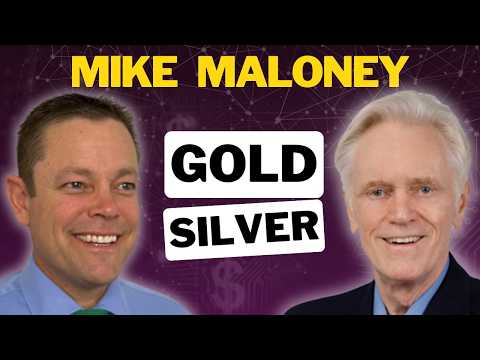
Maloney’s economic worldview is consistently anti-debasement, anti-bubble, and resilience-first.
📈 See how Mike Maloney's thesis changed over time →Preview how this speaker shows up across market transcripts. Unlock the full archive, AI chat, and the version personalized to your watchlist, followed channels, and favorite speakers.
Mike Maloney is a precious-metals investor, educator, and entrepreneur best known for translating monetary history and macroeconomics into simple visual explanations. His recurring public work centers on gold and silver, currency debasement, financial bubbles, and the need for personal resilience. He also presents himself as an active builder/operator, not just a commentator: he has run GoldSilver, written bestselling books on gold and silver, and more recently has been developing Freedom Farms in Puerto Rico as a “Plan B” community and off-grid resilience project. Across the supplied material, he emphasizes long-horizon thinking, contrarian positioning, and preparing for systemic stress rather than reacting after crises hit.
Maloney’s economic worldview is consistently anti-debasement, anti-bubble, and resilience-first. He argues that central-bank money creation and QE have inflated asset prices while eroding purchasing power, and he treats gold and silver as both monetary hedges and strategic responses to currency dilution. He repeatedly frames the current era as unstable: a “bubble century,” elevated valuations, fragile supply chains, and a coming reset or crash. His preferred stance is to own real assets, especially precious metals and productive land/infrastructure, before instability forces repricing. He is also bullish on mining and resource assets in a long time horizon, especially where automation and scarce high-quality deposits could make future margins exceptional. In short, he sees value in hard assets, operating businesses, and preparedness over conventional financial complacency.
Every analyzed appearance we have for this speaker, newest first. Open any transcript preview to read the underlying transcript.
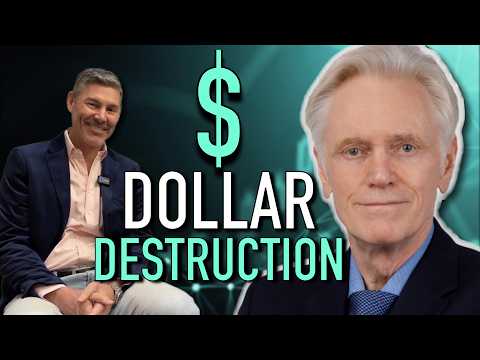
Preview:George Gammon argues that the U.S. dollar is the key force disrupting the global economy, more than domestic U.S. price moves alone. Using the Bronze Age “Sea Peoples” as an analogy, he says dollar strength or dollar scarcity can wreck trade partners, force foreign central banks into intervention, and create a self-reinforcing economic squeeze.
Preview:Brent Johnson argues the global economy is entering a more fragmented, government-influenced regime, and that this makes the current market environment unusually dangerous even if it does not imply an imminent crash. He says most major assets are already expensive relative to the level of uncertainty, and that passive flows are still propping up equities until employment or 401(k) contributions weaken.
Preview:This is a promotional, non-technical presentation for Freedom Farms in Puerto Rico, framed as a “Plan B” community and off-grid resort concept. Mike Maloney and Robert Helms describe a 900-acre property with current food, water, security, and 10 rooms already in place, plus a future vision of resort amenities, member homes, and limited founder memberships tied to an upcoming private placement.

Preview:Mike Maloney argues that multiple systems are already vulnerable or near breaking point: an extreme stock-market bubble, worsening debt and delinquency trends, AI-driven white-collar job loss, and geopolitical/fertilizer/energy shocks that could push inflation and food stress higher. The second half pivots into a personal update and promotion of his new channel, his exit from goldsilver.com, and his plan-B project in Puerto Rico, Freedom Farms, which he presents as a resilient off-grid food/water/power/community base.
Preview:A gold-and-silver bull case centered on central-bank accumulation, declining trust in fiat, and tightening physical supply. The speaker argues gold is supported by official-sector buying and silver is more constrained because industrial demand is rising while mine supply and above-ground stocks are shrinking.
Preview:Mike Maloney argues that a new global monetary reset is underway because years of QE, money printing, and debt have inflated huge bubbles that he thinks are now unstable. He says gold and especially silver still have substantial upside because of currency debasement, industrial demand, and tightening supply, while he also uses his Puerto Rico farm as a practical example of resilience planning.
Preview:Mike Maloney argues that monetary debasement, debt bubbles, and geopolitical risk make gold and silver attractive, while his own response is to build a resilient ‘Plan B’ farm/community in Puerto Rico with food, energy, security, and cash-flow assets.
Preview:Mike Maloney argues the financial system is sitting on top of the biggest bubble in history: record debt, extreme equity valuations, stressed credit markets, and a weak dollar. He uses long-term charts to say stocks, real estate, and the banking system are all vulnerable, while gold and silver remain the only real stores of value.
Preview:Mike Maloney argues that the Iran-related energy shock is feeding into fertilizer, food, and construction costs, while extreme valuation and debt bubbles leave stocks, real estate, and credit markets vulnerable to a severe downturn. He frames gold and silver as the main long-term protection, and repeatedly says the current setup is far more dangerous than normal recession risk.
Preview:The speaker argues that the Iran/Hormuz conflict has created lasting oil, fertilizer, and food supply shocks that could act as the pin pricking extreme asset bubbles in stocks and real estate. He frames the setup as global and potentially severe: shipping through Hormuz has collapsed, fertilizer exports are disrupted, farmers face unaffordable inputs, and food inflation may follow after energy prices already spiked.
Preview:Mike Maloney argues that the Iran war has caused lasting energy and fertilizer disruptions that will keep oil and food costs elevated, acting as the catalyst for a major unwind in the largest bubbles in stocks, real estate, and credit. He frames gold and silver as long-term stores of value and resilience assets, while urging preparation rather than panic.

Preview:A promotional video for Freedom Farms in Puerto Rico pitching it as an off-grid, regenerative, tax-advantaged farm and resilience play. The speaker argues the farm can profit from Puerto Rico's food-import dependence, premium produce, pasture-raised eggs/meat, grants, and Act 60 tax benefits.
Preview:The discussion argues that gold and silver are still early in a major bull phase, with the key thesis that fiat-denominated price targets are unreliable and relative-value ratios matter more than spot prices. The speakers frame the upside as potentially very large because modern investors have far more competing assets than in ancient times, and because institutions, banks, central banks, and eventually broader public participation may drive a late-cycle reallocation into hard assets.
Preview:Mike Maloney interviews David Morgan in Las Vegas about silver’s recent run and what it means for the long-running precious-metals bull market. They argue that dollar-price targets are unreliable, that gold/silver should be judged against real assets and money supply, and that the late stage of a bull market often delivers the biggest gains.
Preview:A precious-metals bull case built around extreme government debt, low institutional ownership, and a belief that gold and silver are still early in their cycle. The speaker stresses personal conviction—more than half of net worth in silver eagles—and argues that deficits, money creation, and weak public participation leave substantial upside in bullion.
Preview:Mike Maloney argues that U.S. equities are in a historic valuation bubble and that precious metals are the safer refuge when the bubble breaks. He uses Buffett-indicator-style measures, Shiller P/E, dividend yields, and stock-market-to-GDP comparisons to claim the market is far above any normal fair-value range, with valuations now extreme enough that a major correction could hit stocks, real estate, and retirement savings.
Preview:Mike Maloney argues that silver is the bigger opportunity than gold because the gold-silver ratio remains extremely stretched and above-ground silver supply is tight. He frames gold and silver as real money versus fiat currency, uses long-run ratio charts to argue both metals are undervalued relative to stocks and currencies, and says silver could revisit triple digits before year-end. He also repeats a structural bullish view on gold, but emphasizes silver’s higher volatility and greater upside.
Preview:Mike Maloney argues the gold and silver bull market is not over, with silver the higher-volatility opportunity. He frames precious metals as the monetary safe haven versus fiat currency, says stock market valuations are in a historic bubble, and believes a major equity drawdown would drive more capital into gold and silver.
Preview:A farewell interview between Alan (host) and Mike Maloney, the founder of GoldSilver, who announces he's taking a year off from making videos to focus on treating his prostate cancer. The conversation is largely personal and retrospective: Mike shares his diagnosis, the alternative therapy he designed, emotional viewer comments about how his educational work changed lives, and the mission statement that has driven GoldSilver. Alan reads the email he sent Mike seven years ago that launched their working relationship and affirms he'll continue the mission. Market content is near-zero — the video is an emotional founder transition, not a market analysis.
Preview:Mike Maloney and an unnamed co-presenter walk through Michael W. Green's Substack investigation "My Life is a Lie," which argues the US poverty line — still computed as 3× the 1963 minimum food budget — is catastrophically outdated. Using today's spending patterns, the multiplier should be ~16, placing the real break-even threshold for a family of four at $130K–$150K. They detail the "valley of death": as a family's income rises from $40K to $100K, benefits vanish faster than wages grow, trapping millions. The discussion ties this to fiat currency debasement, CPI manipulation, and gold as a store of value.
Preview:A bullish silver thesis conversation featuring Mike Maloney and Lynette Zang. Maloney frames silver's recent breakout above ~$54 as a historic event mirroring the late-1979 pattern, predicting triple-digit prices ahead. He interprets the CME margin hike as manipulation that creates a buying opportunity, not a thesis-ender. The core argument: physical silver markets are tightening due to structural shortages, and price discovery is shifting from paper futures to physical supply/demand — a secular regime change. Zang adds emphasis on physical ownership over contracts and the urgency of positioning before the window closes.
Preview:Mike Maloney reacts to a CME margin hike on silver (30% increase, from $25,000 to $32,500 per 5,000 oz contract) and gold (9.1% increase). He expects silver to fall on the open as leveraged traders sell to meet margin calls, but views any dip as a buying opportunity. He frames the current silver rally as fundamentally driven by supply/demand — not speculation — and draws a historical parallel to late 1979's breakout and subsequent run. He expects triple-digit silver eventually, sees a pullback as healthy consolidation that could confirm the bull market, and warns viewers to avoid futures contracts and own physical instead.
Preview:Mike Maloney presents a historical-pattern thesis: global monetary systems reset roughly every 30-50 years after periods of war, debt, and currency debasement. He argues recent statements by Treasury Secretary Scott Bessent and Donald Trump signal another reset is approaching — potentially a return to a gold-backed system. He walks through the math: at current official gold prices ($42.22/oz), each Federal Reserve note is backed by only 0.39% gold. Full backing at current note issuance would require ~$9,044/oz gold. Maloney suggests Trump could declare a higher gold price, devalue the dollar, restore trade balance, and maintain US fiscal dominance — all while gold holders see enormous revaluation gains.
Preview:A compilation-style video featuring clips from Mike Maloney and Lynette Zang arguing that the US dollar system is heading toward a major monetary reset. Maloney walks through the Fed's H.4.1 data to show gold currently backs Federal Reserve notes at less than 0.4 cents on the dollar, and calculates that a return to 100% gold backing would require ~$9,000/oz gold. Zang frames gold and silver as insurance, not a trade, and highlights central bank buying, Trump/Bessent commentary, and the Triffin dilemma as signals of an approaching Bretton Woods-style reordering. Both speakers emphasize physical ownership over paper contracts.
Preview:Mike Maloney presents his thesis that the US government is leaving "breadcrumbs" pointing toward a new global monetary system, potentially involving a gold revaluation to $9,000–$10,000/oz. He traces four prior monetary-system resets since 1870, argues the current fiat era is due for another, and cites statements by Trump, Treasury Secretary Bessent, and the Fed's H.4.1 balance sheet as evidence. The core math: $2.8T in Federal Reserve notes outstanding divided by ~$11B in gold certificates at the statutory $42.22/oz implies a ~$9,044/oz price at 100% backing. He sees this as a historic wealth opportunity for gold holders.
Preview:Mike Maloney and Lynette Zang discuss the bullish case for gold and silver, framing precious metals as the inevitable winners in a coming currency crisis. They argue the gold-to-silver ratio is historically distorted, silver stockpiles are depleted, and industrial/geopolitical demand will drive silver to triple or quadruple digits. The conversation weaves together technical charts, monetary history, and dire warnings about hyperinflation, war, and the impoverishment of the middle class. The tone is urgent and apocalyptic, with gold and silver positioned as the only escape from a collapsing fiat system.
Preview:Mike Maloney presents a hyper-bullish silver thesis: silver is massively undervalued relative to gold (gold-to-silver ratio currently ~64, historically ~33-35 with abundant stockpiles, now depleted). He argues silver is headed for triple digits by 2026-2027, possibly quadruple digits, driven by vanishing global stockpiles, China export restrictions, constrained supply, and surging public interest. He frames this as part of a broader currency crisis where precious metals outperform collapsing assets, and ties it to a mission of protecting the middle class. The video blends market commentary, chart analysis, and commentary on social posts from silver bulls.
Preview:Mike Maloney and Peter Krauth discuss the gold-to-silver ratio, currently near 64, arguing it is destined to collapse below 20 and eventually reach 14-to-1 or even 10-to-1 as it did at the 1980 peak. Maloney contends silver is headed to triple digits and possibly quadruple digits, with gold potentially reaching $8,000+. Krauth adds structural supply constraints (only 25% from primary mines) and extreme physical tightness in London and Shanghai. Both see short-term correction risk but remain structurally bullish.
Preview:Mike Maloney delivers a high-conviction silver bull thesis: he believes silver is destined for triple digits by end of 2026 (possibly 2027), potentially even quadruple digits, driven by collapsing global silver stockpiles, the gold-to-silver ratio's eventual reversion to 10:1–20:1, and industrial/military demand. He frames silver as a historic opportunity while warning of a coming market correction and currency crisis.
Preview:Mike Maloney and an unnamed host react to a Twitter/X thread claiming a new Russia-India-China-UAE trade settlement system is using silver as a reserve asset, bypassing the dollar. While Maloney is broadly sympathetic to the de-dollarization thesis, both speakers push back on key elements: the silver-INR/CNY correlation claim is weak, silver hasn't actually detached from COMEX pricing, and India's tariff cut likely has nothing to do with government-to-government settlement. They treat the thread as interesting investigative work but over-dramatized, and stress that correlation is not causation.
Preview:Francis Hunt and Mike Maloney make the case that silver is in an accelerated breakout phase with structural supply deficits, industrial demand inelasticity, and a collapsing gold/silver ratio driving prices toward triple digits and eventually $333. Hunt outlines HVF technical targets ($91, $100, $333) while Maloney argues that silver is physically "required" (not just needed) for green tech, and that price is the only mechanism that can fix the shortage once paper markets lose control.
Preview:Mike Maloney delivers an off-the-cuff talk arguing we are already in a global monetary reset. He claims gold is leading but all assets will follow as the dollar loses value. He frames precious metals as Giffen goods, warns physical shortages will reach the US soon, suggests the gold price rise is partly driven by unwinding Fed gold leases ahead of a potential Treasury revaluation, and describes the current rally as a physical-demand-driven short squeeze with years left to run. He is dismissive of most crypto but says one distributed ledger tech is an exception. The talk ends with audience Q&A on the gold-silver ratio, Russia's ruble, pegging the dollar to gold, and Bitcoin vs gold.
Preview:Mike Maloney and an unnamed host dissect a viral Twitter thread claiming that a new Russia-India-China-UAE trade settlement loop (bypassing the dollar, using AED/CNY) is driving sovereign silver accumulation and that silver now tracks the INR/CNY exchange rate. Maloney is sympathetic to the broader de-dollarization thesis but pushes back on key claims: he notes correlation is not causation, the chart correlation isn't as tight as claimed, silver hasn't detached from COMEX pricing, India's tariff cut probably doesn't relate to sovereign trade, and Russia's silver buying (~$500M/year) is modest (~1% of annual supply). He sees silver's role as genuinely rising — becoming a strategic bi-metallic reserve asset alongside gold — but rejects the more dramatic framing that silver is replacing gold as the reserve foundation of a new monetary system.
Preview:Mike Maloney argues the popular narrative that the Hunt brothers cornered the silver market in 1980 is wrong. He contends they were scapegoats: regulators (with Fed chair Paul Volcker's involvement) imposed draconian rules — including "liquidation orders only" — to crush silver and thereby cap gold, which was threatening the US dollar. Jeff Christian estimated the Hunts added at most 50-75 cents to silver's price; the real driver was public rotation from gold to silver. A Goldman Sachs analyst's chart labeling the 1980 spike as "Hunt brothers corner the silver market" is, Maloney says, evidence that Wall Street perpetuates a myth.
Preview:A compilation of interview clips featuring Andy Schectman and Mike Maloney making a structurally bullish case for silver. The core argument: silver is massively undervalued relative to its geological mining ratio (~7:1 vs gold), historical monetary ratios, and modern industrial demand. Schectman walks through a 45-year cup-and-handle technical pattern pointing to ~$96, and ratio-based models suggesting $100–$614 silver. Both speakers argue that central bank gold accumulation, repatriation trends, silver's irreplaceable industrial role (EVs, solar, defense), and chronic supply deficits are converging to revalue silver dramatically — possibly within 2026.
Preview:Mike and Alan of GoldSilver analyze a Twitter thread by @macrobsil claiming silver is becoming the foundation of a new global monetary system outside the dollar, driven by India-Russia-China-UAE trade settlement. They affirm parts of the thesis (de-dollarization, Russian silver buying, structural deficit) but push back on overstated correlations, the dismissal of industrial demand, and the idea that silver replaces gold rather than joining it. The core bull case rests on the 5+ year structural supply deficit and growing demand from EVs, solar, and AI.
Preview:Mike Maloney and co-host Allan present a data-heavy argument that gold miners have dramatically underperformed physical gold over the long term. Using the Barron's Gold Mining Index relative to gold since 1971, they show an ~89% loss in value when measured in real money terms. They argue miners are tactical instruments at best — capable of sharp, short-lived outperformance during narrow windows — but are plagued by dilution, operational risks, and brutal drawdowns. The core thesis: own gold/silver for wealth preservation; treat miners only as short-term trades with professional guidance.
Preview:Mike Maloney and an unnamed co-host present a data-heavy case that gold mining stocks have dramatically underperformed physical gold over the long run. Using the Barron's Gold Mining Index (BGMI) to gold ratio since 1970, they show miners have lost roughly 90% of their value relative to gold over five decades. The core explanation: miners amplify downside more than upside, suffer structural share dilution (called "the greatest inflators on earth"), and only outperform during rare, brief windows. The video offers a checklist for those who still want to speculate in miners: use gambling money only, buy when deeply undervalued, have expertise, diversify, and keep a short time horizon.
Preview:Mike Maloney and Alan Hibbard present data showing the Barron's Gold Mining Index has dramatically underperformed physical gold over the long term — losing ~89% against gold since 1971 while gold itself gained ~98x. They argue miners are a dangerous bet unless specific conditions are met: use only gambling money, get professional help, and time entries carefully during brief windows of outperformance.
Preview:Mike Maloney and Alan Hibbard react to a JustDario X post arguing that industrial silver buyers cannot be forced into cash settlements — they need physical metal for solar panels, EVs, and semiconductors. Maloney sharpens the point: silver isn't just "needed," it's "required" because alternatives (gold, platinum, palladium) would only become viable at a 1:1 gold-silver ratio. The core thesis: if COMEX fails to deliver and cash settlements are forced, the physical market decouples from paper, crushing financial institutions while rewarding physical holders.
Preview:Mike Maloney and a co-host present a deeply bullish silver thesis: a 45-year cup-and-handle breakout, a seven-year structural supply deficit (1.1B+ ounces drawn from above-ground stocks), and a collapsing gold-silver ratio. They argue silver is still "dirt cheap" even after its breakout, and that the real move hasn't begun — the fuse has only been lit. Technical targets range from $85 in weeks to triple-digit silver; ratio compression toward 14:1 or lower could multiply returns relative to gold. They explicitly discourage selling and frame the moment as a rare convergence of technicals, fundamentals, and macro forces.
Preview:Mike Maloney and a co-host present an extremely bullish silver thesis centered on a 45-year cup-and-handle breakout, deteriorating COMEX paper-market integrity, a seven-year cumulative supply deficit exceeding 1 billion ounces, and a falling gold-to-silver ratio (currently ~73). They argue silver is in the early stages of a historic revaluation that could reach triple digits, driven by physical scarcity and a potential fracturing of the paper derivatives system. No sell signals are entertained; the speakers frame this as the best possible investment.
Preview:Mike Maloney and David Morgan discuss silver's breakout from a 45-year cup-and-handle pattern, arguing that the real advance has only begun. They see near-term targets of $70–$85 within weeks, with the gold-silver ratio suggesting silver could outperform gold by 5–10x. Structural supply deficits through the 2030s, tightening physical markets, and a potential equity correction are key themes. Morgan cautions that a stock market sell-off could briefly drag metals down, presenting a buying opportunity.
Preview:Mike Maloney and Alan present a highly bullish silver thesis, arguing the rally has barely started. They cite a 45-year cup-and-handle breakout, seven consecutive years of dwindling above-ground silver inventories (1.1B oz cumulative deficit), and a gold-silver ratio still at ~73 that could compress toward 14 or lower. Their core claim: silver is entering an "unobtainium" phase where physical supply scarcity meets surging investment demand, and selling now would be a mistake.
Preview:Mike Maloney draws a direct parallel between silver's November 2025 breakout above $56 and the November 1979 breakout that preceded silver's January 1980 blow-off top. He argues the structural setup — depleted inventories, solar/EV demand, and the absence so far of the margin hikes and position limits that defined the 1979-80 mania phase — suggests this cycle has much further to run. He walks through the recent CME data-center outage, the pattern of repeated margin hikes on gold and silver in September-October, and the historical precedent of "liquidation orders only" that ultimately killed the 1980 bull market. His core message: we are early in the shenanigans, and if history rhymes, silver could see "spectacular" prices with potential targets suggested in the $65-90 range over 12-24 months.
Preview:A compilation of clips from Peter Schiff and Mike Maloney, framed by a Metal Sense narrator, arguing that silver is in a historic breakout above $50 after nearly doubling in 2025. Schiff forecasts silver at $100/oz and gold above $5,000 by next year, with miners (GDX, GDXJ) confirming the move. Mike Maloney draws parallels to the 1979 silver breakout and warns that paper-market infrastructure failures (like the recent CME outage) signal a shift of price discovery toward physical metal. The overall thesis: precious metals are entering the strongest phase of a multi-year bull market driven by negative real rates, central bank buying, fiscal stress, and capital rotation out of crypto and weakening financial assets.
Preview:Mike Maloney analyzes silver's recent breakout and a CME trading halt triggered by a data center cooling failure. He argues the halt's cause is secondary — the real signal is that silver's bull run is following the 1979-80 pattern almost to the day, with margin hikes and position limits from that era yet to begin. He draws a detailed historical parallel to the Hunt brothers episode, warning that similar "shenanigans" could emerge as silver runs higher, and suggests a potential for dramatically higher prices if the 1970s analogue holds.
Preview:Mike Maloney and an unnamed co-host discuss five predictions about gold and silver markets: the LBMA's silver shortage, COMEX gold restocking patterns, the US potentially secretly accumulating gold, the impossibility of a new Plaza Accord-style coordinated devaluation, and the inadequacy of gold revaluation to solve US fiscal problems. The core thesis: the monetary system is a fractional-reserve "scam," gold and silver are early in a structural bull market, and competitive currency debasement will drive precious metals much higher — $4,500 gold is "the beginning."
Preview:Mike Maloney argues that gold is massively undervalued due to systemic price suppression by Western trading institutions (LBMA/COMEX). He calculates that wiping out US national debt would require gold at $142,000-$147,000/oz, far beyond any plausible official revaluation. He presents data showing gold would be ~$3/oz if only London hours existed but ~$40,000/oz based on overnight (non-London) trading — which he calls "100% irrefutable" proof of manipulation. The practical implication: gold and silver are structurally underpriced, causing persistent mining deficits and physical shortages that must eventually force a dramatic repricing.
Preview:Mike Maloney and an unnamed host discuss socialism, capitalism, and the proposed $2,000 Trump tariff dividend. The core argument: fiat currency enables socialism by letting governments print money for vote-buying programs, while a gold standard would enforce capitalist discipline. The tariff dividend is framed as redistribution — importers and consumers pay, not foreign entities — and as a parallel to Rome's late-empire grain distributions. The conversation meanders through definitions of capitalism vs. socialism, critiques of US welfare programs (SNAP, public housing, Medicare/Medicaid), and anecdotes about Puerto Rico's incentive problems. Gold & silver are positioned as the solution to fiat-driven socialism, but no specific trade levels, timing, or tactical calls are made.
Preview:Mike Maloney delivers a full-throated warning that the global financial system is heading toward a collapse that will dwarf 2008, driven by the structural impossibility of fiat currency — debt must always outpace money supply to avoid deflationary implosion. He argues housing, equities, and bonds are all in synchronized historic bubbles, leaving gold and silver as the only major assets not trapped in speculative excess. The core framework: fiat money is built on "fraud, theft, and enslavement," and the perpetual debt-expansion loop guarantees currency dilution and wealth transfer upward.
Preview:Mike Maloney and Alan Hibbard walk through five predictions about gold and silver — from LBMA price suppression to US gold revaluation — using the "LBMA hours vs. non-LBMA hours" chart as their centerpiece evidence that paper markets have suppressed precious metals for 50 years. They argue the bull market is just beginning, that a unilateral dollar devaluation (via money printing) is inevitable, and that gold revaluation to cover US debt is mathematically absurd unless the price reaches ~$147,000/oz.
Preview:Mike Maloney lays out his thesis that the global fiat currency system is structurally doomed — built on fraud, theft, and enslavement — and that a financial upheaval bigger than 2008 is coming. He argues gold and silver are the only honest money with a 5,000-year track record, dismisses concerns that gold has peaked by citing the Dow/gold ratio and gold/M2 ratio, and explains why the debt-based system mathematically cannot be paid off. The conversation is a macro framework interview rather than a near-term trading call.
Preview:Mike Maloney and Alan Hibbard argue that socialism is already deeply embedded in American institutions — not something that might arrive with a new mayor. They walk through education, healthcare, housing, and monetary policy as existing socialist structures, tie Trump's proposed $2,000 tariff dividend to vote-buying redistribution, and frame fiat currency as the root enabler of socialism. Gold and silver are presented as the only assets not in a bubble and the foundation of a truly capitalist system.
Preview:Mike Maloney joins The Bullion Brief to present a deeply bearish macro outlook, arguing that record consumer delinquencies, commercial real estate distress, layoffs, and a historically negative Leading Economic Index all point to an imminent crisis that hasn't even started yet. His core thesis: we are simultaneously in both a stock market bubble and a real estate bubble of historic proportions, and the coming crash will be "horrific." His favored hedge is silver and gold, with silver positioned to outperform and provide the leverage to acquire other assets cheaply after the crisis bottoms.
Preview:Mike Maloney and an unnamed host walk through a litany of bearish macro charts — record housing inventory imbalances, surging credit card and auto delinquencies, spiking layoffs, collapsing commercial real estate CMBS, and a historically negative LEI — arguing the US is in a "pre-crisis" state before the main event even begins. Maloney frames gold and silver as the best-performing asset class of the century (ex-crypto) and the vehicle for the bottom 90% to escape the coming crash. Price targets: $5,000 gold and $80 silver. The thesis: the stock market and real estate are both in historic bubbles simultaneously, a monetary reset is underway, and the divergence between Wall Street and Main Street will resolve with a violent S&P 500 crash followed by Fed bailouts that destroy the currency.
Preview:Mike Maloney and Alan Hibbard present a bearish macro thesis: the US is simultaneously in a stock market bubble and a real estate bubble of historic proportions, with consumer distress already at or exceeding 2008 crisis levels before any crash has even begun. They argue the Leading Economic Index (LEI) has never given a false recession signal and is now more negative than at any point since the late 1970s, while the S&P 500 has diverged from the real economy for over three years. The episode catalogs deteriorating data — credit card delinquencies at 12%, subprime auto delinquencies at record highs, 1.7M car repossessions, 150K October layoffs, commercial mortgage-backed securities delinquencies exceeding 2008 peaks, and consumer sentiment at its second-lowest ever — framing it all as the "prelude" to an imminent, unprecedented bust. Their recommended preparation: gold and especially silver.
Preview:Mike Maloney and his co-host analyze six countries' recent policy moves around silver — including India allowing silver as loan collateral, Russia's central bank buying physical silver, Saudi Arabia buying silver ETFs, China restricting silver exports, the US adding silver to its critical minerals list, and Australia's New South Wales naming it a priority metal. They argue these signals collectively point to silver transitioning from an industrial commodity to a strategic/monetary reserve asset, and overlay a 1970s analog chart suggesting a blowoff top to $600+/oz in 2-3 years, with Maloney betting on at least $200/oz.
Preview:Mike Maloney and Allan (a co-host/analyst) discuss a viewer question about whether central banks buy silver. They identify Russia as the first central bank to explicitly buy physical silver for reserves ($500M+ over 3 years) and India as having elevated silver to loan-collateral status at a 10:1 ratio vs gold. China's 2026 export-licensing rules signal silver is now a strategic resource. They argue that falling futures open interest alongside declining physical inventories shows investors increasingly distrust paper silver and prefer physical delivery — a "musical chairs on the Titanic" dynamic. The thesis: silver is underpriced relative to gold (85:1 ratio vs a historic/implied 10-20:1), and converging industrial, monetary, and geopolitical demand could drive prices significantly higher.
Preview:Mike Maloney lays out an aggressively bullish case for silver and gold, arguing we are entering the "third and final phase" of a precious metals bull market. He points to historic bubbles simultaneously in stocks, real estate, and bonds, a structural silver supply deficit, an extreme gold-silver ratio (~85:1), and early signs of mainstream institutional adoption (Morgan Stanley recommending 20% gold allocations). His core trade: use the gold-silver ratio to rotate between metals, overweighting silver now with a target ratio in the 20s or lower, implying a 4x+ return in gold terms.
Preview:Mike Maloney argues we are in the early stages of the third and final phase of a historic precious metals bull market — where the greatest gains happen in the shortest time. He sees simultaneous bubbles across stocks, bonds, and real estate, and believes a crash of these asset classes against gold and silver is imminent. His core trades: overweight silver vs. gold (300:1 ratio), anticipating the gold-silver ratio to fall from ~85 toward the historical 13-16 range. He uses the Dow-gold ratio and gold-silver ratio as primary valuation tools, dismissing fiat-currency pricing as a "fog." He also discloses a 900-acre farmland investment in Puerto Rico as a separate resilient asset. The video is a one-sided bullish polemic with no interviewer challenge, heavy on historical analogy to the 1970s, and light on near-term timing specifics beyond "weeks."
Preview:Mike Maloney and Alan Hibbard discuss the emerging role of silver as a monetary and national-security asset for central banks. They highlight Russia's $500M+ silver purchases for state reserves, India recognizing silver as loan collateral, and China, the US, and Australia designating silver as a critical mineral. Maloney projects silver reaching at least $200/oz with a potential spike toward $600–$1,000+, based on a 1970s-cycle analog and dollar-devaluation math. The core thesis: central bank buying could trigger a snowball effect that drives a parabolic blowoff top within 2–3 years.
Preview:Mike Maloney argues gold and silver are entering the third and final, most explosive phase of their bull market. He bases this on dramatically expanded global access — 18x more people and ~80x more fiat currency chasing a gold supply that's only doubled since 1980 — plus simultaneous bubbles in stocks, bonds, and real estate. He uses the gold-silver ratio to dictate metal selection (currently ~85:1, heavily favoring silver) and expects "spectacular" prices, with silver topping $200 and gold potentially reaching $10,000 if Jamie Dimon's call proves right. A crisis triggered by tariffs, AI bubble deflation, or a left-field shock is his expected catalyst.
Preview:Mike Maloney delivers an urgent warning: we're in an "everything bubble" — stocks, bonds, and real estate are all at historic extremes simultaneously. He argues central banks have papered over cracks, debt is unsustainably high ($38T+), and the real economy is deteriorating beneath fake market signals. His core thesis: gold and especially silver are massively undervalued, the gold-silver ratio (~85:1) will eventually collapse to 20:1 or below, and physical precious metals are the ultimate safe harbor for the coming crisis he expects within the next year.
Preview:Mike Maloney argues the global financial system is in a historic triple bubble — stocks, bonds, and real estate all inflated simultaneously — and a major crisis is imminent within the next year. He contends that physical gold and silver demand from Asia is driving prices while Western investors are mistakenly selling into this strength. His core thesis: the gold-silver ratio at ~85:1 signals silver is dramatically undervalued, and when the public shifts preference from gold to silver (as in 1979-80), silver will massively outperform, potentially driving the ratio below 20:1.
Preview:Mike Maloney makes the case that gold and silver are in the final phase of a historic bull run, arguing that measuring housing in ounces of gold and silver reveals collapsing real estate values relative to precious metals. He contends that U.S. housing is in a hyperbubble worse than 2006-2007, with affordability at crisis levels requiring either a 38% home price decline, a 60% income rise, or mortgage rates falling to 2.35% to normalize. His core thesis: real estate will crash while gold and silver surge, producing a rare moment where precious metals' purchasing power relative to homes doubles or quintuples, with silver potentially seeing a 5-10x increase in home-buying power.
Preview:Mike Maloney presents a thesis that the global fiat currency system is approaching a breaking point, with central banks quietly repositioning into gold. He argues the precious metals bull market is entering its "third and final phase" — the period of greatest gains — and that silver is historically undervalued relative to gold at an 85:1 ratio versus a ~15:1 historical norm. He expects a major financial crisis within the next year or so, driven by simultaneous bubbles in stocks, bonds, and real estate, and views gold as the anchor in an inevitable monetary reset.
Preview:Mike Maloney warns that markets may have already topped, driven by a dangerous US-China "game of chicken" over rare earths and tariffs. He frames gold and silver as the only durable protection through what he sees as an accelerating currency collapse and empire decline, arguing the 2008 crisis was never resolved — just papered over. The core pitch: individuals cannot change the system but can protect themselves by stacking physical precious metals, particularly gold for stability and silver for explosive upside, while tracking the gold-silver ratio to optimize conversion.
Preview:Mike Maloney, founder of GoldSilver.com, delivers a strongly bearish macro outlook arguing the US is heading into a historic financial crisis because stocks, bonds, and real estate are simultaneously in bubbles of unprecedented magnitude. He sees gold and silver as the primary beneficiaries, with physical demand from Asia and central banks signaling the early stages of the final, most explosive phase of the bull market. He projects gold at $9,000-$10,000+ and expects the gold/silver ratio to compress from ~85 down to 20 or less, implying massive silver outperformance.
Preview:Mike Maloney and Alan Hibbard analyze the feasibility of the US government revaluing its gold reserves to address the $36T national debt. Using a spreadsheet model, they show that to meaningfully reduce the debt-to-GDP ratio (currently ~120%) down to sustainable levels (77-90%), gold would need to be revalued to absurd prices — $34,000/oz to hit 90%, $49,000/oz for 77%, and $86,000/oz just to return to pre-GFC 2007 levels. To halve interest payments to pre-COVID levels requires $64,000/oz gold. Their conclusion: gold revaluation cannot solve the US fiscal problem; the numbers are so extreme that a monetary system implosion is the only path.
Preview:Mike Maloney and Alan Hibbard fact-check a Motley Fool article titled "Millions of Americans Are Falling Into the Gold Trap," exposing it as a cherry-picked, emotionally manipulative advertisement for the Fool's stock-picking service. They show that the article cherry-picks two gold market tops (1980 and 2011) to paint gold as dead weight, while ignoring gold's massive bull runs. The climax: over the exact same 2002–2025 period the Fool cites for its 1,007% return, gold actually returned ~1,000% — virtually matching their flagship service with zero counterparty risk and zero time commitment.
Preview:Mike Maloney and Alan Hibbard walk through key charts from the Incrementum "In Gold We Trust" report to argue gold's bull market is still early. They highlight the pattern of accelerating all-time highs, diverging ETF flows (Western retail absent while Eastern/central bank buying dominates), and Scott Bessent's statements hinting at a new Bretton Woods-style monetary revaluation. Maloney calculates ~$9,000–$10,000/oz to fully back US currency in circulation at historical ratios, and suggests free-market overshoot is likely. The core thesis: the monetary demand phase — fear-driven, not greed-driven — hasn't even begun.
Preview:Mike Maloney and Alan Hibbard discuss the US imposing a 39% tariff on Swiss 1kg and 100oz gold bars, which sparked a spike in gold futures to a record ~$3,534. They explore the disruption to bullion trade flows, the uncertainty around whether the tariff will stick (a WSJ report suggests an executive order may clarify/remove it), and the broader systemic risks of tariff whiplash on a fragile, overleveraged global financial system. The core thesis: this is dangerous monkeying with a tier-1 central bank asset that could trigger a liquidity or leverage crisis akin to 2008 — and gold/silver holders benefit if it does.
Preview:Mike Maloney and Alan Hibbard respond to a viewer question about whether high silver prices would quickly unlock new supply and cap further gains. They argue supply cannot respond quickly: AISC is ~$27/oz, most silver is a byproduct of base metals mining, new mines take 10-20 years, the workforce is aging out with few replacements, and mining-engineering graduates are vanishingly rare. The thesis: a structural deficit plus inelastic supply guarantees a giant price overshoot to "mid triple digits."
Preview:Mike Maloney and Alan Hibbard discuss a viral chart arguing gold's current bull market will end with a monetary system reset rather than a bubble — gold will be revalued and pinned at a high price by a new gold-backed system. Maloney partially agrees but insists there will still be an economic bubble phase where gold becomes overvalued relative to other assets. Hibbard overlays the 1970s gold bull market onto the current one (since ~2000), suggesting a vertical move to ~$9,000/oz is coming if the fractal repeats.
Preview:Mike Maloney and Alan Hibbard discuss Russia's plan to launch gold trading on the St. Petersburg exchange by year-end, framing it as a challenge to London's price-setting dominance and a step toward de-dollarization. They cover surging Chinese gold ETF demand, central banks increasingly buying gold directly from domestic miners (a practice that doubled year-over-year per WGC survey data), and the BRICS summit's push for national-currency transactions. Trump's retaliatory 10% tariff on BRICS countries is criticized as self-defeating. The overarching thesis: gold is benefiting from a structural east-west decoupling, and more global price-discovery participants make manipulation harder.
Preview:Mike Maloney and Alan Hibbard present a bearish case on the US stock market, arguing it is in an unsustainable bubble. Using Dow Theory non-confirmations, the Buffett indicator at a record 205%, record-low breadth at all-time highs, surging bankruptcies, and extreme margin debt, they warn of a potential 1929-style crash. The presentation is data-heavy but one-sided, with no exploration of counterarguments or alternative scenarios.
Preview:Mike Maloney fields an impromptu question from two Australian attendees at Rebel Capitalist Live about when silver will outperform gold. He draws a historical parallel to 1979, arguing that gold must first reach a "too expensive" threshold (~$3,500–$5,000 USD) before the public switches preference to silver, after which silver rockets past gold's gains — but only at the very end of the bull market. The Australian dollar's 50% decline against USD since 2015 has amplified gold returns for Aussie investors.
Preview:Mike Maloney and Alan Hibbard discuss silver's technical breakout, arguing that multiple timeframe confirmations (quarterly, six-month, annual closes at all-time highs) plus a completed giant cup-and-handle pattern point to a vertical move ahead. They compare the current bull market setup to the 1970s, where silver gained 720%+ in a year, and suggest triple-digit to $660 silver is plausible if the pattern plays out. The conversation also touches on silver's purchasing power versus CPI-adjusted levels and the monetary premium of precious metals over industrial commodities.
Preview:Mike Maloney updates his "Silver Slingshot" thesis after silver closes at $38.47, a 14-year high. He argues that silver just blasted through weak 13-year resistance, faces almost no overhead supply, and is headed quickly to $48–$50. He frames silver as absurdly cheap relative to currency creation, housing, and equities, computes a "fair value" average of $921/oz across inflation proxies, and emphasizes a 5–7 year physical supply deficit that only higher prices can resolve. The gold-silver ratio at ~88–90 is, in his view, destined for 30 or below.
Preview:Mike Maloney and Alan Hibbard answer viewer questions about gold and silver on the GoldSilver Show. Maloney lays out his framework for timing cycle peaks using the Dow/Gold ratio and Gold/Silver ratio, dismisses price-level targets, and outlines a staggered selling strategy. He also discusses Bitcoin's role alongside physical metals, defends his fact-based approach to precious metals, and speculates that Fort Knox gold may have been rehypothecated but is being replenished ahead of a possible audit.
Preview:Mike Maloney and Alan Hibbard respond to a viewer's tweet asking whether gold has peaked based on the M2-money-supply-to-gold ratio. They recreate the chart, show it on logarithmic scale, and examine multiple long-term ratios (M2/gold, M2/Treasury gold, Dow/gold). Their core argument: the ratio touching a trend line does not signal a gold top — it could instead mark a head-and-shoulders breakout that precedes an enormous move higher. Maloney frames gold as still deeply undervalued relative to currency supply and financial assets, and ties the thesis to an eventual monetary reset and possible return to something gold-linked.
Preview:Mike Maloney and Alan Hibbard react to Elon Musk's threat to form an "America Party" in response to the Senate's passage of the "Big Beautiful Bill" (BBB), a spending package projected to add ~$3.3T to the deficit. They argue the real problem is not a lack of political parties but the fiat monetary system itself, showing historical charts that debt and CPI exploded after 1913 (Fed creation) and 1971 (Nixon closing gold window). Their core thesis: regardless of political outcomes, fiscal recklessness causes bubbles and crashes — and that drives gold and silver higher. Maloney promotes his upcoming appearance at the Limitless conference in Dallas.
Preview:Mike Maloney and Alan Hibbard discuss whether stablecoins and the GENIUS Act can save the US dollar. They argue the dollar is in structural decline — central banks are diversifying into gold at record levels and the world is slowly de-dollarizing. Hibbard walks through a Treasury Secretary Bessent claim that stablecoins will boost Treasury demand, showing that even under the rosiest assumptions (via Saifedean Ammous's analysis) the impact on US debt is trivial (~$3.7T or 5.4% by 2035). Both speakers conclude gold is the real beneficiary, and the dollar's days as the global reserve standard are numbered.
Preview:Mike Maloney and Alan Hibbard dissect a Goldman Sachs research piece that now recommends adding gold to traditional 60/40 portfolios. They mock Goldman for arriving 20+ years late to the gold thesis, walk through the firm's data showing gold improves risk-adjusted returns across all time periods, and present their own simple comparison: a 60/40 gold/silver portfolio dramatically outperformed the traditional stock/bond 60/40 over 23 years. Alan offers to build an interactive Excel dashboard if viewers request it. The core message is that gold is a no-brainer portfolio addition, especially in the current low-institutional-credibility environment.
Preview:Mike Maloney and Alan Hibbard argue silver is in a "stealth bull market," outperforming gold year-to-date while receiving almost no mainstream media attention — a setup they believe mirrors the late-1970s phase when the public shifted from gold to silver, triggering a blow-off top. They see the gold-silver ratio near multi-decade extremes (~90s), a structural silver supply deficit, and the coming third stage of the precious metals bull market as a setup for triple-digit silver once it clears the $50 resistance level.
Preview:Mike Maloney highlights silver's close above $37, framing it as a significant breakout with little resistance left until the $48-50 area. He expects a slingshot move to continue, a retracement near $50, and eventually triple-digit silver once that level is cleared.
Preview:Mike Maloney presents his thesis that gold has entered the third and final phase of its bull market — the phase of greatest gains in the shortest time. He draws historical parallels to the 1979-1980 gold mania, argues gold and silver act as "Giffen goods" where rising prices create more demand, and contends that today's vastly larger money supply (50x more currency chasing only ~2x the gold) plus instant media could drive gold to $3,000, $5,000, or even $10,000/oz. The video is essentially a reading from his book "The Great Gold and Silver Rush of the 21st Century" with brief framing commentary.
Preview:Mike Maloney presents a multi-layered bullish thesis for gold and silver, anchored by technical wedge patterns suggesting an imminent upside breakout in gold, extreme gold-silver ratio readings, and a mental exercise showing gold would need to reach $140,000/oz to back all US debt. He highlights structural silver deficits, institutional awakening, and central bank gold buying displacing the euro as the second-largest reserve asset. The gold-silver ratio at ~92 is presented as a historic opportunity to swap gold for silver and multiply gold holdings on reversion.
Preview:Mike Maloney interviews Robert Helms (host of The Real Estate Guys podcast) aboard a cruise ship setting. The conversation is primarily a promotional discussion for the upcoming Investor Summit Real Estate Cruise (June 20th) and Rebel Capitalist Live (May 23-25). They discuss gold and silver as wealth preservation tools, the distinction between money and currency, reasons to eventually rotate from metals into cash-flowing assets like real estate and businesses, and the value of in-person networking at investment conferences. Light on market analysis; heavy on event promotion and philosophical musings about tangible assets.
Preview:Mike Maloney argues that silver's "slingshot move" has just begun following a breakout above $36, completing a 45+ year cup-and-handle pattern that he believes will lead to triple-digit silver. He distinguishes this rally from prior ones by pointing to concurrent extreme imbalances: a historically overvalued stock market (Magnificent 7 concentration), the greatest real estate bubble in history (per Shiller data), multifamily and auto delinquency rates exceeding 2008-2009 levels, US debt-to-GDP back at WWII peaks without a world war, and deteriorating employment. He frames the coming rush to silver as monetary demand — a flight from dollars into safe havens — which he says is the driver that produces astronomical prices and outperformance vs. gold.
Preview:Mike Maloney celebrates silver breaking $36, noting it decisively cut through resistance from late 2012 and October 2024. He outlines a technical roadmap: a quick run to the low $40s, a pullback, then a push toward $48-49. He highlights a 45-year cup-and-handle pattern, a deeply imbalanced silver supply deficit forecast through 2025, and cites Eric Sprott's call for $250-$500 silver. David Baitman's thesis on systemic collapse and massive silver accumulation is also featured.
Preview:Mike Maloney and Alan Hibbard discuss an SPRAT article arguing that the dollar and traditional safe havens are failing, marking a paradigm shift toward gold as the world's neutral reserve asset. They draw parallels to the 1970s gold bull market — specifically 1977, when stocks, bonds, and the dollar fell simultaneously — and argue we are entering the "third phase" blowoff top where gold's largest gains occur. Four structural drivers are cited: gold's renewed safe-haven role, non-correlation benefits, stagflation hedging, and central bank accumulation creating a rising price floor.
Preview:Mike Maloney and producer Allan read viewer comments on the GoldSilver channel. Maloney endorses silver's manipulated price, structural supply deficit, and the thesis that monetary demand (fear of dollar/bonds) will drive silver to triple digits. He pitches his book The Great Gold and Silver Rush and promotes the channel's free-silver offer. Content is light on new analysis; mostly reacting to viewer sentiment.
Preview:Mike Maloney takes viewers on a brief backstage tour of the AV production setup at the Limitless Expo, showcasing the massive technical infrastructure — graphics playback, video switching, stacked projectors, camera shading, live streaming — required to run a large-scale conference event. Zero market or investment content.
Preview:Mike Maloney and Alan Hibbert react to Moody's downgrade of US sovereign debt from AAA to AA1, framing it as the final confirmation of a decades-long fiscal death spiral. They argue the free market already downgraded US debt in 2022, foreign central banks are replacing treasuries with gold, and gold is the only remaining safe haven as the dollar reserve status erodes.
Preview:Mike Maloney, in conversation with Alan Hibbert, answers viewer questions about when and how to exit precious metals positions. He outlines a layered selling strategy using proprietary indicators and the gold-silver ratio, suggests converting silver to gold at extreme ratio lows before eventually rotating into stocks, real estate, or private businesses when confirming ratios align. He also discusses his 900-acre regenerative farm in Puerto Rico as a mission-driven post-exit project and plugs his appearance at Rebel Capitalist Live.
Preview:Mike Maloney and Alan Hibbert discuss viewer questions on gold and silver investing. Maloney argues that gold is still early in its bull run because financial advisors overwhelmingly recommend zero allocation — they'll only promote it near the top. He reiterates his silver thesis: a 10x move to $300 is "entirely possible" once the public rushes in, driven by the gold-silver ratio (currently ~100:1). He dismisses "confiscation" fears as a sales tactic for high-margin numismatic coins, framing 1933 as a nationalization, not confiscation. The episode also includes a book plug for Maloney's latest release and a sponsor note for free silver.
Preview:Mike Maloney argues it is not too late to buy gold, contending that the public still hasn't entered the market — evidenced by declining US and Perth Mint coin/bar sales and falling ETF holdings. Central banks (especially China), Chinese ETF inflows, and institutional "whales" are driving the current rally. He forecasts gold reaching $5,000–$10,000+, potentially hitting a 0.5:1 ratio with the Dow, as capital flees overvalued assets into scarce monetary metals. The video blends macro thesis, insider-trading insinuations, and a COMEX fractional-reserve narrative.
Preview:Mike Maloney delivers a high-conviction recession-and-crash call, arguing that multiple macro indicators (housing, employment, earnings revisions) align with a rare bearish S&P 500 signal. He contends the Fed is again behind the curve and a Bernanke-style bust is underway, with real estate and equities both vulnerable. Gold/silver are implied as the safe haven but not explicitly pitched.
Preview:Mike Maloney and Alen Hibbert present the gold/silver ratio as a generational opportunity. With the ratio above 100 (near all-time highs), they argue silver is massively undervalued relative to gold and predict the ratio will revert to at least 30 (highly likely), probably 20, and possibly 10. The core pitch: buying silver now and later rotating into gold could yield 3x to 10x the gold for the same fiat outlay. They support this with a 300+ year chart showing the ratio historically stable around 15-16 and only recently extreme.
Preview:Mike Maloney builds a case that the US is preparing for a new gold-backed monetary system, citing statements from Treasury Secretary Scott Bessent, historical Trump quotes favoring the gold standard, Bridgewater/PIMCO warnings about dollar reserve status, and massive physical gold inflows into US vaults. He argues a $10,000/oz gold price would cover Federal Reserve notes and rebalance global trade, though the transition would involve short-term pain.
Preview:Mike Maloney presents a thesis that the world is on the cusp of a new monetary system — a "Bretton Woods 2.0" or "Mar-a-Lago Accord" — triggered by trade war tensions, dollar reserve-currency distortions, and massive physical gold inflows into the US. He points to Treasury Secretary Scott Bessent as a "gold bug" signaling the reset, and derives a ~$10,000/oz gold price target for this year by dividing US currency in circulation by official gold reserves. The argument leans heavily on historical monetary-reset patterns and recent Swiss gold export data.
Preview:A promotional retrospective on Mike Maloney's two-decade journey building GoldSilver.com — from a spare-bedroom startup in 2005 to a major precious metals dealer with vault partnerships, a widely-watched YouTube channel (100M+ views), and the Hidden Secrets of Money educational series. The transcript is light on market analysis and heavy on brand-building narrative, touching briefly on a 2014 Bitcoin allocation, a bearish Federal Reserve/housing bubble call from the mid-2000s, and Maloney's pro-sound-money philosophy. More of a company origin story than a market briefing.
Preview:Mike Maloney and Alan Hibbard discuss gold's surge past $3,300, with gold up over $100 in a single day. They frame the current gold bull market as tracking the 1970s pattern, implying a potential ~6x from the 1999 start toward $9,000/oz. The core message: silver is historically undervalued (gold-silver ratio ~100+), and they argue this is one of the rarest opportunities in 2,500 years to rotate into silver. They cite fund manager surveys, US debt downgrade warnings, and Treasury volatility as structural tailwinds, while repeatedly noting they don't give advice — only share what they personally do.
Preview:Mike Maloney and Alan Hibbard discuss why the precious metals bull market is not over, using a 1979 analog where gold doubled in 42 days, tripled in 166 days, and quadrupled in one year during the final phase. Maloney suggests gold could reach $12,000/oz — the level needed to make the Fed's balance sheet fully gold-redeemable — and hints that silver may ultimately validate buyers despite choppy price action along the way.
Preview:Mike Maloney and Alan Hibbard discuss the Dow-to-Gold ratio as the foundational chart that convinced Maloney to buy gold in 2002. The ratio currently sits around 12.6, having fallen from ~22, meaning gold has nearly doubled the Dow's performance in recent years. Maloney argues the ratio could fall to 1 (as in 1980) or even 0.5, implying gold could buy 12–24 times more stocks from current levels. He frames this as a rare moment where gold serves as both the safe haven and the asset with the greatest potential purchasing-power gains, and insists "nobody missed it" despite gold's rally to $3,100.
Preview:Mike Maloney, founder of GoldSilver.com, argues that the escalating US-China tariff war is "incredibly dangerous" and could trigger a replay of the 1930s playbook — tariffs, gold nationalization, and dollar devaluation — but on a far larger scale this time. He sees the current moment as a rare opportunity to buy silver at deeply undervalued levels relative to gold, suggests selling gold to buy silver, and warns the gold-silver ratio could spike to 150 or beyond in a shock scenario before the eventual monetary reset.
Preview:Mike Maloney laments that the middle class is not participating in the current gold and silver rally — instead, "whales" and insiders are buying. He argues this represents the greatest wealth transfer in history and urges positioning before the window closes. He also discusses the gold-to-silver ratio, suggesting it could spike higher before eventually reverting, and hints he may trade gold for silver given the extreme opportunity.
Preview:Mike Maloney and Alan Hibbard argue that the recent market turmoil is part of a long-anticipated monetary reset that is favoring gold and, increasingly, silver. They say tariffs, trade tensions, and U.S. policy shifts could lead to a new global monetary arrangement, possibly involving a Mar-a-Lago-style deal, gold revaluation, and a much higher gold price to support currency convertibility.
Preview:Mike Maloney presents a hyper-bearish macro thesis centered on government fraud, recession signals, and an inevitable precious metals breakout. He argues the Treasury runs an unauditable single-account system with $500B+ in annual fraud, that DOGE cuts will contract GDP and trigger recession, and that a 45-year cup-and-handle pattern in silver targets $150–$500/oz. The talk weaves together chart patterns, capital rotation into gold, COMEX delivery anomalies, and systemic fragility — all pointing toward a precious metals supercycle.
Preview:Mike Maloney presents a highly bullish thesis on silver, arguing that the ratio of paper claims to deliverable physical metal on the COMEX is approximately 5.5:1 for silver (vs. ~2.5:1 for gold). He highlights surging short interest in PSLV, alleged daily manipulation at market opens, and a derivatives-based betting market that he claims is pointing toward $75 silver by 2026. The core argument: a short squeeze is building as bullion banks are trapped in oversized short positions with limited deliverable inventory.
Preview:Alan Hibbard joins host Mike to explore three scenarios for US stocks after a "blood indicator" (3-month T-bill / high-yield spread crossing its 100-week moving average) triggered. The trio: a nominal lost decade (S&P sideways for 10-15 years), a nominal crash (precedented by dot-com, subprime, COVID), or a melt-up where both gold and stocks rise as the dollar collapses. The episode leans heavily toward capital rotation into gold/silver, treating the 2025 dollar's worst start in 30 years as a melt-up signal.
Preview:Mike Maloney and Alan Hibbard declare that a rare capital rotation event into gold has arrived. All 11 S&P sectors are now in a bear market versus gold, a signal that has only occurred in 1930, 1972, 2002, and now 2025. They present chart evidence across multiple ratios (S&P/gold, Dow/gold) showing gold beginning to massively outperform equities, and argue this is a once-in-a-career moment where gold could rise hundreds of percent while stocks fall 50-80%. The conversation is framed around Maloney's long-standing wealth cycle thesis with historical precedent from the 1970s.
Preview:Mike Maloney argues that COMEX gold deliveries are surging at an unprecedented pace — 10 million ounces in just the first 58 trading days of 2025, annualizing to a potential 60+ million ounces — threatening to expose what he calls a "fractional reserve scam scheme." He points to rising margin requirements, massive ETF/mutual fund inflows, and Swiss gold exports overwhelmingly routed to the US and UK as evidence that the system is under severe strain. His tone is triumphant: as a precious metals investor, he enjoys watching "the big boys" get squeezed.
Preview:Mike Maloney and analyst Allan discuss the current gold bull market, focusing on record global ETF inflows, a massive gold drain from the Bank of England to the US via Switzerland, and the $3,000+ breakout. Maloney frames this as an international central bank run, argues the fiat system is failing, and suggests gold's uptrend has much further to run based on historical analogies and James Turk's cycle-length comparison.
Preview:Mike Maloney reports on Utah's passage of HB 306, which authorizes a competitive procurement process for a precious-metals-backed electronic payment platform allowing state vendors to be paid in gold and silver. He frames this as a major development ("huge") for both the gold and crypto spaces, and calls it "another nail in the coffin of the global dollar standard." He also promotes specific distributed ledger platforms (Leman Bar and Manz Harmon) as ideal candidates, and notes his personal role in building early vault storage infrastructure in Utah.
Preview:Mike Maloney presents a highly bullish thesis on gold and silver, arguing that a massive short squeeze is underway in silver — driven by extreme naked short positions held by bullion banks — and that a breakout above $50 will send silver into "the stratosphere." He ties this to the multi-decade collapse in the dollar's purchasing power, a brewing fractional-reserve fraud exposure on the COMEX, and converging catalysts including potential Fed QT ending, gold certificate revaluation, and physical gold flows. The tone is urgent, promotional, and long-term structurally bullish on precious metals.
Preview:Mike Maloney and Alan Hibbert present a hyper-bullish silver thesis: silver is "better than gold" due to vanishing inventories, an epic short squeeze setup, and price suppression that has kept the metal artificially cheap. They argue silver is a once-in-16-lifetimes bargain at a gold/silver ratio near 90, cite an overnight silver index implying a "fair" price of ~$382, and predict triple-digit silver as inevitable — with a potential explosion in the very near future.
Preview:Mike Maloney argues that the U.S. government's gold is almost entirely encumbered — the Federal Reserve holds a lien against 99.96% of it via gold certificates, leaving only ~0.04% unencumbered. He frames this through a historical lens: FDR's 1933 gold confiscation was, in his view, treasonous and unconstitutional, orchestrated by Paul Warburg's son to protect the fractional-reserve fraud at the heart of the Federal Reserve System. The core claim is that America's gold is not truly "owned" by America — it's collateral in a pawn-shop arrangement with the Fed.
Preview:Mike Maloney delivers a rapid-fire, chart-heavy warning that a recession is imminent, stock markets are rolling over, and the Fed will respond with massive money printing. He cites the Atlanta Fed's sudden GDP forecast flip (from +3.9% to -1.5%), the yield curve un-inverting, credit card debt rolling over, and multiple technical breakdowns in equities vs. gold. His core thesis: the coming crash is unavoidable, the Fed will print aggressively, and gold/silver are entering the explosive 20% of their bull move.
Preview:Mike Maloney and co-host Alan argue that the Federal Reserve's New York vault — not Fort Knox — should be the real focus of any US gold audit. Alan walks through a 1998 Fed PDF detailing vault security and procedures, noting the Fed anonymizes compartment ownership by number. Maloney claims that if any gold is missing or has been rehypothecated, it is most likely from the Fed's vaults, and urges viewers to contact Elon Musk, Trump, and their representatives to demand an audit of all US gold, especially the Fed's holdings.
Preview:Mike Maloney presents a thesis that China is secretly accumulating massive gold reserves while simultaneously suppressing the gold price to keep accumulation costs low. He argues Swiss gold export data reveals a stark pattern: virtually all Swiss refinery output went to the US in late 2024 while China — normally the largest consumer — was cut to near-zero, suggesting China is instead supplying its domestic market from hidden reserves. He warns gold derivatives and bullion bank short positions may become the epicenter of the next financial crisis, and highlights silver as deeply undervalued relative to gold based on physical abundance ratios.
Preview:Mike Maloney examines the growing call to audit America's gold reserves at Fort Knox and the New York Fed. He argues the bigger risk isn't Fort Knox — where gold is likely present — but the Federal Reserve vaults, where leased or rehypothecated gold may be missing. He speculates about a possible tunnel between JP Morgan and NY Fed vaults and details an ongoing international bank run on physical gold, with record inflows to the US, exploding lease rates, and a parallel silver squeeze. The thesis: paper gold markets are decoupling from physical, and the mismatch could force a dramatic price repricing of both gold and silver.
Preview:Mike Maloney presents a monologue-style analysis of the massive physical gold accumulation happening in early 2025 (~$8-9 billion weekly inflows into ETFs/mutual funds), speculating it could be the US Treasury or Federal Reserve buying ahead of a potential Fort Knox audit. He walks through the opaque status of US gold reserves, the absurdity of the $42.22/oz statutory book value, and calculates that fully backing US currency in circulation with gold would imply a price above $10,000/oz. He also notes silver demand surging as gold bar shortages emerge.
Preview:Mike Maloney and Alan Hibbard celebrate GoldSilver.com's 20th anniversary by reviewing five charts comparing 2005 to 2025: gold vs S&P 500, M2 money supply vs CPI, federal deficit/GDP, federal debt/GDP, and monthly housing payments in dollars vs gold ounces. The core thesis is that gold has outperformed, monetary and fiscal conditions have dramatically deteriorated, and gold-priced housing is now cheaper — with "the best yet to come."
Preview:Mike Maloney draws a parallel between ancient Rome's "bread and circuses" and modern America's welfare-plus-mass-distraction model. He argues that cheap drugs, cheap sugar, cheap credit, and mindless entertainment keep the population pacified while government grows unsustainably — and that when the cost of this "blitz" rises, social unrest and systemic collapse will follow. The episode is a cultural/civilizational critique more than a market call, ending with a tease about interviewing a small business owner to illustrate real-world bureaucratic burden.
Others tracked across the same asset focus or market thesis.
Unlock every transcript this speaker appears in, compare them with your other followed voices, and ask the agent for the bull, bear, and consensus read in one workspace.
Type a question. Create a free agent to send it and keep the answer linked to this speaker.
Your question is preserved across sign-in.
Free. No card. Takes about a minute.