commodity markets are cyclical and mean-reverting, with policy shaping energy prices
📈 See how Doomberg's thesis changed over time →Preview how this speaker shows up across market transcripts. Unlock the full archive, AI chat, and the version personalized to your watchlist, followed channels, and favorite speakers.
Doomberg comes across as a market-oriented energy analyst/commentator who focuses on supply, demand, and policy constraints rather than ideology. In the supplied transcript, he emphasizes that energy markets are highly responsive to geopolitics, that price moves are often counterintuitive, and that government actions materially shape outcomes. The evidence here is limited, but his style appears pragmatic, macro-focused, and skeptical of simple narratives about scarcity or permanent shocks.
His recurring economic worldview appears to be that commodity markets are cyclical and mean-reverting: shocks, wars, and shortages tend to invite new supply, which eventually creates gluts and lower real prices over time. He frames oil as a geographically constrained but ultimately market-clearing commodity, with prices moderated by policy intervention and strategic stock releases from Western governments. He also seems to believe that official narratives can understate how much state actors influence prices, and that long-run commodity inflation is generally hard to sustain. The transcript suggests a bearish long-term view on real commodity prices, but the evidence is too thin to treat that as a complete philosophy.
Every analyzed appearance we have for this speaker, newest first. Open any transcript preview to read the underlying transcript.
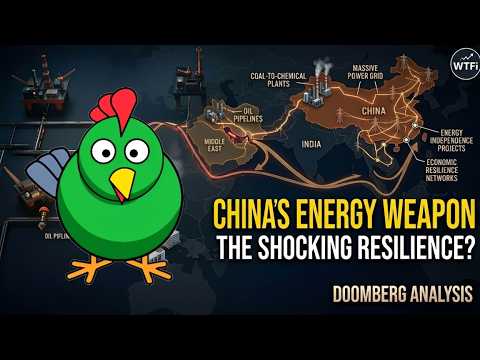
Preview:Doomberg argues the oil market has undergone a structural transformation that almost everyone missed. The March 2026 Iran war spike peaked at $125 — far below the $150-$200 consensus — and he contends this revealed a permanently more flexible hydrocarbon market. China's overinvestment in refining, coal-to-chemicals, and petrochemicals has made ~4M bpd of crude demand fungible with NGLs, coal, and natural gas. US NGL production plugged a critical hole. The Strait of Hormuz is now strategically irrelevant; the only remaining oil risk premium is an Iranian attack on Saudi midstream infrastructure. His core thesis: the long-term real price of all hydrocarbons converges to energy content corrected for logistics, and betting against that is a short on human ingenuity.
Preview:Doomberg argues that the Strait of Hormuz isn't the real oil weapon — Iran's credible threat to destroy Gulf production assets is. He dissects Europe's hypocrisy in buying record Russian LNG from Yamal despite sanctions, frames the US-Iran conflict as dangerously escalatory given depleted Western interceptor inventories, and builds the long-term thesis that cheaper hydrocarbons (natural gas, NGLs) will eventually cap oil's premium through fuel-switching arbitrage. The multi-polar world unfolding means structurally higher costs and less efficiency across supply chains.
Preview:Doomberg argues the Iran war is not escalating in a durable way because bond, oil, and precious-metal moves are signaling a policy reversal rather than a widening conflict. He frames the current Middle East flare-up, the NATO summit, and Ukraine as linked fronts in a broader financial and geopolitical struggle, with the U.S. constrained by air-defense and munitions shortages and the West badly misreading Russian and Iranian behavior.
Preview:Doomberg discusses the AI bubble as a form of "stealth financial repression" where trillion-dollar IPOs generate massive tax receipts and effectively print money. He draws a parallel to the early shale revolution — many companies will fail, but the energy demand from AI is real. The conversation also covers the AI arms race with China (framed as a "race to destruction"), sanctions on large nations backfiring and strengthening them, and the shifting energy narrative away from climate concerns toward an "all of the above" approach (natural gas, coal, nuclear) to power data centers.
Preview:Doomberg argues that fears of an immediate global oil shortage were overstated: the Strait of Hormuz mattered, but the bigger risk was damage to Middle East production infrastructure, not tankers simply stopping. He says market prices, inventories, China’s stockpiling, and flexible energy switching all point to a system that absorbed the shock better than headlines suggested.
Preview:Doomberg argues the Iran war peace deal will be structurally bearish for oil, as China demonstrated the ability to flex 3-4 million barrels/day away from crude — proving hydrocarbon fungibility at the margins. He contends the long-term real price of all commodities trends lower, that geopolitical spikes should be faded, and that gold stands apart as the only monetary metal worth owning. He provides bearish counter-narratives on copper (lower grades are actually bearish, not bullish) and views uranium as a temporary exception due to Sprott's legal cornering of the physical market.
Preview:The speaker argues that silver is structurally weaker than the recent bullish narrative suggests, while gold remains the preferred monetary hedge. His main silver bear case is that silver is now primarily an industrial metal, the key end use is solar, and China’s solar buildout may slow materially in 2026 because its grid is running into dispatchability limits. For gold, he frames price action as heavily linked to Middle East war risk and says he personally holds gold in size. On uranium, he is constructive on the asset’s unique market structure and price insensitivity, but says he does not currently own it.
Preview:Doomberg argues the market is not ignoring obvious risk so much as correctly pricing a new equilibrium: oil has stayed lower than many expected because inventories, non-Middle East supply routes, and especially China’s reduced imports have cushioned the shock. He is skeptical of bullish oil, copper, and silver narratives, sees UAE/OPEC developments as part of a broader end-of-OPEC regime, and remains constructive on gold as the main metal he owns in size.
Preview:Doomberg argues the market has badly underpriced the inflationary effects of the Iran/Hormuz war, but the near-term oil shock has been cushioned by China’s behavior and by coordinated SPR releases. He thinks the world is only seeing a delayed inflation pulse now, with more pressure likely if the conflict reignites, especially through oil, petrochemicals, fertilizers, and related commodities.
Preview:Doomberg argues the market is dangerously complacent about a renewed Iran war. He says oil has held up because China pre-bought crude and cut imports, but if hostilities restart and Iran follows through on threats to hit regional oil/gas infrastructure, the consequence could be a catastrophic supply shock that overwhelms any China-related buffer. He is much less worried about LNG than oil, thinks Europe is the biggest gas loser, sees Russia benefiting only tactically while Ukraine escalation accelerates, and frames the wider conflict as part of a post-2014 breakdown in the post-WWII order.
Preview:Doomberg argues the Strait of Hormuz panic has been overstated by markets, because strategic reserves, rerouting, and especially opaque Chinese stockpiling have cushioned the shock. He is bearish on chasing oil higher from here, more constructive on energy infrastructure and service names than on E&Ps, and skeptical that commodity headlines like helium or sulfur are durable investment trades.
Preview:Duneberg argues the oil market is behaving strangely because the quoted price only makes sense once you specify contract, location, timing, and quality. He says the recent resilience in WTI is not evidence of a simple shortage; it is being shaped by SPR releases, refining bottlenecks, geopolitics, and political intervention that makes it dangerous to bet on oil spikes. He also spends much of the conversation on scenario-building around Iran, Russia, China, and Trump diplomacy.
Preview:Doomberg argues the Iran war has created a near-term oil shock, but that once the conflict ends oil should ultimately collapse as suppressed supply returns, demand destruction bites, and fuel switching accelerates. The later panel from New Harbor is more cautious technically: energy and metals have rallied, but markets remain fragile and dependent on how the war evolves.
Preview:Doomberg argues the Strait of Hormuz crisis is not just a temporary oil shock but evidence that the old, single global energy system is breaking into separate geopolitical blocs. He says the biggest near-term risk is escalating pain and supply disruption for countries that assumed oil, refined products, and reserve assets would always be fungible and accessible.
Preview:Doomberg argues the Iran–Hormuz war has already inflicted major, lasting damage on global energy infrastructure and that markets are underpricing the risk. He says Trump’s latest post may signal a pause in escalation, but the core issue remains unresolved: the Strait of Hormuz can be closed cheaply and reopened only with difficulty, so the conflict could drag on and keep energy, inflation, and geopolitics highly unstable.
Preview:Doomberg argues the Iran war and Strait of Hormuz disruption are a major geopolitical shock, but not necessarily a lasting oil super-spike. His core view is that oil is surprisingly well bid around $95 because the market can offset part of the loss through rerouted flows, higher non-Hormuz production, inventories, strategic reserves, and demand destruction; he still thinks oil should be much lower in 12–18 months.
Preview:Doomberg argues the US strike on Iran has been badly underestimated and could escalate into a broader energy, missile, and political crisis. He frames the immediate market response as a warning sign—higher Brent, a spiking VIX, and falling equities—and repeatedly stresses that the key question is whether Iran can keep firing missiles while the US and allies deplete interceptors and absorb disruption in the Gulf.
Preview:Doomberg argues that the biggest immediate macro risk is not yet reflected in markets: a potential US-Iran escalation that could spill into energy and LNG pricing, though current oil-gas spreads and European LNG prices do not show panic. He also says the recent silver collapse was a classic speculative blowoff, while gold remains the key monetary metal and, in his view, is likely to keep gaining strategic importance as a reserve asset and possible tool of fiat debasement management. He is sharply negative on proposals to steer retirement money into private equity, calling it a late-stage attempt to dump bad assets on American retirees.
Preview:Doomberg argues that geopolitics is increasingly energy-driven, with Venezuela, Iran, Canada/China, and the EU all framed through oil, power, and industrial capacity. The core view is bearish on oil over the longer run but tactically alert to war-driven spikes, bullish on gold as a reserve asset in a fragmented world, and skeptical that current Western political institutions can course-correct.
Preview:Maggie Lake interviews Doomberg about the explosive move in gold, silver, natural gas, Europe, geopolitics, and AI. His core message is that the gold rally reflects deep uncertainty and possible regime stress in currencies/fiscal policy, while silver’s move looks more speculative and meme-like; he also argues that natural gas’s spike is mostly weather-driven and likely to mean-revert, Europe remains structurally weak on energy and industrial power, and AI is both an enormous bubble and an enormous technological shift.
Preview:Doomberg argues that energy is the organizing principle behind wealth, geopolitics, and even the current market move in precious metals. He connects thermal comfort and standard of living to how much energy a person, household, or nation can waste, then extends that framework to Ukraine, NATO/EU weakness, dollar debasement, and the surge in gold and silver.
Preview:Doomberg argues the Venezuela operation is primarily about oil, with secondary motives around drugs, ego, and rare earths, and he frames it as a major escalation that weakens international law, raises the risk of broader great-power confrontation, and could destabilize the peace process in Ukraine. He is skeptical of the humanitarian rationale, thinks the tactical market reaction in gold has been surprisingly muted, and sees the move as strategically bearish for long-run oil prices if the US can actually control and develop Venezuelan resources.
Preview:Doomberg argues the Venezuela strike is an act of war in form, but likely part of a larger pressure campaign whose real purpose is unclear. He says the oil market is too well supplied to price in a major Caribbean war, and he extends that broader framework to Ukraine, Iran, Iraq, and nuclear policy: the world has plenty of energy, the U.S. is shifting attention to the Western Hemisphere, and the real constraint is political, not resource scarcity.
Preview:Doomberg argues that global hydrocarbon markets are well supplied, oil is grinding lower in real terms, and natural gas is the most important near-term marginal driver because AI/data-center demand, winter weather, and regional bottlenecks are starting to tighten gas while leaving crude relatively soft. He also frames energy, geopolitics, and finance as increasingly linked through physical constraints and price spreads, with the US benefitting from abundant gas and flexible shale output.
Preview:Doomberg argues the big macro setup is still driven by energy geopolitics, with a possible US-Russia deal over Ukraine being the most important near-term catalyst. He thinks a ceasefire or sanctions relief would likely push oil and gas lower, while AI-driven gas demand, China’s coal-heavy system, and Western Hemisphere supply growth reinforce his view that commodity shortages eventually become gluts.
Preview:Doomberg joins David Lin to discuss escalating nuclear risks following Russia's test of the Skyfall cruise missile, the expiration of the New START treaty, and Trump's response signaling resumed US nuclear testing. The conversation covers the stalled Ukraine war, China's thorium reactor advancements (which Doomberg downplays), US energy strategy favoring natural gas and nuclear, the data center-driven electricity demand problem, Venezuela as a potential US target for its oil resources, and a structurally bearish outlook for oil prices driven by oversupply and co-producer economics.
Preview:Doomberg joins Liberty and Finance for a live-stream discussion during a sharp gold/silver selloff. He frames the drop as a healthy shakeout after an "Icarian" run, reveals he trimmed ~20% of his gold position on Friday, and plans to re-enter around $4,000. The bulk of the conversation shifts to geopolitics: he argues China has "total escalation dominance" in the trade war (especially via rare earths), that the US will be forced to retreat, and that this represents a battle in "World War III" — a bifurcation of the global financial system away from USD hegemony. On energy, he's firmly bearish: oil is oversupplied, commodities are poor investments vs. gold. The core thesis is that gold replaces US Treasuries as a neutral reserve asset, making pullbacks buying opportunities for savers with long horizons.
Preview:Doomberg argues that last week’s China move on rare earth exports was a major escalation in the US-China trade war and a sign China has real escalation dominance. He links the surge in gold and the relative weakness of oil to a broader de-dollarization / geopolitical reordering, with gold acting as a neutral reserve asset and oil still structurally abundant.
Preview:Kai hosts Doomberg for a wide-ranging discussion centered on the Middle East ceasefire, oil, gold, Europe’s energy decline, and the China–US trade confrontation. Doomberg’s core view is that Israel needed the ceasefire, Iran effectively “won” the 12-day war in strategic terms, Europe is sliding into irrelevance because it lacks energy and heavy industry, and China now has major leverage through rare earths and supply chains.
Preview:Doomberg argues that cheap, abundant energy is still the base case, but the bigger story is gold: he sees gold as re-emerging as a neutral reserve asset, helped by BRICS demand, possible U.S. gold revaluation, and broad debasement of the dollar. He is broadly bearish on oil and uranium as direct commodity bets, prefers volume-linked service/enabling businesses, and thinks refinery/pipeline fragility in places like California can create localized crises even if the wider supply picture remains loose.
Preview:Doomberg argues that energy geopolitics is shifting fast: he expects a kinetic U.S. conflict with Venezuela, sees Russia’s gas deal with China as a major blow to Europe, thinks U.S. shale is not in secular decline, and says solar-heavy grids and ESG politics are colliding with physical realities. He is bullish on gold as a neutral reserve asset and thinks U.S. nuclear fuel bottlenecks are solvable, while treating silver as a secondary speculation.
Preview:Doomberg argues the biggest geopolitical story is a potential U.S. pivot back to the Western Hemisphere, with Venezuela as the near-term focal point and Brazil as the bigger unresolved issue. He frames the conflict less as a drug-war story and more as a fight over oil, gas, and sphere-of-influence control, while also saying Europe is politically and financially fraying, Ukraine is a military rather than diplomatic problem, and gold remains a sensible hedge if major backroom deals are being cut.
Preview:Doomberg argues the world is splitting into a Western dollar bloc and a BRICS/global-south bloc, and that recent events in China, Russia, India, Norway, Ukraine, and Washington all reinforce that bifurcation. He is broadly bearish on Western leverage via tariffs/sanctions, thinks India is drifting toward Russia/China, expects Ukraine to be settled militarily, and sees the Fed becoming less independent as Trump pushes for easier policy.
Preview:Doomberg argues the Alaska Trump–Putin summit is the key event because the Ukraine war is likely to end militarily, not diplomatically, and any deal acceptable to Russia will probably be rejected by Ukraine and Europe. He extends that framework to Iran and Europe, saying energy constraints, missile-stock depletion, and Europe’s industrial weakness shape the broader geopolitical outcome.
Preview:Steve Barton interviews Doomberg about energy markets, geopolitics, and gold. Doomberg argues energy is broadly well supplied absent geopolitical shocks, that politics usually matters more than geology in resource development, and that many current market moves should be read through supply/demand and state-capacity lenses rather than crisis narratives.
Preview:Doomberg discusses China's strategic dominance in rare earth processing, arguing China deliberately degraded its environment to gain monopoly positions. He praises the Trump administration's MP Materials deal as a smart, taxpayer-friendly intervention. The conversation expands to China's coal-based industrial supremacy, Russia's formidable nuclear and Arctic capabilities, and the 50-day Ukraine ultimatum as a bluff. On tariffs, Doomberg sees Trump's 15% baseline as an actual accomplishment despite being unconstitutional. The interview closes with a tribute to Hulk Hogan, whose death was announced during recording.
Preview:Doomberg argues the Ukraine war is effectively unwinnable for the West because the U.S. and NATO are short on air-defense munitions, while Russia (and its partners) can outproduce weapons over time. He says Trump’s 50-day ultimatum and secondary-sanctions threat are political theater that won’t change the military outcome, but will likely harden Russia, China, India, and the Global South against the U.S. financial system.
Preview:Doomberg argues that the world is in a "global war for US dollar supremacy," framing the Ukraine war and the Israel-Iran conflict as phases of a broader bifurcation between the Western alliance and BRICS nations. He contends that the 12-day Israel-Iran war will accelerate nuclear proliferation, that the ceasefire was forced by Israel running out of air-defense missiles, and that the oil market efficiently priced in the performative nature of the conflict. His core investment thesis: all roads lead to gold, which he sees as the only neutral reserve asset in an increasingly divided world. He pegs oil's equilibrium price at ~$55/bbl based on the LNG-to-oil parity relationship.
Preview:Doomberg argues the Iran–Israel escalation is being framed as limited or theatrical by markets, but the real risk is a protracted missile war that could expose Western missile shortages and shock energy flows if it widens. His core tactical warning is to watch Brent vs. WTI and LNG/oil dislocations for signs of a real supply crisis, while his longer-run view is that any spike would eventually trigger workarounds, export controls, and new infrastructure rather than permanently higher prices.
Preview:Doomberg argues the Iran-Israel-U.S. escalation is best understood as a limited but dangerous phase of a much broader great-power conflict, while still saying the market’s base case is de-escalation. He thinks oil is pricing in that the Strait of Hormuz will stay open, but warns that a closure would create extreme regional dislocations, especially for Europe, China, Qatar LNG flows, and U.S./global logistics.
Preview:Doomberg argues the Israel-Iran war is a dangerous escalation with major energy-market implications, especially if Iran can disrupt the Strait of Hormuz. He says the near-term market is pricing some oil risk but not a full crisis, while gold is more about the long-term erosion of the dollar-based system than panic buying today.
Preview:Doomberg argues the Iran–Israel war is a dangerous, potentially long conflict that markets are not fully pricing in, but he is also careful not to claim certainty about near-term escalation. He says the subdued moves in oil, gold, and equities suggest the market does not believe a full regional blow-up is imminent, even as military assets and rhetoric point to deeper US involvement.
Preview:Doomberg revisits his prior (wrong) call that Israel wouldn't strike Iran, dissecting which of his four axioms broke. He sees a real risk this becomes a war of attrition that Israel may not win conventionally, and warns oil markets at $71-72 are underpricing tail risks. Beyond geopolitics, he delivers his commodity framework: all real prices trend down over time, super-spikes are to be faded not chased, and energy dominance is bearish for producers. The conversation also covers Europe's energy vulnerability, Canada's political theater, and AI's grid problem.
Preview:Doomberg argues the Israel-Iran war is a "catastrophic mistake" that Israel cannot win, having failed to achieve a knockout blow and now entering a war of attrition against a larger, Russia/China-backed Iran with functioning hypersonic missile capability. Markets are not pricing escalation — oil is down on Putin-Trump peace signals and OPEC supply. His contrarian view: fading oil spikes is safer than chasing them, and Trump's presidency is at risk if the war drags on.
Preview:Doomberg argues the world is at an extremely dangerous geopolitical inflection point, with the Ukraine-Russia conflict having escalated into a hot war that could spiral toward nuclear confrontation. He says the West is dramatically underreacting to the attack on Russia’s strategic nuclear bombers, that Trump now “owns” the war politically, and that the only durable off-ramp is direct negotiation with Russia over core security concerns. Separately, he sees civilian nuclear energy as gaining broad momentum and gold as benefiting mainly from sanctions-driven de-dollarization rather than from a near-term nuclear-war premium.
Preview:Doomberg argues that the Trump administration is juggling multiple geopolitical and market objectives at once: avoiding war with Iran, trying to end the Russia-Ukraine war on favorable terms, and using trade deals and asset prices to support the Treasury refinancing problem. He is broadly isolationist, bullish on Trump’s ability to push markets higher in the near term, and skeptical that the U.S. has the leverage it thinks it has against China.
Preview:Doomberg argues the US is already in a recession, largely by Trump's design, but that Trump underestimated China's leverage in the trade war and faces internal resistance from the Fed and "deep state." Gold's rapid surge toward $3,500 signals major structural change — possibly a monetary realignment involving gold revaluation. Energy markets are well-supplied and cheap in real terms. His advice: stick to a plan, save in real assets (especially gold), and don't panic-trade.
Preview:Doomberg argues that the U.S.-China trade war is being misread, with China better positioned to absorb pain and retaliate because it has spent years diversifying inputs and controls key supply chains. He also argues oil is headed lower, with $50–$55 WTI as a base case, because cheap natural gas and NGLs are displacing crude demand and because Trump, OPEC, Russia, and Saudi Arabia all have incentives that point toward cheaper energy.
Preview:Danny of CapitalCosm interviews Doomberg about Trump’s tariffs, the market selloff, oil, gold, copper, Europe/Russia/Ukraine, China/Taiwan, and Iran. Doomberg’s core view is that Trump is doing exactly what he said he would do, the tariff shock is likely recessionary, oil is structurally headed lower, and the U.S. should avoid new wars and focus on the Western Hemisphere.
Preview:Doomberg argues Trump is intentionally engineering a recession to reset the economy, renegotiate global trade, and position the US for a post-cleanup boom. He views the Ukraine war as already lost for NATO, sees Trump's aggressive tariff and geopolitical tactics as rational dealmaking toward a multipolar world, and believes gold remains a long-term savings vehicle regardless of short-term price action. On markets: recession is likely, bonds should do well, stocks face correction, and even gold may dip in a panic — but the long-term gold thesis remains intact.
Others tracked across the same asset focus or market thesis.
Unlock every transcript this speaker appears in, compare them with your other followed voices, and ask the agent for the bull, bear, and consensus read in one workspace.
Type a question. Create a free agent to send it and keep the answer linked to this speaker.
Your question is preserved across sign-in.
Free. No card. Takes about a minute.