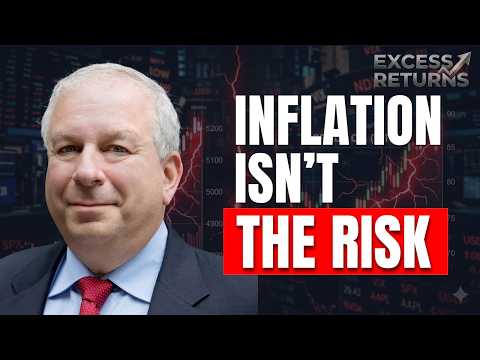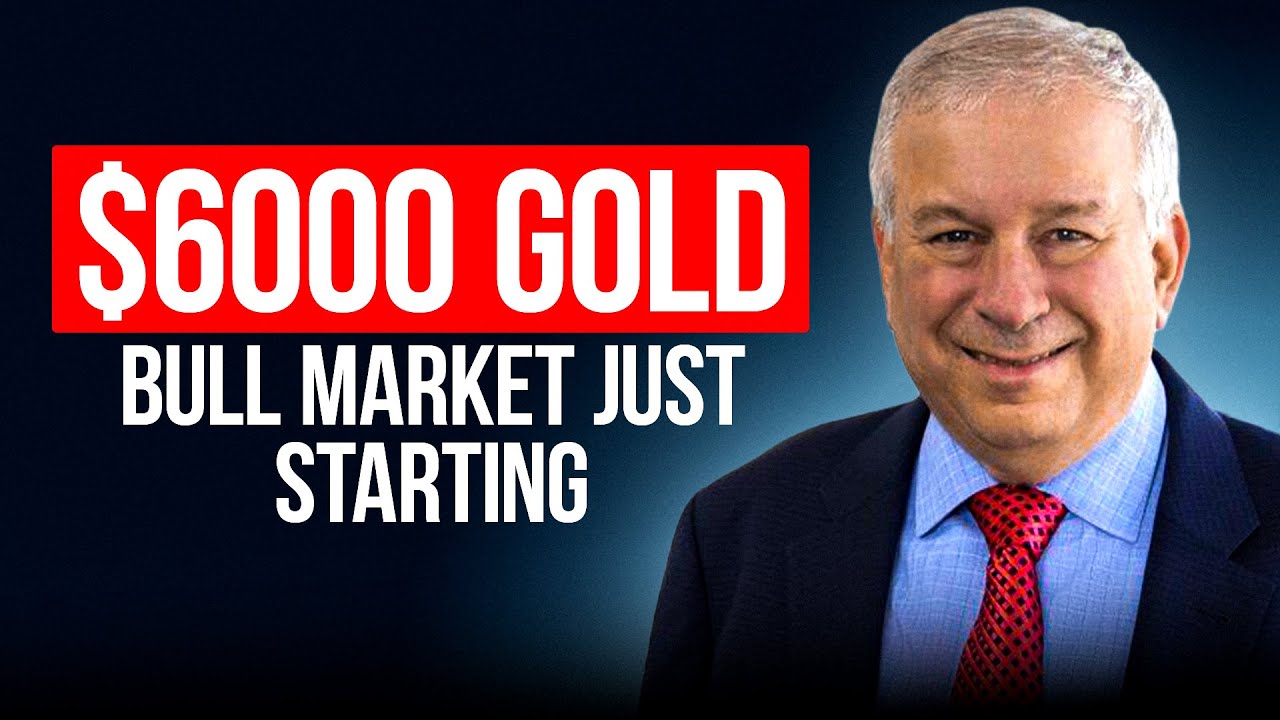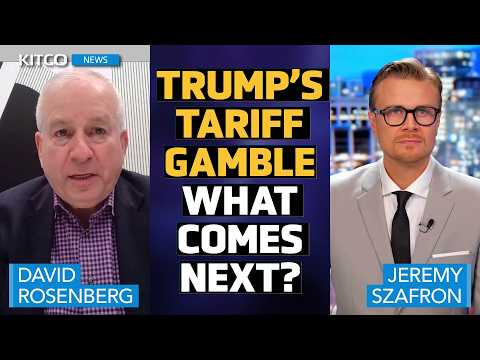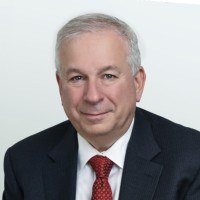
Rosenberg’s recurring economic worldview is skeptical of complacent market pricing and centered on leverage, liquidity, and structural imbalances.
📈 See how David Rosenberg's thesis changed over time →Preview how this speaker shows up across market transcripts. Unlock the full archive, AI chat, and the version personalized to your watchlist, followed channels, and favorite speakers.
David Rosenberg is a macro economist and market strategist, currently president of Rosenberg Research, with a long sell-side background and a reputation built on cycle awareness and tail-risk identification. Across the supplied interviews he emphasizes scenario thinking, probability distributions, and having a plan B rather than anchoring on a single forecast. He repeatedly frames his role as helping investors avoid trouble, identify when consensus is wrong, and judge where the business and market cycle sits. He is strongly identified with calls around housing, recession risk, and defensive positioning, but he resists the simple “perma-bear” label and says he adapts to evidence.
Rosenberg’s recurring economic worldview is skeptical of complacent market pricing and centered on leverage, liquidity, and structural imbalances. He argues that asset prices increasingly drive the economy, especially through the equity wealth effect, and that headline GDP can mask a weaker underlying economy. He is consistently wary of AI enthusiasm, saying the disruption may be real and major, but the market’s expectations and circular financing may be the bigger bubble than the technology itself. On inflation and rates, he tends to expect more persistence than markets assume and sees the Fed as constrained by debt and financial stability risks. He is broadly constructive on hard assets, especially gold and gold miners, viewing the gold bull market as secular and still mid-cycle because central banks continue diversifying away from the dollar; he also favors a barbell or hard-asset-heavy approach as protection against a future reckoning. Overall, he sees current markets as fragile, valuation-stretched, and vulnerable to a sharper downturn than most investors expect.
Every analyzed appearance we have for this speaker, newest first. Open any transcript preview to read the underlying transcript.
Preview:A week when gold sliced below $4,000 and BofA pulled its $6,000 target, Kitco's Jeremy Szafron assembles four expert voices — former Fed insider Danielle DiMartino Booth, fund manager Lawrence Lepard, mining financier Frank Giustra, and economist David Rosenberg — who all argue the selloff is not a top but an entry point. The common thesis: a hawkish Fed under new Chair Kevin Warsh risks breaking private credit markets, the fiat experiment is ending, central banks are still buying, and China's banks are actively making it easier for retail savers to buy the dip.
Preview:David Rosenberg argues the gold selloff is still a correction inside a secular bull market driven by central-bank reserve diversification away from dollars and into bullion. He also thinks the U.S. economy is weaker than it looks because equity wealth, not income growth, is propping up spending, and he expects the Fed’s next move to be a cut rather than a hike.
Preview:David Rosenberg argues the market is overreacting to the Iran memorandum and that the real macro story is still sticky real rates, not a new inflation spiral. He says the Fed, ECB, and Bank of Canada are misreading a supply shock as a demand problem, while the U.S. and Canadian labor/consumer data are softer than headline numbers suggest.
Preview:A macro-and-portfolio interview arguing that the next bear market is likely to be harsher than prior ones because of high valuations, weak real wage growth, AI-driven labor displacement, and worsening social/political tensions. The guest favors bonds, gold, and hard assets over U.S. equities, while warning that debt, deficits, and inequality could drive a political reckoning.
Preview:Steven Feldman interviews David Rosenberg about whether investors need a bear market to reset today’s complacent market. Rosenberg argues that sentiment, passive flows, concentration, and AI-driven capex have created a fragile setup, while underlying income growth and broader business activity look much weaker than headline GDP suggests.
Preview:A weekly Excess Returns recap centered on interviews with David Rosenberg, Chris Bloomstran, Travis Apprentice, and Cameron Dawson about valuation, disruption, passive flows, AI capex, and how concentrated the market and economy have become.
Preview:David Rosenberg argues that U.S. equities are in a valuation mania, with investor behavior—not technology itself—forming the bubble. He says the economy is being held up by AI-related capex, equity wealth effects, and fiscal support, but sees weak underlying labor conditions, fading inflation pressures, and lower forward return prospects for U.S. stocks.
Preview:David Rosenberg argues the recent pullback in gold and silver is mostly a technical/fund-flow event tied to margin calls and dollar strength, not a loss of the secular bull case. He stays constructive on gold, gold miners, select short-duration bonds, uranium, China, and defense/energy infrastructure, while flagging oil, geopolitical risk, private credit, and AI-driven labor disruption as major macro concerns.
Preview:The speaker argues gold’s recent selloff is mainly a liquidity and positioning event rather than a broken long-term bull market, and expects a pullback toward $3,500-$4,000 before buying back in size. He favors cash/T-bills and the front end of developed-market yield curves while the war, dollar strength, real-rate pressure, and margin calls are still dominating risk assets.
Preview:David Rosenberg argues the market is in a global bond-yield reset driven by higher inflation expectations, fiscal premia, and war risk—not just U.S. headlines. His near-term focus is the Iran/Strait of Hormuz conflict, which he thinks is more likely to be resolved by reopening the strait than by regime change, with oil, yields, and risk assets remaining volatile until then.
Preview:Maggie Lake interviews David Rosenberg about the market reaction to escalating U.S.-Iran conflict, and Rosenberg argues the day’s rally was mostly a short-covering response to Trump’s sudden softer rhetoric rather than a durable change in fundamentals. He says the real market focus is whether the Strait of Hormuz fully reopens; until then, oil remains the key risk, with few true safe havens besides some energy exposure and front-end bond curves.
Preview:David Rosenberg argues the U.S. economy is more fragile than the headline GDP numbers suggest because consumer spending is being propped up by a shrinking savings rate, equity wealth effects, and temporary fiscal boosts—not durable income growth. He is skeptical that Trump-era policies are the main driver of growth, sees the second half of 2026 as weaker, and prefers a defensive mix tilted to bonds, select sectors, and non-U.S. equities while remaining modestly exposed to gold.
Preview:David Rosenberg argues that gold remains in a secular bull market, but silver is extremely overbought and could correct sharply in the near term. He also says US equities are richly valued versus long-duration Treasuries, making the stock market look bubble-like on relative measures, while he prefers Asian equities, European aerospace/defense, energy infrastructure, India, and some EM local-currency bonds.
Preview:Panelists argue the U.S. economy is much weaker than headline GDP suggests, with spending distorted by equity gains, lower imports, and K-shaped consumer behavior. They expect easier Fed policy, a weaker dollar, and a favorable backdrop for gold and other hard assets, while disagreeing on how much of the administration’s fiscal stimulus and tax refunds will actually matter.
Preview:The video argues that gold and especially silver have become extremely overbought and are due for a sharp correction, even if the longer-term bull market remains intact. The speakers recommend taking profits now, holding cash in a currency instead, and specifically favor the Japanese yen, with the Australian dollar as a secondary idea.
Preview:Two market commentators argue that gold and especially silver may be near an overextended near-term peak, even while preserving a longer secular bull case. One speaker thinks gold can still trend higher into a euphoric blow-off, but both emphasize taking some profits, expecting a sizable correction, and preserving capital rather than trying to catch the exact top.
Preview:David Rosenberg argues that gold and silver are still in a powerful secular bull market, but that the current move has become too fast and too vertical to chase tactically. He prefers waiting for a pullback, while staying structurally constructive on gold, silver, select producers, and other non-U.S.-equity hedges.
Preview:David Rosenberg argues the headline 4.3% Q3 GDP print was distorted by falling imports and a big drop in the savings rate, and that underlying growth was closer to below 1%. His core macro view is bearish: he thinks the labor market is weakening, recession risk is already rising, and Wall Street is not priced for that outcome. Despite that, he is constructive on a defensive, thematic basket for 2026 — hard assets, utilities, uranium, gold/miners, aerospace/defense, Asian equities, and bonds — rather than broad index exposure.
Preview:David Rosenberg argues that the market’s apparent strength is increasingly dependent on the S&P 500 and the wealth effect at the top of the income distribution, while underlying labor income, small business activity, and credit conditions are weakening. He thinks 2026 could bring a recession or at least a sharp market wobble if equity gains stall, because valuations, sentiment, and positioning are already extreme. He remains constructive on gold, silver, gold miners, and selected energy infrastructure/natural gas plays, while warning against consumer discretionary and broad equity complacency.
Preview:David Rosenberg argues that 2026 could bring a serious stock-market correction or bear market because valuations are stretched, breadth is still weak beneath the surface, and the economy is increasingly dependent on equity wealth effects. He is not broadly bearish on every asset: he likes parts of the market such as consumer staples, energy, some defensive sectors, bonds, Asia, and long/short relative-value trades.
Preview:David Rosenberg argues the market is pricing in a “dead” business cycle, but the real economy is highly uneven: AI and the top 10% are carrying growth while much of the labor market, housing, and lower/middle-income consumer demand remain weak. He thinks recession risk is being ignored, Fed cuts are not yet meaningfully easing the parts of the curve that matter, and the setup favors bonds, select defensives, and non-U.S. opportunities over broad U.S. index exposure.
Preview:David Rosenberg argues the market is entering a post-bubble phase: tech and AI valuations are stretched, volatility is signaling a top, and capital should rotate toward gold, silver, miners, bonds, and relative-value trades rather than passive index exposure. He is also bullish on lower rates and a weaker dollar, but warns that politically driven Fed cuts, tariffs, and a steepening yield curve could keep inflation and long-end yields elevated.
Preview:David Rosenberg argues the US economy is already in widespread trouble beneath headline GDP — real personal disposable income is negative, the labor market is contracting (not "gradually cooling"), and consumer spending is dangerously propped up by an equity wealth effect from the AI boom. He sees the S&P 500 at bubble valuations (CAPE ~40), credit spreads as "insanely priced," and believes the Fed will be forced to cut more than markets expect as unemployment rises toward 5%. He advocates hedges, not wholesale selling, and favors bonds, healthcare, utilities, and Asian equities over broad US cyclical exposure.
Preview:David Rosenberg argues the U.S. economy is flatter and weaker than market prices imply, with AI capex masking broad stagnation. He thinks the stock market is in a price bubble, valuations are at extreme historical levels, and investors should prioritize liquidity, defensiveness, and risk management rather than chase concentrated momentum.
Preview:Ed Yardeni argues the bull market can continue because the economy, earnings, credit, and productivity remain resilient, while David Rosenberg argues the market is priced for too much perfection and is masking weakness in labor, income, and housing. The debate centers on whether AI and fiscal support justify high valuations or whether current price levels are a classic late-cycle bubble.
Preview:Jeremy Saffron interviews economist David Rosenberg about weakening U.S. growth, cooling labor markets, housing deflation risks, Fed policy, and the surge in gold. Rosenberg argues the economy is being held up mainly by AI/data-center spending while the rest of the economy, especially consumer spending and housing, is weak; he expects the Fed to cut in September and continue toward neutral. He also says Canada’s real problem is tax uncompetitiveness, not tariffs, and that gold’s breakout reflects Fed-independence risk, a weaker dollar, and central-bank buying.
Preview:David Rosenberg argues the market has priced away many immediate tail risks, but that this is masking a recession he thinks is already underway. He sees policy uncertainty, weak housing, tight Fed policy, a softening labor market, and a falling dollar as warnings that the economy is weaker than the S&P 500 suggests.
Preview:David Rosenberg argues the U.S. is already slipping into recession, with the Beige Book, rising continuing claims, weakening hiring, and negative/soft real income data pointing to a labor-market crack that Wall Street is still underpricing. He pairs that with a bullish call on long-duration Treasuries, gold, silver, platinum, and aerospace/defense, while warning that tariffs, policy uncertainty, and fading fiscal stimulus are likely to hit spending and profits more than the market expects.
Preview:David Rosenberg argues a recession is already here — visible in economically sensitive stock sectors, not in the AI-distorted S&P 500. He warns tariffs are an inflationary quasi-sales tax that will crush real wages for the most vulnerable, while the US dollar's unusual decline signals foreign capital flight. His portfolio prescription: derisk aggressively, hold cash (4.4% yield), own bond proxies (utilities, staples, tobacco), aerospace/defense, gold and silver miners, European equities, and AI as a secular long-term holding.
Preview:David Rosenberg, founder of Rosenberg Research, makes a cyclical bullish case for long-end US Treasuries, predicated on his view that a recession is imminent. He argues the recent bond selloff is driven by term premium and fiscal uncertainty — not growth or inflation expectations — and that this exogenous rate shock will further weaken an already-soft economy. He expects recession signs to materialize by Q3, driving yields lower and producing double-digit returns in 10s and 30s over 12 months. He sees the S&P 500 as overvalued with a zero equity risk premium, prefers rest-of-world equities, and calls the dollar's weakness a fundamental bear market. His call hinges critically on recession; without one, he acknowledges the bond thesis fails.
Preview:David Rosenberg argues the market is underestimating how much damage the trade war and policy uncertainty can still do, even after the Geneva tariff pause. He thinks the labor market is weakening, recession odds are rising, the Fed will eventually have to cut, and defensive assets like Treasuries, gold, and low-beta stocks look better than cyclicals right now.
Preview:David Rosenberg argues that the dominant market risk is rising policy uncertainty—especially Trump tariffs, fiscal instability, and their knock-on effects on growth, inflation, and risk assets. He says tariffs will likely cause a near-term inflation shock but a bigger and longer-lasting hit to real incomes, spending, and employment, while the Fed is likely to wait through the noise before cutting later in the year.
Preview:David Rosenberg argues the market is extremely expensive, increasingly momentum-driven, and vulnerable because almost everyone is already all-in. He says Trump’s tariff threats are largely bluster, gold is in a secular bull market, and investors should favor cash, Treasuries, defensives, select foreign markets, and gold miners over U.S. growth stocks.
Others tracked across the same asset focus or market thesis.
Unlock every transcript this speaker appears in, compare them with your other followed voices, and ask the agent for the bull, bear, and consensus read in one workspace.
Type a question. Create a free agent to send it and keep the answer linked to this speaker.
Your question is preserved across sign-in.
Free. No card. Takes about a minute.