bullish on silver and precious-metals/resource stocks
Preview how this speaker shows up across market transcripts. Unlock the full archive, AI chat, and the version personalized to your watchlist, followed channels, and favorite speakers.
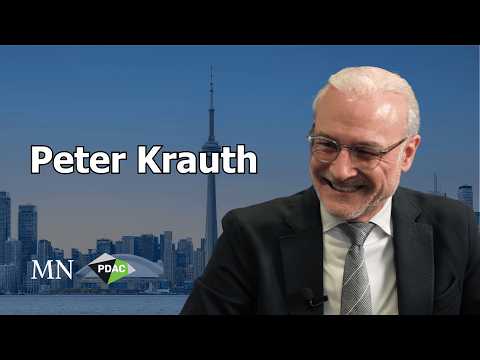
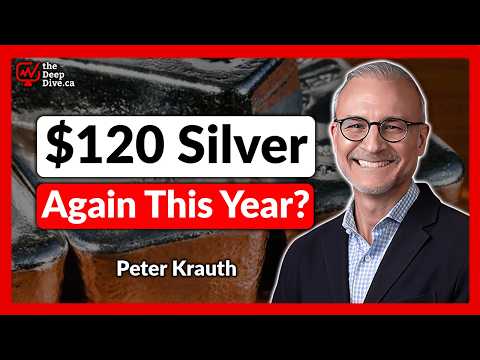
Peter Krauth is a long-time precious-metals commentator and silver specialist: author of The Great Silver Bull, publisher of Silver Stock Investor / Silver Advisor, and a frequent media guest and conference speaker. In the supplied material he comes across as an experienced silver-market analyst who focuses on cycle structure, supply/demand balances, investor positioning, and miner selection. He repeatedly frames silver as a market he has studied for decades, and he presents himself as someone who combines macro commentary with sector-specific research and equity selection.
Krauth’s recurring economic worldview is broadly bullish on silver and constructive on precious metals as long-term stores of purchasing power. He repeatedly argues that silver is in a multi-year secular bull market that has moved from a quiet ‘stealth’ phase into broader awareness, with volatility and sharp pullbacks functioning as bear traps rather than thesis breaks. His framework emphasizes structural supply deficits, strong industrial demand, limited recycling, and the idea that higher prices may not quickly solve shortages because much silver is a byproduct metal. He also ties the outlook to inflation, geopolitics, oil shocks, and shifting demand from solar, electronics, and AI/data centers, while seeing silver equities as potentially earlier and more leveraged opportunities than the metal itself. He is generally skeptical of the idea that the cycle is already mature; even after dramatic run-ups, he continues to describe the move as early and potentially multi-year.
Every analyzed appearance we have for this speaker, newest first. Open any transcript preview to read the underlying transcript.
Preview:Peter Krauth argues the silver bull market is still early, but the path higher will be volatile and likely stretched out over years rather than months. He thinks triple digits could arrive by late 2026 or next year, but his ultimate target remains around $300 silver, with the caveat that it may take four to six years and could overshoot higher later.
Preview:Peter Krauth argues silver’s sharp pullback is a bear trap, not the end of the bull market. He sees a strong base forming in the $70-$80 range, expects inflation to reaccelerate into the second half of the year, and says industrial, investment, and supply-demand forces still favor higher silver prices over the next several years.
Preview:Peter Krauth argues that silver’s combination of industrial demand and shrinking investable supply makes it unusually attractive, with AI/data-center buildout and solar power both adding to demand. He says the more compelling trade now is the miners and broader silver equities, not just the metal, though he also stresses buying in tranches because volatility remains high and a lot of the move has already happened.
Preview:Peter Krauth argues the silver bull market is not over; the current pullback is a volatile consolidation within an early-cycle advance. He says the Iran conflict has created near-term sideways-to-weaker price action in silver and gold, but he views any further weakness as a buying opportunity, especially because central bank gold buying, supply-chain reshoring, and industrial demand for solar and EVs are reinforcing the broader precious-metals thesis.
Preview:This interview argues that gold and silver are in the early-to-middle stages of a major bull market driven by monetary debasement, central-bank buying, and a tightening silver supply. Don Durrett and Peter Krauth are especially bullish on silver’s long-run upside, with repeated discussion of $300 silver as a plausible target in a strong re-rating, while gold is framed as the leader that could move toward $7,000–$10,000 and pull silver and miners much higher.
Preview:Peter Krauth argues the Iran conflict could trigger an initial safe-haven bid in gold and silver, but that any spike would likely fade as higher energy costs, a stronger dollar, and liquidation pressures reassert themselves. His bigger thesis is that silver remains in a structural bull market: supply is tight, inventories have been drawn down, industrial uses remain durable, and inflationary war spending plus deglobalization should lift prices again after the current consolidation.
Preview:Peter Krauth argues that silver's recent 40%+ correction from $120 to below $70 is historically consistent with prior bull markets (2001-2011 averaged ~30% corrections) and likely represents a classic "bear trap" within the awareness phase of the bull cycle. He believes the worst may be over but sideways consolidation could persist for 1-2 more months. The core thesis: a structural supply deficit (5 years running, projected for 5 more) driven by industrial demand growing from 50% to 67% of the market, combined with depleted inventories and inelastic industrial consumption, sets up a potential supply crisis where delivery failures could "blow the top off" silver. He sees silver miners as poised to outperform silver itself after underperforming 2:1 over five years.
Preview:Peter Krauth argues silver has likely already absorbed its sharp post-spike correction and is now in the broader awareness phase of a bull market, not a blow-off top. He says tight physical supply, structural deficits, and improving miner fundamentals still point to higher medium- to long-term prices, while near-term volatility may continue.
Preview:Peter Krauth argues silver’s recent volatility is a bear trap inside a still-intact bull market, with the next major leg likely to come from institutional buying of miners rather than just the metal. He says industrial, geopolitical, and especially East/West pricing shifts could tighten the market further, while miners remain relatively cheap versus silver’s move.
Preview:Peter Krauth, author of The Great Silver Bull and editor of Silver Stock Investor, argues that while silver's run from $50 to $100 in three months is overdue for a 20-30% correction, the medium-to-long-term thesis remains intact. He sees the next big opportunity shifting from the metal itself to silver miners, whose valuations haven't kept pace with the silver price. As miners report profits at $80-$100 silver, he expects a dramatic re-rating over the next 2-3 years. He frames the current silver bull as being in roughly the "third inning" with 5-10 years remaining.
Preview:Peter Krauth argues that heavy sovereign debt refinancing, a steeper yield curve, and the likely need for yield-curve control are setting up a durable bull market in precious metals. He is especially bullish on silver, but says the bigger investment story is the broader rotation into gold and silver as confidence in fiat currencies weakens and more institutional money finally starts to enter the space.
Preview:Peter Krauth argues silver is still in an early-to-middle bull phase even after a sharp correction from roughly $120 to the high-$60s, and he thinks the recent pullback was a healthy bear trap rather than a top. He remains constructive on silver itself, but sees the bigger opportunity now shifting to silver miners, especially undervalued juniors and midcaps, while warning that investors in the West may be losing pricing power as Asian physical markets and delivery-based exchanges gain influence.
Preview:A Vancouver conference panel argues silver is in a rare revaluation phase: supply deficits, strategic/national-defense demand, and renewed retail/investment buying are pushing the metal into a parabolic move. The speakers agree the move is volatile and likely unsustainable in a straight line, but they think the fundamental backdrop is strong enough that pullbacks should be bought rather than feared.
Preview:Silver is in the final phase of a secular bull market driven by physical scarcity, massive Chinese speculative buying, and structural industrial deficits. After spiking to ~$120 in late January 2026, a 31% single-day crash ("Black Friday") reset the market into a $74–$85 consolidation range. David Morgan and Peter Krauth argue the paper paradigm temporarily regained control but physical demand fundamentals remain intact. Key risks include a potential exchange failure to deliver and ongoing 10–20% annual supply deficits. The speakers expect a new higher trading range to form, followed by another leg up, with the structural bull market having roughly 1.5 years remaining by historical analog.
Preview:Peter Krauth argues silver remains in a structurally tight market despite the recent blowoff and pullback, and he expects higher prices later this year. His key setup is a persistent physical deficit, strong industrial demand, rising ETF flows, and the possibility of delivery stress or exchange bottlenecks; he also thinks the next major opportunity may be silver miners rather than the metal alone.
Preview:Peter Krauth argues silver remains structurally bullish despite its big run, because fundamentals have not changed, supply is inelastic, and deficits persist. He says volatility will likely stay high for months, but sees pullbacks into the $70s-$80s as buyable and thinks $100+ silver could eventually become normal rather than a top.
Preview:Peter Krauth argues silver’s violent pullback has not broken the bullish thesis; in his view the market remains structurally tight because macro conditions, industrial demand, and limited mine supply all still point higher. He expects continued volatility in a broad 70–85 range near term, but still sees higher prices later, with $100 likely to be revisited and potentially become a floor.
Preview:A bullish, single-speaker pitch on silver argues that silver has already re-rated but is still cheap versus stocks, gold, and global financial assets, and that the next opportunity is now shifting from the metal itself to silver miners. The speaker leans on price performance, ETF flows, exchange inventories, lease rates, and gold/silver ratio mean reversion to argue that the silver market is structurally tight and that mining equities have not yet caught up.
Preview:Peter Krauth, author of The Great Silver Bull, joins host David on The Silver Market to argue that silver's current rally above $50—and its rapid move past $100—is fundamentally different from prior peaks in 1980 and 2011. Unlike those sentiment-driven blowoffs, today's run is rooted in multi-year structural supply deficits (mining peaked in 2016 at 900M oz, now stuck below 830M oz), dwindling COMEX/LBMA inventories, US critical mineral designation, Chinese refining dominance, and sovereign stockpiling. Krauth warns a near-term correction is likely given the parabolic move, but believes $50 is now a floor. He walks through historical mania-phase ratios to frame a long-term bullish framework, while acknowledging the difficulty of contrarian positioning at current levels.
Preview:Peter Krauth argues silver’s path to much higher prices is being driven less by pure investor speculation and more by structural supply deficits, industrial demand growth, and policy/geopolitical factors. He still expects a near-term correction because silver has already moved very fast, but he thinks the larger bull trend is intact and could eventually support far higher prices in a mania phase.
Preview:Peter Krauth argues silver has already broken out of a long, structurally supported base and that the current move is still early despite being extended near term. He thinks a correction is likely soon because the run is parabolic and sentiment is crowded, but he believes the larger trend remains higher, with $100 silver plausible first and a longer-term mania phase capable of reaching roughly $300.
Preview:Peter Krauth argues silver is in the early innings of a structural bull market, with the price having broken $50 and doubled to $100 in just three months after 45 years of failing to breach that level. His core thesis: lingering supply deficits (now in year five and likely worsening), flat mine supply since the 2016 peak, and growing industrial/investment demand — particularly from Asia — create a powerful setup. The main opportunity, he believes, has shifted from physical silver to silver miners, which haven't yet priced in spot silver levels; analysts still use $25–$60 assumptions when silver averaged ~$70 last quarter. He highlights that silver mining ETFs have underperformed the metal itself (negative leverage), developers trade at 0.2x NAV versus producers at 2x, and industrial consumers like Samsung are pre-funding production from non-producing miners to secure supply. He expects a multi-year rerating of the entire silver mining sector.
Preview:Peter Krauth argues silver’s surge to $100 is driven by a persistent supply deficit, strong industrial and investment demand—especially in Asia—and a delayed re-rating of silver miners. He thinks the metal may need to digest gains first, but still sees the bull trend intact and the sector potentially much higher over the next 2-3 years.
Preview:Peter Krauth lays out a structural bull case for silver, centering on a long-term $300/oz price target derived from a 15:1 gold-to-silver ratio. He argues that persistent supply deficits (~100M oz/year), surging industrial demand (solar now takes ~20% of supply), and the $50 floor now acting as support put silver in uncharted territory. The timeline is years, not months — he explicitly disagrees with more aggressive 2026 forecasts — but sees all the ingredients for an eventual mania-phase compression in the gold-silver ratio from today's ~64 toward 15.
Preview:Peter Krauth, author of *The Great Silver Bull*, argues silver's rally from $22 in early 2024 to ~$70 is fundamentally driven — not a meme squeeze — by a decade-long structural supply deficit now ~15–20% annually, with above-ground inventories drained across COMEX, LBMA, and Shanghai. He describes the remaining silver as a "shell game" where metal shuffles between the three exchanges without changing total supply. The recent 10% spike/crash reflects thin holiday liquidity, margin hikes, FOMO, and an Elon Musk tweet. He sees the current correction as healthy, with $60–62 as a reasonable pullback target near the 200-day moving average. While 2026 won't repeat 2025's 150%+ gain, he expects sustained high prices with upside bias toward triple digits. Mining stocks, he argues, still have catch-up leverage to price in $60–70 silver margins, with institutional rotation just beginning to trickle from large producers to mid-tiers and explorers.
Preview:Peter Krauth argues silver’s violent pullback is a volatility event inside a still-bullish structural bull market, not a thesis break. He says the move was fueled by FOMO, thin holiday liquidity, tight physical supply, strong industrial demand, ETF inflows, and upcoming Chinese export restrictions, and he thinks a healthy correction toward the low $60s would actually improve the setup.
Preview:Peter Krauth lays out a structural deficit thesis for silver: annual demand (~1.2B oz) outstrips supply (~1B oz), exchange inventories are at multi-year/decade lows, and solar panel technology is becoming MORE silver-intensive, not less. He forecasts $300 silver eventually via a gold-silver ratio compressing to 15:1 (last seen in 1980), but unlike Eric Sprott he does NOT expect this in 2026 — his timeline is "a few more years." Silver ETF demand has surprised to the upside (~200M oz vs. ~70M oz projected), deepening the deficit. He acknowledges near-term corrections are possible despite the bullish structural setup.
Preview:Peter Krauth argues silver’s move to new highs is being driven less by speculation than by a genuine physical squeeze: exchange inventories have drained, London delivery stress has intensified, China inventories hit multi-year lows, and the market has shifted from surplus to structural deficit. He is bullish on the longer-term silver thesis, but he also warns the rally is stretched in the short term and could see a sharp correction or sideways consolidation around the $70 area.
Preview:Interview with silver analyst Peter Krauth argues the 2025 silver surge reflects a mix of physical tightness, investor rotation into precious metals, and exchange/inventory dynamics rather than pure sentiment. He cautions that silver is likely due for a correction after a parabolic move, but still sees structural deficits, strong eastward demand, and more upside over time.
Preview:Peter Crot argues silver is in a powerful secular bull market driven by structural industrial demand, persistent supply deficits, and a broader monetary backdrop that he thinks is increasingly hostile to fiat money. He is notably bullish on silver’s price outlook, says the squeeze is real, and expects higher prices to persist, with long-term potential for triple-digit silver if the bull market extends toward his prior framework. The interview also covers CBDCs, stablecoins, gold’s role in a future monetary system, and why he thinks silver is less likely than gold to regain a major monetary role.
Preview:Peter Krauth discusses silver's unprecedented breakout above $60/oz, attributing it to a structurally tight physical market, persistent supply deficits, and strong investment demand. He sees the move as part of a secular bull market, with $50 now acting as a new floor. While cautious about near-term volatility and potential consolidation, he projects silver could reach $70 in 2026. Krauth highlights byproduct-heavy supply inelasticity, solar/electrification demand, and portfolio under-allocation as long-term tailwinds.
Preview:Peter Krauth discusses Canadian fiscal deterioration, inflation dynamics, and the silver/gold bull market with host Steve. Krauth argues the rate-cutting cycle combined with persistent inflation is a game-changing setup for precious metals, targeting silver above $80. He sees the recent junior mining correction as healthy and expects M&A to cascade down the market-cap ladder. The conversation also critiques government intervention in critical minerals and proposes a gold-streaming sovereign fund to rebuild Canada's reserves.
Preview:Silver analyst Peter Krauth argues silver is entering a structural bull phase driven by tight physical supply, surging industrial demand (especially solar), and mid-cycle Fed rate-cut dynamics. He sees $70–95 silver as realistic within 1–2 years, with the gold-to-silver ratio compressing toward 55. Key themes: inflation expectations embedded at ~5%, physical market now setting the price, Topcon solar tech requiring 40-50% more silver per panel, and US critical-mineral listing potentially amplifying demand. The core thesis is that flat supply + growing industrial consumption leaves less silver for investment demand, making price spikes more violent when investment flows return.
Preview:Peter Krauth (Silver Stock Investor) discusses the silver market with Liberty and Finance host Elijah K. Johnson. Krauth explains that silver is in a multi-year structural deficit (~15-20% annual shortfall), with above-ground inventories down ~70% over four years. He expects $40 silver by end of 2025 (already touched), possibly $45 on black/gray swans, and the $50 all-time high in 2026. He argues the gold-silver ratio makes silver extremely cheap, and that industrial demand (solar, AI, electrification) is being underestimated. The consolidation around $37 is healthy, and he'd welcome a further small correction.
Preview:Peter Krauth argues silver is in the early stage of a powerful bull market, with momentum, ETF inflows, industrial demand, and tightening above-ground inventories driving prices higher. He expects $40 in the second half of 2025, $45 possible this year, $50 likely in early 2026, and says a long-run mania target of $300 silver is plausible.
Preview:Peter Krauth argues silver's move above $35 is real, driven by a structural supply deficit, flat mine supply, shrinking above-ground stockpiles, and growing industrial/investment demand. He maintains his $40 year-end target with upside to ~$44 if central banks capitulate on rate cuts. He sees the gold-silver ratio falling from ~92 toward 60 (or lower), supporting silver above $45. Silver stocks are exploding — one pick doubled in under two weeks — and he expects the SIL/silver ratio to continue showing equity leverage over the metal.
Preview:Silver expert Peter Krauth lays out a structural-deficit thesis: the silver market has been in a ~200M oz/year deficit for five years (~1B oz total), met by drawing down exchange inventories that now have ~12-18 months left. He argues private silver hordes will only come to market at $45-$70/oz. Solar demand, flat mine supply, and the rotation out of bonds/dollar into precious metals support his bullish view. Near-term, he sees gold as slightly overbought but silver miners as early in a bull cycle, with oil tailwinds helping margins.
Preview:Peter Krauth argues the stock market was in a bubble that needed popping, and Trump's tariff chaos is the pin. He sees stagflation returning — higher inflation, negative real rates, struggling GDP — creating the perfect environment for precious metals. He believes the COMEX "error" of a $40B gold delivery order was no error at all, but reflects real physical tightness as inventories drain from London to New York. His base case: gold and silver return to all-time highs by year-end, with silver's key hurdles at $35-37 then $50, after which it enters "uncharted waters."
Preview:Jeremy Saffron and guest Peter Krauth discuss the renewed "silver squeeze 2.0" chatter, why silver may be tighter than it looks, and whether a retail-driven push could cause a meaningful price move. Krauth is bullish on silver structurally, but he doubts a repeat of 2021 will create a lasting squeeze without a genuine shift in industrial or investment demand.
Preview:Peter Krauth argues the silver market is structurally very tight, driven by massive physical metal flows from London to New York amid tariff uncertainty, a fifth consecutive annual supply deficit, and rising investment demand. He maintains his silver price targets of $35 mid-2025 and potentially $40 later this year, expects a return of stagflation, and sees the Fed cutting rates later in 2025 despite persistent inflation — a move that would destroy Fed credibility and act as a powerful trigger for precious metals.
Others tracked across the same asset focus or market thesis.
Unlock every transcript this speaker appears in, compare them with your other followed voices, and ask the agent for the bull, bear, and consensus read in one workspace.
Type a question. Create a free agent to send it and keep the answer linked to this speaker.
Your question is preserved across sign-in.
Free. No card. Takes about a minute.