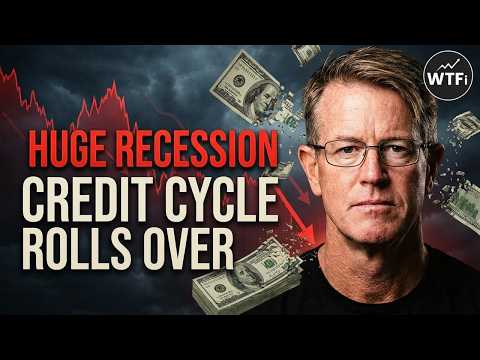
Dowd’s recurring economic worldview is broadly deflationary-to-stagflationary and highly skeptical of reported resilience.
📈 See how Edward Dowd's thesis changed over time →Preview how this speaker shows up across market transcripts. Unlock the full archive, AI chat, and the version personalized to your watchlist, followed channels, and favorite speakers.
Edward Dowd presents himself as a macro-focused market commentator and former BlackRock portfolio manager who now runs Phinance Technologies and writes publicly on finance and broader social themes. Across the supplied transcripts, he repeatedly frames his work as identifying fragility beneath headline strength: he emphasizes deteriorating labor data, housing weakness, private credit stress, China’s slowdown, and narrow equity leadership. He also uses his own website, X account, and Substack as recurring channels for his analysis and audience building. His commentary is consistently high-conviction and system-oriented rather than company-specific or trade-specific.
Dowd’s recurring economic worldview is broadly deflationary-to-stagflationary and highly skeptical of reported resilience. He argues that the real economy is weaker than GDP or equity indices suggest, with the middle class under pressure, consumer spending strained by inflation, and credit creation increasingly fragile. He sees private credit, housing, and China as major stress points, and views AI-led equity strength as a narrow late-cycle phenomenon rather than durable growth. In his framework, recessions, liquidity shocks, or bond-market instability tend to force central banks back into easing and money creation, which he believes eventually supports gold and other hard assets. He is persistently bullish on gold as a long-term store of value, often citing central-bank buying, currency debasement, and a possible monetary reset; silver is treated as more cyclical and industrial.
Every analyzed appearance we have for this speaker, newest first. Open any transcript preview to read the underlying transcript.
Preview:Ed Dowd argues the market is moving from an AI-driven credit boom into a broader credit slowdown that could eventually hit housing, consumers, and equities. In the near term he’s cautious on gold, bearish on AI infrastructure spending and semis, and expects the private credit market’s illiquidity to be an early sign of a larger credit event.
Preview:A curated clip compilation featuring fund manager Michael Pento and macro strategist Ed Dowd. Pento argues the Fed will deliver zero rate hikes in 2026 and may be forced to cut, with gold taking off at the first sign of recession and miners following. He sees the middle class already in recession, asset bubbles propping up only the top quintile, and a depression risk if credit markets freeze. Dowd sees a dollar cycle low, one more push higher in yields before bonds bottom, and core inflation falling to 1.77% by Q1 2027, forcing a Fed pivot within six months. Both are structurally bullish on gold, with Dowd targeting $10,000 by 2030.
Preview:Ed Dowd argues the market is rolling from an AI/credit-driven liquidity peak into a broader deflation scare. He says private credit is freezing, AI capex is running into power/water and ROI limits, the dollar is strengthening on a liquidity squeeze, and bonds are near a yield peak that should eventually give way to rate cuts. He also thinks the housing market is softening, China is slowing and hoarding real assets, and gold should be viewed as a long-term hedge despite possible near-term weakness.
Preview:Edward Dowd argues the market is still rewarding the headline economy because AI leadership and tight credit spreads are masking underlying weakness in housing, labor, and especially credit. He says the real risk is a coming risk-off move driven by a narrowing market, a stressed private credit system, and a possible end to the AI-led bid in equities.
Preview:Ed Dow argues that 2026 is shaping up as a major downside year because housing, China, and AI are all flashing stress at once. He sees Bitcoin weakening as a liquidity warning, while gold remains his strongest long-term bullish call, with a path to $10,000 by 2030.
Preview:Edward Dowd argues that gold remains in a long-term bull market even after a healthy consolidation, while the broader stock market — especially AI and semiconductors — is late-cycle, crowded, and vulnerable to an oil-shock-driven slowdown. He is especially bearish on the real economy, consumer health, and any new money being put to work in equities at current valuations.
Preview:Edward Dowd argues the market is in the late stages of a broad bubble, with gold consolidating before a much higher long-term move, equities still vulnerable to a sharp correction, and China/consumer credit weakening beneath the surface. He is constructive on gold over years, cautious on AI-led stocks and energy tactically, and expects a growth scare or liquidity event to expose how concentrated and fragile the current rally is.
Preview:Ed Dowd argues the market is nearing the end of a narrow, AI-driven rally and that a broader downturn is likely as inflation stays sticky at the headline level while core demand weakens. He expects the oil shock, China slowdown, housing weakness, and rising layoffs to show up in earnings and margins, eventually forcing a repricing across equities, semiconductors, and credit-sensitive assets.
Preview:The video argues that gold and especially silver are in a major long-term bull phase driven by de-dollarization, physical accumulation, and distrust of paper pricing. Andrew Maguire says gold is consolidating but could reach $5,600-$7,000 by 2026 and, if the gold/silver ratio compresses, silver could reach roughly $295-$368. Ed Dowd adds a macro overlay: a growth scare, falling inflation, and eventual Fed cuts could reinforce demand for hard assets, even if gold and silver suffer temporary liquidity-driven pullbacks.
Preview:Ed Dowd argues the market and economy are rolling into a second-half 2026 downturn, worsened by the Iran/oil shock and narrow AI-led equity leadership. He expects a 20-30% stock pullback in 3-6 months, a countertrend rally, then likely lower lows if a bear market confirms, while favoring cash, long-duration Treasuries, and gold.
Preview:Edward Dowd argues that a U.S. recession is already underway, with the official call likely lagging the real economy. He says the combination of a credit cycle rollover, weakening housing, slowing China, and an oil-driven inflation shock is creating a classic late-cycle slowdown that ultimately leads to demand destruction, lower core inflation, and eventually Fed cuts. He is bullish on cash and long-duration Treasuries, and remains constructive on gold and silver longer term.
Preview:Edward Dowd argues the market is already in the early stages of a broad downturn driven by housing weakness, an AI capex/financing bubble, and a deteriorating China cycle, with the Iran war only adding a shorter-term shock. He expects a relief rally if geopolitical tensions ease, but sees that as a chance to raise cash ahead of a possible 40-50% stock market drawdown.
Preview:Edward Dow argues that a broad market break is coming from three converging stress points: a U.S. housing downturn, a cracking AI/tech bubble, and China’s demographic/real estate slowdown. He expects a 40-50% equity drawdown, favors long-duration Treasuries and cash in the near term, and remains constructive on gold and silver over the long run, though he thinks they may need a consolidation first.
Preview:Ed Dowd argues the US economy is already slipping into a recession-like slowdown, with bad labor data, weakening GDP, housing stress, and a budding credit/liquidity unwind. He expects the setup to favor long-duration Treasuries over risk assets in 2026, while still viewing gold and silver as long-term monetary hedges.
Preview:Ed Dowd argues 2026 is set up for a deflationary slowdown: overextended tech valuations, weakening labor and housing data, and a China slowdown should pressure risk assets and support long-duration Treasuries. He also says global geopolitics are shifting toward multipolar blocs, and Trump’s more aggressive Western Hemisphere posture may be a signal of a wartime-style economic and strategic reset.
Preview:Edward Dowd argues a late-cycle slowdown is already underway and that a recession is becoming visible through weak ADP employment, soft consumer confidence, rising delinquencies, tighter credit, and stress in financial plumbing. He frames the current strength in equities as an AI-driven bubble concentrated in a handful of mega-cap names, while housing, China, and the labor market are increasingly deteriorating underneath.
Preview:Ed Dowd argues the U.S. is already in a technical recession, the AI-led stock market is a narrow bubble, and the next major moves are lower yields, a stronger dollar, falling oil, and eventually a deflation scare that forces Fed easing and possibly QE. He also sees China as a major deflation export story and thinks housing, credit, and employment weakness are broadening beneath the surface even as headline indices remain near highs.
Preview:Edward Dowd argues that the broad US equity market is being held up by an AI-led bubble even as bonds, credit, housing, and parts of the economy are rolling over. He thinks the next phase is not a systemic collapse but a quick repricing in stocks, a recession trade, lower rates, weaker oil, and a continued gold bull market after a multi-month consolidation.
Preview:Ed Dowd argues the U.S. economy has been artificially propped up by fiscal stimulus, immigration-driven spending, and distorted payroll data, and that the support is now fading into a recessionary, deflationary setup. He sees trouble building across credit, housing, private credit, and an AI-capex bubble, while remaining constructive long term on Treasuries, the dollar, and especially gold as crisis hedges.
Preview:Ed Dowd argues the U.S. is late in a synchronized unwind: a speculative AI-driven stock bubble, a rolling housing recession, and an eventual credit/liquidity problem that could force much larger Fed cuts. He sees bonds as bullish, gold as a core hedge, oil as weak unless a real war shock appears, and stablecoins/yield-curve control as potential policy backstops that won’t solve the underlying imbalances.
Preview:Ed Dowd speaks with host Daniela Cambone (ITM Trading / Daniela Cambone Show) about engineered political division in America, arguing the Charlie Kirk assassination was timed to divide the populace ahead of an impending financial reset. He sees housing as the "canary in the coal mine" — overbuilt multifamily, prices too high for buyers, about 8 months from public crisis — and warns of a concurrent AI stock bubble resembling the dot-com / railroad booms. He views these as converging toward a Great Depression-style reset requiring a "new deal." Gold is his beneficiary: central banks and commercial banks are accumulating, partly due to Basel III making it Tier 1 capital.
Preview:Michelle McCrory and guest Ed Dowd argue that the apparent strength in the U.S. economy is masking a weakening real economy, with housing the key pressure point. Dowd says the end of the immigration-driven demand boost, rolling over housing indicators, weak labor data, and narrow stock-market leadership set up a recession and a possible 40% to 50% equity drawdown, while gold and short-duration cash/T-bills are his preferred shelters.
Preview:Ed Dowd argues the U.S. economy is rolling into a recessionary/deflationary slowdown, with housing weakness, slowing money growth, and rising unemployment eventually forcing the Fed into aggressive cuts. He thinks the market is still too focused on summer price action and not yet discounting the harder data that should show up in the fall.
Preview:Edward Dowd argues the market is in the late stage of a bubble: stocks can still grind higher near term, but the combination of stretched valuations, weak breadth, and deteriorating housing/credit data should eventually force a sharp risk-off move. He is also constructive on physical gold as a long-term monetary hedge, bearish on the dollar’s trend, and thinks a recession plus weaker housing could push oil much lower unless Middle East tensions re-escalate.
Preview:Ed Dowd (Phinance Technologies) joins CapitalCosm's Danny to argue the US is entering a deflationary recession driven by collapsing housing, falling immigration, and rolling-over economic momentum. He sees the multifamily housing sector as a bubble about to burst, warns a Minsky moment risk is rising, and views the Iran-Israel conflict as a recession accelerator if oil spikes — though oil remains contained. His high-conviction trade: long duration Treasuries and the dollar, short risk assets. He interprets the recent tariff chaos, AI capex slowdown, and job data revisions as confirming signals, and advises holding dry powder to buy the eventual post-recession bottom.
Preview:Ed Dowd argues that a deep U.S. and global recession is already underway beneath the surface, with tariffs, tightening credit, rolling-over money velocity, and a housing downturn now starting to show up in the data. His key twist is that illegal immigration and related government/NGO spending artificially propped up demand, rents, and housing activity, so unwinding that flow will expose weakness in consumption, housing, and eventually stocks. He is also bullish on physical gold and bearish on the AI/Nvidia trade, while viewing lower bond yields and weaker commodities as confirmation of his macro call.
Preview:Ed Dowd argues the U.S. economy is rolling into recession, which should push deficits wider, force more Fed easing, and eventually support gold even higher. He says the setup was already visible in weak market breadth, falling long yields, slowing government-related activity, and a reversal of the immigration-driven fiscal boost he believes inflated growth over the last two years.
Preview:Edward Dowd argues the US economy is entering a deliberate, Trump-engineered recession aimed at restructuring away from fiscal dominance toward private-sector growth. He claims massive deficit spending and illegal immigration under Biden created a "fraud" economy, and the unwind is now accelerating. He expects risk-off conditions, declining bond yields, lower Fed rates, and a potential disinflation/deflation scare before eventual reflation. His near-term advice: go to cash and prepare for opportunities.
Preview:Edward Dowd argues the US economy is rolling from artificial support into recession, with illegal immigration, deficit spending, and weak housing leading the reversal. He sees disinflation/deflation ahead, bonds as the main beneficiary, and the AI trade as an overbuilt bubble that is starting to crack.
Others tracked across the same asset focus or market thesis.
Unlock every transcript this speaker appears in, compare them with your other followed voices, and ask the agent for the bull, bear, and consensus read in one workspace.
Type a question. Create a free agent to send it and keep the answer linked to this speaker.
Your question is preserved across sign-in.
Free. No card. Takes about a minute.