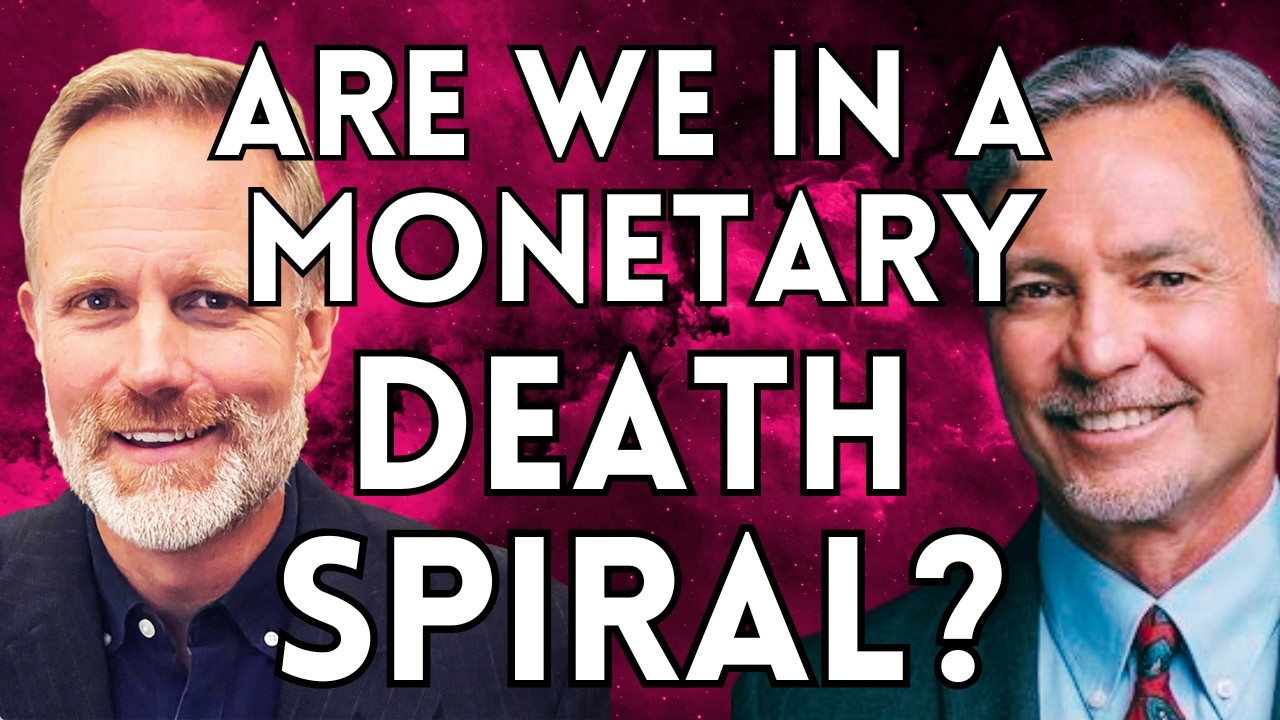
bullish commentary on gold, silver, and mining stocks
📈 See how John Rubino's thesis changed over time →Preview how this speaker shows up across market transcripts. Unlock the full archive, AI chat, and the version personalized to your watchlist, followed channels, and favorite speakers.
John Rubino is a financial author/commentator whose recurring focus is macro risk, monetary instability, and precious metals. Across the supplied interviews he consistently frames himself as a long-term gold-and-silver bull, but is cautious about short-term timing and often warns that dealer premiums, market volatility, and policy shocks can overwhelm clean technical narratives. He also frequently discusses systemic fragility in debt markets, central-bank behavior, reserve-currency risk, and the possibility of major financial resets. His own Substack is a higher-trust identity source here.
Rubino’s overall worldview is that the current fiat-money system is structurally unsound because governments can create too much credit, accumulate unpayable debt, and then respond to inflation and instability with more currency creation. He repeatedly suggests that gold is the safest form of money and that some form of gold-linked or multipolar monetary order may eventually replace the present reserve-currency system. In his framework, rising debt-service burdens, central-bank gold buying, policy interventions, and asset bubbles in tech are all signs of a late-cycle environment in which precious metals should outperform over the long run. He is generally bullish on gold and silver as stores of value, but tends to expect sharp corrections and prefers gradual accumulation rather than aggressive trading. He also sees the AI/tech boom as vulnerable to bubble dynamics and potentially a source of broader market stress.
Every analyzed appearance we have for this speaker, newest first. Open any transcript preview to read the underlying transcript.
Preview:John Rubino discusses gold ($4,000 resistance) and silver ($60 resistance) after a sharp correction, the fragility of the AI/data-center bubble after a Blackstone project failure, the fiat currency death spiral driving the precious metals bull market, central bank gold buying as de-dollarization, disrupted physical bullion dealer spreads, Fed Chair Walsh's political bind, and the inevitability of rates returning to zero when the next crisis hits.
Preview:John Rubino argues silver is in a secular bull market driven by fiat currency degradation, central bank gold buying, and silver's dual role as both monetary and industrial metal. Despite silver's pullback from ~$120 to the $60s, he views this as normal bull-market volatility. The structural drivers — $2T US deficits, $1.6T annual interest costs, geopolitical rearmament, and solar/EV demand — remain intact. He expects the Fed to cut rates to zero within 1-2 years regardless of near-term Fed drama, which would further boost precious metals.

Preview:Gareth Soloway and John Rubino present a dual technical/fundamental case for precious metals: a near-term corrective washout targeting gold $3,500–$3,600 and silver $46–$50, followed by a multi-year structural bull run to $10,000 gold and $200 silver (Rubino extends to $15,000 gold). Soloway frames this via the "bouncy ball pattern" where repeated trendline tests weaken support; Rubino anchors the long case in central bank buying, fiscal-spiral deficits, and the playbook of crisis liquidation followed by QE-driven V-bottoms.
Preview:A discussion with Jim Rickards and John Rubino covering gold/silver's sharp correction, AI bubble risks, and the entropy-trap framework for market collapses. Gold dropped from ~$5,355 to ~$4,000 (a full bear market), but Rickards argues fundamentals are intact — central banks still buying, flat mine output, inflation and geopolitical uncertainty persisting. Both speakers see the Blackstone data-center pullout as a potential AI bubble-top signal. Rubino flags dealer premium issues in physical silver. The conversation weaves in complexity theory, thermodynamics analogies, and historical investor case studies (Livermore, Baruch, Kennedy) to argue for gold as a buy at current levels.
Preview:John Rubino argues that fiat currencies are in a long, worsening decay and that the eventual endpoint is some form of gold-backed or commodity-backed monetary reset. In the near term, he expects volatility, possible gold/silver shakeouts during a broader market margin call, and elevated risk for banks and other dollar-debt-sensitive assets. Over the medium term, he still sees gold, silver, copper, uranium, and broader commodities benefiting from deficits, debt service stress, and central-bank buying. The interview is framed as a bullish precious-metals and hard-assets thesis, with a strong warning that the AI/equities boom could be the trigger for the next recession or liquidation event.
Preview:John Rubino discusses three main themes: gold and silver testing support levels after a multi-month decline (gold at $4,000, silver near $60); widening dealer premiums on physical metals and how to navigate them; and Blackstone pulling out of a major AI data center project — which he flags as a potential "smart money exits, retail holds the bag" top-of-cycle signal for the AI/tech bubble. He also touches on junior miners benefiting from producer free cash flow and M&A, and frames the push to let retail into pre-IPO allocations as exit-liquidity engineering by tech elites.
Preview:John Rubino argues that precious metals are in a long-term bull market driven by unsustainable government debt and inevitable future monetary easing, but the near term is unpredictable due to geopolitical risks (Iran war) and erratic policy from Trump. He flags unusually wide dealer premiums on physical silver as a new problem for stackers, suggesting ETFs or miners as alternatives. He sees gold/silver miners as extremely attractive after 50% corrections, with record free cash flow. He also warns about the multi-trillion-dollar yen carry trade unwinding as a systemic risk that could trigger a US stock market crash.
Preview:John Rubino argues that while precious metals' long-term thesis remains intact (central bank buying, debt monetization), near-term dealer premiums on physical silver/gold are so elevated that stacking physical metal right now may be suboptimal. He recommends pivoting to physical ETFs or mining stocks temporarily. Mining stocks, down 35-50% from highs with record free cash flow, represent what he sees as a generational buying opportunity — seniors could double, juniors 3-5x, explorers 5-10x. The conversation also covers Japanese bond market risks (yen carry trade unwinding, JGB yields rising), oil/geopolitical uncertainty (Iran war), and Fed policy constraints. Rubino repeatedly emphasizes not trying to time markets and maintaining a long-term accumulation approach.
Preview:John Rubino argues that gold, silver, copper, uranium, and related miners are in the early stages of a multi-year bull market, and that the right response is to accumulate gradually rather than try to trade the volatility. He recommends overweighting silver versus gold on valuation grounds, building positions through dollar-cost averaging, and treating corrections as normal within a larger commodity uptrend.
Preview:John Rubino (founder of rubino.substack.com) joins host Ivan on Wall Street Bullion to discuss the recent 50%+ crash in silver (from ~$120 to the $50s) and parallel drawdowns in mining stocks. He frames the selloff as a classic parabolic-correction shakeout that does not invalidate the secular precious metals thesis, which rests on irreversible government debt spirals and fiat debasement across major economies. Rubino argues the world is in a long-running currency crisis and predicts resolution via a gold-backed currency reset — the "least horrible" option for governments facing sovereign debt collapse. He also flags AI-bubble risk, geopolitical wildcards (Iran, Strait of Hormuz), and urges resilience through gold/silver stacking, quality miners, and local community-building.
Preview:John Rubino and Doug Casey argue that gold, silver, and related commodity/miner equities remain in a long-term bull market despite sharp pullbacks. Their core advice is to accumulate patiently, start with physical metals, then move into high-quality royalty companies and miners, while avoiding the temptation to trade daily volatility or speculate in the riskiest juniors too early.
Preview:John Rubino argues the US is heading toward a currency/debt crisis driven by persistent deficits, rising interest costs, and ultimately a loss of confidence in the dollar. His preferred response is to own real assets—especially gold and silver, but also copper, uranium, oil, and selective mining equities—rather than long-duration bonds or cash-like financial claims.
Preview:John Rubino argues that gold and silver remain in a secular bull market driven by an irreversible government debt spiral. He sees the recent price pullback as a mid-cycle correction, not the end of the trend, and advises investors to accumulate gradually and focus on long-term fundamentals rather than short-term volatility. The core thesis: fiat currencies are being destroyed by deficit spending and currency creation, and hard assets — precious metals, commodities, strategic minerals — are the beneficiaries.
Preview:The speaker argues that the combination of a prolonged Iran-related energy shock, rising rates, high inflation, and a collapsing Nasdaq is creating a broad macro stress event that is temporarily pressuring gold and silver. He still sees the precious-metals bull market as intact because governments are running huge deficits and debasing currencies, and he recommends gradual accumulation rather than reacting to day-to-day volatility.
Preview:John Rubino argues that the simultaneous selloff in silver, gold, and tech is being driven by a dangerous mix of war-driven energy stress, rising rates, stock market liquidation, and a looming attempt to channel retirement-liquidity into overvalued AI/space IPOs. He sees the current precious-metals dump as a tactical correction inside a still-intact secular bull market tied to fiat-currency debasement and government debt spiral dynamics, not the end of the cycle.
Preview:John Rubino argues that commodities—especially copper, silver, gold, and related miners—still have major upside because they are cheap relative to crowded tech stocks and because AI, electrification, and possible currency debasement all point to higher real-asset demand. He also says oil is the near-term wild card: fundamentals may be softer over time, but the Iran conflict and tightening inventories could create a sharp spike if the situation drags on.
Preview:This video argues that markets are in an extreme, unstable bubble regime driven by AI, deficits, and loose liquidity, while gold/silver investors should avoid short-term timing and instead accumulate gradually. The speaker also adds a live chart read: precious metals are weak intraday, the dollar and yields are firming, and Bitcoin looks like distribution with further downside risk.
Preview:The video is a bullish, long-duration case for gold and silver, but not a short-term momentum call. The speakers argue precious metals are in a healthy consolidation after a big run, and that investors should accumulate gradually rather than try to time the next move. They frame gold as protection against currency debasement, sovereign debt stress, and a possible future monetary reset.
Preview:John Rubino argues the market is in an unusually fragile, bubble-heavy state: AI is the dominant bubble, valuation measures are at extremes, rates are rising, and private credit/data-center financing could be the domino that breaks things. He recommends avoiding short-term market heroics and instead accumulating high-quality real assets and commodity exposure gradually, especially precious metals and miners. He also thinks oil could become much more dangerous if the Middle East situation worsens and inventories keep drawing down.
Preview:John Rubino argues that markets are being driven by extreme uncertainty from oil, geopolitics, AI, deficits, and the shadow banking system, and that the best response is to keep accumulating hard assets rather than trying to trade the noise. He expects precious metals and other commodities to remain strong over time even if they correct or consolidate in the near term, with silver eventually much higher.
Preview:John Rubino argues that the current mix of war, deficits, AI layoffs, high rates, and volatile oil makes short-term market prediction nearly impossible, but strengthens the long-term case for real assets. He is broadly bullish on gold, silver, copper, uranium, and Bitcoin as hedges against fiscal dominance, future Fed easing, and collapsing trust in institutions.
Preview:John Rubino argues that the market is masking a brewing credit problem: banks and institutions are likely to pull back from private equity/private credit, which he thinks could be the first domino in a broader shadow-banking unwind. He pairs that warning with a constructive long-term view on commodities—especially gold, silver, copper, and uranium—because he expects future crises to force central banks back into very easy money.
Preview:John Rubino argues that the Iran/Middle East conflict and AI are both reinforcing a fragile setup that could turn into a deflationary recession or depression before a later inflationary response lifts gold and silver. He says the market is oddly complacent, expects stocks to keep grinding higher because of autopilot retirement flows, and thinks the best practical response is to build resilience, hold real assets, and use mining stocks selectively where cash flow and balance sheets are improving.
Preview:John Rubino argues that parts of the shadow banking system — especially private credit — may be rolling over in a way that resembles the early stage of the 2007-2008 subprime crisis. His practical conclusion is that people should reduce exposure to bank deposits and other financial claims, and gradually shift toward physical gold and silver plus select real-asset equities that are less dependent on counterparties.
Preview:John Rubino argues the world is entering a late-stage fiat-currency “death spiral” driven by excessive government debt and money creation, and that this is supportive of gold, silver, and other real assets. He extends that thesis into AI, inequality, and politics, suggesting rising chaos will push societies toward redistribution, populism, and a stronger emphasis on resilience and tangible assets.
Preview:Luke Gromen and John Rubino argue that the financial system is moving toward a currency-debasement endgame: either deflationary crashes or hyperinflationary currency destruction, with precious metals as the primary refuge. They are especially bullish on gold and silver, and see a structural shift in silver pricing as physical demand in Asia tightens against thin Western paper-market inventories. They also think mining equities should benefit from record cash flows and likely M&A.
Preview:John Rubino discusses the precious metals bull market and a potential COMEX silver delivery crisis, arguing that growing physical demand against paper futures could trigger a short-term disruption. He connects this to a broader institutional trust crisis centered on the Epstein files, ongoing geopolitical tensions (Iran, Russia), and structural commodity deficits. His core thesis: gold and silver remain in a secular bull market, silver's structural supply deficit and industrial demand make triple-digit prices plausible, and investors should steadily accumulate commodities. The conversation also covers conspiracy-adjacent theories about Epstein's fate and intelligence-agency honeypot operations.
Preview:John Rubino discusses the recent sharp correction in silver and gold, attributing it to Chinese market closures for holiday, COMEX margin hikes, and possible short-position covering by bullion banks. He frames the pullback as normal within a secular precious metals bull market driven by structural silver supply deficits from solar, EV, and defense demand. He warns of eventual COMEX delivery failures, advises against trading the volatility, and recommends gradual dollar-cost averaging into quality miners, ETFs, and physical metal rather than futures contracts.
Preview:John Rubino argues that the recent gold and silver selloff is mostly a tactical correction inside a much larger bull market, driven by China’s holiday-driven pause, futures-market pressure, and exchange-level attempts to manage tight physical supply. He says the real story is a growing shortage of physical silver, with delivery stress likely to matter more than daily paper prices.
Preview:Chris Vermeulen presents a bearish technical outlook: the S&P 500 is in late-cycle stage 3, the NASDAQ has already entered a short-term downtrend, and he expects a stage 4 decline (financial reset) to unfold within 2026-2027. He has sold all physical gold and silver, closed his NASDAQ position, and is holding ~1/3 S&P 500 with large cash reserves. Silver's blowoff top signals a potential move to $50 (golden ratio target), with possible downside to $28. Despite short-term bearishness, he remains structurally bullish on metals long-term. His positioning is defensive — waiting for confirmed trends before re-engaging.
Preview:John Rubino discusses the recent gold and silver pullback as a normal correction within a secular bull market, attributing the week's weakness partly to Chinese markets being closed for holiday. He highlights a mysterious whale buying $15,000-$20,000 December gold calls, calling it likely a rich gambler rather than an insider. The core thesis: silver faces a structural supply deficit, gold is headed toward $15,000-$20,000 for a future currency reset, and investors should accumulate physical metals and quality miners while ignoring short-term noise. He cautions against trading futures or betting on COMEX default scenarios.
Preview:John Rubino argues the financial system is moving toward a monetary reset because debt, money creation, and currency debasement are becoming unsustainable. He sees AI/tech as a likely near-term market risk, precious metals as the main beneficiary of the current regime, and silver miners as an especially interesting way to express that view.
Preview:John Rubino argues that silver’s near-term price action may stay volatile, especially around the Chinese New Year shutdown and margin changes, but that the underlying bull case is intact: structural supply deficits, rising industrial use, government stockpiling, and growing physical demand should keep the trend higher over time. He also broadens the conversation into a “shrinking trust horizon,” linking distrust in institutions, the Epstein files, and practical resilience steps like owning real assets, building community, and using gradual accumulation rather than trying to trade every swing.
Preview:Don Durrett discusses the recent sharp correction in gold (from $5,600 to $4,400, down ~20%) and silver (down ~41%), framing it as a leverage-driven flush rather than a fundamental breakdown. He argues the macro backdrop — central bank gold buying, BRICS-driven monetary realignment, and US debt unsustainability — remains intact and is actually strengthening. He names six silver producers and six developers he favors, predicts silver could reach $150–175 this year, and sees the S&P 500 entering a slow-bleed trading range that will further boost gold.
Preview:John Rubino argues that the recent sharp selloff in gold and silver is a correction within a much larger bull market driven by currency debasement, central-bank buying, and tightening physical supply. He is especially constructive on silver because industrial demand is rising while physical availability appears to be diverging from paper pricing, creating a possible delivery/default problem in futures markets. He also extends the thesis to broader commodities, saying oil, coal, copper, uranium, rare earths, and critical minerals still look attractive if global growth continues and infrastructure buildout persists.
Preview:John Rubino and Andy Schectman discuss a wild week in silver: a historic $7/oz spike on Friday followed by a crash on Monday. They frame silver as caught between a structural supply deficit (four consecutive years), surging industrial demand (solar, EV batteries, defense), non-price-sensitive corporate buyers, and a persistent arbitrage gap between Western paper markets and Shanghai physical markets. The failure of arbitrage to close the COMEX-Shanghai spread, China's new export restrictions, and CME margin hikes all feature. Rubino leans optimistic, arguing "triple-digit silver is completely conceivable" barring a global depression, though he acknowledges silver's history of violent reversals.
Preview:John Rubino makes a bull case for silver driven by three forces: central bank gold buying pulling precious metals higher, surging industrial demand (solar, solid-state batteries), and potential monetary crisis. He argues silver could reach triple digits, but acknowledges a round-trip crash to $30 is equally possible. His core tension: how to stay exposed for the parabolic finale without getting wiped out by a V-bottom. He discloses selling some physical silver this week, recommends covered calls, holding cash, and hedging with put options. The thesis is long-term structural, but the near-term risk management challenge dominates the conversation.
Preview:John Rubino lays out a structural bull case for silver driven by surging industrial demand (next-gen solar, solid-state EV batteries, defense/missiles) and monetary debasement from persistent US deficits and coming Fed rate cuts. He sees triple-digit silver as plausible in 2026, acknowledges short-term volatility risks, and warns of a potential "twilight zone" where government bond/equity buying inflates financial assets while fundamentals rot — making precious metals essential portfolio insurance.
Preview:John Rubino and Gareth Soloway present a dual bull case for silver and gold in 2026. Rubino emphasizes silver's converging industrial demand (next-gen solar, solid-state EV batteries, defense/missiles) and monetary debasement, calling triple-digit silver "completely believable." Soloway provides technical levels: gold targeting $4,800–$5,000 on breakout confirmation; silver above $70 opens the mid-$70s, with pullback to $65 being routine. Soloway also flags oil as his top 2026 pick and analyzes natural gas gap fills. Both speakers are bearish on Bitcoin near-term, arguing it trades like a tech stock and diverges from the precious metals thesis. The macro backdrop features expected aggressive Fed rate cuts under Trump, potential government bond/equity purchases, and structural dollar debasement favoring hard assets.
Preview:John Rubino and David Hunter discuss the gold and silver secular bull market. Rubino argues gold is being repriced as global money, with $10k-$20k/oz possible, while silver's industrial demand, supply deficits, and thin market structure support $100 and eventually $200/oz. Hunter targets gold $5,000 near-term, $20,000 by early 2030s, silver $100 in Q1 2026, and expects a global bust/correction later in 2026 that drags PMs down before the larger rally resumes. Both see a weakening dollar and deteriorating fiscal situation as tailwinds, with Japan's rate breakout flagged as a 2026 risk.
Preview:John Rubino argues that silver is finally breaking out of a long underperformance period because the market is physically tight, exchanges may be running short of deliverable metal, and a cash-settlement default or other discontinuity could trigger a much larger upside move. He is similarly constructive on gold, but thinks silver may have more torque from here, especially if crypto/stablecoin capital starts reaching into precious metals.
Preview:John Rubino argues that silver’s breakout is real and still early, with supply deficits, shrinking exchange inventories, and potential delivery/default stress creating the setup for a much larger move. He remains constructive on gold too, but sees silver and silver miners as the cleaner tactical trade into 2026, while also warning that the yen carry trade, rising debt stress, and a bond-market revolt could create broader market disruptions.
Preview:John Rubino makes a bull case for precious metals and mining stocks heading into 2026, arguing that gold and silver have structurally outperformed equities for 25 years, central banks keep buying, India is unlocking silver liquidity, BRICS just launched a partially gold-backed "Unit" currency, and crypto firms like Tether are accumulating gold. He sees Q4 2025 earnings for gold/silver miners as potentially the best quarter ever, with blowout reports in Jan-Feb 2026 that could attract generalist momentum capital. He cautions that junk miners may spike the most on indiscriminate buying but recommends quality producers or broad ETFs like GDX for most investors.
Preview:A macro analyst and a veteran commodities trader lay out a multi-year precious-metals thesis: BRICS nations just introduced a gold-backed settlement currency (the "Unit"), Russia is poised to ban gold bar exports in 2026 (mirroring the palladium playbook), and Western bullion hubs — especially the LBMA — are structurally insolvent, not merely illiquid. They argue that silver above $60 and gold above inflation-adjusted highs signal a regime change, with miners set for blowout Q4 earnings and the strongest run in years. The recommendation: own physical metal and high-quality miners or broad ETFs; avoid trying to pick individual juniors without deep expertise.
Preview:John Rubino lays out a macro thesis centered on the unwinding yen carry trade as a potential systemic risk for 2026, driven by rising Japanese bond yields. He argues precious metals (gold, silver, miners) are in a secular bull market supported by central bank buying, BRICS gold-backed currency developments, crypto demand for gold, and strong miner earnings momentum. He advocates physical metals and quality mining stocks (or ETFs like GDX) as hedges against currency debasement and financial chaos.
Preview:John Rubino argues that the unwinding of the yen carry trade is a major 2026 macro risk because higher Japanese rates are ending a long period of cheap leverage that has supported global asset prices. He pairs that with a strong bullish case for gold, silver, and quality miners, saying precious metals are being rediscovered by central banks, BRICS, crypto capital, and generalist investors.
Preview:John Rubino and Dave Collum lay out a thesis that silver is entering a structural squeeze driven by industrial demand outstripping mine supply, shrinking above-ground inventories, and exchanges showing stress via trading halts — signaling insufficient physical metal to back paper claims. Gold consolidates at elevated levels because central banks and stablecoin issuers like Tether are price-insensitive, tonnage-sensitive buyers, reinforcing a quiet monetary reset. Collum adds platinum as his highest-conviction bullish call on fundamental deficit math. Both warn that 2026 could bring a bond-market revolt against aggressive Fed easing, a dollar crisis, and the endgame of the fiat experiment — making physical metals the life-changing trade.
Preview:John Rubino lays out a thesis that silver is approaching a physical supply squeeze driven by the math of industrial demand outpacing mine supply combined with monetary demand from the gold-silver ratio. He highlights central bank gold buying as non-price-sensitive, creating a floor under precious metals. He warns of systemic risks: a yen carry trade unwind, an AI bubble bursting, and a scenario where Fed rate cuts fail to contain long-term yields. His core message: own physical precious metals and hard assets ahead of a monetary reset.
Preview:John Rubino argues we are entering the late-stage, parabolic phase of a precious metals bull market driven by an accelerating global fiat currency crisis. He sees silver now outperforming gold — a classic late-cycle signal — as sovereign debt spirals, inflation erodes purchasing power, and consumers buckle under record credit card, student loan, and auto debt. He expects a recession to trigger an equity bear market, massive government bailouts, and a currency death spiral that pushes gold and silver to "outrageous" levels. His recommended strategy: physical metals first, then ETFs, then senior miners, and finally carefully selected junior explorers for life-changing upside — all while warning against overconfidence when those bets pay off.
Preview:John Rubino lays out a bearish macro thesis: the world is entering the late stages of the fiat currency experiment, with sovereign debt spirals, consumer exhaustion, and a brewing global currency crisis. He argues gold and silver — especially silver — are in the early innings of a historic bull run, and that individuals should shift from financial assets into real assets (metals, farmland, practical skills). He sketches a recession → equity crash → government bailout → bond market revolt → dollar crisis sequence that he sees as plausible within this decade.
Preview:John Rubino lays out the classic hard-money thesis: fiat currency since 1971 has enabled exponential debt buildup now reaching terminal stage, and gold/silver are the only durable hedges. He walks through gold's monetary history, argues US gold revaluation for borrowing power is nonsense, explains how government bailouts (repos) perpetuate a Ponzi-like system, and frames the recent correction in precious metals as a "head fake" that shakes out weak hands before the bull run resumes. Silver, being more thinly traded, should outperform gold in percentage terms. Well-run miners remain leveraged plays with 10-bagger potential, though operational risks are real.
Preview:John Rubino argues that the world is entering the late stage of a global fiat-currency experiment: too much debt, too much money creation, and rising interest costs are setting up a currency crisis. His practical conclusion is that gold and silver remain attractive protection, while investors and households should shift toward real assets, useful skills, and community resilience.
Preview:John Rubino delivers a wide-ranging bearish macro thesis centered on sovereign debt spirals, an inevitable recession, an AI-fueled equity bear market, and creeping authoritarianism — all converging toward a fiat currency crisis and eventual reset. His core investment prescription: buy gold and silver heavily, own real assets, and prepare for a painful multi-year unwind that governments are powerless to fix without destroying their currencies.
Preview:John Rubino makes a hyper-bullish case for silver, arguing structural supply deficits, industrial/monetary dual demand, and the US government's "critical mineral" designation will drive prices to $100+ within a couple of years, with potential for a parabolic squeeze if a COMEX default occurs. He also warns the "everything bubble" — especially AI stocks and vendor-financing loops — could trigger a 2008-style crash, after which governments will bail out everyone and unleash inflation, further benefiting gold and silver. Short-term timing is unknowable; the strategy is to be positioned and wait.
Preview:John Rabino, founder of Rabino's Substack, joins host Ivan on Wall Street Bullion to discuss the bull case for gold and silver. He argues the dollar devaluation trade and central bank gold buying are driving precious metals higher, while silver benefits from both monetary demand and being designated a US critical mineral. His core thesis: silver is a tiny, thinly traded market heading toward a physical shortage that could trigger a COMEX default and a parabolic price spike — making $100 silver a "very reasonable target" within a couple of years. He also flags bubble risk in AI stocks, commercial real estate, and shitcoins, and discusses Michael Burry's recent hedge fund closure.
Preview:John Rubino argues gold's bull market is far from over, with a long-term target of $15,000–$30,000/oz driven by currency debasement and a potential monetary reset. The current correction is healthy and a buying opportunity, not a reason to exit. He sees the fiat system in its "death spiral," facing only two paths: deflationary depression or hyperinflationary reset — with policymakers always choosing the latter. Physical silver is tightening dangerously; an exchange delivery default could send silver prices vertical. Lower short-term rates are politically baked in, but could spike long-term yields, creating chaos.
Preview:John Rubino lays out a bull case for gold and silver driven by a structural fiat-currency death spiral, central bank gold buying, and tight physical silver conditions including backwardation and lease-rate stress. He sees silver potentially reaching $100/oz and expects Q3 miner earnings to be spectacular, attracting generalist inflows — but acknowledges the tension between holding for the reset and taking profits at the old $50 silver ceiling.
Preview:John Rubino argues that the recent surge in gold and silver reflects a broader loss of faith in fiat currencies, especially the dollar, euro, yen, and yuan, and that silver is additionally tightening because physical supply is constrained relative to exchange claims. He frames precious metals as the core defensive asset in a currency-debasement regime, with miners and some energy assets as more leveraged ways to participate.
Preview:John Rubino makes the case that we may be witnessing the end of the fiat currency experiment, which makes the current gold and silver bull market structurally different from the 1970s and 2000s. He argues that sovereign debt spirals (France, Japan, US, China) leave governments no choice but to inflate away their currencies. Silver is particularly interesting due to backwardation, industrial demand (missiles, solar, EVs, AI data centers), and a structural supply deficit. He advises holding physical metals as generational wealth while being tactical with mining stocks ahead of what he expects will be stellar Q3 earnings.
Preview:John Rubino discusses two main themes: (1) the royalty/streaming mining sector is entering an M&A boom due to surging gold prices, with record cash flows prompting big deals and making junior takeover targets attractive; (2) government price controls are a form of "shrinkflation on steroids" — they degrade product quality across the economy, fuel mistrust in institutions, and push people toward real assets like gold, silver, farmland, and commodities. He frames this as part of the late-stage fiat currency cycle heading toward a monetary reset.
Preview:Interview with John Rabino of rabbino.substack.com on the precious metals bull market. Key signals: major royalty deals (Royal Gold, Franco Nevada) suggest M&A is starting in the mining space — historically the catalyst that lights up junior explorers. COMEX physical delivery trends point to demand from central banks, commercial banks, and profit-taking from tech/crypto wealth rotating into gold and silver. Rabino argues the Fed can't cut rates given bubble-level stocks and housing, but Trump will force cuts within two years, leading back to zero/negative rates — a perfect environment for precious metals. He sees a global fiat currency crisis and eventual monetary reset (gold standard or gold-adjacent) as inevitable, though CBDCs will be attempted as a control mechanism first. The conversation is speculative and macro-heavy, with a distinct "gold bug" worldview.
Preview:John Rubino argues the market is in an unusually fragile macro setup: equities are expensive, gold is consolidating after a big run, and the bigger risk is a global monetary/bond-market breakdown driven by high debt, rising long rates, and geopolitical shocks. He thinks precious metals remain the cleanest hedge, with silver and miners offering more upside than gold if the commodity bull market broadens.
Preview:John Rubino joins Sprott Money's Craig Hemke to discuss Fed independence under Trump, the likelihood of dramatically lower interest rates, and the potential for yield curve control, a dollar crisis, and eventual monetary reset involving gold. He argues gold could reach $10,000–$15,000/oz in a currency-reset scenario, silver could go parabolic into the hundreds, and mining stocks remain attractive. The conversation frames the current moment as the probable prelude to financial chaos, with a crack-up boom as the most likely mechanism over the next 3–5 years.
Preview:John Rubino argues that today’s macro backdrop rhymes with the 1970s but is potentially much larger in scale: geopolitical shocks, inflation risk, heavy debt, and policy easing all point toward currency debasement and a future monetary reset. His practical conclusion is bullish for gold, silver, copper, and hard assets, with silver especially leveraged by both monetary demand and industrial demand from solar, EVs, missiles, and AI-related buildout.
Preview:John Rubino lays out a classic precious metals bull-market thesis: gold has broken out first, the gold-to-silver ratio recently spiked above 100 (an extreme buy signal for silver), and silver is now beginning to outperform — a pattern that in the 1970s and 2000s led to multi-hundred-percent silver outperformance. He argues that silver miners remain relatively cheap and could deliver "5- to 10-bagger" returns. The macro backdrop is a fiat-currency death spiral: governments globally are running unsustainable deficits, interest costs have gone parabolic, and we are approaching a "crack-up boom" where people flee paper currencies for real assets. Rubino advises protecting wealth with physical gold, silver, farmland, and high-quality energy/commodity stocks, while also acknowledging speculative opportunities in well-chosen mining equities. He sees the current moment as an opportunity to short the AI/NASDAQ bubble and rotate into real assets.
Preview:John Rubino discusses Trump's second term as fundamentally different from his first, with aggressive global deal-making that could stabilize trade. He sees a debt-driven financial crisis as "baked in the cake" and argues a currency reset is inevitable — possibly even a return to a gold standard. On gold, he sees consolidation between $3,000–$3,400 as likely near-term but maintains a long-term bull case driven by currency debasement. He highlights M&A activity in the mining sector, touches on AGI as a wild card, and advocates a "reluctant prepper" approach: own precious metals, buy quality miners, improve health, and build community resilience.
Preview:John Rubino argues the gold-to-silver ratio at ~100 is a historic "screaming buy" signal for silver, framing it within a broader thesis of a Fourth Turning-style crisis, currency reset, and populist revolution. He explains gold's rally has been driven by BRICS central bank buying and Basel III reclassification of gold as a Tier 1 asset, while silver has lagged due to recession fears and industrial-demand uncertainty. He sees gold miners as entering a sweet spot with margins expanding as gold stays above $3,000 and input costs (oil) decline. His core advice: dollar-cost average into precious metals, lean toward silver now, avoid aggressive lump-sum buying. The interview also covers Trump's tariff strategy, UK trade deal implications, and Europe's geopolitical realignment.
Preview:John Rubino argues that gold’s move is a symptom of a broader fiat-currency and debt-system breakdown, not just a normal commodity bull market. He thinks the world is entering a chaotic “terminal phase” where governments keep borrowing to service old debts, currencies keep losing value, and real assets — especially gold, silver, oil, uranium, and farmland — become the logical refuge.
Preview:John Rubino argues gold remains in a strong bull market because of central-bank and bank buying, geopolitical chaos, and a likely broader monetary reset. He is similarly constructive on silver and gold miners, while warning that recession risk, banking stress, and a possible market drawdown could create both dangers and opportunities.
Preview:John Rabbino (rabino.substack.com) joins host Ivan on Wall Street Bullion to discuss the macro backdrop for gold and silver. Rabbino argues gold's rise is driven by a structural shift: Basel III making gold a Tier 1 asset, central bank buying, and gold becoming "monetary infrastructure." He sees miners as massively undervalued with blowout earnings coming, and expects generalist money to eventually discover the sector. He discusses the US-China tariff chaos, the fragility of 60/40 portfolios in a debt bubble, and his view that the US narrowly dodged systemic collapse. Silver is called too cheap relative to gold. Much of the conversation is broad macro-pessimism with gold-as-solution framing.
Preview:John Rubino argues that gold’s decisive break above $3,000—and now above $3,100—suggests central-bank demand is still strong and may be tied to an approaching monetary reset. He is bullish on gold’s long-term role but cautious that the move is extended and seasonality could create a pullback. He is also constructive on silver as a heavily manipulated market that could eventually face a squeeze and a physical shortage, though he notes the current “Silver Squeeze 2.0” day has not yet produced the expected price reaction.
Preview:A wide-ranging conversation between host Danny and recurring guest John (likely John Rubino or similar) covering the unsustainable US fiscal trajectory ($130T total obligations vs. $141T private net worth), the idiocy of tariffs, Mark Carney as a "competent Trudeau," the destruction of money through inflation, the coming end of the Federal Reserve's monetary monopoly, and a durable gold bull market driven by distrust in credit rather than inflation fears. The speakers are structurally bullish on gold (target $10,000+) and silver (target couple hundred dollars), but expect violent corrections along the way, including possible engineered selloffs. Dollar-cost averaging is advised.
Preview:John Rubino argues that the biggest near-term market setup is still in precious metals, especially silver. He sees gold’s break above $3,000 as confirmation of a longer currency/debt problem, but thinks silver may be the more explosive trade because it is already in deficit, heavily underowned versus gold, and vulnerable to a scramble for physical metal if investment demand accelerates. He also says the geopolitical panic around a direct US-Russia nuclear clash has eased, which lowers the most catastrophic risk, while tariffs, recession risk, and possible trade retaliation remain live but investable macro variables.
Preview:John Rabino, founder of the Rabino's Substack, argues that a financial crisis is coming driven by unsustainable sovereign debt monetization. He recommends moving out of financial assets into real assets — physical gold and silver (with silver preferred on valuation), copper, uranium, and mining stocks. He highlights the COMEX physical delivery risk as a potential catalyst for a gold price explosion and warns of an overvalued equity market vulnerable to a bear market triggered by rising interest rates.
Preview:John Rubino argues that while Trump's first month has been surprisingly effective at dismantling the DC "swamp" (via DOGE, spending cuts, and scaling back global military commitments), the US is still mathematically doomed to a currency crisis. The debt and interest dynamics are a "death spiral" — even heroic deficit reduction to $1 trillion/year wouldn't prevent an eventual monetary reset. His investment thesis: assume the currency is the victim and own things that go up when the dollar loses value — gold, silver, energy stocks, uranium, and hard assets. He's cautiously optimistic geopolitically but warns the Deep State will strike back.
Others tracked across the same asset focus or market thesis.
Unlock every transcript this speaker appears in, compare them with your other followed voices, and ask the agent for the bull, bear, and consensus read in one workspace.
Type a question. Create a free agent to send it and keep the answer linked to this speaker.
Your question is preserved across sign-in.
Free. No card. Takes about a minute.