bullish on junior mining stocks and resource-sector capital allocation
Preview how this speaker shows up across market transcripts. Unlock the full archive, AI chat, and the version personalized to your watchlist, followed channels, and favorite speakers.
Bill Powers is the host of Mining Stock Education and a resource-sector interviewer/commentator who focuses on junior mining, metals, and mining-stock investing. In the supplied material he appears primarily as the MSE presenter rather than as a subject-matter guest. His style is skeptical and process-oriented: he asks about risk, incentives, shareholder pushback, technical setups, and how investors should interpret volatility, dilution, and management behavior. He frequently frames discussions around how retail investors should think about speculation, discipline, and decision quality.
Powers’ recurring worldview is that junior mining is a high-variance but potentially very attractive speculative arena where careful process, valuation discipline, and attention to management quality matter more than headlines or short-term price action. He emphasizes contrarian thinking, probabilistic decision-making, and the idea that good outcomes do not always prove good decisions. Across the transcripts, he treats commodity cycles, inflation, central-bank behavior, and capital flows as important background forces, while also highlighting the practical realities of dilution, financing terms, shareholder rights, and board incentives. His economic lens is broadly pro-resource, but distinctly skeptical and cyclical: he tends to look for structural opportunity amid weak sentiment, while warning that narrative-driven promotion and poor governance can distort outcomes.
Every analyzed appearance we have for this speaker, newest first. Open any transcript preview to read the underlying transcript.
Preview:First Phosphate CEO John Passalacqua explains the company now has ~$50M in available capital (including a ~$16.7M Canadian government grant), giving 24-36 months of runway to reach Final Investment Decision. The mine in Quebec targets 2029 production, with a feasibility study due late 2026/Q1 2027. Passalacqua addresses the small-cap selloff (blaming Iran war fears, oil, rate concerns), argues First Phosphate is insulated due to its cash position, and downplays First Nations risk, citing strong collaboration with the local Mashteuiatsh Nation.
Preview:Bill Powers interviews Mark Zaret of Small Cap Investor about a set of illiquid junior-mining and resource names he has held for years. The conversation centers on three realized wins—Tanzanian? actually Tanas Energy, Orion, and Fox River—plus one laggard, Grounded Lithium, and the broader investing style behind them: buy small caps when nobody cares, hold through long development cycles, and let management execution plus commodity winds do the work. Zaret is upbeat on his process but notably cautious on the overall market, with cash now his second-largest position.
Preview:This is a sponsor-style interview about Contango Silver and Gold (CTGO) and its multi-asset growth plan. Shawn Khunkhun argues the shares are cheap at about 3x next year’s free cash flow, the company is now hedge-free, and the main catalysts are stronger production from Man Choh, an imminent Kitsault Valley resource update, and drill progress at Lucky Shot and Johnson Tract.
Preview:Dr. Rob Stevens explains the geological and economic differences between sulfide and oxide mineral deposits for copper and gold, aimed at junior mining investors. Oxide deposits form near the surface through weathering of sulfide minerals and are cheaper to process (heap leaching, no grinding mill, on-site copper cathode production), but often have lower recoveries (60-90%) and smaller total contained metal. Sulfide deposits require costlier milling, flotation, and smelting but offer higher recoveries (85-95%), greater vertical extent, and the potential to recover minor critical metals. Supergene enrichment zones — where leached copper redeposits at depth — can create high-grade zones that improve early mine economics. The interview closes with pragmatic investor advice: treat "oxide will pay for the sulfide" narratives from junior CEOs with skepticism and evaluate oxide economics on a standalone basis.
Preview:Midnight Sun Mining VP Adrian O'Brien provides a sponsor update on the Dumbwa copper discovery in Zambia. The company has extended continuous near-surface copper mineralization to 6.7 km of strike within a 20 km geochem anomaly, using a systematic fence-line drilling methodology (holes every 50m, 6-10,000m/month). O'Brien describes Dumbwa as a direct analog to Barrick's Lumwana mine — a basement dome-hosted copper deposit — and notes the first MRE is expected fall 2026. He addresses the disconnect between operational success and the declining share price, citing legacy shareholders, assay delays, and market misunderstanding of the low-grade/high-tonnage model. The Kazhiba oxide asset monetization talks are progressing but details remain confidential.
Preview:Bill Powers interviews strategic investor David Lotan about how he made large returns in junior mining by buying illiquid stocks in the open market, staying patient, and sometimes stepping in as chairman to help unlock value. The core examples are Aurion Resources and Fox River Resources, both ultimately sold for all-cash deals to Agnico Eagle-related buyers after long, messy strategic processes.
Preview:Lara Exploration CEO Simon Ingram provides an update on the Planalto copper-gold deposit in Brazil's Carajás mining district. The company raised ~$25M and is running seven drill rigs on infill drilling to upgrade resource confidence ahead of a pre-feasibility study. Early results are validating the geological model, with a higher-grade core zone (~0.6-1%+ Cu) and a southern extension showing promising grades. A transaction nearby (BHP assets sold for $400M+) highlights district value. The next catalysts are batch drill results, an updated resource estimate, and filing for an environmental permit around year-end.
Preview:Bill Powers and Brian Leni discuss navigating the junior mining sell-off at ~$4,000 gold (down from ~$5,500 highs). They emphasize disciplined watch lists, capitulation analysis, management quality assessment, and the DSO (direct ship ore) trend. Brian favors high-quality developers with exploration upside over trendy narratives; Bill shares ground-level due diligence tactics including questioning undervaluation claims, offtake agreements, and community resistance. Both advocate deliberate buying in uncertain markets rather than chasing selloffs.
Preview:Bill Powers interviews Scorpio Gold CEO/director Zayn Kalyan about drill progress in Nevada’s Manhattan district and a newly recognized caldera-style target near Round Mountain. The company says it is seeing mineralization in volcanic units/tuff that may resemble Round Mountain’s bulk-tonnage style, potentially expanding the resource base beyond the prior 740,000 oz inferred MRE. Kalyan also discusses financing strategy, a possible non-dilutive tailings/leach-pad opportunity, an upcoming updated resource estimate, and a near-term NY listing update.
Preview:Bill Powers interviews Dr. David Erfle about gold/mining stocks after a sharp sector pullback. Erfle argues the correction is a normal, healthy washout after a parabolic advance, not a thesis break, and says sentiment, open interest, and positioning look washed out enough to be nearing a bottom.
Preview:This is a sponsor-style interview with Fury Gold Mines CEO Tim Clark focused on Eau Claire, Quebec. Clark says Fury is shifting from exploration toward development, with a PFS targeted for the first half of next year, while recent drill results, infill work, and resource conversion are intended to lift ounces, confidence, and ultimately valuation. He also emphasizes the company’s balance sheet, asset portfolio, and optionality from nearby producers, especially in James Bay.
Preview:This is a sponsor-style interview focused on First Phosphate’s post-G7 momentum. The CEO argues the company has moved from being a Quebec phosphate project to a G7-backed critical-minerals platform tied to the Western onshoring of the LFP battery supply chain, with new definitive offtakes, sovereign support, and Italian engineering participation.
Preview:Rick Rule argues junior mining has moved from a crowding-driven, easy-money financing environment to one where selective buying matters again. He thinks a rough summer may give investors better entry points, especially in sub-$250M market-cap juniors with real drill results, infrastructure, and the ability to build on existing mills rather than fund standalone plants.
Preview:Larry Lepard argues that silver, gold, and mining equities remain in a powerful monetary-debasement trade despite a sharp Friday selloff. He thinks the pullback was a broad risk-off/margin-call event, not a thesis break, and believes rates, liquidity, and inflation pressures will eventually push metals higher again.
Preview:Michael Gentile says he remains extremely bullish on junior mining, with roughly 90%+ of his net worth still in the sector and most of his freed-up capital being redeployed. He argues his venture-capital-style process—small initial checks, long holding periods, heavy emphasis on management, infrastructure, and cap-table quality—has been validated by wins like Northern Superior and Arizona Sonoran.
Preview:Phil Hoskins gives an upbeat exploration update on Atomic Eagle’s Zambian uranium portfolio. The core message is that drilling at Chisabuka is already hitting mineralization as expected, additional targets look large and underexplored, and the company believes the Montanga project can be expanded materially toward a scale that works at today’s uranium prices. He also says permitting is progressing, the project is effectively development-ready once the remaining environmental approvals land, and the company has cheap optionality on a second uranium asset in Zambia plus retained upside from the expropriated Muntanga/Madala-style asset.
Preview:First Phosphate CEO John Passalacqua says the company’s updated mineral resource estimate at Bégin-Lamarche was a major success, expanding indicated resources sharply and setting up a feasibility study targeted for year-end 2026. He frames First Phosphate as a rare pure-play phosphate supplier for LFP batteries, argues the recent share-price strength reflects both execution and renewed industry attention, and highlights funding, government support, and upcoming permitting as the key next steps.
Preview:David Irle argues that the gold/mining sector is in a boring consolidation, not a top, and that investors should be accumulating into weakness ahead of the next leg higher. He leans on central-bank gold buying, stagflation, relatively cheap miner valuations, and improving relative strength in GDX/GDXJ as evidence that the setup remains constructive despite short-term frustration.
Preview:This is a monthly junior-mining discussion focused on investor pushback, process, luck vs. skill, narrative marketing, and director incentives. Bill Powers and Brian Lenny mostly agree that junior investors should be more selective, read disclosures, and be willing to sell quickly when management or board behavior looks misaligned with shareholders.
Preview:Bill Powers argues that junior mining investors should judge decisions by process, not by outcome, and should focus as much on the price paid as on the quality of the company. Using Howard Marks’ memo “You Bet” and Annie Duke’s thinking-in-bets framework, he says speculative success comes from understanding probabilities, edge, and proposition rather than story quality alone.
Preview:This is an interview with Contango Silver and Gold CEO Rick Van Nieuwenhuyse about the post-merger company’s production profile, hedges/debt cleanup, and the development pipeline across Lucky Shot, Johnson Tract, and Kitsault Valley. The near-term story is a low-production year at the Manto/Moncho mine because of pit transition and pre-stripping, but management says that work should set up a stronger 2027 with materially higher gold output and lower unit costs. The company also expects to become hedge-free and debt-free by year-end, while pushing several exploration and permitting milestones that could create a lot of news flow through 2026.
Preview:This interview is a bullish update on Midnight Sun Mining’s Dumbo copper discovery in Zambia. Adrian O’Brien says the company has now defined 5.3 km of drilled strike within a much larger ~20 km copper-in-soil anomaly, and he argues the project is becoming a real, large-tonnage copper system rather than a simple high-grade, super-pit-style target.
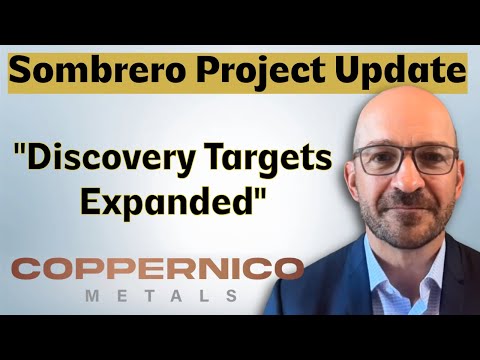
Preview:This is an interview-style update with Coppernico Metals CEO Ivan Bebek focused on the Sombrero copper-gold project in Peru. The main message is that the project has expanded from a few targets to seven drillable targets, with 65 planned holes over the next 18 months, and that the company expects a major permit and financing in the near term before drilling begins.
Preview:Ross Beaty and guests pitch Lumina Metals (LMCU) as a world-class Polish copper-silver developer with over a billion ounces of silver resources, major infrastructure advantages, and a path to a mining license over the next 4–5 years. The core thesis is that its scale, jurisdiction, smelter adjacency, and institutional backing can support a premium valuation, especially once U.S. retail investors can access the stock.
Preview:Scorpio Gold’s CEO Zayn Kalyan and VP of Exploration Harrison Pokrant say a recent Manhattan district drill hole at the Zanzibar trend is one of the best since the company recapitalized. The hole intersected 10.40 g/t gold over 5.67 m, including a very high-grade capped subinterval tied to a nuggety vein system, and management says the result supports a larger resource target and more upside along the 1.2 km Zanzibar–Black Mammoth–April Fools trend.
Preview:Joe Mazumdar argued that the large gold miners are benefiting from a very favorable setup: lower production, much higher realized gold prices, expanding margins, strong free cash flow, and aggressive shareholder returns. He also said the majors are not really growing reserves through exploration; instead, they are preserving capital, using M&A to replace ounces, and leaving the risky development work to juniors and intermediates. The second half focused on project-capex blowouts in Arizona, skepticism toward underground developers, the logic behind copper spinouts, the potential winners from Trump’s proposed critical metals stockpile, and the need for stronger governance after a junior mining fraud case.
Preview:Bill Powers and Brian Lenny use their monthly Junior Mining Insights segment to argue that junior mining investors should scrutinize management behavior, not just geology or promotion. The first half focuses on several recent regulatory and corporate controversies involving alleged or confirmed insider-trading failures, self-dealing, misrepresentation, and questionable related-party transactions. The second half shifts into a broader discussion of how to evaluate PEA/PFS/feasibility studies, with Brian arguing those documents are best treated as stage gates and rough inputs to a margin-of-safety framework rather than as precise valuation anchors.
Preview:Bill Powers interviews David Erfle about why he thinks junior gold miners are in a healthy post-peak consolidation rather than a failed rally. Erfle argues the recent pullback, especially the sharp leverage washout in miners and the drop in speculative open interest, is constructive because it should reset sentiment and build a base for the next leg higher. He frames the current opportunity as a rotation toward earlier-stage juniors while later-stage names become more of a trim-and-wait area.
Preview:This is a sponsor update on Fury Gold Mines (FURY) centered on a new drill result at Eau Claire: 12.5 g/t gold over 7.02 metres outside the current block model. The speakers frame it as positive for resource growth, especially because the intercept is consistent over the full width and should add indicated ounces into a future resource update and PFS.
Preview:Will Thomson argues that in mining and resources, company execution and jurisdiction-specific relationships matter more than commodity forecasts, especially for investors who need repeatable returns. He prefers producers and developers with advancing projects, cites several long-held positions that worked on fundamentals rather than beta, and spends much of the interview unpacking how to think about Niger, Mexico, the DRC, and security versus political risk.
Preview:This interview is a bullish update on First Phosphate’s financing and development progress. CEO John Passalacqua says the company now has multiple sovereign-backed letters of intent, including a EUR 170M commitment from Denmark’s export credit agency and a prior USD 170M LOI from EXIM, alongside Canadian government support and a bankable off-take agreement. He argues these pieces de-risk the project, improve credibility with lenders and suppliers, and help support the company’s aggressive target of first mine production in 2029.
Preview:John Kaiser argues the junior resource sector is still early in a multi-year bull market even after the January surge, with the current pause in gold acting more like a digestion phase than a top. He says many juniors still do not discount even $3,000 gold, and he is rotating profits from early movers into laggards while waiting for the next broadening leg.
Preview:Bill Powers interviews Lara Exploration CEO Simon Ingram about a recent C$33 million financing and how it advances the Planalto copper-gold project toward development. Ingram argues the project is already economic at the PEA stage, that the new capital will fund drilling and technical work toward pre-feasibility, and that Atalaya Mining’s investment is a credibility signal because it is a copper producer that understands open-pit operations.
Preview:This is a promotional interview with Coppernico Metals CEO Ivan Bebek about the Sombrero copper-gold project in Peru. The core message is that the company has spent years consolidating land, refining targets, and is now entering what he calls the most revealing 12 to 18 months, with seven large drill targets about to be tested.
Preview:Jamie Keech argues the “energy decade” thesis is playing out because modern tech, especially data centers and AI, is colliding with the physical world’s energy limits. He says Resource Insider has evolved from mostly mining newsletters into a broader platform that combines mining stock picks, private placements, and private energy/infrastructure businesses, with a recent launch of a stock-picking service for a wider audience.
Preview:Jonathan Goodman argues mining is entering a generational bull case because investors abandoned the sector for tech, governments now want domestic supply, and permitting/building mines in Canada and the U.S. should become easier. He also spends much of the interview explaining why mining studies, DCFs, and 43-101-style outputs are poor valuation tools unless you understand the geology, metallurgy, and real-world build risk behind them.
Preview:This is a sponsor-style interview with Atomic Eagle CEO Phil Hoskins about resource growth at the Muntanga uranium project in Zambia. The core message is that the company says it grew the resource 24% to 58.8 million pounds using only about US$700,000 of drilling, has a busy 2026 exploration program ahead, and still has optional upside from its much larger Madawela asset in Niger.
Preview:This is a sponsor interview on Scorpio Gold’s Manhattan district in Nevada, with host Bill Powers speaking to returning guests Leo Hathaway and Zane Collison. The core message is that Scorpio is trying to grow an inferred resource toward 2 million ounces while also testing a number of underexplored targets, especially Black Mammoth and Iron Queen. They frame hole 57 at Black Mammoth as a potential discovery hole because it hit mineralization in a place that fits their structural model, and they also highlighted encouraging results at Iron Queen.
Preview:David Erfle argues the recent selloff in gold miners is primarily a forced-liquidation event tied to broad market deleveraging, not a breakdown in the underlying precious-metals bull case. He says he already took profits aggressively into the parabolic move, keeps cash for further weakness, and is advising a tranche-based approach rather than buying all at once.
Preview:Bill Powers and Brian Leni discuss how recent war-driven volatility in junior mining has exposed portfolio construction, emotional discipline, and opportunity cost. Their main message is that investors should not overreact to drawdowns, should know their process, keep cash reserves, and buy only when they can articulate why something is "cheap enough" on a risk/reward basis.
Preview:This is a sponsor update interview with Fury Gold Mines CEO Tim Clark and SVP of exploration Brian Atkinson. The core message is that Fury is aggressively drilling Eau Claire to move the project toward a PFS/FS and, ultimately, production, while maintaining enough cash to fund 2026 and a second program at Committee Bay. Management argues that additional drilling, conversion of inferred ounces into measured/indicated, and a higher gold price environment could materially improve project economics and support a re-rating.
Preview:Tavi Costa argues the recent gold selloff was not a true liquidation event and sees it as a buying opportunity within a much larger bullish gold thesis. He pairs that with a contrarian macro book: long-term U.S. Treasuries, Chinese equities via options, and European banks, while also emphasizing gold, miners, energy, Latin America, and Brazil as broader themes tied to dollar weakness, deglobalization, and leverage in the system.
Preview:Bill Powers interviews Tomasz Nadrowski about the global critical minerals race, arguing that China has weaponized control of key inputs and that Western investors can profit if they understand geopolitics, processing bottlenecks, and policy support. Nadrowski’s core message is that the opportunity is not just in mines, but in rebuilding value chains, reference pricing, tariffs, and downstream demand creation.
Preview:Bill Powers interviews Ed Baer of DNA Gold about junior mining psychology, portfolio discipline, and where he sees value in the resource sector. Baer argues the current commodity/mining rally is pulling in euphoric, undisciplined money, but he remains constructive on gold and copper while warning that the easy money is fading and project financings are getting tighter.
Preview:Bill Powers interviews Shawn Khunkhun about the pending Dolly Varden Silver / Contango merger and the investment case for the combined company, which is expected to trade as CTGO. Khunkhun says the merger is nearly complete, expects a close around March 26 after the March 17 meeting, and argues the new company should benefit from index/ETF buying, strong cash flow, and a re-rating as a Canadian/US-listed precious metals producer.
Preview:Adrian Day argues the macro backdrop is turning stagflationary: growth is slowing, inflation is still sticky, and that favors commodities broadly, especially gold and selective copper exposure. He says recent geopolitical spikes have already been “bought on rumor, sold on event,” so he is using pullbacks to buy gold, while taking some profits in oil stocks because they are no longer especially cheap after their recent run.
Preview:An interview with First Phosphate CEO John Passalacqua about a Canadian grant, critical-minerals policy support, LFP battery demand, and new OTC/ADR access for U.S. investors. His core message is that the company has been meaningfully de-risked, is approaching feasibility, and still looks undervalued despite recent stock strength.
Preview:Adrian O’Brien says Midnight Sun has transformed from a small, underfunded explorer into a heavily capitalized copper story with a methodical drill-out, a large land position, and a newly defined oxide resource. The core pitch is that Dimbwa sits in Zambia’s Copperbelt at the center of major geopolitical and infrastructure competition, and that the project’s geometry, geology, and systematic drilling could eventually support a very large discovery or M&A event.
Preview:Bill Powers and Brian Leni argue that junior mining sentiment is improving, with PDAC and Metals Investor Forum showing more deal talk, more corporate activity, and a clear pickup in financing and validation events. They also spend much of the episode on process: how government support, hidden influence, bulk sampling, and investor psychology can all affect junior mining outcomes, but only if the underlying company and cycle are right.
Preview:Coppernico Metals’ Tim Kingsley and Ivan Bebek argue that geophysics plus limited drilling have sharpened Sombrero’s targets from broad anomalies into a smaller set of higher-probability drill zones. The pitch is that surface validation, strong skarn/porphyry signatures, and a large land package could support multiple discoveries, not just one.
Preview:Rick Rule argues that the precious-metals and royalty/streaming complex had a spectacular 2025 because years of stagnation created a coiled-spring move, but he does not expect 2026 to repeat that magnitude. The interview is less a near-term trade call than a framework for where he thinks capital should flow: high-quality assets, strong teams, low-cost capital structures, and jurisdictions where geology and politics eventually align.
Preview:David Erfle argues the precious-metals bull market is still intact, with gold and silver benefiting from stagflationary U.S. data, geopolitical stress, and strong miner relative strength. His main actionable message is that Mexico remains investable, but only on a case-by-case basis by jurisdiction; he is more selective now, rotating into earlier-stage juniors while avoiding or exiting names where cartel risk has worsened.
Preview:Phil Hoskins says Atomic Eagle is trying to re-rate the former GoviEx Uranium assets by combining resource growth, a larger exploration target, and a simple heap-leach development concept in Zambia. Near-term, the story hinges on an imminent feasibility-study reissue, an early-March resource upgrade, and a larger 2026 drill program that could expand Mutanga from 47 million pounds toward a much bigger inventory.
Preview:This interview is a promotional deep dive on Lara Exploration’s Planalto copper-gold project in Brazil. CEO Simon Ingram argues the company is using the same low-risk, partnership-driven prospect-generator model that previously created major value at Reservoir Minerals, and says Planalto is now transitioning from discovery/exploration into development with a PEA that shows meaningful leverage to copper prices.
Preview:This is a sponsor-style interview on Scorpio Gold’s Nevada consolidation story. CEO Zayn Kalyan argues that the company’s 8.5 km Manhattan district, centered on a 740,000 oz resource at 1.26 g/t, has room to grow meaningfully through aggressive drilling, with catalysts coming from step-outs, infill upgrades, warrant exercises, and a possible US listing/cross-listing.
Preview:Dr. Rob Stevens argues that uranium is in a strong setup because nuclear demand is rising, AI/data centers are adding new power demand, supply investment has lagged, and a structural deficit could emerge around 2029–2030. He then explains the main uranium deposit types, how unconformity and sandstone-hosted deposits form, why many deposits are small but can cluster, and what investors should look for in exploration and mining.
Preview:Sam Broom argues that the precious-metals and broader resource space is still early enough in the cycle that the best opportunities are in a narrow set of high-quality, small-to-midcap producers with visible internal growth. He thinks the recent gold/silver crash was a leverage/liquidity event, not a fundamental change, and he remains constructive on gold, platinum, some niche metals, and selected energy names, while warning that overtrading volatility is the main near-term risk.
Preview:Bill Powers and Brian Leni discuss bullish junior mining sentiment after recent Vancouver conferences, the importance of understanding investor psychology, and how to separate bias from process when evaluating mining stock recommendations. Leni says conference attendance and enthusiasm were strong, younger crypto investors are entering the space, and many juniors have already rerated, making value harder to find. The conversation repeatedly returns to disciplined profit-taking, the danger of crowd psychology, and how each investor should filter commentary through the speaker’s incentives, skill set, and disclosed holdings.
Preview:This is a sponsor-style interview about First Phosphate’s thesis: phosphate is the overlooked bottleneck in LFP batteries, and CATL’s reported huge tender for LFP cathode active material is used as evidence that demand is still accelerating. Bill Powers interviews CEO/founder John Passalacqua, who argues First Phosphate is differentiated because it is focused entirely on high-purity igneous phosphate for battery-grade LFP, not fertilizer phosphate.
Preview:David Erfle argues the precious-metals bull market is still early, with junior miners lagging badly despite huge gains in gold and silver. He says the next money is shifting from late-stage winners into higher-risk, smaller sub-$250M explorers, especially those with district-scale projects, strong drill results, and credible management.
Preview:Joe Mazumdar argues the mining sector is moving into a more strategic, policy-driven phase where scale, permitting, smelting/refining capacity, and jurisdiction matter as much as the commodity price. He likes the logic of a potential Rio Tinto–Glencore merger, sees capex expansions at existing permitted sites as more attractive than greenfield builds, and warns that tariffs, nationalism, infrastructure bottlenecks, and capital intensity can still break weak projects even in a bull market.
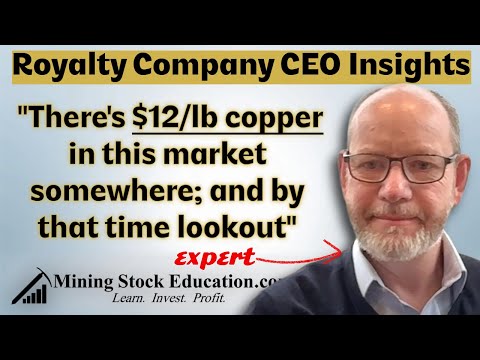
Preview:Brian Dalton argues the royalty business has become mainstream, with capital increasingly flowing into royalty/streaming as a preferred partner model rather than a fringe financing niche. He thinks the sector is entering a more competitive, more institutional phase, while Altius is positioning itself contrarianly through selective deals, especially lithium, and by leaning on technical asset selection and long-duration thinking. A recurring theme is that commodity bull markets overshoot incentive prices, which he uses to justify his comment that “there’s $12 copper in this market somewhere.”
Preview:This is a sponsor update/interview about Coppernico Metals’ Sombrero project in Peru, focused on the NEOK target. CEO Ivan Bebek says recent surface work extended a strong copper trench from 52m of ~1% copper to 155m of 0.54% copper, which he frames as some of the best un-drilled surface copper results he has seen globally. The discussion centers on surface sampling, permitting progress, community access, financing, and the company’s plan to keep advancing multiple targets across Sombrero as copper prices strengthen.
Preview:This interview centers on the announced merger between Contango Ore and Dolly Varden Silver to create a larger North American precious-metals producer. The speakers argue the combination makes strategic sense because the assets are geographically aligned, high grade, cash-flowing, and complementary: Contango brings current production and cash flow, while Dolly Varden brings a large silver/gold exploration pipeline. They frame the resulting company as a potential mid-tier competitor to Hecla, with meaningful scale, a stronger balance sheet, and a hub-and-spoke development model. The near-term focus is on shareholder approval, court approvals, and closing expected around mid-March. The most important forward-looking catalyst is Dolly Varden’s updated resource estimate in the first half of 2026, which Sean argues could add about 50% more silver resource and address concerns that the merger “dilutes” silver exposure. Rick emphasizes that Contango’s production and cash flow are already real, and that the combined company can use that cash to advance Johnson Track, Lucky Shot, and eventually mill ownership. Overall, the tone is promotional but specific, with the main investment case resting on execution, high grades, jurisdiction, and the promise of a much larger growth runway than either company had alone.
Preview:Bill Powers and Brian Leni use a year-end reflection episode to stress self-critique, due diligence, and profit-taking in junior mining/speculation. Their core message is that investors should distrust hype, study structures and incentives, and sell into strength instead of assuming winners will compound forever.
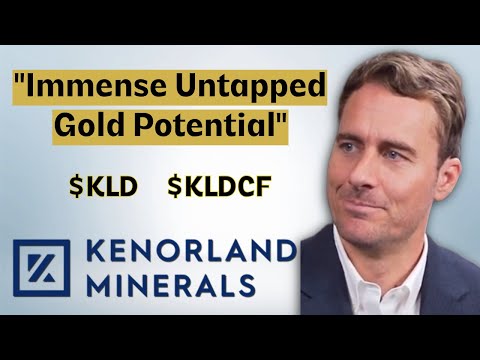
Preview:This is a sponsor update interview centered on Kenorland Minerals’ 4% NSR royalty on the Froet/Renault gold discovery with Sumitomo. CEO Zach Flood says the maiden inferred resource—2.55Moz at 5.47 g/t—confirms a major discovery, but he frames it as an early starting point because the system remains wide open and the resource is based on only about 130,000m of drilling.
Preview:Bill Powers interviews junior-miner newsletter writer David Erfle about how he manages a very profitable mining portfolio late in the cycle, why he still thinks juniors are underowned, and how recent silver financings and M&A are changing the opportunity set. Erfle argues the sector is still not in a mania, the best names are still catching up to metal prices, and the right response is disciplined trimming rather than trying to call the exact top.
Preview:Rick Rule argues that his best junior-mining returns come from backing high-quality people in hated markets, then selling into valuation and crowd recognition rather than waiting for perfection. He extends that framework to gold and oil: own beta first, prefer liquid high-quality names, and use dividends to offset being early. He is skeptical of niche metals, government “support,” and small speculative projects, while expressing strong preference for established cash-flowing energy and royalty names.
Preview:This interview is a bullish update on Fury Gold Mines’ pivot from pure exploration toward development and, ultimately, production at Eau Claire/Oaklair. CEO Tim Clark and VP Exploration Brian Atkinson argue the recent PEA, growing resource base, and new talks with the nearby Eleanor mine owner (DPM/Dilmar) give Fury a clearer path to a rerating, while also highlighting Sakami, Committee Bay, and Fury’s Dolly Varden equity stake as supporting value drivers.
Preview:A Mining Stock Education interview with First Phosphate CEO John Passalacqua argues that purified phosphoric acid is the missing bottleneck for LFP batteries, not lithium. He says First Phosphate’s igneous phosphate deposit in Quebec can be upgraded directly into purified phosphoric acid, giving the company leverage to both battery supply-chain demand and a possible shortage in purified phosphoric acid.
Preview:A monthly Junior Mining Insights discussion between Bill Powers and Brian Leni focused on investor judgment in junior mining: they both argued that management competence matters more than simple incentive alignment, while noting that the ideal is to have both. The conversation expanded into how to assess management through compensation, financing structure, technical-study quality, openness to criticism, and personal network checks, with repeated warnings that junior mining has many ways to lose money beyond just getting the metal price right.
Preview:Gianni Kovacevic argues that the next major opportunity in battery metals is in electric-metal niches tied to LFP batteries—especially purified phosphoric acid/phosphate and lithium, with DLE/brine projects as the preferred way to access future supply. He is bullish on lithium demand, skeptical of cobalt and manganese, and sees copper as already more efficient/recognized, while preferring byproduct exposure to gold/silver rather than standalone precious-metals bets.
Preview:David Erfle argues gold stocks and especially junior miners are still cheap versus gold, despite a huge run in bullion and miners. He sees the gold price trying to build a floor near $4,000, silver basing near $50, and expects money eventually to rotate from an overvalued general stock market into gold equities as AI/Bitcoin-linked sentiment cools. The interview also centers on Probe Gold’s takeover by Fresnillo, which Erfle thinks is too cheap and may attract a higher bid, likely from Agnico Eagle or possibly Kinross.
Preview:Bill Powers and Brian Leni discuss junior mining investor psychology through the lens of Howard Marks' wisdom on how emotions (greed and fear) drive price swings more than fundamentals. They explore contrarian strategies for the current gold bull market, critique controversial financings at ATEX Resources and Next Metals, debate the gold-to-silver ratio's usefulness, and emphasize the importance of rules-based selling, understanding one's own psychology, and avoiding "greasy" promoters.
Preview:Coppernico Metals CEO Ivan Bebek provides an update on the Sombrero copper-gold project in Peru, detailing the newly discovered Roomie target, permit progress, community engagement strategy, and the company's positioning ahead of what he expects will be a major copper bull market in the next two years.
Preview:Bill Powers interviews Joe Mazumdar about junior mining stock selection in a broad precious-metals and critical-minerals bull market. Joe argues that with almost everything rising, the hard part is not finding winners now but avoiding weaker names when the cycle turns, and he emphasizes financing quality, jurisdiction, management, and real project progression over headline price action.
Preview:Dave Kranzler returns to Mining Stock Education to discuss the junior gold mining bull market. He argues gold's momentum is driven by Eastern Hemisphere demand overwhelming Western price-management efforts, alongside a structural shift away from dollar reserve status. Kranzler describes his high-risk "elephant hunting" strategy — targeting sub-$100M market cap juniors with 10x upside, accepting 70% failure rates. He emphasizes management conversations as his core analytical edge, criticizes short-sellers who don't contact management before publishing reports, and advises taking partial profits on positions already showing 2-3x gains. He specifically mentions US Gold Corp as a low risk-adjusted opportunity for a double or triple.
Preview:David Erfle (JuniorMinerJunkie.com) and host Bill Powers discuss gold's parabolic move past $4,100, silver's backwardation and 45-year cup-and-handle breakout, and the junior miner sector catching up. Erfle advocates holding core positions while trimming on the way up, sees juniors as still cheap (~$100/oz in ground vs $1,000-$1,200 at prior peaks), and notes oil is a no-brainer on the oil-to-gold ratio. Key resistance: gold $4,500, silver $55-60 short-term.
Preview:Bill Powers and Brian Leni argue that the current junior mining bull market is exactly when investors should be harvesting profits, not chasing euphoria. Their core message is that a rising sector can mask weak discipline, overconfidence, and even questionable management behavior, so investors need predetermined sell targets, a plan for redeploying gains, and enough skepticism to ask why a stock is going up at all.
Preview:Ivan Bebek, CEO of Coppernico Metals, provides an update on the Sombrero copper-gold project in Peru. The company has reached an agreement with Aceros Arequipa to gain access to the Furaso target area, which has historic drill holes confirming copper mineralization at depth. Permitting is advancing, with drilling expected in H1 2026 (ideally late Q1/early Q2). Bebek also discusses two potential US acquisitions — a pure gold play and a copper-gold skarn system — that could provide drill-ready optionality while Sombrero permits progress. He notes strong institutional support from Teck and Newmont, and frames Sombrero as a globally unique, district-scale opportunity with multiple tier-one targets across a 10-target pipeline.
Preview:Alexandra Woodyer Sherron, CEO and President of Empress Royalties, explains the gold royalty and streaming business model, recent M&A consolidation trends (Gold Royalty/Sandstorm, Triple Flag/Origin, EMX/Elemental with Tether capital), and how investors should analyze royalty companies. She details Empress's strategy of direct structured finance deals with near-term producers, discusses gold/silver macro tailwinds, and argues the junior streaming space is underserved.
Preview:Michael Kosowan, a 30-year junior mining veteran (mining engineer, former Rick Rule broker, now chairman of TDG Gold Corp), sits down with host Bill Powers for a career-spanning interview. Kosowan outlines his philosophy: let winners ride, use insider ownership as a key vetting tool, and recognize that we are still early in a new junior mining bull cycle. He discusses his thesis that senior gold producers need new discoveries and will increasingly turn to juniors, and he walks through his involvement in Eminent Gold Corp, Torq Resources, TDG Gold Corp, and Almaden Resources.
Preview:Bill Powers hosts David Erfle and Brian Leni at the Beaver Creek Precious Metals Summit to discuss the junior-mining setup. They argue the sector is still early, with GDX at an all-time high but GDXJ still far below its peak, money flowing back into juniors, and M&A chatter potentially making Q4 2025 and early 2026 active. Both are bullish on precious metals but are increasingly selective, trimming winners and looking for better value in copper, polymetallics, and earlier-stage juniors.
Preview:Jeff Phillips argues that junior mining is a highly cyclical speculation game, not traditional investing, and says his edge comes mainly from share structure and management quality rather than the geology alone. He describes a career built on financing disciplined teams, favoring large insider ownership, fully reporting shareholders, and long lockups, while warning that weak capital structures, short-term financing terms, and commodity-price slumps can overwhelm even strong assets.
Preview:Ivan Bebek says Coppernico Metals’ Sombrero project just delivered unusually strong copper surface results that reinforce a rare combination of grade, scale, and geophysical support. He argues the project could be world-class if drilling confirms the system, while noting the company is funded for now and the next catalysts are permits, follow-up drilling, and more target results.
Preview:A junior-mining discussion focused on process: learning from both wins and losses, taking profits, position sizing, skepticism toward anonymous promoters, and how to think about management accountability in a sector full of dilution, financing risk, and execution failures. Bill Powers and Brian Leni repeatedly stress that even in a strong gold cycle, investors need to size positions carefully, avoid leverage, verify claims independently, and be willing to sell winners into strength rather than assume every bull market will bail them out.
Preview:Fury Gold Mines CEO Tim Clark and SVP Exploration Brian Atkinson present the PEA for the Éléonore (Oaklair) project in Quebec's James Bay region. The study outlines three scenarios — standalone mill, hybrid toll milling, and full toll milling — with after-tax NPV5 ranging from $554M to $639M and IRRs from 41% to 84% at a conservative $2,400/oz gold. The high-grade deposit (5.22 g/t diluted) has a tight mine plan with 76koz/year over 11 years and strong optionality for expansion, consolidation, or an eventual sale to a producer like Newmont's Éléonore mine.
Preview:Bill Powers interviews broker/geologist Steve Todoruk about a discovery-hole investing approach in junior mining. Todoruk argues the best setups are very wide, high-grade initial drill holes in projects that can plausibly grow into multi-million-ounce deposits and be attractive takeover targets for majors; he also explains why he prefers waiting for the discovery announcement rather than trying to anticipate it.
Preview:This interview focuses on how mining project cost estimates are built, where technical studies often go wrong, and what investors should watch for. The guests argue that inflation, labor, permitting, reclamation, ramp-up assumptions, and metallurgy often matter more than headline capex numbers, and they stress that PEA-level studies are especially unreliable.
Preview:Bill Powers interviews returning guest Dave Lotan about junior mining cycle timing, capital flows, and how government policy can create or extend opportunity in resource stocks. Lotan argues the sector is just starting to re-enter a growth-seeking phase after a very long cycle, with gold already strong and policy-driven themes like uranium, rare earths, antimony, tungsten, copper, and AI-linked power demand creating potential follow-on trades.
Preview:Jayant Bhandari of Anarco Capital explains how retail investors can profit from persistent arbitrage opportunities in junior mining M&A. He argues market inefficiencies — illiquidity, cross-jurisdictional listings, tired shareholders, and investor laziness — create 20–60%+ upside situations that can last months, not hours. He walks through specific past trades (Sunridge Gold, Kiska Metals, Paramount Gold Nevada, True Gold/Endeavor Mining, Griffin/Teranga) and outlines his simple-math approach: calculate the merger equation, assess management and assets, and optionally short the acquirer to hedge.
Preview:Sultan Ameerali walks through his recent decision to sell Minera Alamos (MAI) after a heavily dilutive recapitalization/acquisition of Nevada assets from Equinox. He originally bought in 2018 as part of a bootstrap-miner basket, averaged down to C$0.27, and sold around C$0.35 after the deal — a ~25% gain over seven years that underperformed broad benchmarks. The conversation is a candid postmortem: protecting downside vs. chasing upside, the role of ego in holding too long, why warrants cap a stock, and how process discipline matters more than outcomes. Ameerali does not attribute malice to management but concludes the risk/reward no longer works for him.
Preview:Tim Clark (CEO) and Brian Atkinson (SVP Exploration) of Fury Gold Mines provide a sponsor update on multiple discovery-stage projects. The centerpiece is the first hole from the newly acquired Sakami project (41.12m at 1.23 g/t gold), released early to signal momentum. Committee Bay (funded by Agnico Eagle) is framed as "the big swing," with drilling underway and results expected mid-September. Oaklair is positioned as a near-development high-grade asset. The Kipawa rare earths project is acknowledged as a real but dormant optionality play. Management emphasizes low dilution (~3-4%/year), a strong Dolly Varden equity position, and a strategy of building resources to attract mid-cap buyers.
Preview:John Kaiser argues that junior mining stocks are offering the richest speculative valuations he has seen in decades, because gold prices have re-rated the sector while many projects are still priced as if gold will fall back sharply. He walks through his “rational speculator” framework for estimating project value versus probability of success, and says the biggest opportunities are in underfollowed exploration and advanced-development names where the market is underappreciating ounces, pounds, and drill upside.
Preview:Dr. Rob Stevens explains AI-powered drill core scanning technologies (XRF, hyperspectral, LIBS) used in mineral exploration — how they work, their advantages over visual logging alone, and what investors should know. The core thesis: core scanning adds unbiased geochemical data that improves geological interpretation, but it supplements rather than replaces assay labs. For investors, companies using these tools well may gain an edge in discovery success, though core scanning claims in press releases warrant skepticism without demonstrated lab correlation.
Preview:A monthly Junior Mining Insights discussion between Bill Powers and Brian Leni focused on how each investor learned from missed winners and losses, why they now use a tighter, more selective process, and how to think about junior mining speculation in a gold bull market. They argue that process, valuation, management quality, and concentration matter more than simply chasing every strong story, even if a broad bull market can mask weak picks for a while.
Preview:Don Durrett argues that miners are still in the early innings of a powerful bull market, with a major trade setup driven by higher gold and silver prices and eventual stress in the U.S. bond market. He prefers producers and mid-tier producers over exploration stories, and says his edge comes from buying only companies that check a strict list of operational, financial, and insider-ownership boxes.
Preview:Ivan Bebek, CEO of Coppernico Metals, provides an update on the Sombrero copper-gold project in Peru — permitting announcements expected within 30 days, with phase two drilling to follow. He also reveals the company is negotiating to add US-based gold and copper assets to create year-round drilling capability and build a more active news flow. The company has ~11-12 months of working capital and trades on the TSX (CPR) and OTCQB (CPPMF). The core thesis: assemble a compelling copper-gold exploration portfolio before the junior mining bull market fully ignites.
Preview:David Erfle argues gold stocks are still lagging the gold price and should continue catching up, with silver and junior miners now showing the strongest relative strength. He sees the sector as unusually healthy: prices are consolidating bullishly, balance sheets are strong, margins are set to expand further, and M&A should accelerate as majors and mid-tiers look to add ounces.
Preview:Kenorland Minerals CEO Zach Flood provides an update on the South Uchi gold discovery in Ontario, where maiden drilling by partner Oronova Resources confirmed a large gold system across an 8km x 3km area with no prior known gold occurrences. Key intercepts include 9.5m at 1.2 g/t Au (with visible gold), 25m at 2 g/t, and broad lower-grade intervals. Flood also details a new deal with Santara Gold covering three projects in NW Ontario, discusses Kenorland's project-generator model, and outlines near-term catalysts including follow-up drilling at South Uchi, initial drilling at Opanaka, and a scout hole at Tanacross in Alaska.
Preview:Matt Geiger says MJG Capital has materially outperformed both the S&P 500 and its own history, and he argues the bigger story is a coming rotation away from over-owned U.S. equities and toward commodities, international assets, and mining-related opportunities. The discussion then shifts into why he likes copper, precious metals, prospect generators, and royalty companies, and how he screens and exits positions.
Preview:A long-form interview with Seabridge Gold CEO Rudi Fronk focused on why he thinks Seabridge is deeply undervalued despite a ~$1.5B market cap. His central argument is that Seabridge’s per-share metal backing, de-risked KSM project in British Columbia, and eventual joint-venture partner should drive a major rerating. He also frames gold as re-entering the center of the global financial system, which he thinks favors both bullion and gold equities.
Preview:Bill Powers and Brian Leni discuss junior mining speculation through the lens of process, downside protection, and management quality. The conversation centers on optionality names, flow-through financings, warrants, confidence in management, and how to build and use watch lists in a bull market.
Preview:Bill Powers interviews David Erfle about the precious-metals junior mining market. Erfle argues gold remains supported by geopolitics, U.S. debt, and a weak dollar, while silver and miners are now catching up after a long lag. His core message is that the bull market is still early for retail, and the best opportunities are moving down the quality ladder into earlier-stage juniors with real projects, historic resources, or imminent catalysts like resource updates, PEAs, feasibility studies, financing, and permitting progress.
Preview:Kenorland Minerals CEO Zach Flood discusses recent drill results at the Frotet gold project in Quebec (4% NSR royalty held by Kenorland, project owned by Sumitomo). Deep drilling returned 6.7m at 30 g/t gold, including 2.75m at 72 g/t. Flood highlights the blue-sky expansion potential at depth, the upcoming maiden resource estimate (late 2025/early 2026), and a potential decline decision by Sumitomo around 2027-2028. He also updates on South Uchi (assays pending, gold system confirmed), new grassroots staking in New Brunswick and Ontario, and the company's dual strategy of protecting the NSR value while pursuing new discoveries.
Preview:Michael Gentile argues junior mining stocks are starting to enter a “market recognition phase” after several hard years of capital raising and project advancement. He contrasts his roles as a co-founder of Bastion Asset Management and as a strategic investor/director in junior resource companies, emphasizing that he prefers to back projects with his own capital, influence boards constructively, and focus on capital structure, management quality, jurisdiction, and execution.
Preview:Ed Baer argues that junior mining investing is mostly about jurisdiction, geology, governance, and disciplined due diligence—not the spot price of gold. He says retail investors overread press releases, misunderstand how ounces in the ground are valued, and often ignore political and community risk. He also shares a contrarian preference for places like Manitoba and a skeptical view of expensive boards, IR spend, and public-market hype.
Preview:Bill Powers and Brian Leni discuss how they invest in junior miners: they prefer concentrated positions, deep due diligence, and management teams they know well over lifestyle companies, promotional stories, or small speculative punts. A major focus is jurisdiction risk—how to think about Alaska vs. Yukon, why political and infrastructure issues matter, and why any jurisdiction can turn from favorable to unfavorable and back again.
Preview:Fury Gold Mines CEO Tim Clark and SVP Exploration Brian Atkinson discuss Agnico Eagle's strategic investment: a C$0.64/share placement (23% premium) to fund summer drilling at the Committee Bay gold project in Nunavut. The deal validates Fury's geological thesis — Agnico had previously dismissed the project but changed its view after seeing new shear-zone targets. Fury also holds a large Dolly Varden share position (~US$33M), ~C$7.8M cash, the Eau Claire gold resource, Eleonore South, the newly acquired Sakami gold project, and an overlooked rare earths asset from the QPM acquisition. Drills turn at Committee Bay the first full week of July.
Preview:David Erfle argues that the biggest value in precious-metals equities has shifted from later-stage miners into higher-risk juniors, especially in silver. He says the recent pullback-and-breakout pattern, the rise in silver, and the breakout in junior benchmarks like the Venture Exchange suggest money is rotating down the food chain, while the major-miner trade has become more mature and fairly valued.
Preview:Joe Mazumdar gives a grounded, deal-focused read on mining: financing is still available for credible projects, but often at painful discounts, and capital structure is now as important as geology. He is constructive on Pan American Silver’s MAG deal, explains copper TC/RC stress as a supply-side and smelter issue, and flags Peru’s illegal mining problem as a serious security and country-risk concern.
Preview:Bill Powers interviews Lynette Zang about her thesis that the world is entering a hyperinflationary depression and a currency reset, with gold and other hard assets as the main protection. She argues the IMF’s SDR, tokenization, and digitized assets could form a more universal monetary system, while gold/silver remain the only real escape from counterparty risk and future confiscation or surveillance.
Preview:Coppernico Metals CEO Ivan Bebek provides an update on the Sombrero copper project in Peru after the first 20-hole drill program yielded lower-than-hoped grades. He frames the results as "smoke versus fire" — vectoring toward higher-grade zones — and argues the next drilling phase targeting robust outcrops and historical holes has a significantly higher probability of success. The market has not rewarded the stock, which Bebek attributes to macro headwinds (tariffs, flat junior equities) and the under-cover nature of the initial targets. He teases upcoming surface sampling results, new target identification, and a broader 200-hole permit application, while also hinting at potential US-based acquisitions to diversify while waiting on Peruvian permits.
Preview:Rick Rule discusses how AI will widen the gap between winners and losers in mining investment — those who can use it as a tool for analysis will thrive, while mere information assemblers will be displaced. He reflects on investor psychology failures (impatience, greed, laziness), shares his own missed opportunities, explains why merchant banks trade at NAV discounts, and promotes his upcoming Rule Symposium and Boot Camp events. The conversation is interview-format, light on specific stock picks but heavy on behavioral finance and industry critique.
Preview:Bill Powers and Brian Leni debate how junior mining investors should distinguish scams from shady or strategic behavior, using insider selling, disclosure timing, and the Giga Metals/Tesla rumor episode as the core examples.
Preview:David Erfle (Junior Miner Junky) argues gold is near a short-to-intermediate-term top after a parabolic run, but the secular bull market has much further to go as Western investors only just begin entering via GLD inflows. He sees stagflation as confirmed by the Fed, the Trump-Powell feud as another gold catalyst, and advises focusing on junior gold stocks with tight share structures, strong management, and at least 12 months of cash runway. He is adding earlier-stage (PEA-stage) companies to his portfolio but avoiding pure drill plays.
Preview:Mark Galashevki argues that gold is leading the start of a multi-decade commodity bull market, with interest rates and emerging markets also poised to benefit. He frames the current regime as the end of the “infoch” era — Nasdaq, Magnificent 7, Bitcoin, and other intangible-asset leaders — and the rise of tangible assets, especially gold and commodity producers.
Preview:Bill Powers interviews returning guest Mark Zaret about how to handle volatility and why he still likes a couple of junior gold names. Zaret’s core message is that patience, conviction, and balance-sheet discipline matter more than reacting to day-to-day price whiplash. He argues Fortune Bay and Orion Resources are long-duration, underfollowed situations where time and catalysts—not hype—should unlock value.
Preview:Investor Sultan Ameerali says he is mostly focused on gold-related special situations, where he looks for assets with downside protection and optionality rather than pure exploration risk. His favorite setups are turnarounds, restructurings, royalties, and derivative-like instruments where the market may be underpricing embedded assets or contingent upside.
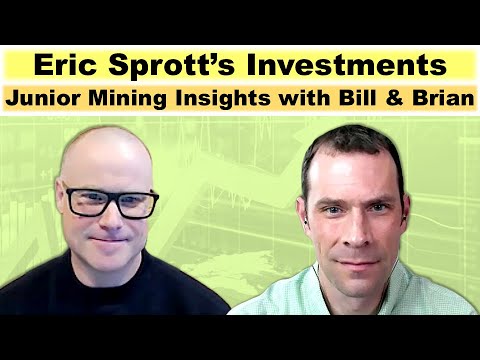
Preview:Bill Powers and Brian Leni dissect New Found Gold's recent resource estimate as a case study in promotional junior mining stocks, avoiding overvalued companies, and why Eric Sprott's investment approach is dangerous for retail investors to copy. They discuss CEO compensation across multiple issuers, portfolio allocation lessons, liquidity management, and the credibility of juniors claiming they'll self-build mines.
Preview:David Erfle argues the gold-mining sector is in the early phase of a major rotation: gold has broken out, the miners are finally outperforming the broad market, and capital is leaving AI/crypto for undervalued mining equities. He is constructive on majors, but he expects juniors to start outperforming more meaningfully now that the sector has broken key technical levels and generalist investors are paying attention.
Preview:Bill Powers compiles past Mining Stock Education clips to correct common junior mining investor mistakes: shifting time horizons, chasing hype, misreading management incentives, and failing to separate company-specific issues from macro or jurisdictional risks. The recurring theme is that mining is a long-duration, probability-based game, so investors need a written thesis, realistic time frame, and risk management.
Preview:Bill Powers and Brian Leni discuss takeaways from the Metals Investor Forum and PDAC 2025 conferences. They cover retail investor psychology in junior mining, the 15-minute due diligence framework, pitfalls of private company investing, the importance of management reputation, and the discipline of taking profits. The conversation is a reflective, conversational piece on process and mindset rather than a market call or specific stock thesis.
Preview:Fury Gold Mines CEO Tim Clark and Quebec Precious Metals CEO Normand Champigny discuss Fury's proposed acquisition of QPM at PDAC 2025. The deal combines adjacent James Bay gold properties, creating the largest exploration group in the region. Key assets: QPM's Sakami gold project (23km mineralized structure, road-accessible) and the Kipawa rare earths project (only North American project with a full feasibility study outside an operating mine). Fury plans to drill Sakami this summer pending shareholder approval. Also discussed: ongoing drilling at Fury's Éléonore South project, renewed interest in Committee Bay, and Tim Clark's bullish macro view that gold is going "a lot higher" with capital expected to trickle down to juniors.
Preview:Coppernico Metals CEO Ivan Bebek sits down with Bill Powers at PDAC 2025 to discuss the Sombrero copper project in Peru. Phase 1 drilling (17 of 20 holes done) has been a slow grind through covered terrain, but Bebek argues the technical picture keeps improving — more skarn targets, better vectoring, and three remaining holes (18–20) that he calls the most exciting and potentially "transformational." The company is pausing drilling after hole 20 to let assays catch up, advance permits for a 200-hole expansion, and wait out the weak junior copper equity market. Bebek sees copper's macro setup improving through H2 2025 and hints at M&A ambitions while the sector is cheap. Treasury runway is solid (~7–8 months with drilling, longer without).
Preview:David Erfle argues gold stocks are in a different bull market than the last cycle, with fewer easy home runs but better opportunities in select growth producers and developers. He sees the sector still under-owned, with gold making new highs, while miners and silver have lagged and are waiting for a broader retail return and a possible stock-market rollover.
Preview:Bill Powers interviews Joe Mazumdar of Exploration Insights about antimony, permitting, capital access, M&A, and jurisdiction risk in mining. Mazumdar’s core view is that antimony is becoming a “security mineral” that can help projects get permitted and financed, especially when paired with gold; he also argues that North American and Australian capital pools value mining projects very differently, so listing venue and investor base matter as much as geology.
Preview:Kenorland CEO Zach Flood pitches the company as a capital-efficient project generator: it stakes prospective ground, uses geochemistry to find targets, then brings in partners to fund drilling while Kenorland keeps royalties, equity, carried interests, and operator fees. The interview focuses on the value of the Rena royalty at Frotet, the South Uchi maiden drill program, and why he thinks the company gives investors broad discovery leverage without heavy dilution.
Unlock every transcript this speaker appears in, compare them with your other followed voices, and ask the agent for the bull, bear, and consensus read in one workspace.
Type a question. Create a free agent to send it and keep the answer linked to this speaker.
Your question is preserved across sign-in.
Free. No card. Takes about a minute.