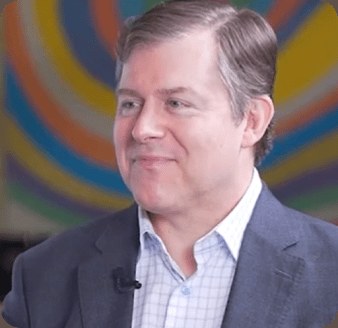
Phil Hoskins
advocates uranium project development with strong geological pedigree
Preview how this speaker shows up across market transcripts. Unlock the full archive, AI chat, and the version personalized to your watchlist, followed channels, and favorite speakers.
Speaker snapshot
Research profile
Profile notes are still being inferred from transcripts.
Economic vision
advocates uranium project development with strong geological pedigree
Reliability notes
- Admin-validated speaker with linked X / Twitter profile.
- Preview built from 5 analyzed appearances.
- Latest tracked appearance: 2026-05-31 05:43.
- Most often seen on MiningStockEducation.com.
Mining company record (92)
92 transcript-backed statements from 5 appearances, covering milestone, exploration upside, country and other company claims. These reflect management's own framing and have not been independently verified.
- Is the resource figure supported by a current NI 43-101 / JORC technical report — and is it measured, indicated or inferred?
- Is the stated grade a reserve grade, a resource grade, or a single drill intercept?
- Which study do these economics come from — PEA, pre-feasibility or feasibility?
- What metal price and discount rate underpin the NPV and IRR?
our over overall expiration target was between 40 and 100 million pounds in addition to our resource. So that puts the size of the prize somewhere between 100 and 150 million pounds according to our geologists.
there's so much opportunity there given 1100 km of of tenure.
I think it's a 600 by 300 m high higher grade zone that's been defined uh there and you know rough rule of thumb if you look at the size of those things could be another five five odd million pounds
there's several anomalies between 3 and 5 km long.
exploration target uh that we released in December was 40 to100 million
quite a prospective region and basin for uranium resources with over 500 million pounds within these known basins historically.
we've probably only touched 25, 30% of of that whole region.
we've already got 29 million there.
24% increase in the resource from 47 million to 58.
first drilling of the year was at Chisabuka where last year we had defined a 9.7 million pound resource uh and that's only over an 800 by 600 m meter zone.
It's 116 million pounds at 1300 ppm
the resource is 58.8 million at 309 ppm
low asset consumption um heap leach operation with low strip um is very much like what uh what Bannerman is
The measured and indicated component of that is 4 million at 359 ppm
a 12-year heap leach operation at 2.2 million pounds per annum
the sort of drilling we're doing is about US 40 dollars all in.
the 3.5 million ton per annum plant, uh which was producing roughly 2.2 million pounds per annum
an extremely low acid consumption of 20 kilograms per ton of ore treated.
What it has taught us is where we need to optimize the project to make it economic at today's uranium price.
the economics at $90 a pound didn't quite stack up
at $90 a pound um it was roughly NPV equals capex
when we look at uh at an 8 million ton per annum plant at a cost of 350 million dollars
Banaman's capex is 20% higher for a plant throughput that's more than twice as high uh twice as large.
what we have in our back pocket sort of properly reimagined as I said um could do 3.9 million pounds per annum at 12 year for 12 years
our budget has us closing the year with with $9 million in the bank even with 50,000 mters of drilling
Your treasury still around 19 million Australian dollars? Yeah, it was 19 end of December.
Um I think it might be just shy of 18 end of March.
with 19 million in the bank uh end of December.
To do that with 700,000 dollars of drilling.
I'd say by the end of this calendar year we'll have uh just short of half of that
We uh loaned $700,000 to GobX uh to drill what we considered lowhanging fruit while the transaction was concluding
So, you were capitalized in Q4 of last year with 20 million Australian dollars
Largest program the project's seen in almost 20 years uh funded to do it.
the first 13 or 14 drill holes from the program um almost all of them have hit mineralization where we expected
we're kicking off with a 30,000 meter drill program that will be concluded by August
it'll end up being upwards of 50,000 meters that we would have drilled by the end of the year
we listed in November 2025
Then we'll flow into 2027 uh with an update to the feasibility studies
updating the mineral resource by the end of the year
towards the end of the 2026 field season once we've understood uh where the mineralization is is where we'll bring in the RC and diamond.
the number of targets and the target areas, there will be an announcement coming out in in the coming week or or two
at 12 months ago there was a NI43101 feasibility study done over the asset um 12 year mine life at 2.2 million peranom.
the drill program starting at the beginning of April will be the largest program at the project since 2007.
reactors are going to be uh dependent on new supply coming out of the ground
we do uh benefit from the fact that environmental approvals and relocation action plan were all lodged through 2025 in aid of development. So we will receive those approvals this year.
2027 will be about met test work and and updating studies.
we have a worldclass asset um in Nger that was expropriated from GOIX in 2024
our Mantunga uranium project in southern Zambia
So, you're in Zambia, the third best mining jurisdiction the Fraser Institute says in Africa.
our principal asset being the Mantunga uranium project in Zambia
the Mutanga uh uranium project in Zambia
those approvals are on track and our expectation is over the next month or so that we should have those um approvals in place.
our expectation is in the coming months around mid 2026 we should be in receipt of the environmental approvals
the ASX required an independent review from an engineer to sign off that the inputs used by Goviex were reasonable.
these uh resources sit on mining licenses um we we do uh benefit from the fact that environmental approvals and relocation action plan were all lodged through 2025
tenure in southern Zambia
company that was founded by Grant Davyy and Keith Ba, who were founders of Boss Energy and Lotus Resources
those two were the founders behind Boss Energy um and Lotus Resources which are both now uranium producers.
It first started with Boss, uh was called Boss Resources, now Boss Energy and Matador uh acquired the Kayelekera uranium mine
chief operating officer for Atomic Eagle is Warren King who was the exec that restarted KA. Um so there's a fair bit of uranium expertise in the group. Our sales and marketing consultant is Chris Lewis who uh exchamico sales and um and our geologist ch consulting geologist Harry mustard was involved at lethane uh uranium and and lotus as well.
low acid consumption around 20 kg per ton and that's a real driver of operating costs
21day average leech kinetics and an extremely low acid consumption of 20 kilograms per ton of ore treated.
the acid consumption is incredibly low, averaging around 20 kg um of acid per ton
achieving high recoveries greater than 90% with low acid consumption
Excellent recoveries plus 90% on average.
the recoveries are plus 90% um in pretty quick time
the very simple uh heap leach processing, high recoveries, low acid consumption, uh very simple um low strip open pit mining.
it is a very simple heap leach operation.
grades anywhere from sort of 220 through to sort of 350 to 400 ppm um over this entire region. Um the recoveries have been um mostly very similar um and acid consumption's pretty similar as well.
Our grades are slightly higher on average so far.
we could be producing 4 to 5 million pounds um uh via very simple heat leach operations
But um furthermore across montanga north, namac 1 and namac 2. And it's really exciting
Every claim above was said by Phil Hoskins in the interview it is dated to, and carries their own words. Nothing is added from filings, and nothing has been checked against them. Transcripts are automated — clearly mis-heard words are corrected for readability, never figures, dates or the speaker's own hedges. Not financial advice: an executive discussing their own company has an interest in it.
Themes and assets
Most discussed assets
Transcript previews
Every analyzed appearance we have for this speaker, newest first. Open any transcript preview to read the underlying transcript.


Related speakers
 Adrian Day
Mining & resource stocks
Adrian Day
Mining & resource stocks
 Justin Huhn
Mining & resource stocks
Justin Huhn
Mining & resource stocks
 Michael Gentile
Mining & resource stocks
Michael Gentile
Mining & resource stocks
 Shawn Khunkhun
Mining & resource stocks
Shawn Khunkhun
Mining & resource stocks
 Shane Williams
Mining & resource stocks
Shane Williams
Mining & resource stocks
 Keith Neumeyer
Mining & resource stocks
Keith Neumeyer
Mining & resource stocks
 Ross Beaty
Mining & resource stocks
Ross Beaty
Mining & resource stocks
 John Feneck
Mining & resource stocks
John Feneck
Mining & resource stocks
Create your free research agent
Unlock every transcript this speaker appears in, compare them with your other followed voices, and ask the agent for the bull, bear, and consensus read in one workspace.
- Full transcript archive for this speaker
- Personalized relevance to your watchlist
- Cross-speaker comparisons inside your workspace
- AI chat about this speaker’s thesis
- Track how their view changes over time