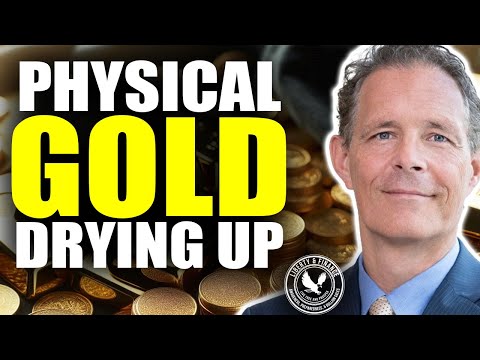
Piepenburg’s recurring worldview is that the global monetary system is moving away from paper claims and toward tangible hard assets, especially physical gold.
📈 See how Matthew Piepenburg's thesis changed over time →Preview how this speaker shows up across market transcripts. Unlock the full archive, AI chat, and the version personalized to your watchlist, followed channels, and favorite speakers.
Matthew Piepenburg is a partner at Von Greyerz / GoldSwitzerland and presents himself as a macro-focused precious-metals commentator. Across the supplied transcripts he repeatedly frames gold and silver through the lens of currency debasement, sovereign debt stress, bond-market dysfunction, and declining trust in fiat and Treasury IOUs. He is comfortable discussing market structure, central-bank reserve behavior, and cross-border monetary shifts, and he tends to speak as a long-term secular analyst rather than a short-term trader. His style is emphatic and conviction-driven, with frequent references to central banks, China, the BIS, and the role of physical gold as collateral.
Piepenburg’s recurring worldview is that the global monetary system is moving away from paper claims and toward tangible hard assets, especially physical gold. He sees rising debt burdens, hidden or distorted inflation, and the need to repress real yields as structural features of the current system, not temporary policy quirks. In that framework, gold is not mainly a speculative investment but monetary protection, reserve collateral, and a form of wealth preservation as trust in sovereign debt erodes. He also argues that central banks are net strategic buyers of gold and that China and other actors are helping shift price discovery away from heavily leveraged Western paper markets toward physical settlement. He is generally bullish on gold and silver over the long run, but expects major volatility, corrections, and periodic forced selloffs along the way.
Every analyzed appearance we have for this speaker, newest first. Open any transcript preview to read the underlying transcript.
Preview:Matthew Piepenburg (Von Greyerz) argues that gold's recent price decline is a distraction driven by forced selling, leveraged ETF unwinds, and deliberate COMEX manipulation to let insiders accumulate cheaply. His core thesis: sovereign bonds are losing trust globally, central banks are replacing US Treasuries with gold as collateral, and China's July 2026 clearing/settlement reforms will shift price discovery toward physical gold and away from paper-futures fraud. He sees the current pullback as a sale price in a secular bull market that is just beginning, with fiscal dominance making Fed hawkishness impossible and currency debasement inevitable.
Preview:Matthew Piepenburg of Von Greyerz presents a deeply conviction-driven thesis that gold is in an irreversible secular bull market, supported by accelerating sovereign debt, central bank gold accumulation, and the weaponization of the US dollar. He argues that gold's recent pullbacks are classic shakeouts within a much larger structural shift where gold is replacing US Treasuries as the world's trusted collateral. He contends Fed Chair Worsh is dovish in practice despite hawkish talk, inflation is systemically understated (likely 8–12%), and the West is losing control of gold price discovery to the East.
Preview:Matthew Piepenburg argues that gold’s recent volatility is a tactical shakeout inside a much larger secular bull market, not a thesis break. He says the price is being held “artificially cheap” by paper-market mechanics, margin pressure, and narrative management while central banks and other large buyers accumulate physical gold and push collateral demand eastward.
Preview:Matthew Piepenburg argues that gold’s recent pullback is just a normal correction inside a much larger secular bull market, while the real story is the breakdown of trust in sovereign debt and the rise of gold as collateral. He says central banks, especially China, are accumulating physical gold as paper gold and Western Treasury credibility weaken, and he frames rising yields as evidence of debasement rather than real positive returns.
Preview:Egon von Greyerz and Matthew Piepenburg discuss the global debt crisis, arguing that governments will continue debasing currencies until the system collapses into high inflation followed by a deflationary reset. Both are extremely bullish on gold and silver, with Piepenburg forecasting silver above $300 and detailing supply deficits, technical signals, and de-dollarization trends as tailwinds.
Preview:A compilation of clips from Matthew Piepenburg and Clive Thompson on gold, market risk, and debt-driven currency debasement. Piepenburg argues that official real-yield data is misleading, real inflation runs 8–10%, and central banks are quietly replacing US Treasuries with physical gold — creating a secular tailwind for the metal. Thompson offers a tactical equity-market perspective from his 1987 crash experience: raise cash gradually, hold gold as a volatility buffer, and prepare a shopping list of ETFs to deploy if equities correct.
Preview:Matthew Piepenburg and Egon von Greyerz argue that gold and especially silver are entering a powerful bull phase driven by currency debasement, physical shortages, and growing distrust in paper markets. They frame gold as the steadier wealth-preservation asset and silver as the more volatile but potentially higher-upside trade, with repeated references to $10,000 gold and $300-$400 silver as plausible outcomes in fiat terms.
Preview:Matthew Piepenburg argues the real fault line is the bond market, not the MAG7. He says sovereign debt demand is weakening, yields are rising, and that tighter financing conditions are already pressuring equities, buybacks, private credit, derivatives, and government funding. He sees gold as the clearest beneficiary of this regime shift and says silver should follow with much more upside leverage, potentially reaching $300 quickly.
Preview:Matthew Piepenburg argues the US and other major sovereigns are already in a debt crisis, visible in rising bond yields, central-bank gold buying, and what he sees as worsening currency debasement. He is far more constructive on gold than Bitcoin, which he treats mainly as a speculative asset, and says the Fed and modern monetary policy are extending rather than solving the problem.
Preview:Matthew Piepenburg argues that markets are disconnected from fundamentals because of central-bank liquidity, while bond markets, gold, China, and de-dollarization are the real signals to watch.
Preview:Matthew Piepenburg argues that gold and silver are in the early stages of a major bull market driven less by inflation headlines than by long-term fiat debasement, rising U.S. debt, and declining trust in Western paper-market price discovery. He says physical demand, central-bank buying, and Eastern market influence are overpowering the old COMEX/petrodollar framework, while silver’s structural deficit and backwardation make him especially constructive on the metal over time.
Preview:Matthew Piepenburg argues that rising yields and accelerating CPI are symptoms of a deeper sovereign debt and currency-loss-of-trust problem, not just an energy shock. He says the Fed is losing control of the long end, the dollar’s reserve-currency privilege is weakening, and gold’s longer-term bull case is being reinforced by central-bank demand and structural distrust in paper money.
Preview:Matthew Piepenburg argues that silver and gold are increasingly being priced by paper markets that are losing credibility, especially COMEX and LBMA. He says silver is facing a persistent physical supply deficit and that long-term investors, not traders, should focus on wealth preservation, with much higher gold and potentially $300-$400 silver over time. He also says recent weakness in gold during war-related stress was driven by forced selling and leverage, not by a broken bullish thesis.
Preview:Matthew Piepenburg argues silver remains in a powerful long-term bull setup, with supply deficits, tight physical markets, and paper-market distortions setting up further upside. He is also constructive on gold over the longer run, but says war-related liquidations and leveraged positioning have delayed its breakout while rising sovereign yields and a debt problem could become the bigger macro catalyst.
Preview:Matthew Piepenburg argues that gold is not near a ceiling and that the real story is currency debasement: since 1971 the dollar has lost most of its purchasing power, central banks have been stacking gold, and policy tools like negative real rates and financial repression make gold more attractive over time. The video frames gold as a long-duration reserve asset rather than a trade, with upside to $5,000-$7,000 and even $10,000 discussed as plausible over time, though not in a straight line.
Preview:Matthew Piepenburg argues the current mix of war, debt, and central-bank policy is pushing the global system toward stagflation, currency debasement, and a much higher gold price. He frames gold as the key reserve and settlement asset in a world where paper money, US Treasuries, and the petrodollar are all under pressure.
Preview:A gold bull from VRIC argues that recent war-driven selloffs are temporary, caused by forced liquidations and liquidity needs, while the longer-term case for gold as a reserve asset remains intact and even stronger.
Preview:A gold panel at VRIC argued that the current move in gold is a durable bull market, not a bubble, and that it reflects a deeper loss of confidence in fiat money, sovereign debt, and the US dollar. Panelists said central-bank buying, emerging-market demand, and a possible remonetization of gold are the key drivers, with silver, miners, and royalties also benefiting.
Preview:Matthew Piepenburg argues that gold and silver are not mainly telling a story about investor enthusiasm; they are reflecting a weak global fiat system, heavy debt monetization, and persistent reserve diversification by central banks. He is constructive on both metals, but especially bullish on gold as a long-term preservation asset and more cautious on silver because it is more volatile and more exposed to industrial cycles and market squeezes.
Preview:Matthew Piepenburg argues that the current market regime is propped up by easy Fed policy and fiscal stimulus, but sits on top of an unsustainable debt and fiat-currency system. He is constructive on gold and silver as long-term preservation assets, cautious to mixed on broad US equities, and expects more volatility, potential delivery stress, and possible contagion in precious metals.
Preview:The video argues that gold and silver are still in the early-to-middle stages of a much larger bull market, not at a peak. The speakers say gold is underowned, driven mainly by central bank demand, and supported by a weakening fiat-money backdrop; silver is framed as even more underpriced, with technical work suggesting a potential long-run target around $500.
Preview:Matthew Piepenburg argues that the surge in gold and silver is not a bubble but a market warning about a broken fiat currency and debt system, with the U.S. dollar and sovereign bonds at the center of the stress. He frames the move as a symptom of long-running monetary debasement that could eventually force some kind of reset, revaluation, or more centralized policy response, though he says the timing is unknowable.
Preview:Matthew Piepenburg argues that gold’s rise is less a speculative bubble than a warning signal: fiat money, sovereign debt, and paper-derivatives infrastructure are under strain, and central banks are accumulating bullion as a hedge against that stress. He says the COMEX/LBMA system is increasingly unable to suppress price discovery because physical metal is tightening, which could eventually force cash settlement and expose fragility across broader derivatives markets.
Preview:Matthew Piepenburg argues that gold and silver are rising for structural reasons, not just because prices are hot: US debt monetization, currency debasement, central bank buying, and waning trust in the dollar since 2022. He expects continued upside, but repeatedly warns that gold will not move in a straight line and that silver is far more volatile and better treated as a tactical metal than a set-and-forget store of value.
Preview:Matthew Piepenburg delivers a wide-ranging interview on gold and silver markets, arguing that the COMEX fractional-reserve pricing mechanism is breaking down. He points to 100% delivery demand on COMEX gold, silver lease rates spiking to 5%, and a persistent $10 Shanghai-vs-London silver premium as evidence of physical scarcity overwhelming paper shorts. He warns a silver delivery failure could trigger cascading counterparty defaults across futures markets. On price, he frames the current secular gold bull — which began from the 2015 trough near $1,050 — as only halfway through a historical ~8x pattern, with violent retracements likely along the way. The core message: gold and silver are signaling currency debasement and eroding trust in sovereign credit, not merely benefiting from bullish sentiment.
Preview:Matthew Piepenburg argues that rising global bond yields, yen stress, and central-bank intervention are signs of a broader debt-and-trust crisis. His core thesis is that gold and silver are rising not because they are in a bubble, but because fiat currencies and sovereign credit are losing credibility, with central banks increasingly using gold as a reserve and settlement asset.
Preview:Matthew Piepenburg argues gold and silver are nowhere near a peak, framed as a structural monetary regime shift rather than a cyclical bull market. The core thesis: COMEX/LBMA exchanges lost their ability to manipulate prices in 2025 because physical metal became too scarce, and rising industrial plus monetary demand broke the old paper-shorting model. He refuses to give price targets, stresses a 10-20 year horizon, warns of retracements, and advises buying gold as wealth preservation rather than trading it. Silver gets a brief, separate caveat — more volatile, not for widows and orphans.
Preview:Lynette Zang and Matthew Piepenburg argue that gold and silver are not trades so much as protection against a collapsing fiat system. Their core message is to build personal monetary sovereignty—“become your own central bank”—by holding physical metals and basic necessities, rather than trying to time pullbacks or trade around price swings.
Preview:Matthew Piepenburg argues that gold and silver are in a structural bull market driven by physical tightness, rising industrial/monetary demand, and weakening control by COMEX/LBMA paper structures. He says repeated margin hikes, limit rules, and cash-settled futures are signs of stress rather than health, and he expects higher prices in 2026 and beyond even though he won’t give precise targets.
Preview:Matthew Piepenburg argues that silver still has meaningful upside, but only investors who respect its volatility and use ratio-based exits will handle it well. Gold is the cleaner long-term preservation asset, in his view, because the broader monetary system is deteriorating and fiat currencies are losing credibility.
Preview:The video argues that gold is a long-term monetary preservation asset and that silver has even greater upside, but with much higher volatility and no reliable way to time the exact top. The speaker repeatedly says he does not price-predict metals, instead emphasizing gold/silver ratios, dollar-cost averaging, and viewing precious metals as protection against currency debasement and systemic monetary stress.
Preview:Daryl Thomas interviews Matthew Pipenberg about gold and silver surging, arguing the move reflects deeper cracks in the fiat system, rising debt, and geopolitical stress rather than a simple commodity rally. Pipenberg is bullish on precious metals structurally, especially gold as a long-term preservation asset and silver as a more volatile but still powerful catch-up trade driven by both monetary and industrial demand.
Preview:Matthew Piepenburg argues the currency and debt system is in a structural breakdown, and that 2026 will likely feature more central-bank liquidity, weaker fiat, and continued strength in gold, with silver more volatile. He also frames cash-rights efforts in Switzerland and Sweden as small but meaningful resistance to a broader push toward programmable, trackable digital money.
Preview:Matthew Piepenburg of Von Greyerz argues that gold and silver are in a secular bull market driven not by ordinary asset dynamics but by a systemic bear market in paper currencies. He points to unsustainable global debt, currency debasement through money printing, and emerging banking liquidity stress (spiking repo rates vs Fed funds) as the structural drivers. The key near-term signal: repo market stress is flashing a "low oil" warning for the banking system, which will ultimately force more QE-like liquidity injections — another tailwind for precious metals. He also argues that inflation is significantly understated (~11% using pre-1980 methodology) and that central banks and mainstream institutions are now openly pivoting to gold, making the gold thesis "almost too easy."
Preview:Matthew Piepenburg argues gold is in a secular bull market that could reach $10,000-$20,000 during our lifetimes, driven by the terminal decline of fiat currency systems, massive debt, and central bank de-dollarization. He acknowledges gold can experience brutal 30-50% retracements even within a bull run (as in 1975 and 2008) and warns against trying to time entries. He discusses the "uh-oh moment" thesis where an equity bubble pop may initially favor the dollar and Treasuries before gold becomes the obvious safe haven, the complexities of US gold revaluation, and stablecoins as a clever but insufficient band-aid for US debt absorption.
Preview:Matthew Piepenburg argues that gold's surge is a symptom of a global monetary and debt crisis, not a normal commodity rally. He says the gap between Wall Street and Main Street is widening, the dollar is being debased, central banks are losing trust in fiat collateral, and silver may be the cheaper way for retail investors to participate in the same thesis.
Preview:Matthew Piepenburg argues that the current market is sitting on multiple interlocking bubbles or stress points: AI, subprime credit, private credit, and a broader monetary system that is losing trust. His core bullish view is that gold is moving from a contrarian trade to a necessary strategic reserve asset as central banks, China, and parts of the West adapt to a changing monetary order. He is skeptical of Bitcoin as a long-term store of value, though he acknowledges it remains a powerful speculative asset and a useful proxy for risk appetite.
Preview:Matthew Piepenberg argues that recent gold price volatility is noise within a secular bull market driven by a fundamental monetary shift. Central banks now hold more gold than US Treasuries, de-dollarization is accelerating since the 2022 dollar weaponization, and the US faces structural debt problems (120% debt/GDP, $2T deficits). He contends gold is held as savings for decades, not traded, and predicts gold will reach $10,000–$20,000+ in our lifetimes. He also discusses the possibility of a Treasury gold revaluation and critiques misreported inflation that renders Treasury bonds constructively defaulting.
Preview:Matthew Piepenburg argues that gold is in the early chapters of a secular bull market driven by fiat debasement, unsustainable US debt ($38T public debt, 120% debt/GDP, $2T deficits), and the post-2022 weaponization of the dollar accelerating de-dollarization. He believes the US Treasury will eventually revalue its gold certificates (currently at $42/oz) to a much higher price — but will wait until gold reaches $10,000–$20,000 to maximize the one-time benefit. Key supports: central banks stacking 1,000+ tons/year since 2022, Judy Shelton proposing gold-backed Treasuries, BIS tier-1 status, and the shift to multi-polar trade net-settled in gold. He dismisses short-term pullbacks as noise that shakes out leveraged traders, advocating multi-decade hold horizons.
Preview:Matthew Piepenberg of Von Greyerz Gold discusses the recent gold volatility ($180 down day, $260 pullback) as normal bull-market behavior, not a top. He anchors his secular gold thesis in dollar devaluation, central bank gold stacking (now exceeding US Treasury holdings since 2014), de-dollarization post-2022, and debt unsustainability ($38T public debt, $2T deficits). He addresses the counterargument (Zeberg's DXY-spike thesis) but argues the world has already tipped toward gold as the preferred safe haven in a crisis. He dismisses timing pullbacks as a "fool's errand" and urges holding gold as generational savings measured in ounces, not dollars.
Preview:Matthew Piepenburg argues that the recent gold and silver rally is not a short-lived trade but an early stage of a broader monetary reset driven by fiat debasement, rising debt, and a gradual loss of trust in the U.S. dollar and Treasury system. He is similarly bearish on U.S. fiscal and geopolitical resilience, saying America is trying to manage China and its own debt problem with tools that no longer match the scale of the challenge.
Preview:Matthew Pipenberg, former attorney and hedge fund manager, argues the dollar is approaching a "Stalingrad moment" — deliberate policy-driven debasement to monetize unsustainable sovereign debt. He frames gold's run to $4,000 as a historic flight from bad fiat money to real money, driven by central bank stacking, BRICS de-dollarization, and collapsing trust in US treasuries. He sees silver as the undervalued opportunity for smaller investors, remains cautious on Bitcoin as untested, and calls the GENIUS Act a disguised CBDC that enriches insiders. His core thesis: gold is not in a bubble — it's the lifeboat, and $5,000 is coming faster than $4,000 did.
Preview:Matthew Piepenburg, partner at Von Greyerz Gold, argues the US is in an irreversible debt trap that is driving political polarization, dollar decline, and a secular gold bull market. He contends the Fed cannot raise rates given $37T in debt, that de-dollarization is accelerating faster than expected, and that central banks now hold more gold than US Treasuries for the first time since 1996. The conversation covers the government shutdown, Fed policy, the DXY outlook, and the debate between dollar bulls (Brent Johnson, Henrik Zeberg) and dollar bears. Piepenburg acknowledges the strong-dollar thesis but argues 2022's weaponization of the dollar was a turning point comparable to 1971, making a final dollar spike unlikely.
Preview:Matthew Piepenburg argues the Fed’s recent 25 bps cut is mostly symbolic and that the deeper story is a collapsing dollar-based system: rising debt, unreliable inflation data, more rate cuts ahead, and a growing case for gold as monetary insurance. He frames gold revaluation and stablecoins as possible tools for devaluing the dollar while preserving the appearance of system continuity, but says the real issue is decades of debt expansion and policy dishonesty.
Preview:Matthew Piepenburg argues that stablecoins are CBDCs rebranded — programmable, trackable, seizable digital money controlled by the same kingmaker nexus of big banks, fintech, and government. He traces the arc from sovereign debt crisis → currency debasement → social unrest → centralized control as a historical pattern, and sees the GENIUS Act as a stealth framework for surveillance-friendly digital infrastructure. On Bitcoin, he takes a respectful but cautious stance: the real test will be whether it decorrelates from the NASDAQ during an "uh-oh moment" in markets, revealing whether it is a store of value or a sentiment/momentum trade.
Preview:A discussion between host Michelle and returning guest "Pip" (Pipenberg) about the convergence of three crises — sovereign debt, stock markets, and fiat currencies — all under strain simultaneously. Pip argues that debt is the root driver, that the US is at WWII-level debt-to-GDP without a war, and that recent crises (2019 repo, 2020 bond crash, 2022 gilt crisis, 2023 banking crisis, 2025 Liberation Day) are all manifestations of a credit/debt crisis. The conversation then examines whether Trump's tariff/reshoring strategy can delay or prevent systemic reckoning, with Pip offering a balanced "too soon to tell" view but ultimately calling tariffs a "guppy solution to a whale of a debt problem." The final segment explores the Fed's recent note on gold revaluation, where the Fed outlined how other nations tapped gold gains without selling — raising the question of whether the US might revalue its gold reserves from $42.22/oz to market prices as a desperate fiscal measure. The transcript cuts off during Pip's response on gold revaluation.
Preview:Matthew (Miles Franklin) and host Michelle discuss a recent Federal Reserve note that reviews historical cases of countries revaluing gold reserves to raise cash — effectively "cracking open the gold revaluation playbook." Matthew sees this as part of a broader shift where gold revaluation has moved from fringe conspiracy theory to mainstream policy discussion, driven by unsustainable US debt levels. He thinks marking gold to spot (~$3,400) is plausible but nearly useless (barely covering one year's interest). A revaluation to $15,000–$20,000 would meaningfully reduce debt-to-GDP but carries Kissinger-esque geopolitical risk: if China/Russia hold more gold than the US, they gain leverage. He hedges heavily — "we'll see" — and warns that any revaluation is a confession of dollar weakness, not a solution to structural deficit problems.
Preview:The video argues that a U.S. gold revaluation is plausible under Trump, but the guest treats it less as a durable fix than as a symptom of a deeper debt, dollar, and trust crisis. The discussion expands into tariffs, de-dollarization, stablecoins/CBDC fears, and why gold remains the preferred store of value in a system the guest sees as increasingly fragile.
Preview:Matthew Piepenburg argues that war, debt, and currency debasement are tightly linked, and that the current market’s calm reaction to geopolitical shocks reflects deep moral hazard and central-bank backstops. He says the real fragility is in sovereign debt and the bond market, not just equities, and that gold is the main beneficiary of the coming reset while silver is still lagging because the gold bull market is only in its early stages.
Preview:Matthew Piepenburg argues gold is the financial system's ultimate "lie detector" — its relentless rise exposes decades of monetary dishonesty from Nixon's 1971 gold window closure through modern MMT. He points to a recent ECB report admitting gold could "bring down the European system" because European banks have over $1 trillion in derivative gold exposure they cannot settle. The core thesis: sovereign debt is terminal, paper money is being destroyed, and gold is transitioning from a hedge to the center of the emerging monetary system.
Preview:Matthew Piepenburg argues the US is in a debt trap that makes tariffs, rate hikes, and even one presidency incapable of restoring durable hegemonic power. He says the bond market, not political will, forced the tariff de-escalation, and that the broader global system is already shifting away from the dollar toward gold, central-bank coordination, and eventually some form of CBDC/reset architecture.
Preview:Matthew Piepenburg argues the dollar and U.S. Treasury are no longer the unquestioned center of the system, because the world is moving away from a debt-backed, dollar-centric order toward gold, localized trade, and more centralized digital money. He frames recent U.S. tariff and fiscal moves as symptoms of desperation rather than strength, and says gold’s rise reflects central-bank buying and declining trust in U.S. assets.
Preview:Matthew Piepenburg (Von Greyerz AG) argues the US and global economy are in an inescapable debt crisis that manifests as serial liquidity crises. He frames Trump's tariff blitz as a deliberate but desperate 1971-style policy shock aimed at restoring dollar hegemony and isolating China — but warns the US is too indebted to sustain the tariffs without triggering a Treasury buyer's strike, rising yields, and ultimately forced Fed monetization. The endgame: continued currency debasement, structural gold demand from central banks replacing US Treasuries as reserve assets, and a multi-polar disorder where America survives but is no longer the empire it was.
Preview:Matthew Piepenburg argues that the U.S. is in a historic debt-and-liquidity crisis, not just a tariff or policy shock, and that this is driving falling trust in Treasuries, a weaker dollar, stronger gold, and more market volatility. He also says tariffs may support reshoring in the long run but are likely to cause painful near-term disruption, while Bitcoin is increasingly being co-opted into a system that still depends on U.S. dollar and Treasury demand.
Preview:Matthew Piepenburg (Von Greyerz) argues that the COMEX is running out of physical gold and silver because counterparties are increasingly demanding delivery — ending decades of "extend and pretend" paper leverage. He frames this as a symptom of a deeper systemic shift: the East has been quietly accumulating physical gold as the West debases its currency through debt. The dollar's weaponization post-2022 accelerated de-dollarization. Piepenburg's core message: own physical gold and silver not to get rich, but to avoid getting poorer, because governments and central banks cannot be trusted to preserve purchasing power.
Preview:Matthew Piepenburg argues that massive gold outflows from London to COMEX warehouses are NOT primarily about tariff fears or arbitrage, but evidence that the world is losing trust in US Treasuries and demanding physical delivery. He frames this as a historic signal that COMEX paper-market manipulation is breaking down, that the dollar/Treasury regime is eroding, and that gold is in the early innings of a secular bull market driven by sovereign debt unsustainability and central bank buying.
Others tracked across the same asset focus or market thesis.
Unlock every transcript this speaker appears in, compare them with your other followed voices, and ask the agent for the bull, bear, and consensus read in one workspace.
Type a question. Create a free agent to send it and keep the answer linked to this speaker.
Your question is preserved across sign-in.
Free. No card. Takes about a minute.