TranscriptAgent
Try it free
TRANSCRIPTAGENT.AI · transcript analysis

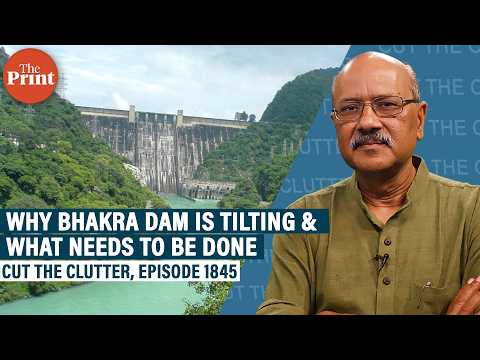
Why Bhakra dam is tilting, how this is an early warning & what needs to be done to prevent disaster

Channel: ThePrint Published: 2026-06-04 14:44
ThePrint

The video argues that Bhakra dam’s small but measurable tilt is an early warning sign, not an immediate emergency, and that the real issue is long-term stress from persistent high reservoir levels and rising silt. The speaker says the dam needs lower water levels periodically to "rest" and enable inspection/desilting, but that good monsoons over the last decade have prevented the reservoir from drawing down enough. The result, in the speaker’s framing, is a structure that is operating under more load than ideal and deserves preventative work now rather than crisis response later.

Watch on YouTube ›

Get the market thesis, key claims, assets, contradictions, and follow-up questions from any financial video — then unlock a version personalized to your portfolio, watchlist, and favorite speakers.

Detailed summary

The core thesis is straightforward: Bhakra dam is not about to fail, but its tilt crossing the design threshold is a meaningful warning that should trigger preventive maintenance, deeper study, and possible desilting. The speaker frames the issue as a question of structural fatigue and operational stress. In their explanation, a large gravity dam like Bhakra is engineered to tolerate some movement, but not to carry maximum load continuously for years without sufficient drawdown. The key concern is that the reservoir has remained relatively full for a long stretch, so the dam has not had the annual relief that would normally come when water levels fall in the lean season. A major part of the argument is technical explanation delivered in accessible language. …

🔒 The full detailed summary continues — read all of it free with an account. Read the full summary →

Main takeaways

  1. Bhakra dam is presented as structurally stressed but not in immediate danger.
  2. The key warning sign is a measured tilt above the stated design tolerance.
  3. The dam has reportedly not reached low enough levels for about a decade, limiting its ability to “rest” and be desilted.
  4. Siltation is materially reducing storage capacity and adding long-term pressure.
  5. The speaker’s main policy recommendation is preventive action now: study, drawdown planning, and desilting.
  6. The argument is cautious rather than alarmist, but it clearly leans toward early intervention.

Market read by horizon

Short term

Near term, the setup is a maintenance-warning story: the reported tilt is enough to justify vigilance, but not panic. The actionable risk is any new monsoon-driven rise in reservoir stress before inspection and drawdown planning advance.

  • The immediate watch item is the reported 1.177-inch tilt versus the 1.03-inch tolerance.
Show more
  • Bhakra-Bas Management Board has already moved to commission an IIT Roorkee study, which is the near-term catalyst.
  • The short-run risk is not collapse but complacency: the speaker urges action before the reservoir season raises water levels again.
Mid term

Over the next few weeks and months, the issue likely resolves into a technical review and a decision on whether reservoir levels can be lowered for desilting. The key validation point is whether the IIT Roorkee study or board action shows the tilt is stable and manageable, or whether more intrusive work is required.

  • Over the next several months, the key question is whether the technical study confirms that the tilt is manageable or whether more structural work is needed.
Show more
  • A sustained drawdown to the minimum operating level would allow inspection and desilting, but that requires coordination among Punjab, Haryana, Rajasthan, and others.
  • If the reservoir can be lowered safely and maintenance proceeds, the issue may fade into a controlled engineering project.
Long term

Structurally, the piece argues that legacy infrastructure degrades through use, sediment, and delayed upkeep even when originally well designed. The long-run implication is that India’s big dams need lifecycle management as a core policy priority, not just periodic crisis response.

  • The long-term thesis is that large legacy dams age into management problems as much as engineering problems.
Show more
  • Siltation, watershed changes, and repeated full reservoirs gradually erode both storage utility and safety margin.
  • Bhakra is portrayed as a strategic infrastructure asset whose long-run value depends on disciplined maintenance and periodic drawdown.
Unlock the full horizon read See the full short-term, mid-term, and long-term implications with confirmation and invalidation signals. Unlock horizon read

Key claims (7)

MIXED infrastructure safety Bhakra dam

Bhakra dam is not in immediate danger, but its tilt is a cause for concern that needs preventive action.

The speaker repeatedly says there is no immediate threat while emphasizing concern and the need for early intervention.

BEARISH dam safety Bhakra dam

The dam’s design tilt limit is 1.03 inches, and a reported tilt of 1.177 inches exceeds that limit.

The transcript states the design tolerance and the newer reading that crossed it.

BEARISH reservoir management Bhakra dam

The reservoir has not gone down to the lean-season minimum for about 10 years, leaving the dam under persistent load.

The speaker links high monsoon years to lack of drawdown and insufficient rest for the dam.

Unlock 4 more claims See the full bullish, bearish, and counter-consensus argument map extracted from the transcript. Unlock all claims

Assets discussed (2)

Bhakra dam
MIXED other

Presented as structurally sound but under maintenance concern because of tilt and siltation.

Bhakra-Bas Management Board
NEUTRAL other

Cited as the institution assessing the tilt and commissioning a consultancy study.

Speakers

SPEAKER Unknown speaker

Where this transcript pushes against consensus

  • The speaker treats 1.177 inches as clearly concerning, but the evidence presented is secondhand and lacks technical detail on measurement context or variability.
  • The explanation heavily anthropomorphizes dams needing “rest,” which is a useful metaphor but not a precise engineering formulation.
  • Claims about current silt inflow versus design assumptions are presented without showing the underlying study or data series.
  • The video implies that higher-than-normal reservoir levels are the main reason for concern, but does not fully quantify how much risk this adds relative to other factors like geology or instrumentation.
  • The historical collapse examples are relevant but not directly comparable to Bhakra, so the analogy may overstate the immediacy of the threat.

Topics

Bhakra dam tiltdam safetysiltationreservoir drawdowndesiltinggravity damsBhakra-Bas systemmonsoon water managementinfrastructure maintenancecomparative dam failures

Create your free research agent

Unlock the full claims, asset map, scores, related transcripts, follow-up questions, and AI chat — shaped around your portfolio, watchlist, favorite speakers, and risks.

  • Full claims and asset map
  • Personalized relevance to your watchlist
  • Follow-up questions you can track
  • Related transcripts from your workspace
  • AI chat about this video
Create your free research agent
TRANSCRIPTAGENT.AI