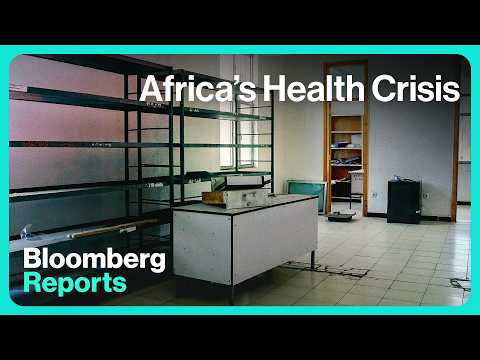
Bloomberg’s segment argues that Trump’s foreign aid cuts, especially the dismantling of USAID, have pushed Mozambique’s health system and other African countries into a fragile stopgap phase. The piece emphasizes immediate risks to HIV, malaria, tuberculosis, maternal-child health, surveillance, and Ebola containment, while noting that new US deals demand more domestic financing, country ownership, and in some cases health data or minerals access in return for aid.
Watch on YouTube ›Get the market thesis, key claims, assets, contradictions, and follow-up questions from any financial video — then unlock a version personalized to your portfolio, watchlist, and favorite speakers.
This segment’s core thesis is that the Trump administration’s cuts to US foreign aid have created an acute health-system shock across African countries, with Mozambique used as the clearest example. The narration says the country’s vulnerability is structural because it depends heavily on external aid, faces climate shocks and conflict displacement, and now has to absorb a sudden reduction in US support at the same time that disease risks remain elevated. The piece frames the result as a race against time: governments are being forced to improvise near-term responses while trying to preserve long-term public-health capacity. The segment links the aid cuts directly to the dismantling of USAID in January 2025, describing the shutdown of the website, furloughs and firings, and the cancellation of most contracts. …
Immediate setup is fragile: the funding shock is already hitting clinics and surveillance, so the tactical risk is service disruption, stockouts, or outbreak visibility before replacement funding arrives.
Over the next several weeks to months, the base case is a messy transition in which Mozambique and peers try to substitute domestic funding and new partnerships, but health programs remain exposed unless financing and implementation capacity recover quickly.
The structural implication is a more transactional global-health regime, with US support less reliable and African health systems forced to operate with thinner buffers and greater dependence on domestic fiscal capacity.
Mozambique’s health vulnerability is structural because it depends heavily on external aid, climate shocks, and conflict displacement.
This is the segment’s framing explanation for why the country is especially exposed to aid cuts.
Trump’s 2025 actions effectively dismantled USAID and froze most US foreign aid.
The narrator directly links the aid shock to executive actions in January 2025.
US aid cuts could cause more than 14 million additional deaths by 2030, according to a Lancet study.
The segment uses this as a high-impact estimate of the global consequence of the cuts.
Unlock the full claims, asset map, scores, related transcripts, follow-up questions, and AI chat — shaped around your portfolio, watchlist, favorite speakers, and risks.