TranscriptAgent
Try it free
TRANSCRIPTAGENT.AI · transcript analysis

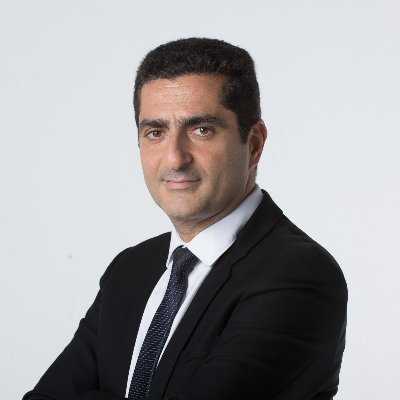
Marc Touati : "Je ne crois pas à un pétrole à 200$"

Channel: Boursorama Published: 2026-06-08 07:31
Boursorama

Marc Touati argues that the Iran/Strait of Hormuz shock is already creating a real oil and inflation problem, but he does not believe in a $200/barrel outcome. He thinks the damage will eventually slow global growth enough to cap oil, while equities are still being supported by AI-related flows and an unusually strong U.S. economy, in contrast to a weakening France and euro area.

Watch on YouTube ›

Get the market thesis, key claims, assets, contradictions, and follow-up questions from any financial video — then unlock a version personalized to your portfolio, watchlist, and favorite speakers.

Detailed summary

Marc Touati’s core thesis is that the current Middle East conflict has created a genuine oil shock, but that the market is overestimating the chances of an extreme, sustained oil spike. He says he does not believe in a $200 barrel scenario, even if Hormuz remains shut for weeks, because prices above equilibrium eventually hurt global activity, reduce demand, and force oil back down. In his view, the bigger problem is not just inflation, but the broader economic slowdown and shortages that an energy shock can trigger. He repeatedly emphasizes that oil around the high-$90s already represents a serious shock. He cites the world economy slowing to about 1.8% growth, well below the long-run norm of 3.5%, and says this environment makes a prolonged oil surge unsustainable. …

🔒 The full detailed summary continues — read all of it free with an account. Read the full summary →

Main takeaways

  1. Touati is bearish on a $200 oil narrative, but bullish that the oil shock is real and inflationary.
  2. He thinks the bigger medium-term risk is global growth destruction, shortages, and recession rather than oil staying extreme forever.
  3. He sees AI as the main force propping up equity markets for now, even as rates and inflation eventually bite.
  4. France is his strongest bearish call: recession, worsening deficits, higher unemployment, and little policy credibility.
  5. He argues the U.S. remains structurally stronger than Europe because of growth, jobs, and the dollar's reserve status.

Market read by horizon

Short term

Near term, the actionable risk is that oil and commodity prices stay elevated if Hormuz tensions persist, keeping inflation sticky and rates under upward pressure. Equities can still levitate on AI leadership, but that cushion looks vulnerable if the conflict drags on or rate expectations reprice.

  • Immediate risk: oil near $97 is already a shock, and any continued disruption in Hormuz could keep energy and commodity prices elevated.
Show more
  • He expects inflation readings to keep rising in the near term, especially in Europe and possibly the U.S.
  • Equities are still being held up by AI/tech leadership, but he sees that as a fragile cushion if rates rise further.
Mid term

Over the next few months, Touati expects growth damage to overwhelm the initial oil spike, capping crude and pressuring cyclicals, while inflation stays uncomfortable. France and the euro area look like the weakest link, with recession and fiscal stress likely to become more visible.

  • Over the next several weeks to months, he expects the oil shock to weaken global growth enough to cap crude prices.
Show more
  • He thinks higher inflation plus higher rates will eventually trigger an equity adjustment, even if AI remains a leadership theme.
  • He sees France and the euro area as moving deeper into recession, with weak demand and worsening labor-market data.
Long term

Structurally, he sees a widening split between growth-capable economies like the U.S. and fiscally constrained Europe, especially France. The lasting implication is that debt, taxes, and low structural growth are the core regime risks for France, while reserve-currency status and stronger productivity keep the U.S. advantaged.

  • Touati's structural view is that France has a chronic low-growth, high-tax, high-debt regime problem.
Show more
  • He implies Europe is at a lasting competitive disadvantage versus the U.S., which benefits from a stronger growth model and the dollar's reserve role.
  • He sees the AI boom as a potentially real productivity regime rather than a pure bubble, because profits exist in parts of the ecosystem.
Unlock the full horizon read See the full short-term, mid-term, and long-term implications with confirmation and invalidation signals. Unlock horizon read

Key claims (10)

BEARISH oil shock pétrole

He does not believe oil can sustainably reach $200 per barrel, even with Hormuz disruptions.

He directly rejects the extreme bullish oil forecast and cites prior episodes where similar fears proved excessive.

BULLISH energy prices pétrole

The current oil level around the high-$90s is already a real shock and not a trivial move.

He says oil is expensive relative to equilibrium and describes the situation as a shock pétrolier.

BEARISH supply shock Hormuz

If Hormuz stays shut for weeks, the main damage will be to activity and supply chains, not just to inflation.

He argues shortages in fertilizers, raw materials, and heavy crude would hurt output more than prices themselves.

Unlock 7 more claims See the full bullish, bearish, and counter-consensus argument map extracted from the transcript. Unlock all claims

Assets discussed (8)

pétrole
BEARISH commodity

He says he does not believe in $200 oil and expects prices to eventually fall as growth slows.

Brent / baril de pétrole
BULLISH commodity

He describes oil around $97 as already a costly shock and says it is still elevated.

Unlock the full asset map (6 more) See all assets mentioned, their directional bias, and the exact reasoning. Unlock asset map

Interview (11 Q&A)

pénurie pétrolière

Que se passe-t-il si dans un mois ou deux mois, Ormouz est toujours fermé pour le pétrole ?

Le vrai danger est celui des pénuries, notamment de matières premières, d'engrais (déjà le cas), et possiblement de pétrole lourd. Cela entraînerait moins d'activité économique et des pénuries de plastique par exemple. L'impact serait plus grave sur l'activité que sur l'inflation, qui devrait monter à 4-5% aux États-Unis et 3,5-4% en France.

marchés boursiers

À quel moment la prolongation du conflit en Iran affecte-t-elle les marchés boursiers, ce qui n'est pas le cas jusqu'à présent ?

Jusqu'à présent, les marchés sont boostés par la révolution de l'IA qui compense les tensions géopolitiques. L'écart entre valorisations tech et bourse classique n'a jamais été aussi élevé. La nouveauté est que les entreprises d'IA font des profits, ce qui limite la bulle. Mais l'inflation élevée et la hausse des taux d'intérêt vont finir par calmer les marchés boursiers.

marchés et conflit

Les investisseurs se fichent-ils de l'évolution du conflit ?

Les investisseurs arrivent à se convaincre que ça ne sera pas la troisième guerre mondiale, comme au début de la guerre en Ukraine. Ils tablent sur un apaisement du conflit et espèrent une paix dans la région, même si ce n'est pas encore le cas.

Unlock the full interview (8 more Q&A) Every question, answer summary, and YouTube timestamp. Unlock full Q&A

Where this transcript pushes against consensus

  • He presents a strong oil-supply shock story, but the claim that Hormuz closure alone cannot sustain very high prices is asserted rather than demonstrated with detailed supply-chain math.
  • The estimate that AI-related crypto-money flows are materially supporting equities is speculative and explicitly admitted as unproven.
  • His French GDP calculation excluding inventories is rhetorically powerful, but it is a nonstandard framing that can overstate weakness if inventories are unusually volatile.
  • The Greece-comparison warning is directionally clear but may overstate the immediacy and probability of a similar path for France.
  • He treats the Treasury/official institutions as too complacent, but does not reconcile this with the range of potential policy responses still available.

Topics

Iran-Israel conflictoil pricesHormuzglobal growth slowdowninflationcommoditiesAI and equity marketsFrance recessionpublic debt and deficitsU.S. vs Europe divergence

Create your free research agent

Unlock the full claims, asset map, scores, related transcripts, follow-up questions, and AI chat — shaped around your portfolio, watchlist, favorite speakers, and risks.
  • Full claims and asset map
  • Personalized relevance to your watchlist
  • Follow-up questions you can track
  • Related transcripts from your workspace
  • AI chat about this video
Create your free research agent
TRANSCRIPTAGENT.AI