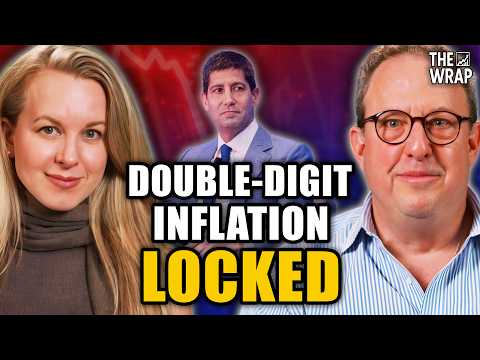
Ted Oakley argues the market is in a late-stage, crowded phase: IPO activity, broad participation, and enthusiasm for a narrow set of winners are all signs of excess. His response is to stay selective, avoid IPOs, and favor fundamentally cheap assets—especially gold, miners, energy, copper, natural gas, and other commodities—because he thinks a commodity-heavy regime is emerging over the next decade.
Watch on YouTube ›Get the market thesis, key claims, assets, contradictions, and follow-up questions from any financial video — then unlock a version personalized to your portfolio, watchlist, and favorite speakers.
Ted Oakley’s core thesis is that the market is behaving like a late-cycle topping environment rather than a healthy broad-based bull market. He points to a surge in high-profile offerings, widespread investor participation, and the feeling that “every strategy is up” as classic signs that the crowd is leaning too far in. He repeatedly frames the current phase as “late stage” and says he would not be surprised by another summer swoon, even while allowing that new highs in the S&P could still happen before year-end. A major part of his reasoning is historical analogy. He compares today’s setup with prior manias in oil and gas in the early 1980s, drug stocks in the late 1980s and early 1990s, tech in the late 1990s, and real estate in 2006–2007. The point is not that the same exact asset will always lead, but that mania-like concentration and crowd behavior recur across cycles. …
Tactically, he sees a crowded, late-stage tape that could still grind higher but is vulnerable to a near-term swoon; IPO enthusiasm and narrow leadership are the main red flags.
Over the next few months, he favors selective exposure to cheap commodities, gold, and energy while watching whether leadership broadens or the speculative areas fade; a sustained commodity bid would validate his view.
Structurally, he thinks the world is shifting toward a commodity and hard-asset regime as fiscal strains, geopolitical fragmentation, and reserve diversification reduce trust in paper claims.
The market is late-stage, characterized by huge IPOs and everyone being 'in,' which historically precedes a downturn.
The speaker cites Warren Buffett's 1999 quote about all strategies being up as a late-cycle signal, notes that huge IPOs like SpaceX occur at market tops, and observes that 'everybody's in now.'
The next 10 years will be a commodity-based market driven by countries hoarding raw materials.
The speaker observes that countries are no longer cooperating globally and are hoarding their raw materials like oil, fertilizer, and critical minerals, requiring higher prices to bring them out.
Gold will go 'a good bit higher' and has several more years left in its bull run.
The speaker notes central bank buying continues, and after a brief correction (5500 to 4000) they started buying again.
What do you make of the markets right now, given the recent IPO activity and move in stocks?
He says the market looks late-cycle and volatile, with a lot of money already in and recent gains concentrated in semiconductors rather than the whole market. He expects there could still be another swoon into summer and notes that IPOs often do poorly over a 1-, 3-, or 5-year horizon.
Do you think the market is now in a late-stage phase?
Yes. He says the current flood of offerings and broad participation look like the end stage of a cycle, though he would not rule out new highs in the S&P before year-end.
Have you seen this kind of market behavior before?
He says he has seen similar episodes numerous times, though in different forms. He cites prior cycles in oil and gas, drugs, tech, and real estate as examples of the same pattern.
Unlock the full claims, asset map, scores, related transcripts, follow-up questions, and AI chat — shaped around your portfolio, watchlist, favorite speakers, and risks.