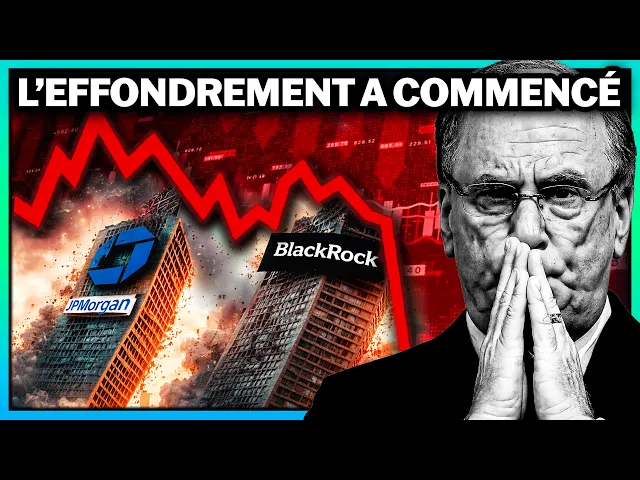
The video argues that private credit is under pressure from withdrawal freezes, forced asset sales, and rising refinancing stress, and warns that the sector’s illiquidity could amplify a broader market shock. It also offers a more tempered view: the problem may be severe for some funds but manageable systemically because banks are better capitalized than in 2008.
Watch on YouTube ›Get the market thesis, key claims, assets, contradictions, and follow-up questions from any financial video — then unlock a version personalized to your portfolio, watchlist, and favorite speakers.
This is a French-language market explainer focused on the private credit industry and the recent strain visible at major alternative asset managers. The speaker frames the situation as a liquidity and confidence problem: BlackRock reportedly limited redemptions at its private-credit vehicle, Blackstone had to inject capital and cap withdrawals after unusually heavy redemption requests, and Blue Owl had already shut the withdrawal window on a retail-facing product. The core thesis is that private credit has grown rapidly into a large, opaque, lightly regulated market that is now revealing the risks of selling illiquid loans through semi-liquid vehicles to investors who believed they had easy access to cash. The speaker explains how private credit arose after post-2008 regulation made banks more cautious about lending to mid-sized companies. …
Near term, the trade-off is between defensive gating and reputational damage: if more funds restrict withdrawals, the sector could see another wave of outflows and headline risk. Tactical caution is warranted because sentiment can deteriorate faster than fundamentals resolve.
Over the next few months, the base case is a messy but contained repricing in private credit, with tighter fundraising, more selective refinancing, and pressure on weak software borrowers. The setup improves only if redemption demand normalizes and managers can fund withdrawals without repeated sponsor rescues.
Structurally, private credit is becoming a major shadow-banking channel for corporate funding, which means liquidity design and leverage discipline matter more than headline yield. The long-run lesson is that products sold as accessible income can hide duration and credit risk that only show up under stress.
Private credit has become a huge, fast-growing but lightly supervised market that now threatens the financial health of large investment funds and their clients.
The video repeatedly states the market is around $2 trillion, unlisted and not rated, and that it is harming major managers.
Blue Owl, Blackstone, and BlackRock have all recently faced redemption stress or withdrawal restrictions in private-credit vehicles.
The speaker cites specific examples of limited redemptions, asset sales, and capital support.
Private credit expanded after 2008 because tighter bank regulation made banks less willing to lend to mid-sized companies.
The speaker explains the sector’s rise as a response to post-crisis bank retrenchment.
Unlock the full claims, asset map, scores, related transcripts, follow-up questions, and AI chat — shaped around your portfolio, watchlist, favorite speakers, and risks.