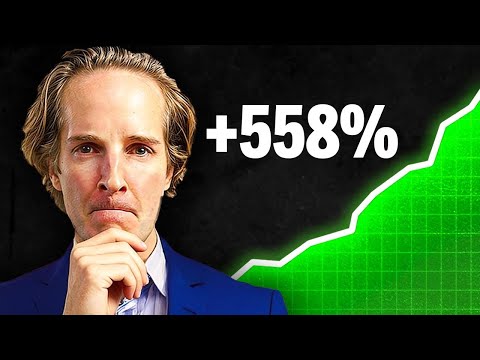
Felix, walking through Central Park, breaks down a newly released central bank survey showing 45% of central banks plan to buy more gold — the highest ever. He frames gold's recent 20% drop as speculative froth exiting, while structural buyers (central banks) never stopped. He argues the US is trapped by its debt (interest payments now exceed military spending), the dollar is being weaponized through sanctions, and countries are moving gold home — all creating what he calls the best environment for gold in decades. The video serves as a funnel to his free "90 Day Playbook" teaching session.
Watch on YouTube ›Get the market thesis, key claims, assets, contradictions, and follow-up questions from any financial video — then unlock a version personalized to your portfolio, watchlist, and favorite speakers.
Felix films this episode walking through Central Park in New York, framing it as an urgent breakdown of a newly released central bank survey. His core thesis: central banks are buying gold at unprecedented levels because they see geopolitical instability, dollar weaponization, and US fiscal fragility as structural threats — and retail investors are being misled by media narratives calling gold's recent correction the end of the trade. He opens by contrasting the media narrative ("gold is done, the trade is over") with the survey data: 45% of central banks plan to buy more gold in the next year, up from 8% in 2019, 25% in 2022, and 43% last year. Central banks have bought over 1,000 tons annually for four straight years — roughly double the prior decade's pace. **Framework 1 — Smart Money vs. Dumb Money:** Felix explains gold's ~20% drop using a house analogy. …
Cautiously bullish gold setup: the 20% correction cleared speculative froth, and fresh central bank survey data (45% planning to buy more) provides a catalyst for renewed interest before mainstream media fully digests it. However, COMEX speculators still dictate near-term price action, so volatility remains high and the catalyst timing is uncertain.
Constructive for gold over the next several months if the Fed remains constrained by debt-service costs and keeps real rates negative or neutral. The EM central bank buying trend (1,000+ tons/year) is durable and not price-sensitive. Key risk: a sharp disinflation surprise that flips real rates positive, or fiscal consolidation that eases the debt-trap narrative.
Structurally bullish for gold: dollar weaponization, competing financial blocks, and US fiscal unsustainability are secular trends that do not reverse quickly. Gold's role as the only non-sovereign reserve asset with no counterparty risk becomes more valuable in a multipolar world. AI/equity valuations at extremes may eventually redirect institutional flows toward hard assets.
Central banks bought more gold despite the recent price drop, and their buying never stopped.
Speaker cites a central bank survey showing they bought more gold even as retail/momentum sellers drove prices down.
45% of central banks say they plan to buy more gold in the next year, the highest number in the survey's history.
Speaker references a central bank survey that produced this statistic as a key data point supporting his bullish gold thesis.
Central banks (especially US adversaries) are buying gold because they distrust each other and gold has no counterparty risk and cannot be frozen.
The speaker observes that China, India, Russia, and other nations are all accumulating gold as a hedge against each other and against US-dominated financial system leverage.
Unlock the full claims, asset map, scores, related transcripts, follow-up questions, and AI chat — shaped around your portfolio, watchlist, favorite speakers, and risks.