TranscriptAgent
Try it free
TRANSCRIPTAGENT.AI · transcript analysis

Nancy Pelosi Just Purchased THIS ‘10X Stock’

Channel: Felix & Friends (Goat Academy) Published: 2026-06-26 07:00
Felix & Friends (Goat Academy)

Felix presents a bullish thesis on Intel (INTC), arguing that both Nancy Pelosi and Donald Trump are making large, concurrent bets on the stock. Pelosi purchased ~$6M in Intel call options with a one-year horizon, while the Trump administration made the US government a ~10% equity owner of Intel alongside Trump's personal trust buying stock and bonds. Felix applies a three-pillar framework: (1) fundamentals are weak (he scores it 13/100) but improving with the 18A manufacturing process; (2) risks include execution difficulty, strong competitors (TSMC, NVIDIA, AMD), and negative cash flow; (3) the catalyst is government underwriting — national defense priorities ensure continued support for domestic semiconductor manufacturing. He notes a bullish technical pattern and has a watchlist entry around $136 with stops at $115 or $97, but has not yet entered. The video functions partly as a funnel for his free live training at 90dayplaybook.org and his Winston app.

Watch on YouTube ›

Get the market thesis, key claims, assets, contradictions, and follow-up questions from any financial video — then unlock a version personalized to your portfolio, watchlist, and favorite speakers.

Detailed summary

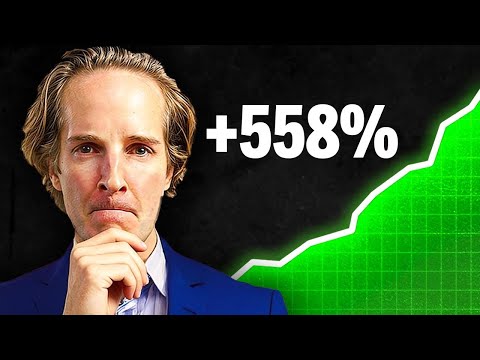
Felix opens with a hook: two of the most powerful people in America — Donald Trump and Nancy Pelosi — are making the same bet, and it's not on NVIDIA or Microsoft. The stock in question is Intel, which he first covered bullishly in August 2025, claiming a $1,000 investment at that time would now be worth $65,000 (the stock is up 550%). He walks viewers through a three-pillar framework he uses to analyze "political stocks." **Pillar 1 — Fundamentals:** Felix is candid that Intel scores poorly — 13 out of 100 on his app's metric. Revenue growth is about 7% year-over-year (unimpressive versus NVIDIA), the company is not making money, and R&D spending is declining. Despite this, he argues that "big money" and Wall Street are buying, which is what ultimately matters more than understanding every technical detail. …

🔒 The full detailed summary continues — read all of it free with an account. Read the full summary →

Main takeaways

  1. Felix is bullish on Intel (INTC) based on a three-pillar framework combining weak-but-improving fundamentals, significant execution risk, and a government-underwriting catalyst
  2. Nancy Pelosi bought ~$6M in Intel call options expiring in roughly one year, signaling conviction on a significant move higher
  3. The Trump administration made the US government a ~10% equity owner of Intel, and Trump's personal trust has also been buying Intel stock and bonds
  4. Intel's 18A manufacturing process (RibbonFET + PowerVia) is a technological differentiator, though fundamentals remain poor (13/100 score)
  5. The core AI thesis: Intel wins as AI shifts from training (NVIDIA's domain) to deployment/inference where cheaper CPUs matter
  6. Felix has a technical entry around $136 with stops at $115 or $97 but has not yet entered the position
  7. Position sizing recommendation is 1-5% with automated exit plans; the setup is on his watchlist, not yet triggered
  8. Risks include execution complexity, TSMC's 30-year foundry lead, NVIDIA/AMD competition, and negative free cash flow

Market read by horizon

Short term

Near-term tactical: Intel sits at a technical inflection point with a defined entry (~$136) and stops ($115/$97). Felix is on watch, not yet triggered. The setup is a breakout-or-fail pattern; if it triggers, the thesis is that institutional flows follow the same pattern as August 2025 and April 2026 breakouts. If it fails, the stop-losses are pre-set. No immediate macro catalyst beyond the chart.

  • Intel is on Felix's watchlist with an entry at ~$136; the bullish technical pattern has not yet triggered a buy
Show more
  • Stop-losses are placed at $115 or $97 depending on risk tolerance — the trade has defined downside parameters
  • Pelosi's call options have roughly a one-year expiration, suggesting the catalyst is not an immediate flip but a multi-month setup
Mid term

Medium-term base case: Government semiconductor spending (CHIPS Act, defense budgets) continues regardless of which party holds power, creating a multi-month bid under Intel. The foundry business needs 12-18 months to show whether factory investments translate to revenue. Pelosi's one-year call option horizon aligns with this timeline. The key risk is execution — if 18A fails to win external foundry customers, the government-backing thesis alone may not sustain the stock at elevated levels.

  • Government underwriting — 10% equity ownership plus defense spending needs — creates a multi-month floor under Intel regardless of fundamentals
Show more
  • The foundry business is losing money now but the factory-build phase is expected to turn profitable once plants come online (restaurant analogy: lose in year one, profit in year two)
  • As AI shifts from model training toward deployment (inference), Intel's CPU advantage becomes more relevant over the next several months
Long term

Structural thesis: US domestic semiconductor manufacturing is a national security imperative driven by Taiwan risk and AI-enabled military threats (drones). Intel is positioned as the only US-based leading-edge foundry alternative to TSMC. If the foundry strategy succeeds, Intel's valuation framework shifts from a cyclical chip stock to a strategic infrastructure asset with implicit government backing — a multi-year re-rating. If it fails, the stock likely reverts to its legacy PC/datacenter valuation floor.

  • National defense imperative for domestic semiconductor manufacturing is a structural, multi-year thesis that outlasts quarterly earnings noise
Show more
  • Intel's foundry ambition positions it as the US alternative to TSMC; geopolitics (Taiwan risk, Iran drone incident cited) reinforces the strategic value
  • The shift from AI training dominance to AI inference ubiquity is a secular trend; Intel's CPU-centric strategy bets on the 'cheapest way to run models' winning long-term
Unlock the full horizon read See the full short-term, mid-term, and long-term implications with confirmation and invalidation signals. Unlock horizon read

Key claims (5)

BULLISH US semiconductor policy / national defense INTC

The US government now owns about 10% of Intel, creating a support floor under the stock via national defense and semiconductor manufacturing policy interests.

Speaker states the Trump administration made the government a shareholder via billions in taxpayer money, not just loans or grants, which underwrites the stock.

BULLISH INTC

Intel stock has a repeatable technical breakout pattern forming that previously led to a 550%+ rally, and the same pattern is flashing signals again now.

The speaker points to a prior textbook pattern in August 2025 and April 2026 that preceded large moves, and claims the same pattern is forming again currently.

BULLISH INTC

Nancy Pelosi (via her husband Paul) bought $6 million of expensive Intel call options with roughly a one-year horizon, signaling very high conviction.

Speaker describes the size ($6M), the type (expensive calls), and the duration (almost a year) as indicators of strong conviction beyond a casual trade.

Unlock 2 more claims See the full bullish, bearish, and counter-consensus argument map extracted from the transcript. Unlock all claims

Assets discussed (8)

Intel — INTC
BULLISH stock

Presented as the stock the speaker is interested in, with political buying, government ownership, and chart setup framed as bullish catalysts.

Nvidia — NVDA
MIXED stock

Used as the AI leader Intel is not directly competing against in the same way, but also as a benchmark for growth and a competitor in the broader AI stack.

Unlock the full asset map (6 more) See all assets mentioned, their directional bias, and the exact reasoning. Unlock asset map

Where this transcript pushes against consensus

  • 'Big money is buying it, do I need to really understand why?' — dismisses the importance of understanding the business when fundamentals score 13/100; following flows alone is a thin thesis
  • The $65,000 return claim from $1,000 invested in August 2025 implies a 64x return in under a year; Intel has not achieved this — this likely refers to options leverage (call options), which Felix does not clearly disaggregate from stock returns
  • Equates Pelosi's personal call options (a directional bet) with Trump administration's government equity stake (national policy) as if they are the same signal, when they have entirely different motivations and constraints
  • The 'subconscious access to committees' framing is a rhetorical dodge — Felix implies insider advantage while repeatedly disclaiming it with sarcasm, which is intellectually dishonest as an investment thesis
  • No discussion of Intel's actual balance sheet, debt levels, or cash burn rate — the fundamental 'analysis' is reduced to a single app score of 13 with no detailed P&L review
  • The technical pattern is described as 'the exact same pattern' as before but no specifics are given (no named pattern, no measured move targets, no volume confirmation criteria)

Topics

Intel (INTC) stock analysisNancy Pelosi stock trades / political insider tradingDonald Trump & US government Intel holdingsThree-pillar investment frameworkSemiconductor manufacturing (18A, foundry)AI training vs. inference thesisTechnical analysis / chart patternsRisk management and position sizingCHIPS Act and defense spending catalystPolitician trade tracking (Winston app)

Create your free research agent

Unlock the full claims, asset map, scores, related transcripts, follow-up questions, and AI chat — shaped around your portfolio, watchlist, favorite speakers, and risks.

  • Full claims and asset map
  • Personalized relevance to your watchlist
  • Follow-up questions you can track
  • Related transcripts from your workspace
  • AI chat about this video
Create your free research agent
TRANSCRIPTAGENT.AI